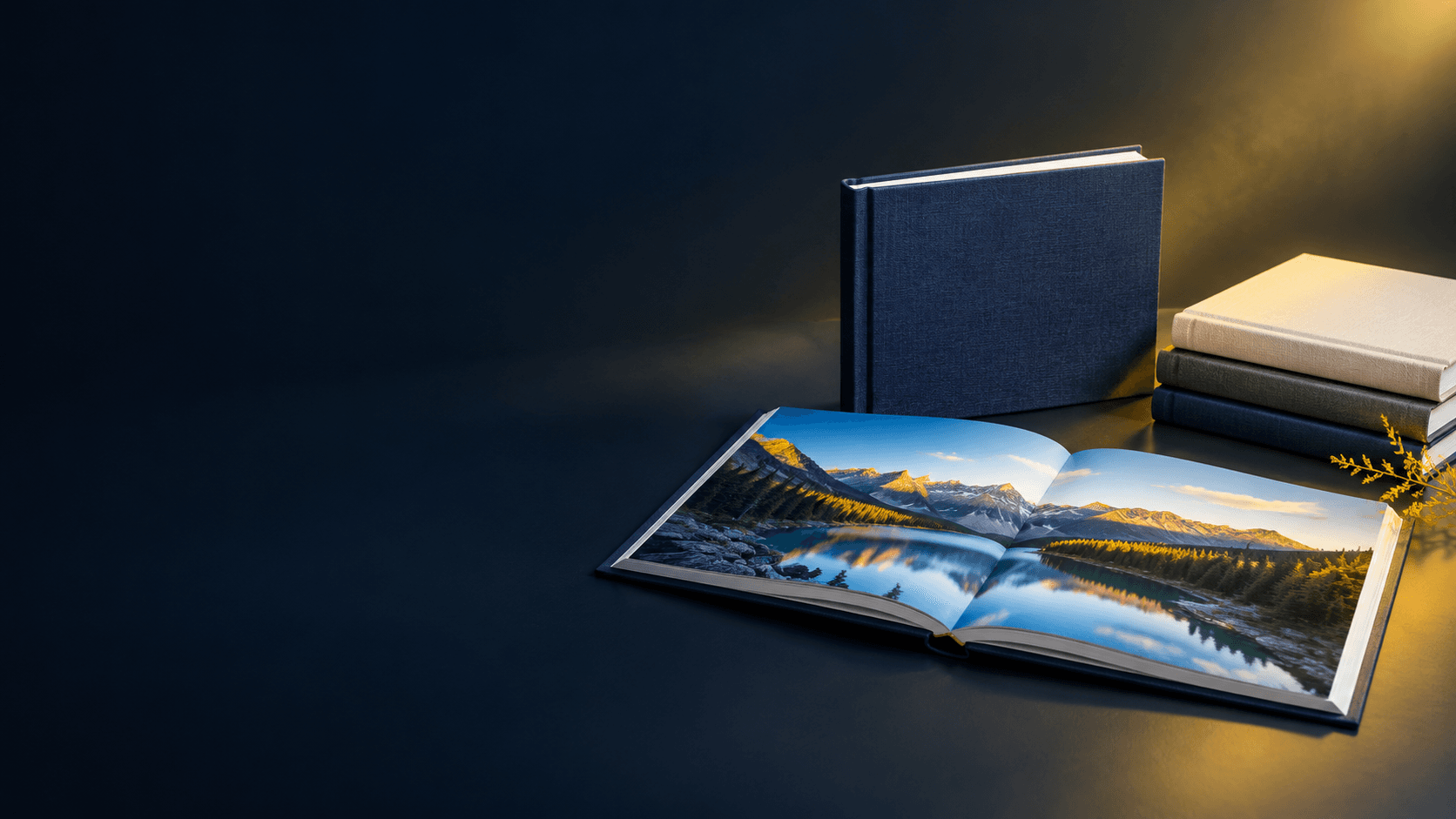
Photographic sequences with the right page opening
Custom Photo Book Printing
Turn a photographic sequence into a book whose paper and opening suit the images. Compare a conventional bound edition with a dedicated lay-flat construction before designing critical panoramas.
- Conventional blocks or mounted lay-flat spreads
- Surface, shadow and highlight proofing
- Page-count and presentation planning
The product in use
Choose the image surface and the way the spread opens.
A photo book may use printed paper pages in a bound block or thicker mounted spreads in an album-style construction. These are different assemblies, with different page feel, gutter and weight. Commercial printed stock and silver-halide photo paper are also different reproduction processes. The term “photo book” does not establish either one. Choose the image surface and opening from an actual sample, then prepare photographs for that route.
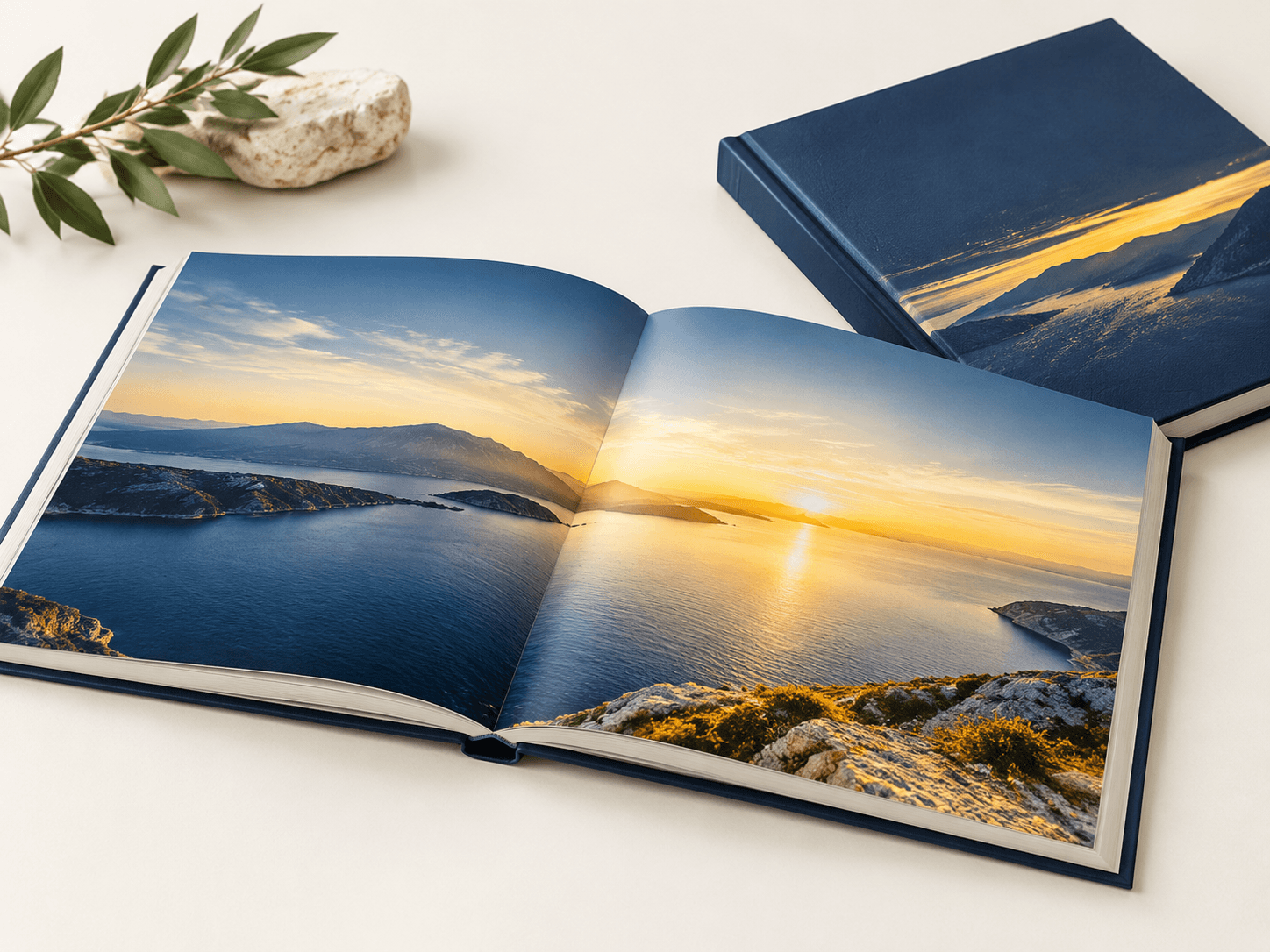
The print process and opening construction are separate choices.
- 01Image surface
- Paper shade and finish affect perceived tone, reflection and detail. Commercially printed paper is distinct from photographic silver-halide paper.
- 02Bound or mounted interior
- A conventional block has separate curved pages and a gutter; a mounted lay-flat spread uses a different construction and thickness.
- 03Cover and fitted presentation
- A case, jacket or slipcase must follow the finished block. Interior changes can move the cover and presentation dimensions.
Specifications & materials
Compare the options and what they change.
Numeric dimensions and paper weights are selection references, not guaranteed Lemon production limits or a stocked-material list. The quoted specification identifies the available grade and construction.
| Engineering spec | Reference or option | Selection effect |
|---|---|---|
| Finished dimensions | 8 × 10 in (203.2 × 254 mm); 10 × 8 in (254 × 203.2 mm); 12 × 12 in (304.8 × 304.8 mm) | Interior trim references, not manufacturing limits. Portrait reference for albums and photographic narratives. Landscape reference for wide scenes. Large square reference; more area and assembled weight. |
| Format and component count | Complete book: interior, cover and separately identified components | Send trim, pages or spreads with the counting convention, quantity, print surface, binding/opening requirement, cover and destination. Include a critical panorama and dark image. |
| Printed interior | 130, 150 or 170gsm coated-paper references | Compare image detail, sheen, opacity and page flexibility. |
| Construction | Conventional paper block or dedicated mounted lay-flat spread | Mounted spreads add thickness; plan covers and pagination for that assembly. |
| Reproduction route | Commercial print route specified in the quote | Do not assume silver-halide or archival permanence from the product name. |
| Image preparation | Final-size resolution, approved color space and controlled crop | 300ppi is a common reference; source detail and enlargement still matter. |
| Reproduction process | Commercial print on selected paper; other photographic processes only if verified | Do not transfer photographic-paper permanence or process claims to a commercial-print configuration. |
| Panorama construction | Conventional bound block or dedicated mounted lay-flat spread | The choice changes gutter access, page thickness, count and cover geometry; use construction-specific templates. |
Flexible printed pages
130/150gsm coated references for a conventional image-led book.
Judge surface and gutter on the complete binding.
Mounted album spreads
Selected printed surfaces bonded into thicker spreads.
Specify the full mounted construction, not just the face paper’s GSM.
A pearl, gloss or matte description alone does not identify the print process or page build. Establish the actual grade and reproduction route, then judge reflection, tone and the bound opening together.
A decision for this product
Compare whole spreads, not only paper swatches.
Flexible pages / mounted spreads
Paper feel, opening and assembled thickness interact. A surface swatch cannot establish the panorama or finished album weight.
Selection illustration · not a production template or test result
Selected direction
Flexible printed pages
Photographic narrative · Flexible printed pages
More conventional page turning; keep critical content clear of the gutter.
Panoramic album · Dedicated mounted lay-flat spreads
Evaluate full images and added assembled thickness.
Portable portfolio · Moderate trim and page bulk
Balances image area with handling and transport.
See the trim proportions.
These are publishing references, not required sizes. Compare the usable page shape before adapting an existing layout.
Selected: 8 × 10 in. Proportions only; not actual size.
Trim dimensions describe the cut page. Artwork bleed, cover overhang, tabs and modules are separate allowances.
Surface finish options
Printed covers and jackets
Choose the finish for the printed cover or jacket, not automatically for the interior. Check color, rub marks, hinges and compatibility with the cover stock. Cloth and synthetic wraps need a separate material trial.
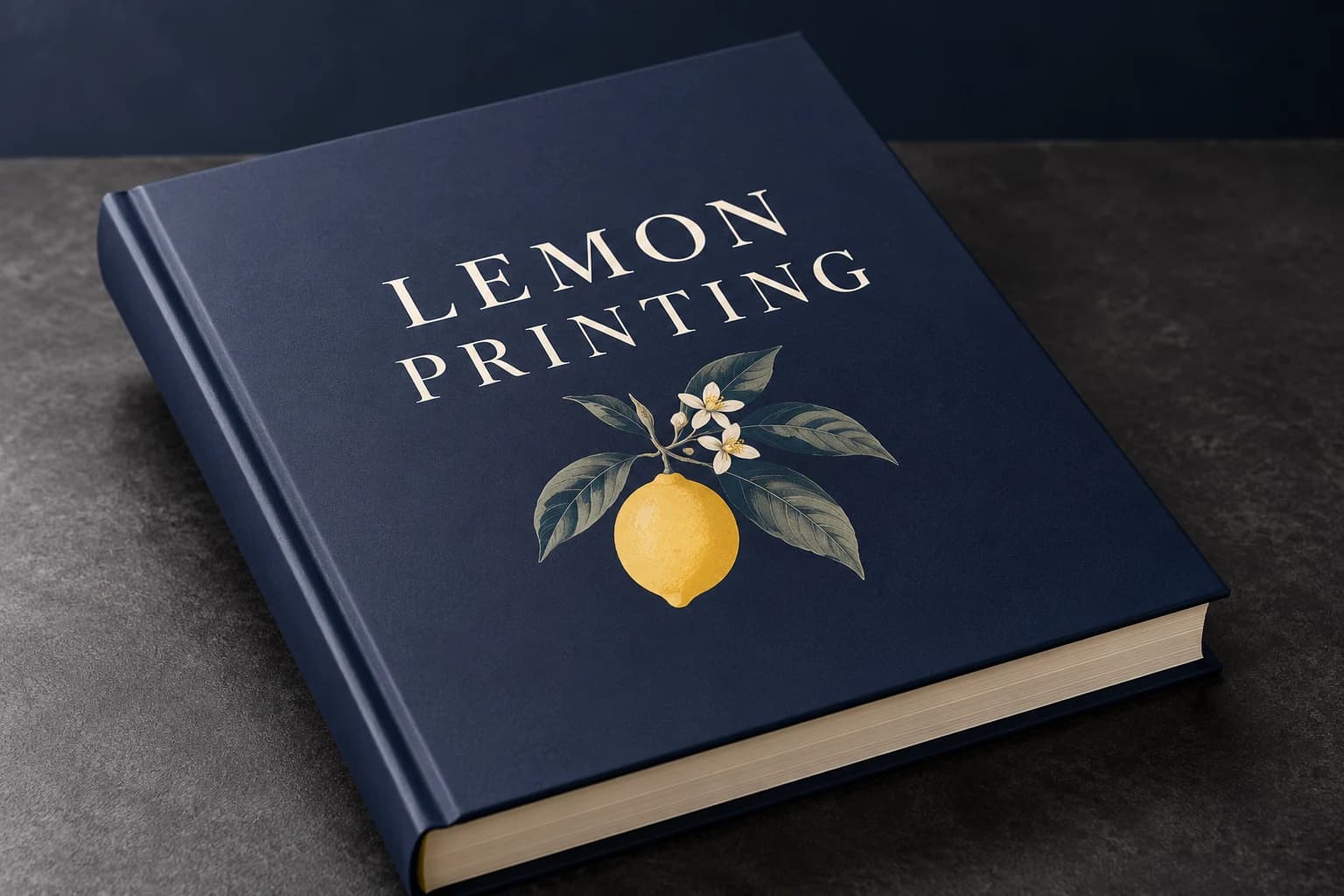 Matte lamination View effect & artwork guidance
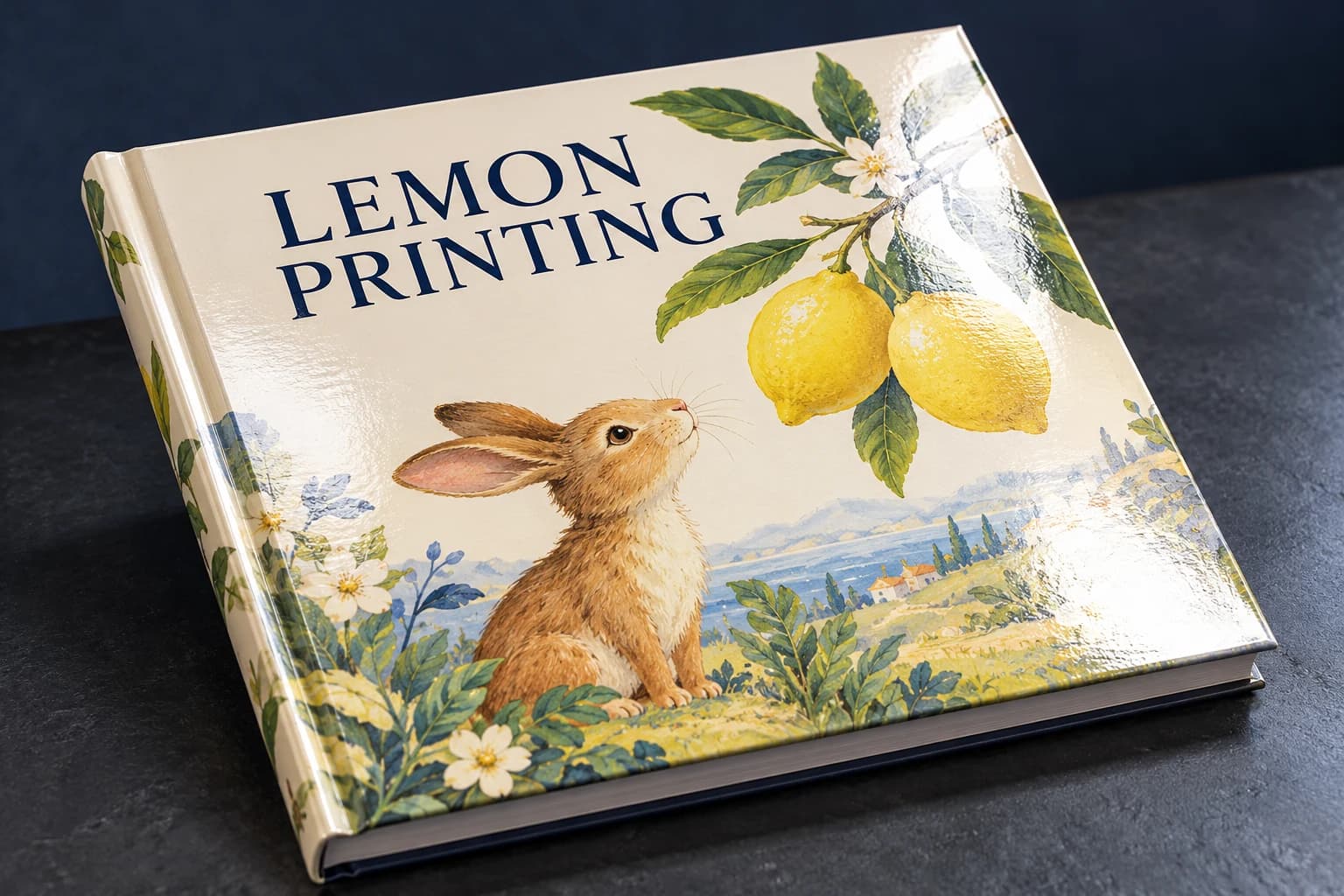 Gloss lamination View effect & artwork guidance
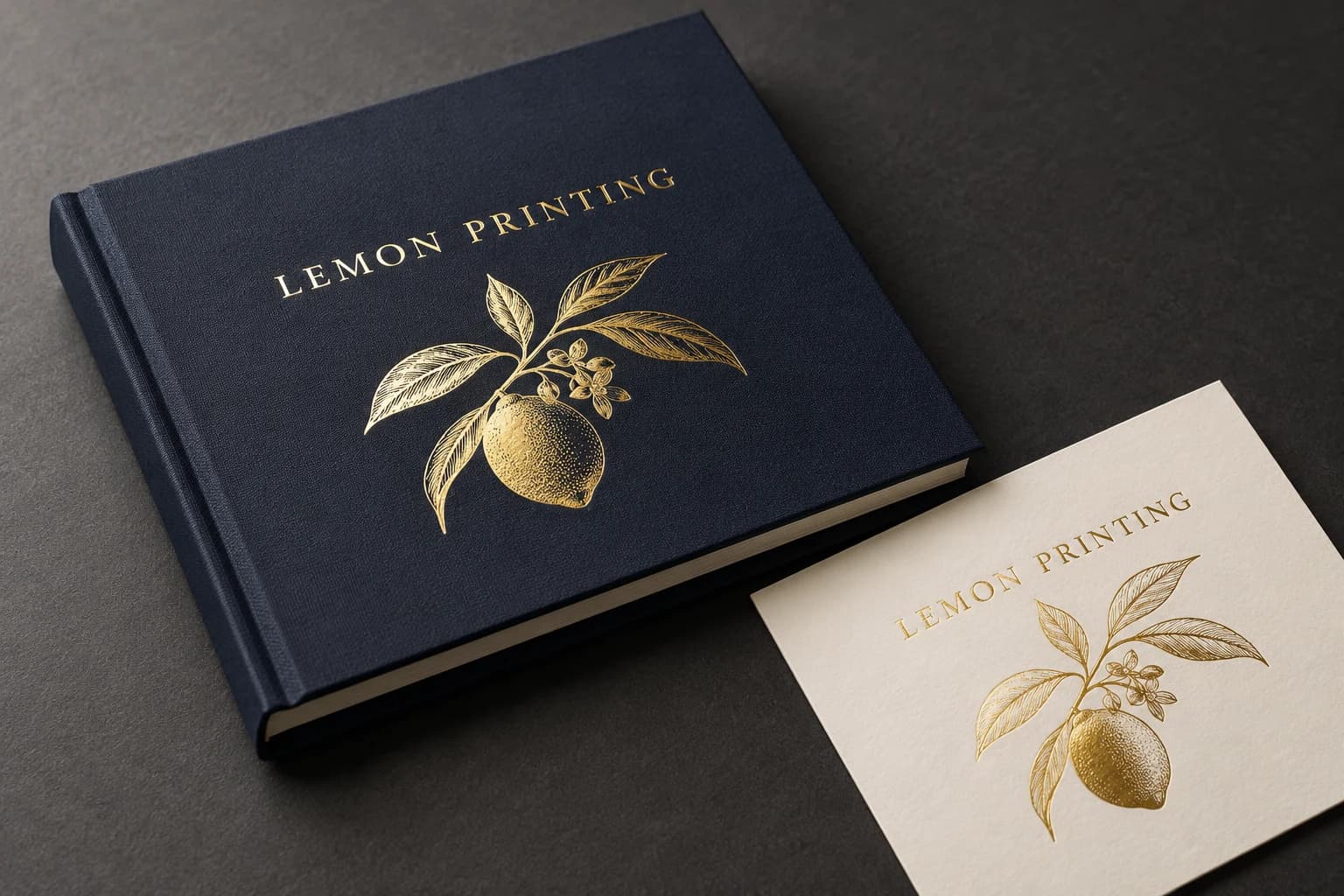 Gold foil stamping View effect & artwork guidance
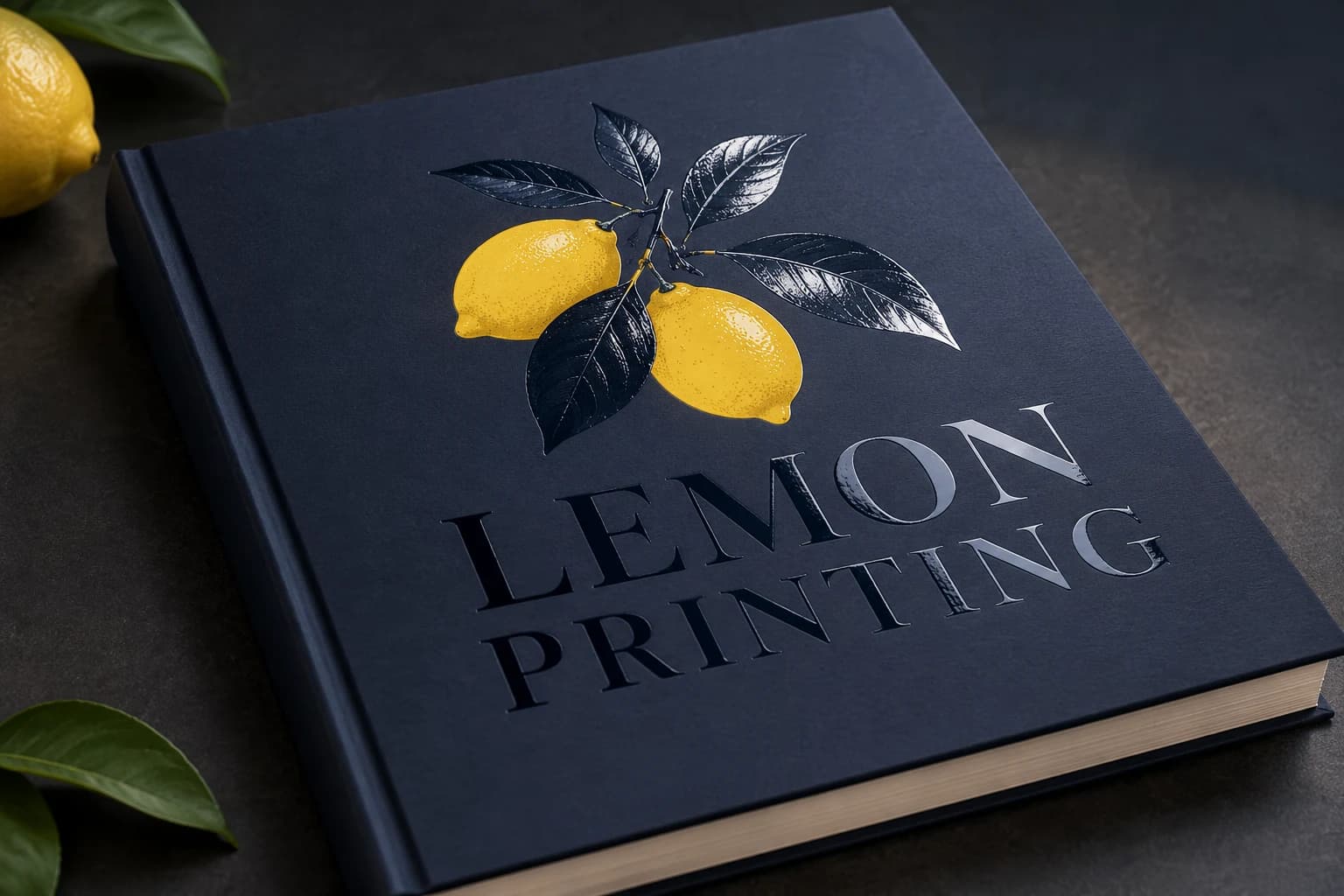 Spot UV View effect & artwork guidance
Illustrative finish samples, not photographs of this product. Final suitability follows the confirmed stock, construction and approved sample.
Compare all surface finishesHow it is made
Construction decisions with a practical effect.
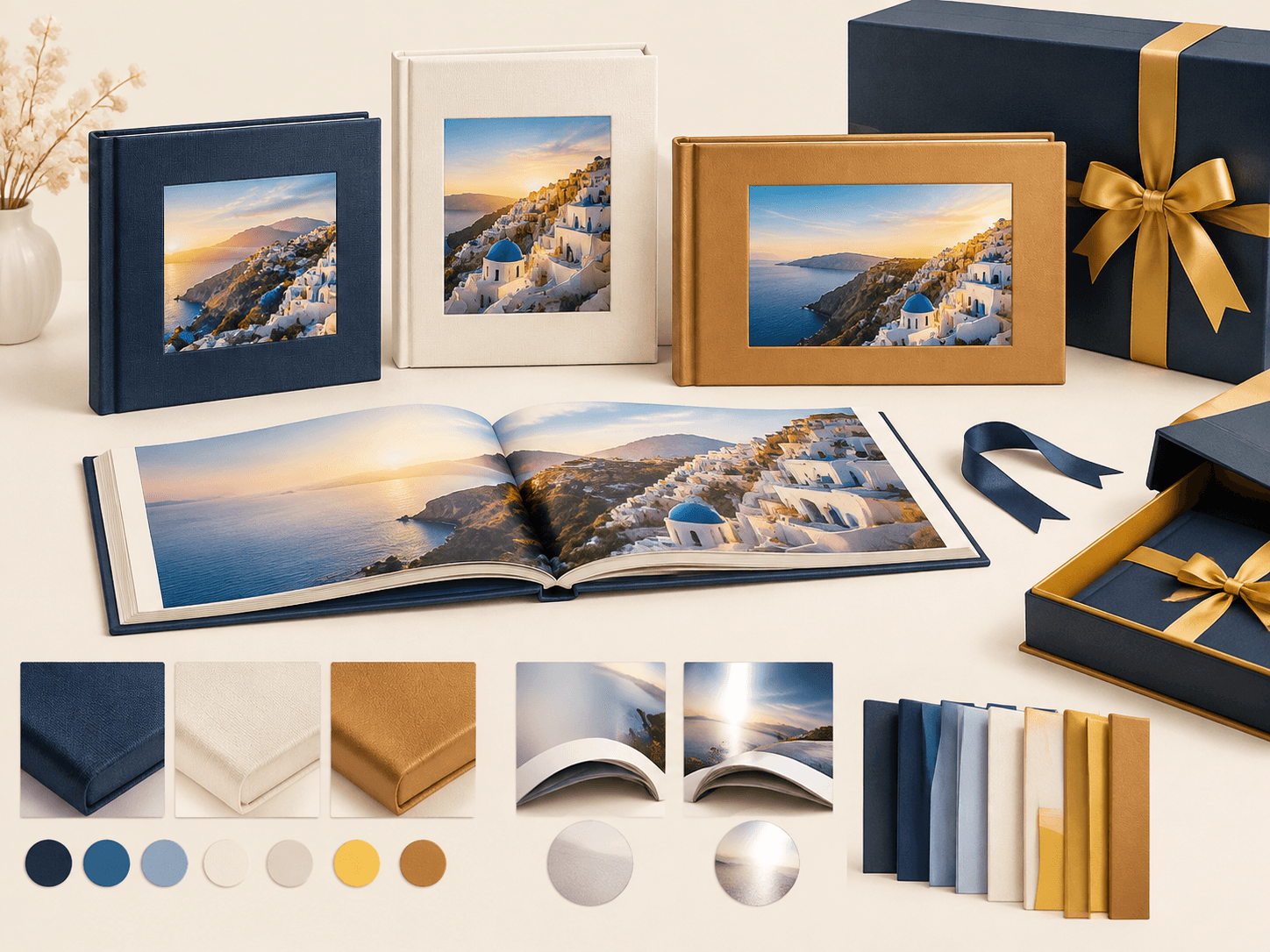
Color and image preparation
Keep crops, color treatment and rendering references consistent. Use representative skin tones, shadows and highlights in the proof set; a vivid display preview does not describe the selected printed paper.
Bound or lay-flat assembly
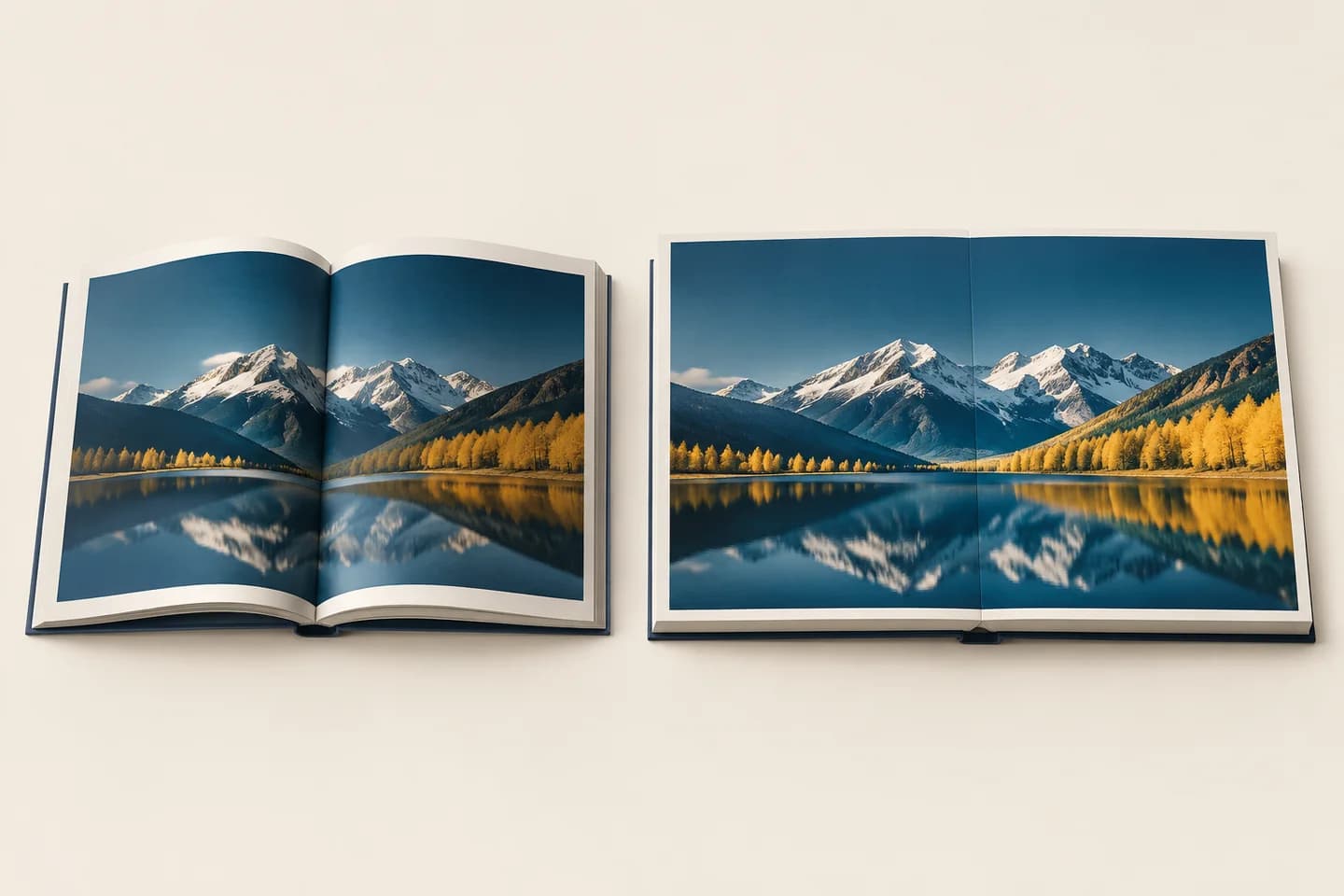
A paper block retains a working gutter. Dedicated mounted lay-flat spreads use a different page assembly and can suit panoramas; test the exact construction instead of assigning that property to any hardcover.
Details that change the finished book
Approve a full spread, not just a loose paper swatch.
The same image sequence can need different crop and cover files when the opening construction changes. Select the structure before placing critical panoramic detail.
Define the reproduction route
Specify commercially printed sheets or another verified process; do not assume silver-halide output from the words “photo book.” Retain the intended image-proof reference.
Match the layout to the opening
Move faces and straight lines away from a conventional gutter. A dedicated mounted lay-flat spread needs its own page and cover template.
Inspect shadow and highlight detail
Use representative images with dark tones, pale gradients and skin-tone references where relevant. Inspect them on the intended surface under consistent viewing light.
Match the specification to the project
Photo Book configurations in use.
Photographic narrative
Flexible printed pages · controlled gutter composition
A conventional block supports a familiar reading sequence; keep essential center details on individual pages.
Panoramic album
Dedicated mounted spreads · full-spread approval
The opening supports continuous imagery, with thicker leaves and a different complete-book specification.
Portable portfolio
Moderate trim · selected interior mass
Balance the image area with carrying comfort and distribution weight; a larger page is not always a better working portfolio.
Solve the risk before production
What can go wrong, and how to check it.
Important details disappear in a panorama
Cause: The layout assumes a flat opening but uses a conventional bound block.
Fix and check: Test the spread on a dummy, move critical content or choose the appropriate lay-flat construction.
Dark images lose useful detail
Cause: The output surface and image preparation were not evaluated together.
Fix and check: Proof representative shadows on the selected route and approve adjustments against that reference.
Shadow detail is lost in the chosen surface
Cause: The image was judged only on a luminous screen or a proof made on another grade.
Fix and check: Proof representative dark and pale images on the intended stock and compare the approved reference under consistent viewing conditions.
When to choose another format
Photo Book or another format?
| Alternative | Structure | Use and trade-off |
|---|---|---|
| Coffee table book | Large image-led publishing edition | Often designed for shelf presence and repeated reference. |
| Hardcover | Rigid case with a selected block | Explains case construction; does not alone establish the photo surface or opening. |
Samples & order planning
Test the physical question before the bulk run.
A sample for the actual product
Use printed shadow/highlight references and a complete construction sample. Judge the panorama, page feel and weight together.
Representative photographic proof
Review shadow detail, pale gradients and important colors on the intended paper.
Complete opening sample
Compare a critical panorama, finished leaf thickness, counting convention and cover fit in the selected construction.
Order Details for Photo Book Printing
Quantity and quotation
Quote complete finished books per title or version. Send trim, pages or spreads with the counting convention, quantity, print surface, binding/opening requirement, cover and destination. Include a critical panorama and dark image.
Sample scope and schedule
Free samples are available, with preparation completed within 15 days. Confirm which materials, finishes and construction the sample represents. Courier arrangements and transit time are separate. The quotation records bulk production timing and the minimum quantity for your configuration.
Packing and delivery
Protect case corners and photo surfaces from abrasion. Include the assembled album thickness and any presentation box in final packing dimensions.
- 01
Supply final crops and consistent color handling across the sequence.
- 02
Check effective image resolution at final placement.
- 03
Keep essential content out of the conventional gutter or use the approved spread template.
- 04
Identify mounted construction and cover/jacket artwork separately.
Configuration details
A panorama needs the chosen opening, not just a wide image.
Mounted photographic leaves and a conventional sewn text block have different center behavior. The word lay-flat should describe the actual construction and opening demonstrated on a sample. An important face placed at the middle of a spread can still be interrupted by a hinge or binding gap.
- Spread reference
Image continuity and acceptable center interruption
Test the widest panorama on the proposed construction before finalizing its crop.
- Leaf construction
Mounted spread or conventional paper pages
Specify page thickness and how pages turn; do not price the two constructions as equivalent.
Explore the relevant formats
Product questions
Details worth settling before ordering.
Are these automatically silver-halide photo books?
No. Silver-halide paper is a distinct process. The quote must identify the offered print route and selected stock rather than infer it from the product name.
Can you claim an archival lifetime?
Only with evidence for the exact paper, imaging process and storage conditions. This page does not assign a permanence rating.
Does resizing a low-resolution image to 300ppi repair it?
No. Changing the resolution field or interpolating pixels does not recover missing source detail. Review the actual print size and original image.
Can we change to lay-flat after preparing the files?
The image assets can be reused, but layout, counting and cover geometry may change. Rebuild from the selected construction template and approve critical full spreads instead of changing only the cover label.
Does “photo book” imply archival photographic paper?
No. It describes the image-led product, not a single printing chemistry or permanence rating. State the actual reproduction route and paper grade; do not publish longevity claims without evidence for that complete process.
Your photo book project
Send a brief that can become a specification.
Send trim, pages or spreads with the counting convention, quantity, print surface, binding/opening requirement, cover and destination. Include a critical panorama and dark image.
Related formats & guidance