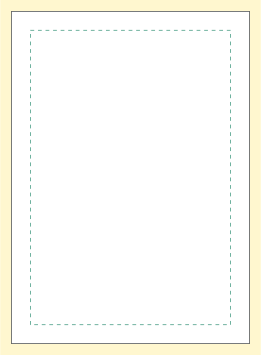
Poker-style card
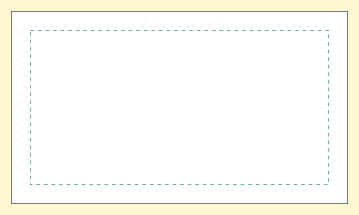
Trim: 63 × 88 mm
Bleed: 3 mm per edge · Safe inset: 5 mm
Flat rectangular reference · v1
PDF includes instructions and a dimensioned layout. SVG contains editable guide groups. Remove the guides before production.
Templates and downloads
These flat-piece templates show trim, a 3 mm bleed and a 5 mm reference safe area. They help set up artwork; remove instruction guides before production and follow the final project template.
Each PDF contains an instruction page and a dimensioned reference page. The SVG uses named guide groups. Dimensions and template versions appear below.
PDF includes instructions and a dimensioned layout. SVG contains editable guide groups. Remove the guides before production.
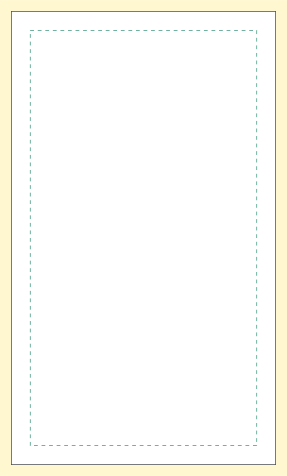
PDF includes instructions and a dimensioned layout. SVG contains editable guide groups. Remove the guides before production.
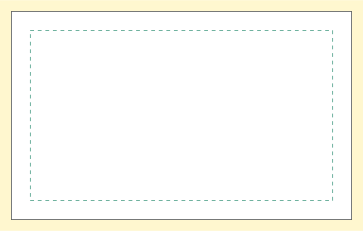
PDF includes instructions and a dimensioned layout. SVG contains editable guide groups. Remove the guides before production.
PDF includes instructions and a dimensioned layout. SVG contains editable guide groups. Remove the guides before production.
PDF includes instructions and a dimensioned layout. SVG contains editable guide groups. Remove the guides before production.
Use the dimensions, not a screenshot of the template. Open the SVG in a vector application or use the PDF as a dimensioned reference; place artwork at its intended scale. Extend edge backgrounds into the bleed.
Remove instruction pages, dimension labels and guide artwork from the final production file. Keep a proof showing the intended trim and verify the exported page size. A 5 mm safe area is a planning reference, not a cutting tolerance or a guarantee for every product.
This calculation gives overall dimensions only. It does not create a binding, folding or packaging template.
Artwork with bleed:
Safe content area: 53 × 78 mm
Flat rectangular layouts only. Add bleed outside the trim; inset the safe area inside it. A 63 × 88 mm card with 3 mm bleed produces a 69 × 94 mm artwork area. This does not calculate a spine, hinge, fold or punching allowance.
For a paperback or hardcover, supply final pagination, selected stock and binding. For packaging, supply usable internal dimensions, actual contents, insert and closure. Those inputs determine the geometry that a generic flat template cannot provide.
Reviewed October 8, 2026. Industry examples explain selection; the quotation defines the actual Lemon product and service. Supplier data does not certify Lemon or establish our inventory.
File preparation reference; job-specific settings follow the approved production workflow.
Trim and bleed setup; 3 mm and 0.125 inch are common starting allowances, not precisely equal measurements.
Tell us the product, finished size, quantity and destination. Include the feature you need the sample to check.