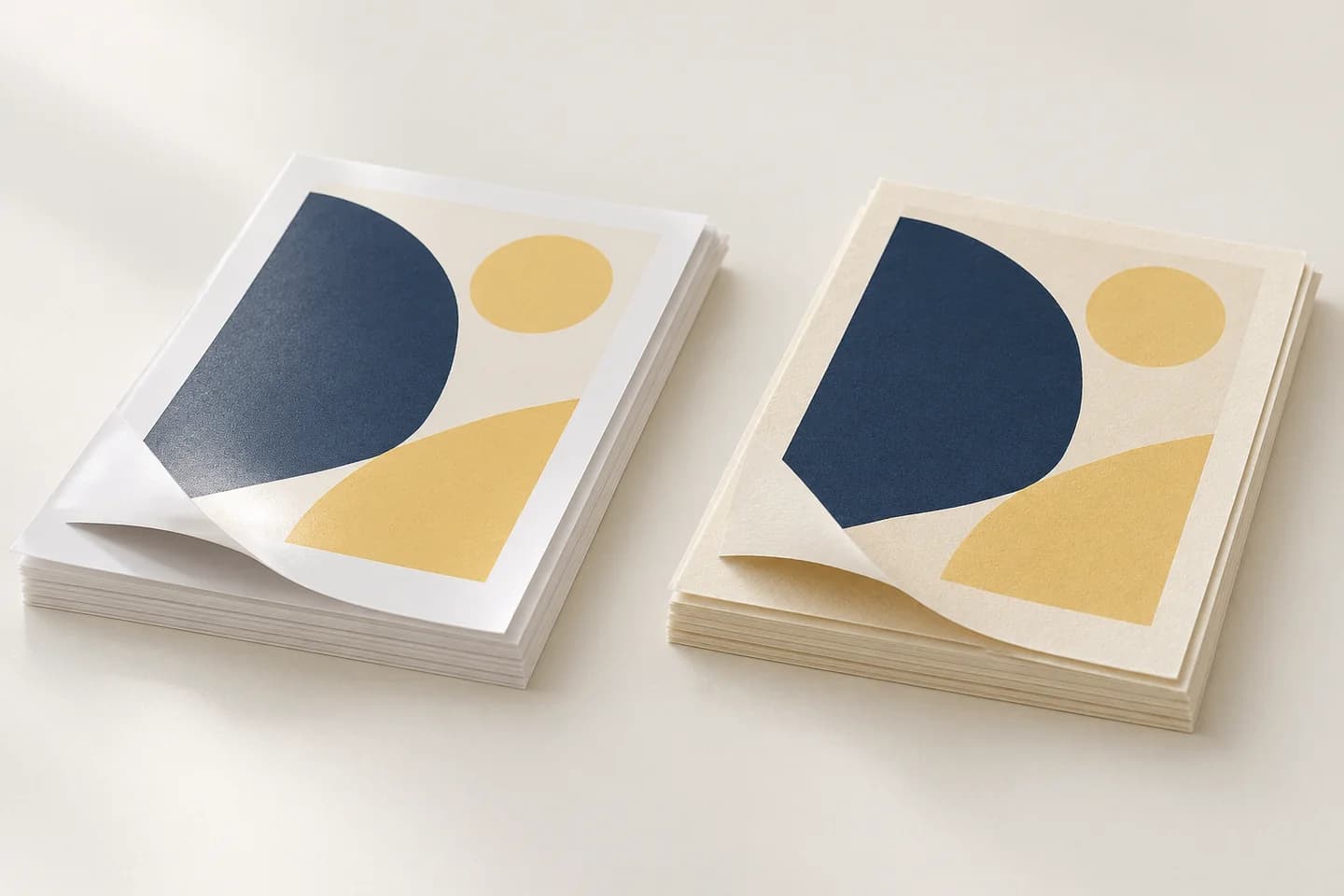
Illustrative configuration · not a customer order
A publisher edition built around image reproduction.
Compare coated interior stocks and sewn case binding for a 160-page publisher edition. This hypothetical configuration checks gutter visibility, block thickness and case fit.
Start with the working requirement.
An image-led edition needs readable detail, controlled show-through and a page block that works with the cover. Choosing a heavier sheet changes handling and block thickness; it does not automatically improve every reproduction.
The illustrative brief.
| Parameter | Reference configuration |
|---|---|
| Quantity | 1,200 copies; hypothetical brief |
| Trim | 210 × 280 mm |
| Interior | 160 pages / normally 80 text leaves |
| Stock comparison | 115 vs. 150 g/m² coated interiors |
| Construction | Sewn case-bound reference; verify actual opening |
| Approval feature | Image reproduction, gutter visibility and final case fit |
Example quantities are not minimum order quantities. Materials and construction describe comparison choices, not a manufacturing limit.
Resolve the risk with a representative sample.
A full-spread image can lose its essential detail near the gutter. Review the actual spread in a bound layout reference and move essential detail when the opening limits it.
Use the same representative images to compare printed stocks. Check sequence, actual block thickness, opening and the relationship between the case and page block.
Use this reasoning in your own brief.
Record the intended use, actual dimensions, quantity by version and the feature that matters most. Name the proposed sample and the reference it needs to reproduce. A real project record must also identify the final approved configuration and supporting evidence.
Build a specification we can quote.
Tell us the product, finished size, quantity and destination. Include the feature you need the sample to check.