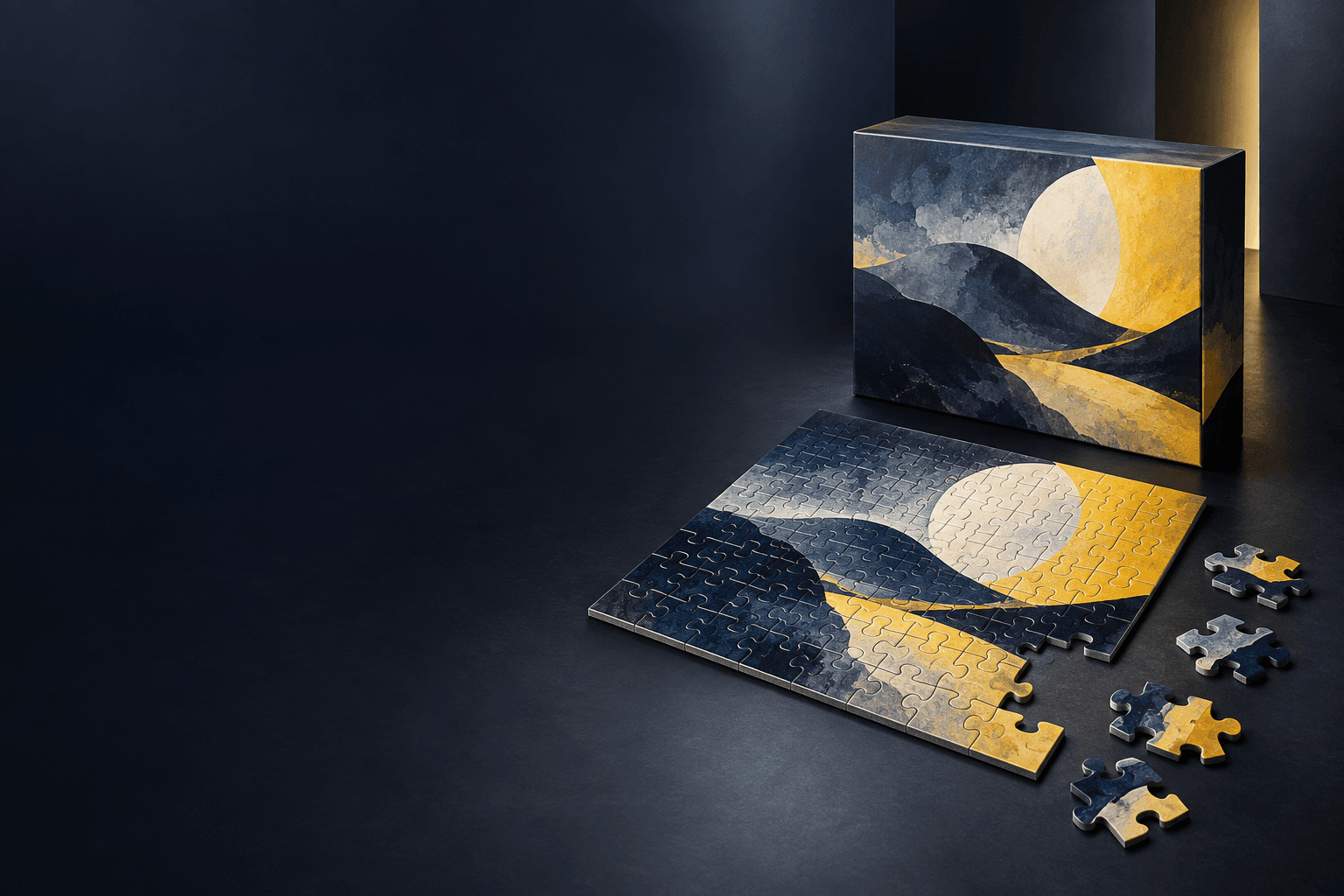
Puzzle artwork, cutting & pack control
Custom Jigsaw Puzzle Printing
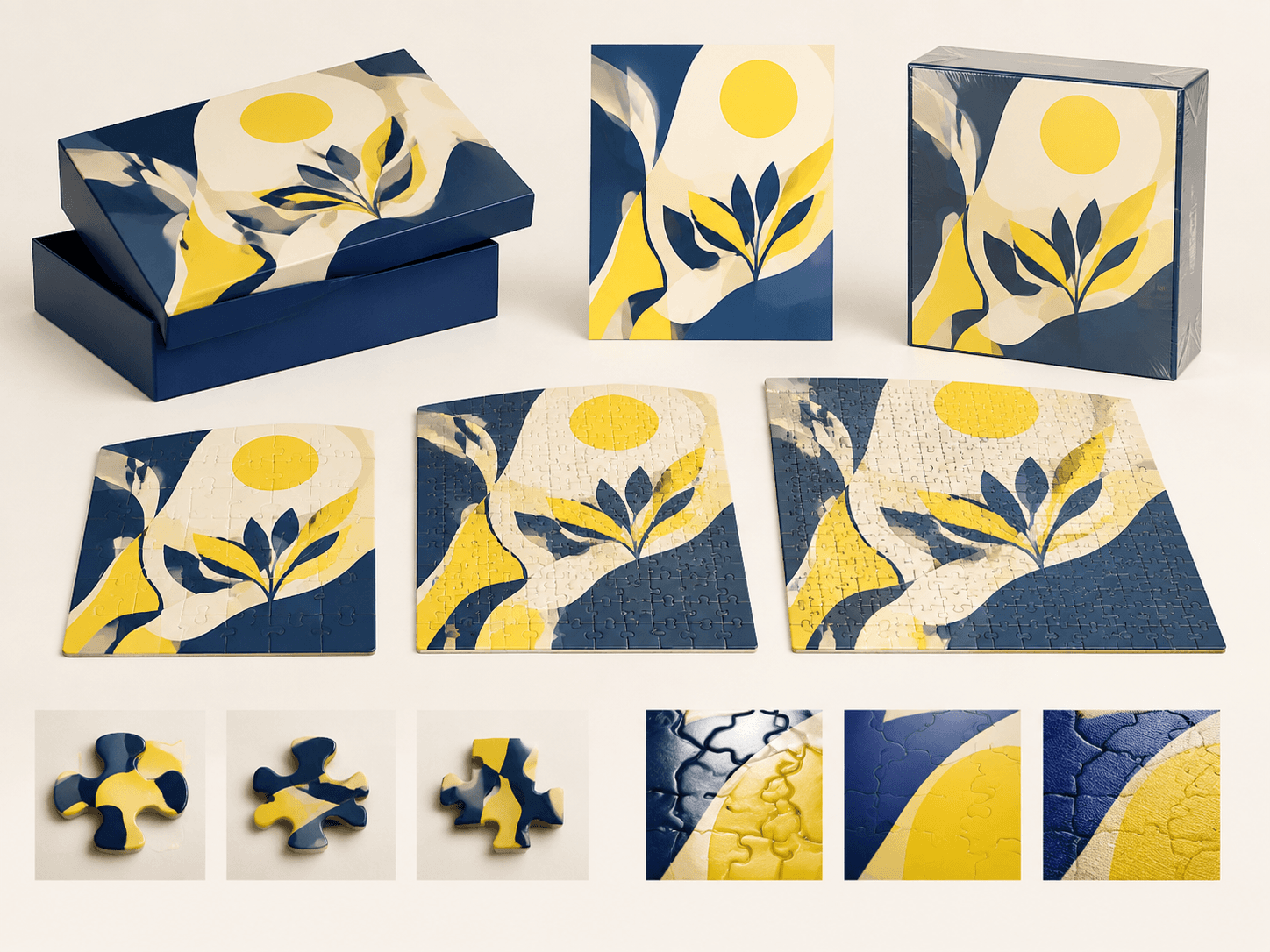
Jigsaw puzzles suit image collections, gifts and retail games. Mounted-board quality, the cutting pattern and a complete piece set determine the experience beyond the printed picture.
- Mounted image
- Piece geometry
- Picture reference
Illustrative product configuration
Product overview
A printed image turned into an interlocking set.
A jigsaw puzzle bonds a printed image to board and cuts it into an interlocking pattern. Board caliper and bonding affect edge integrity; the die-cut geometry determines fit. Overall image size and exact piece count are independent choices. A complete assembled sample reveals loose joins and image discontinuities that an uncut print proof cannot show.
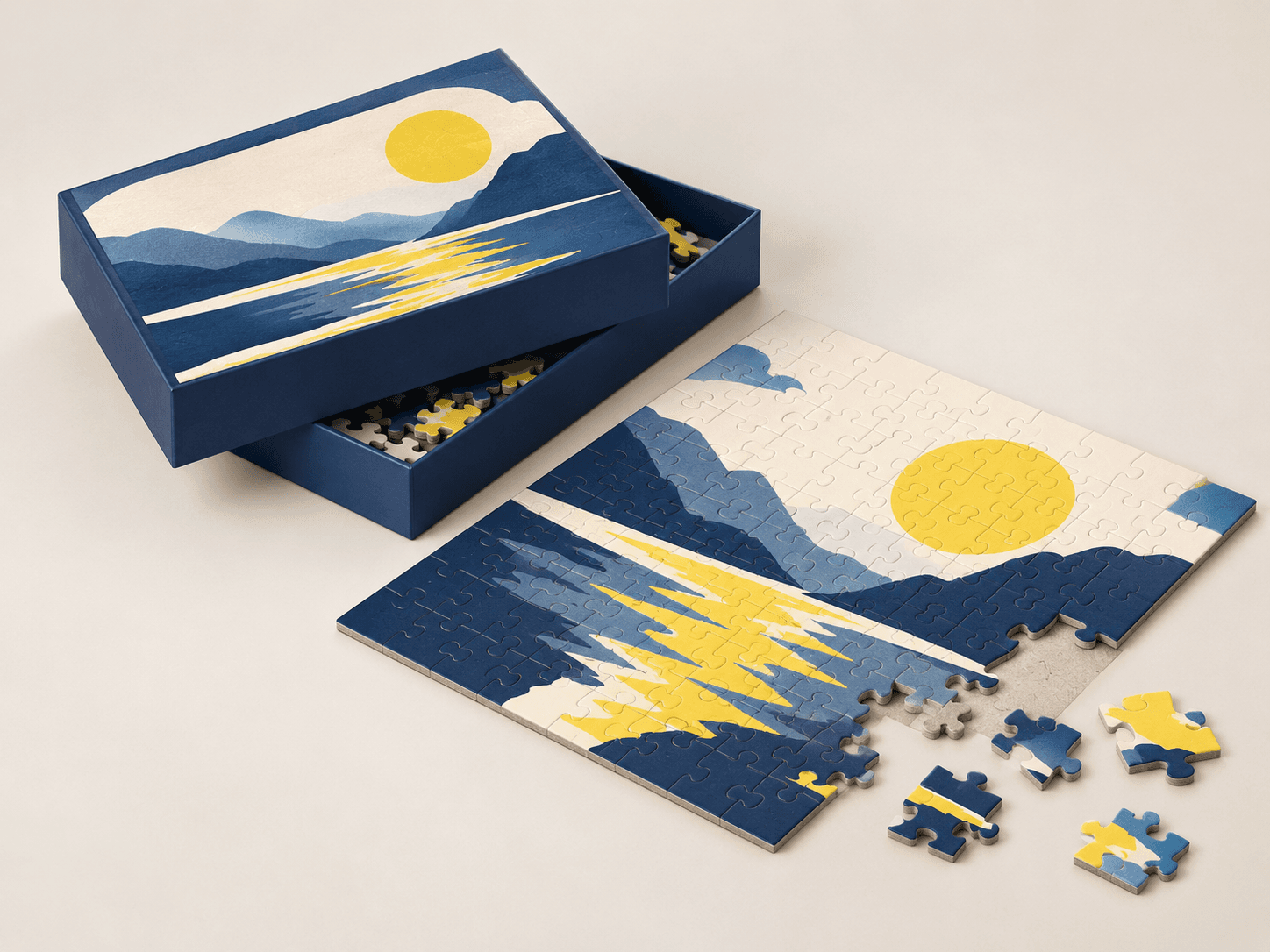
Mounted image
The image sheet and board give each piece its surface and body.
Piece geometry
A cutting pattern divides the picture into shapes that connect to their neighbors.
Picture reference
The guide image and box help the player assemble and store the complete set.
Specifications & materials
Set the Finished Image Size and Piece Count
Start with assembled puzzle width × height in mm; packed box dimensions. Then compare the material and construction choices below.
Use these options to prepare your specification. Material grades, weights, thicknesses and feasible dimensions are confirmed for the quoted construction. A paper weight is not a finished thickness or a strength rating.
| Parameter | Options or Information to Supply | Why It Matters |
|---|---|---|
| Finished dimensions | Compact puzzle example: 300 × 200 mm; Larger puzzle example: 500 × 350 mm | Reference formats or explicitly labeled design examples. Select by the use cases below; custom trim and final construction belong in the quotation. |
| Format and component count | Exact piece count; reference poster and other inserts listed separately | Exact pieces per puzzle and complete puzzles per edition are different counts; include the reference sheet and box separately. |
| Board | Puzzle board selected by finished caliper and cutting behavior | Review bonded layers and edge quality on cut pieces. |
| Cutting pattern | Agreed piece count and tooling pattern | Assess interlock with a complete assembled puzzle rather than an uncut sheet. |
| Image and surface | Final-size image with a compatible surface treatment | Check important detail near cuts and the image alignment after mounting. |
| Packaging | Box, bag and reference image as specified | Confirm all pieces and inserts fit and remain identifiable by version. |
Swipe the table to compare selection checks.
Compare materials and construction
Choose around the intended use. These are alternatives to discuss, subject to the confirmed specification.
Puzzle board
- Suitable for
- A mounted image converted to a quoted piece pattern.
- Check before selection
- Check caliper, edge fit and printed-sheet bond after cutting.
Quoted surface finish
- Suitable for
- A selected image surface or protective treatment.
- Check before selection
- Compare glare, rub and image appearance without obscuring the piece-cut inspection.
Surface finish options
Board or token printed surfaces
Compare low-glare film or compatible coating for the play surface. Test folding hinges, token edges, adhesion and repeated handling on the assembled sample; the finish alone does not establish scratch resistance.
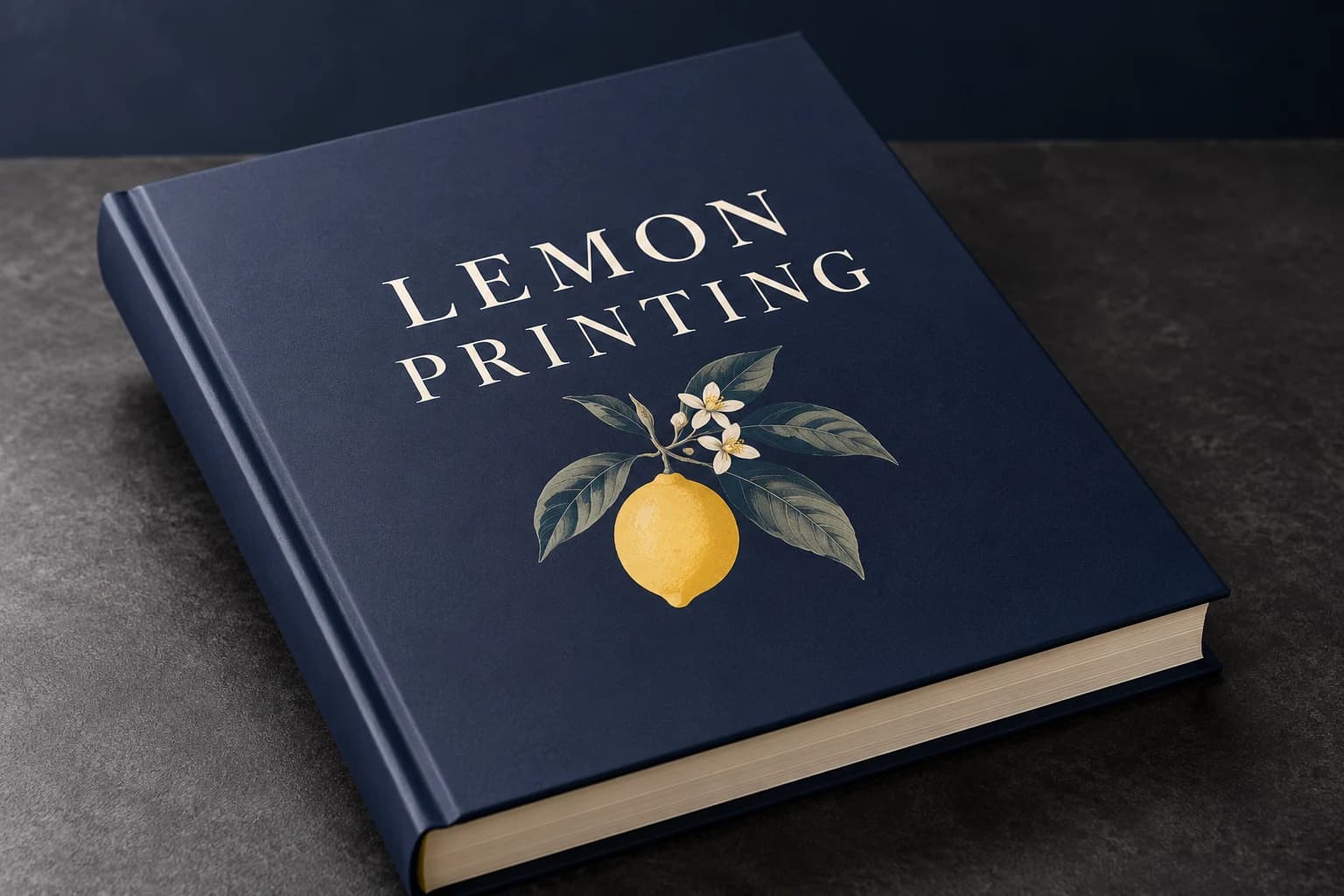
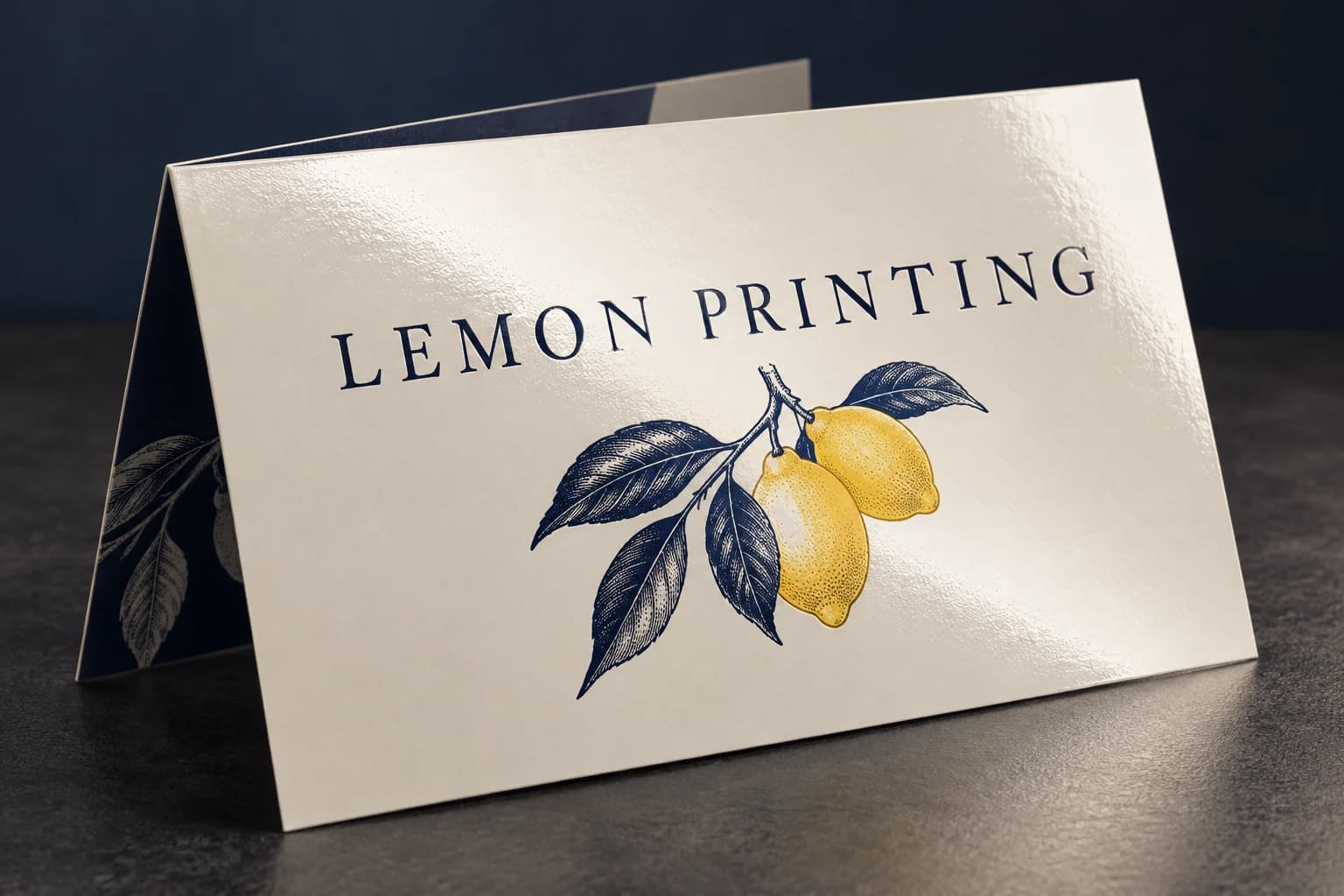
Illustrative finish samples, not photographs of this product. Final suitability follows the confirmed stock, construction and approved sample.
Compare all surface finishesConstruction & finishing
Keep Pieces Complete and the Image Aligned
Focus the review on interlock, complete piece count, image alignment and surface bonding.
01 / SELECTION CHECK
Assess mounting before the cut
Review image reproduction, board caliper and adhesion using the proposed material. Surface appearance and interlock feel answer different questions, so neither should be approved from a digital picture alone.
02 / SELECTION CHECK
Inspect a complete assembly
Trial piece release, connection and edge fit across the cutting pattern. Reconcile the full count and include the reference and packaging. A few loose pieces cannot establish completeness or the overall fit.
Puzzle artwork, cutting & pack control
Protect the image across the cut pattern and verify the complete piece count
A jigsaw puzzle depends on image alignment, cut quality and a complete set of pieces. Approve the image at final size, keep essential details away from risky edges where possible, and check the assembled puzzle and packed count on a physical sample.
Compare dimensions and usable space
Design examples are labeled; they are not production limits or approved templates.
Compact puzzle example · 300 × 200 mm
Illustrative 300 × 200 mm assembled image; exact piece count and cut tooling determine individual shapes.
Read every format’s selection note
- Compact puzzle example: 300 × 200 mm. Illustrative 300 × 200 mm assembled image; exact piece count and cut tooling determine individual shapes.
- Larger puzzle example: 500 × 350 mm. Illustrative 500 × 350 mm assembled image; piece count can change independently of total image area.
- Full-size artwork
- Board / cut pattern
- Piece count & box pack
Select the material by its finished behavior
Specify the actual board construction and finished caliper rather than relying on GSM alone. Solid board, mounted greyboard and corrugated board behave differently at a hinge or cut edge. Evaluate the fully converted part, not only the facing paper.
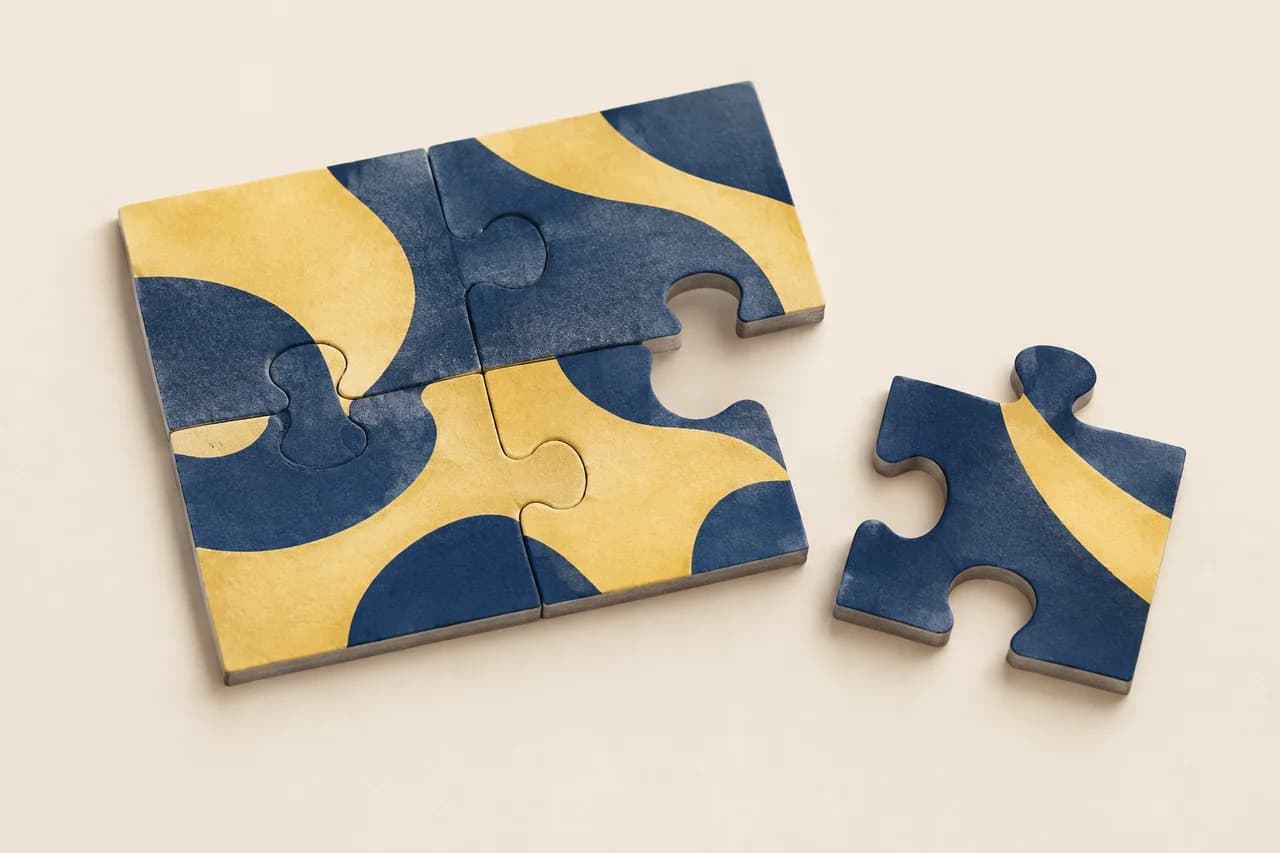
Production checks that prevent avoidable rework
Review image detail at the finished size
Check crop, contrast and small features at the intended puzzle dimensions. Fine, low-contrast areas may be difficult to assemble even when the source image looks sharp on screen.
Check cut alignment against the image
Assemble a sample and review whether the printed image remains aligned across cut edges. Confirm the final piece count and intended cut pattern with the approved sample.
Count and pack the full set
Verify that the assembled sample contains the specified number of pieces and that the pieces, reference image and any insert fit the box without excessive movement.
Use-case selection
Choose a configuration for the job it has to do
Retail image puzzle
Choose a photograph or illustration with varied detail and enough contrast to guide assembly.
Trade-off: Large uniform color areas can make solving more difficult.
Custom photo gift
Use a high-resolution image with important faces and text away from the trim-sensitive edges.
Trade-off: A personal image may need crop approval and rights clearance.
Promotional puzzle
Integrate a brand mark into the image while keeping it natural to the puzzle composition.
Trade-off: Promotional text can reduce the visual challenge or make the puzzle feel like an advertisement.
Problem → cause → solution
Resolve the failure points before production
Pieces delaminate or leave frayed edges
Why it happens: The facing bond and cutting setup do not work together on the selected board.
How to prevent it: Inspect removed pieces and tabs from a converted sample; review bonded edges rather than approving only the uncut picture.
Pieces fit loosely or the set is incomplete
Why it happens: The tooling pattern or packing count was not checked as a complete product.
How to prevent it: Assemble a full sample, reconcile the exact piece count and verify that the reference image matches the shipped edition.
Alternative formats
When another construction is a better fit
| Alternative | Structural difference | Selection trade-off |
|---|---|---|
| Board game | Folded playing board with separate components. | Designed for repeated play actions rather than assembling one interlocking image. |
Sampling & production
Choose a Sample That Answers Your Main Concern
A structural sample, a print proof and a finished sample answer different questions. Confirm the sample scope before approval. Free samples are prepared within 15 days; courier arrangements and transit time are separate.
Structure and material sample
Review board and cutting pattern with the proposed dimensions and component count. Agree whether the sample uses production materials or substitutes. An unprinted construction sample does not approve printed color.
Print and artwork proof
Review representative artwork at finished size on the agreed proof condition. Check fine detail and important colors. A screen proof cannot establish physical feel or the performance of the finished assembly.
Complete finished sample
Assess interlock, complete piece count, image alignment and surface bonding with the specified components and finishing present. Record the approved revision and any differences to resolve before production.
How to Order Jigsaw Puzzle
Send your project brief
Send assembled puzzle width × height in mm; packed box dimensions. Specify exact piece count; reference poster and other inserts listed separately. State the number of complete puzzles per image and piece-count version, delivery destination and required arrival date. Tell us which options are undecided.
Compare the quotation
Ask for pricing by complete puzzles per image and piece-count version. Compare the same configuration at each quantity. The quotation should identify materials, finishing, sample scope, packing and freight, plus payment and order terms.
Review the right sample
Choose a sample that can demonstrate interlock, complete piece count, image alignment and surface bonding. Confirm what the free sample includes and any differences from the intended production specification. Preparation is completed within 15 days; courier arrangements and transit time are separate.
Approve the production version
Confirm the specification, file revision and sample decisions in writing. Production scheduling follows the agreed approvals and order release conditions; changes may require a revised quote or schedule.
Confirm packing and delivery
Reconcile complete piece sets and protect them from loss or bending. Include the correct reference and label image, count and edition on the finished package. Agree the destination and shipping arrangement, with production, dispatch and transit dates listed separately.
Details to Confirm in the Quotation
- Order unit and price breaks
- Specify complete puzzles per image and piece-count version. Request the feasible minimum and quantity breaks for that exact configuration; a change of material, version or component count can change the price.
- Sample scope and delivery
- State whether you need a material trial, a print proof or a complete finished sample. Free samples are available, with preparation completed within 15 days. Confirm the included materials and processes; courier arrangements and transit time are separate.
- Approval and schedule
- State the required arrival date and whether versions ship together or to separate destinations. The quote must distinguish sample work, production and transit; a requested date is not a confirmed schedule.
- Packing and identification
- Reconcile complete piece sets and protect them from loss or bending. Include the correct reference and label image, count and edition on the finished package.
- 01
Provide artwork at finished puzzle dimensions and identify the approved piece pattern. Supply reference-image and box files with the same edition ID and stated complete-set contents.
- 02
Use the PDF/X export preset and output condition confirmed with prepress. Embed fonts and identify the approved file revision.
- 03
Check continuous-tone images at about 300 effective pixels per inch (ppi) at their final placed size. Fine linework can require a different resolution or vector artwork.
- 04
Extend trim artwork by 3 mm unless the approved template specifies otherwise. Keep structural, folding and binding clearances separate from trim bleed.
- 05
Identify named spot colors or physical references and the intended substrate. Agree proof acceptance and keep finishing separations distinct. A screen PDF does not approve printed color.
Engineering & purchasing FAQ
Questions Before Ordering Jigsaw Puzzle
Does higher image resolution improve interlock?
It improves available image detail, not the cutting geometry. Board, mounting and the selected tool influence piece fit. Review reproduction and a complete assembly as separate acceptance checks.
How is the puzzle quantity defined?
Quote complete puzzles with the specified piece count, reference and package. Identify image or edition variants separately. Individual piece quantities are not a substitute for the number of finished saleable sets.
Can I choose a custom cutting pattern?
Share the required piece count, assembled dimensions and any special shapes. Tooling availability, design suitability and any tooling charge must be confirmed before the pattern is promised.
Which sample should I request first?
Start with the uncertainty that could change the specification: interlock, complete piece count, image alignment and surface bonding. If the concern is physical, request the relevant material or functional sample. If it is print appearance, agree a suitable proof. Confirm the sample scope before approval. Free sample preparation is completed within 15 days; courier arrangements and transit time are separate.
How should I state quantities for a quote?
Use complete puzzles per image and piece-count version. Separate versions and give a delivery destination and required arrival date. This lets the quote distinguish the production quantity, packing and shipping scope.
Your project specification
Plan Your Jigsaw Puzzle Order
Send assembled puzzle width × height in mm; packed box dimensions. Specify exact piece count; reference poster and other inserts listed separately. State the number of complete puzzles per image and piece-count version, delivery destination and required arrival date. Tell us which options are undecided.