
Bag structure & load-path planning
Custom Kraft Paper Bag Printing
Kraft paper bags suit retail and gift carrying where the paper surface is part of the design. Body size, base and handles need to match the contents as well as the artwork.
- Brown or white kraft
- Folded carrying space
- Handle choices
Illustrative product configuration
Product overview
Let the kraft surface shape the design.
A kraft bag forms carrying volume through a folded base and side gussets. Brown kraft changes the ink’s background; white kraft presents colors differently. Paper handles transfer load into reinforced attachment areas, so the body, base and handle bond act as one assembly. Specify the packed contents and their mass before choosing the construction.

Brown or white kraft
The substrate provides its own shade and texture beneath the printed ink.
Folded carrying space
Gussets and a formed base provide room for groceries, takeaway or merchandise.
Handle choices
Flat or twisted handles make different carrying constructions at the top of the paper body.
Specifications & materials
Size the Kraft Bag Around the Packed Contents
Start with body width × gusset depth × height in mm; handle drop separately. Then compare the material and construction choices below.
Use these options to prepare your specification. Material grades, weights, thicknesses and feasible dimensions are confirmed for the quoted construction. A paper weight is not a finished thickness or a strength rating.
| Parameter | Options or Information to Supply | Why It Matters |
|---|---|---|
| Finished dimensions | Small gift example: 180 × 230 mm; Retail example: 260 × 320 mm | Face width × height references only. Specify gusset depth, usable body dimensions and handle drop separately. |
| Format and component count | Bags per size, artwork and handle configuration | Count finished bags by size and artwork; tissue, tags and any packed gift components are separate line items. |
| Kraft stock | Brown or white kraft selected for the construction | Confirm actual stock and strength through the assembled bag, not GSM alone. |
| Base and gussets | Gusseted body and base style matched to the contents | State the contents dimensions, total mass in kg and carrying use. |
| Handles | Flat, twisted or another agreed handle construction | Check attachment and grip under the intended load. |
| Printing | Artwork and ink coverage reviewed on the chosen kraft | Confirm the production route for this bag; do not assume the same process as a bound book. |
Swipe the table to compare selection checks.
Compare materials and construction
Choose around the intended use. These are alternatives to discuss, subject to the confirmed specification.
Natural kraft
- Suitable for
- A brown paper appearance with visible substrate tone.
- Check before selection
- Proof print contrast; the paper color changes the appearance of printed ink.
White kraft
- Suitable for
- A lighter print base where quoted.
- Check before selection
- Compare opacity and fold behavior, then load-test the complete handle and base construction.
Surface finish options
Natural kraft surface and limited accents
Leaving kraft without added treatment preserves its paper feel. Foil can be discussed after checking transfer on the actual textured stock. Do not assume film, relief, moisture resistance or environmental claims from the kraft appearance.
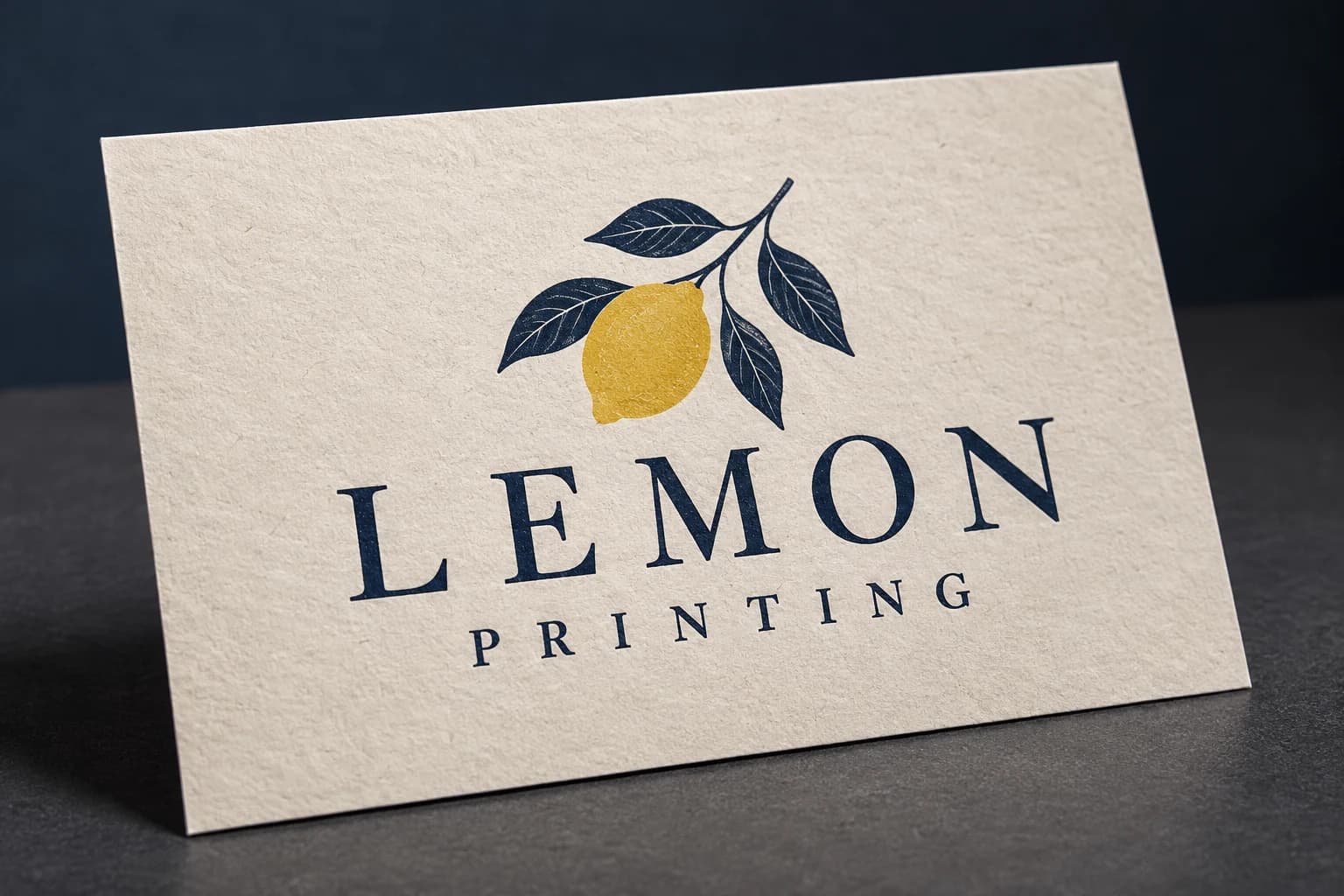 No added surface treatment View effect & artwork guidance
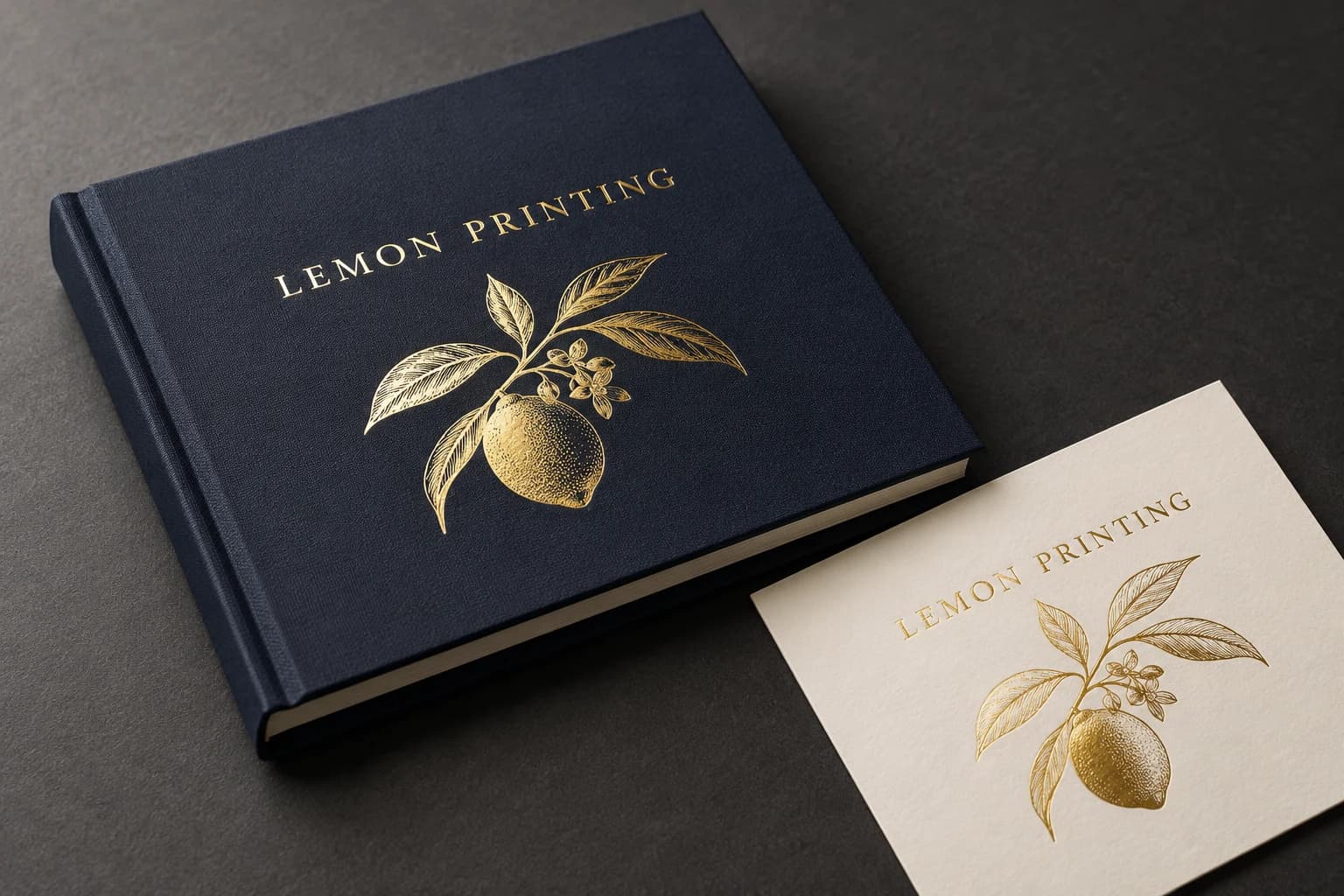 Gold foil stamping View effect & artwork guidance
Illustrative finish samples, not photographs of this product. Final suitability follows the confirmed stock, construction and approved sample.
Compare all surface finishesConstruction & finishing
Check Color on Kraft and Strength in the Loaded Bag
Focus the review on contents fit, base support, handle attachment and ink appearance on the chosen kraft.
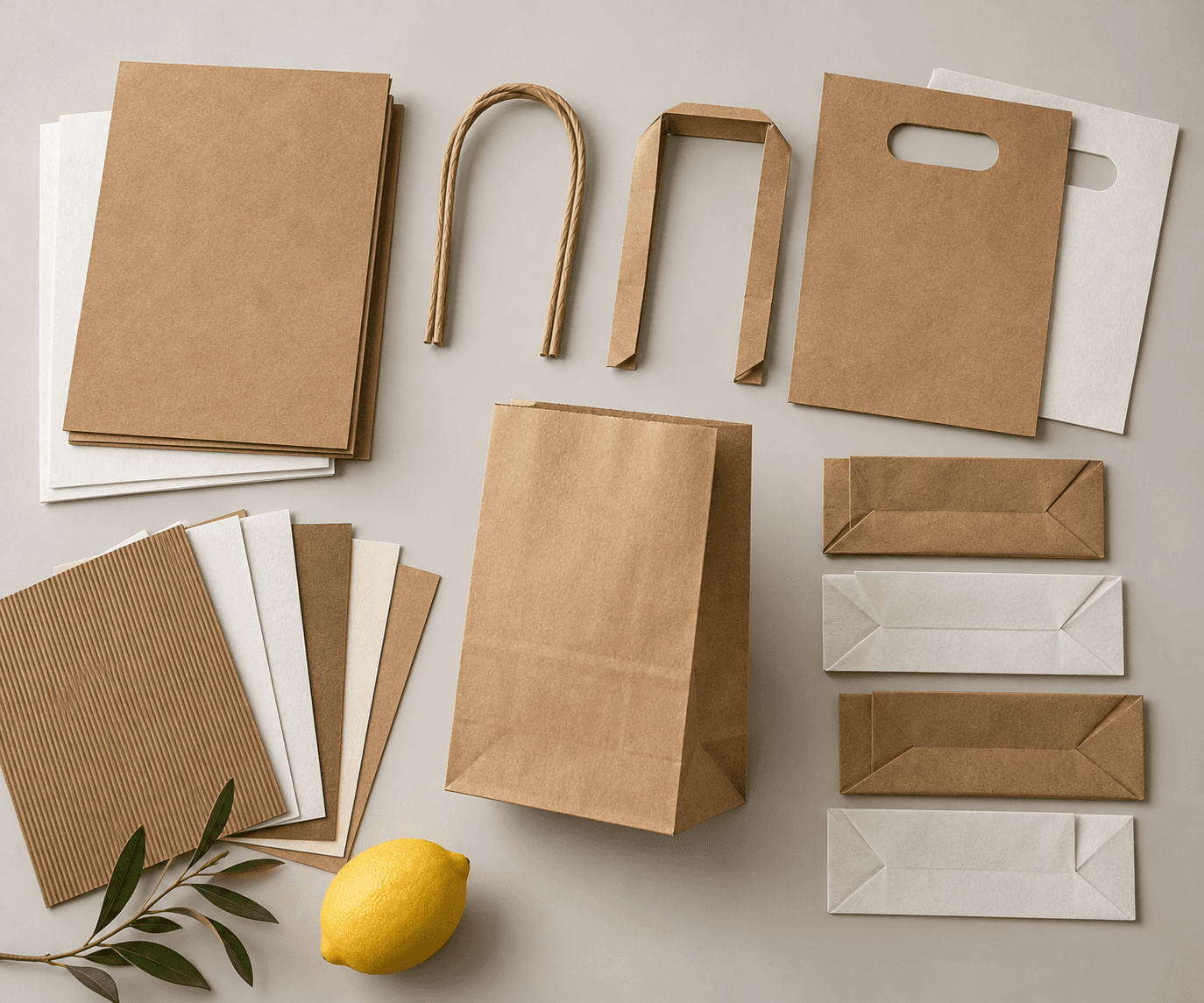
01 / SELECTION CHECK
Approve ink on the selected kraft
Brown substrate changes the appearance of process and spot colors. Evaluate a printed material reference instead of relying on a white-paper proof for the same design.
02 / SELECTION CHECK
Test base and handle together
Use the declared contents, load and lifting method on an assembled sample. Review seams and any reinforcement; nominal paper weight does not prove a specific safe carrying load.
Bag structure & load-path planning
Size the gusset, base and handle around the item being carried
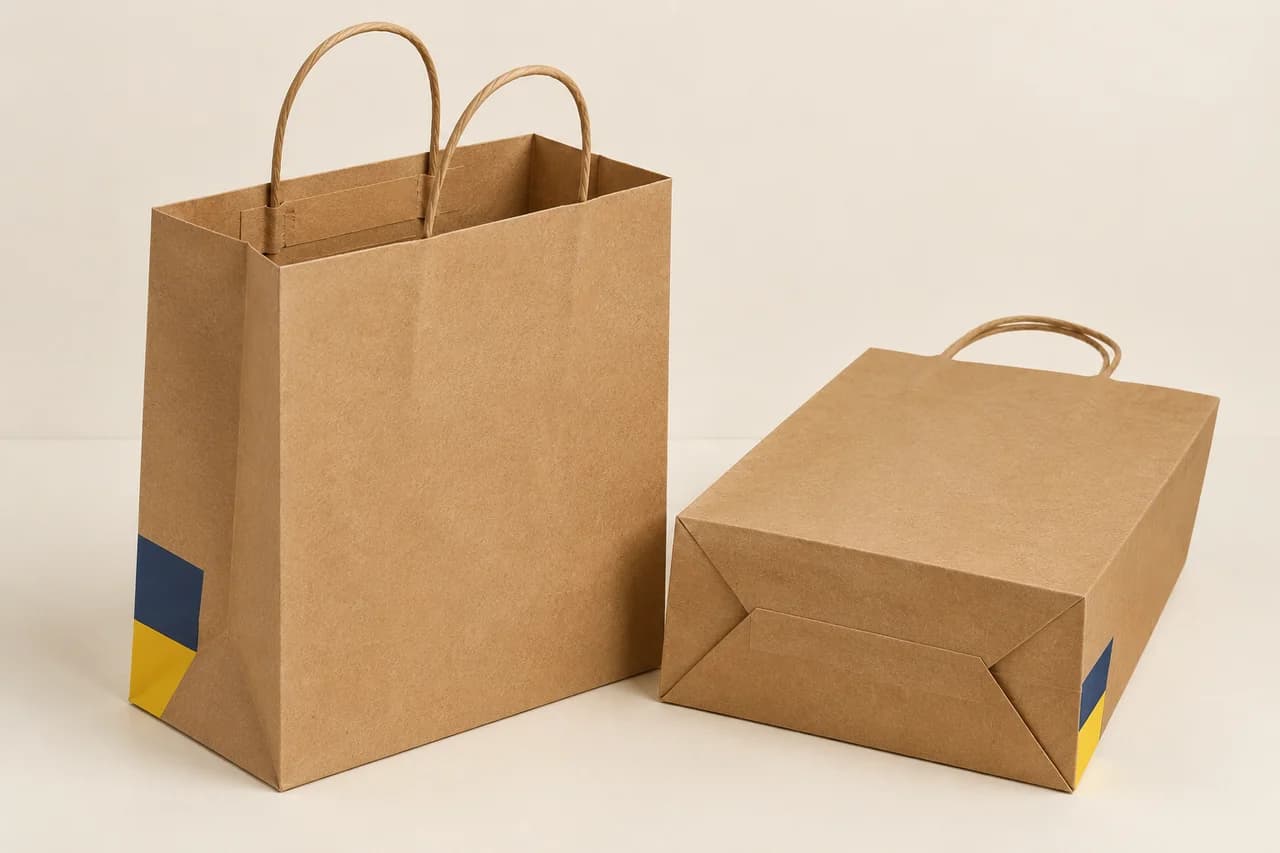
A kraft bag's usable volume and carrying behavior come from its bag width, height, side gusset, base construction and handle attachment. Share the actual product dimensions and orientation so the sample can be checked with the intended contents.
Compare dimensions and usable space
Design examples are labeled; they are not production limits or approved templates.
Small gift example · 180 × 230 mm
Illustrative 180 × 230 mm face for a small retail item; add a contents-led gusset and handle drop.
Read every format’s selection note
- Small gift example: 180 × 230 mm. Illustrative 180 × 230 mm face for a small retail item; add a contents-led gusset and handle drop.
- Retail example: 260 × 320 mm. Illustrative 260 × 320 mm face for a larger item; these proportions do not establish carrying capacity.
- Bag body: width × height
- Side gusset / folded sides
- Base fold & handle attachment
Select the material by its finished behavior
Mondi’s named Smooth White Strong kraft is listed in 70–120 g/m² grades. Its 100 g/m² example has 134 µm nominal caliper; these supplier values do not prove finished-bag capacity. Brown kraft, coated paper and film-laminated paper need their own sample review.
Production checks that prevent avoidable rework
Measure the packed item, not just the front face
Provide the product's width, depth and height plus how it enters the bag. Include inserts or multiple items and allow the buyer and converter to agree workable clearance.
Check handle and base as one load path
Load a physical sample with the intended contents and inspect handle attachment, base opening and paper stress. Do not infer a safe carrying capacity from paper weight alone.
Proof print on the selected kraft tone
Kraft color changes how printed colors appear. Review a sample on the chosen paper; pale colors and fine reverse text may need artwork adjustment.
Use-case selection
Choose a configuration for the job it has to do
Retail merchandise
Match gusset and base to the packed footprint, then choose handle length for comfortable hand carry.
Trade-off: A larger gusset increases capacity but also changes the folded pack size.
Food takeaway
Confirm product contact, ventilation and grease exposure requirements with the material supplier before specifying the bag.
Trade-off: A general kraft bag is not automatically suitable for direct food contact or hot, oily contents.
Branded event bag
Use simple high-contrast artwork and test the loaded sample for distribution and stacking.
Trade-off: Heavy full-coverage ink can change the look and fold behavior of kraft stock.
Problem → cause → solution
Resolve the failure points before production
The handle detaches or the base opens
Why it happens: The assembled load reaches an attachment or glue joint that a flat-paper sample did not test.
How to prevent it: Load the finished bag with the intended contents and check handle patches, knots or bonds, base joints and sharp corners during the expected carrying motion.
Brand colors change on brown paper
Why it happens: Process colors are printed over a brown substrate rather than an opaque white surface.
How to prevent it: Proof the design on the actual brown or white grade; treat substrate tone as part of the color target.
Alternative formats
When another construction is a better fit
| Alternative | Structural difference | Selection trade-off |
|---|---|---|
| Laminated retail bag | Printed paper body with a film surface. | Offers different surface feel; film and carrying construction still need joint evaluation. |
Sampling & production
Choose a Sample That Answers Your Main Concern
A structural sample, a print proof and a finished sample answer different questions. Confirm the sample scope before approval. Free samples are prepared within 15 days; courier arrangements and transit time are separate.
Structure and material sample
Review kraft stock and base and gussets with the proposed dimensions and component count. Agree whether the sample uses production materials or substitutes. An unprinted construction sample does not approve printed color.
Print and artwork proof
Review representative artwork at finished size on the agreed proof condition. Check fine detail and important colors. A screen proof cannot establish physical feel or the performance of the finished assembly.
Complete finished sample
Assess contents fit, base support, handle attachment and ink appearance on the chosen kraft with the specified components and finishing present. Record the approved revision and any differences to resolve before production.
How to Order Kraft Paper Bag
Send your project brief
Send body width × gusset depth × height in mm; handle drop separately. Specify bags per size, artwork and handle configuration. State the number of finished bags per size and design, delivery destination and required arrival date. Tell us which options are undecided.
Compare the quotation
Ask for pricing by finished bags per size and design. Compare the same configuration at each quantity. The quotation should identify materials, finishing, sample scope, packing and freight, plus payment and order terms.
Review the right sample
Choose a sample that can demonstrate contents fit, base support, handle attachment and ink appearance on the chosen kraft. Confirm what the free sample includes and any differences from the intended production specification. Preparation is completed within 15 days; courier arrangements and transit time are separate.
Approve the production version
Confirm the specification, file revision and sample decisions in writing. Production scheduling follows the agreed approvals and order release conditions; changes may require a revised quote or schedule.
Confirm packing and delivery
Keep bases and handle attachments protected when flattened or nested. Label grade, size and artwork versions and specify bundle counts and moisture protection. Agree the destination and shipping arrangement, with production, dispatch and transit dates listed separately.
Details to Confirm in the Quotation
- Order unit and price breaks
- Specify finished bags per size and design. Request the feasible minimum and quantity breaks for that exact configuration; a change of material, version or component count can change the price.
- Sample scope and delivery
- State whether you need a material trial, a print proof or a complete finished sample. Free samples are available, with preparation completed within 15 days. Confirm the included materials and processes; courier arrangements and transit time are separate.
- Approval and schedule
- State the required arrival date and whether versions ship together or to separate destinations. The quote must distinguish sample work, production and transit; a requested date is not a confirmed schedule.
- Packing and identification
- Keep bases and handle attachments protected when flattened or nested. Label grade, size and artwork versions and specify bundle counts and moisture protection.
- 01
Prepare graphics on the approved gusset and base dieline. Identify brown or white grade, handle zones and any direct-contact requirement alongside the artwork.
- 02
Use the PDF/X export preset and output condition confirmed with prepress. Embed fonts and identify the approved file revision.
- 03
Check continuous-tone images at about 300 effective pixels per inch (ppi) at their final placed size. Fine linework can require a different resolution or vector artwork.
- 04
Extend trim artwork by 3 mm unless the approved template specifies otherwise. Keep structural, folding and binding clearances separate from trim bleed.
- 05
Identify named spot colors or physical references and the intended substrate. Agree proof acceptance and keep finishing separations distinct. A screen PDF does not approve printed color.
Configuration details
A brown substrate changes the brand-color decision.
The natural base shade remains part of a kraft bag's printed appearance. A color approved on white paper may lose contrast or shift on brown stock. Compare the actual material with the intended print before treating a Pantone number as a complete appearance specification.
- Color reference
Ink reference plus the selected brown substrate
Review contrast and any opaque print area on the actual paper; a white-paper proof answers a different question.
- Bag fit
Product footprint, gusset and usable height in mm
Include handle intrusion and top turnover when checking how the contents are inserted and carried.
Engineering & purchasing FAQ
Questions Before Ordering Kraft Paper Bag
Will a color look identical on brown and white kraft?
The substrate changes the perceived result. Compare the selected grade with the intended ink coverage and physical reference. A color approved on white stock should not automatically be treated as the brown-kraft target.
Does a kraft bag automatically meet food-contact requirements?
No. State whether direct contact is intended and identify the applicable product documentation needed for that use. Bag format or the word kraft alone does not establish suitability.
Which sample should I request first?
Start with the uncertainty that could change the specification: contents fit, base support, handle attachment and ink appearance on the chosen kraft. If the concern is physical, request the relevant material or functional sample. If it is print appearance, agree a suitable proof. Confirm the sample scope before approval. Free sample preparation is completed within 15 days; courier arrangements and transit time are separate.
How should I state quantities for a quote?
Use finished bags per size and design. Separate versions and give a delivery destination and required arrival date. This lets the quote distinguish the production quantity, packing and shipping scope.
Your project specification
Plan Your Kraft Paper Bag Order
Send body width × gusset depth × height in mm; handle drop separately. Specify bags per size, artwork and handle configuration. State the number of finished bags per size and design, delivery destination and required arrival date. Tell us which options are undecided.