Hinges
Open the assembled sample repeatedly and inspect adhesion and surface response near the joint. A supple covering does not make every binding lay flat.
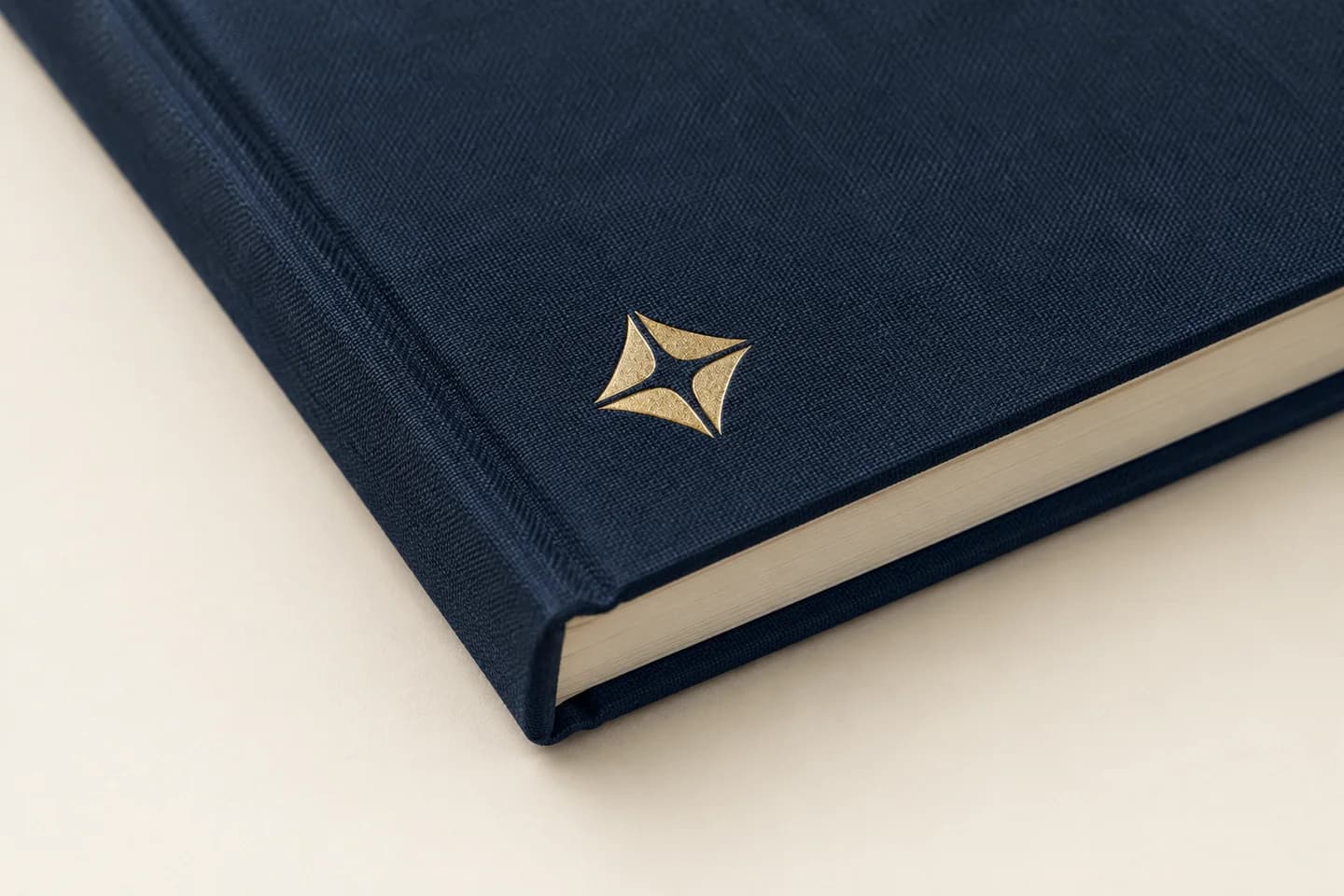
Book cover selection
The covering material supplies the visible surface. The boards, hinge and page block supply the structure. A leather-like texture or cloth pattern does not identify the material by itself.
A textured covering can interrupt fine foil lines and small debossed lettering. Review the actual motif on the intended grade, not a smooth-paper sample with a different finish.
Keep a named material reference for color, texture and backing. A photograph is useful for direction, but lighting and scale can conceal grain, gloss and tactile differences.
| Family | Selection value | What to establish |
|---|---|---|
| Printed paper wrap | Supports continuous artwork across the case | Paper, protective finish, turn-ins and hinge geometry. |
| Book cloth | Adds a textile surface and tactile grain | Fiber, backing, surface treatment and decoration compatibility. |
| Textured covering paper | Provides an embossed surface without necessarily being cloth | Paper grade and emboss pattern; do not label it woven textile. |
| Leather-look covering | Provides a leather-like appearance in a specified material | Exact composition; leatherette, PU and genuine leather are not interchangeable names. |
Open the assembled sample repeatedly and inspect adhesion and surface response near the joint. A supple covering does not make every binding lay flat.
Inspect buildup, exposed board and wrap adhesion. Material thickness and backing affect how corners can be made.
Inspect fine detail and intended contact areas. Specify the method and acceptance reference for any abrasion assessment.
Record construction, material grade or approved reference, color, decoration files, board and endpaper choices, jacket and slipcase requirements. Case dimensions follow the complete page block and binding.
These are material selection families, not a declaration that every grade is in stock. Confirm the named material in the quote and retain the approved sample for reprints.
No. An embossed paper can resemble a weave without containing woven textile. Specify the composition and grade, then compare an actual material sample.
The decoration route may change. A full-color paper wrap and foil on cloth need different artwork and material checks; the case template must match the construction.
Reviewed October 21, 2026. Industry references explain selection. The approved specification defines the actual materials, processes and acceptance conditions for your order.
Reference material categories for publishing and packaging; availability and material grades are order-specific.
Tell us the product, finished size, quantity and destination. Include the feature you need the sample to check.