
Open working pages for manuals, recipes & exercises
Custom Spiral-Bound Book Printing
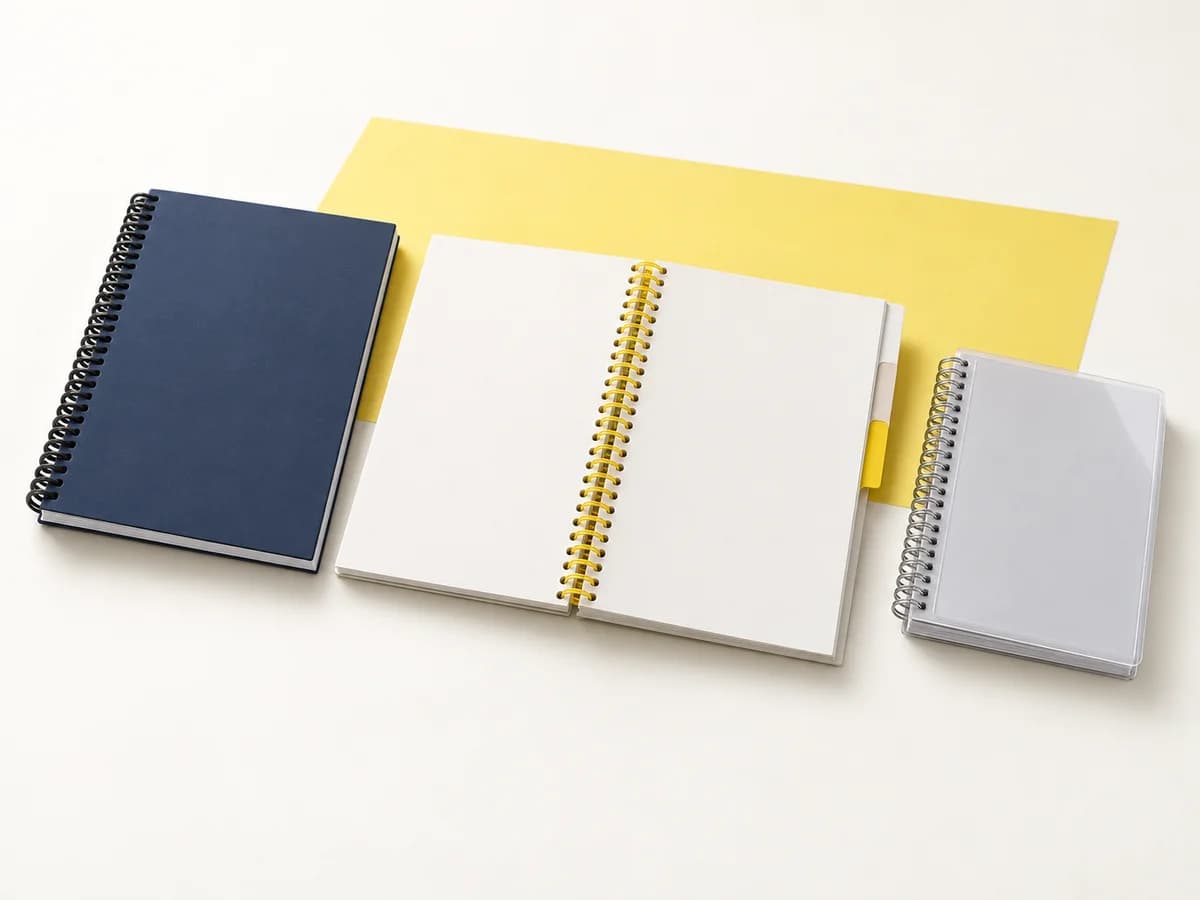
Keep working pages open while readers write, follow instructions or use a recipe. Continuous coil supports fold-back use; paper, covers and punch geometry determine how comfortably the pages turn.
- Continuous coil or twin-loop wire
- Fold-back page access
- Matched hole pattern and binding size
The product in use
Working pages that stay open and fold back.
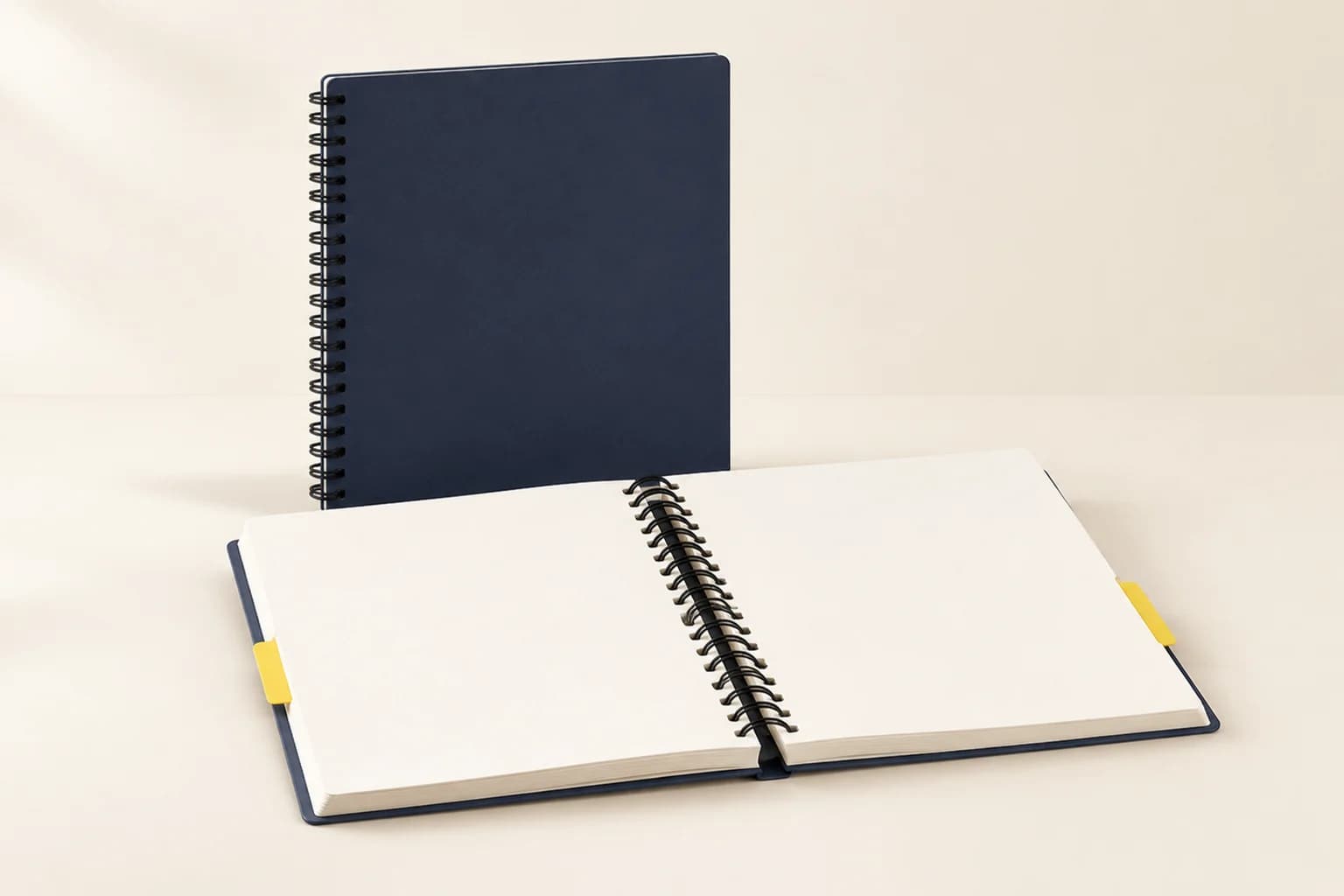
A continuous coil passes through a punched row and is secured at both ends. Unlike a glued spine, it allows individual pages to rotate around the binding, helping a workbook stay open on a desk. Twin-loop wire is a different construction with a closed seam. Neither supplies a conventional printable square spine, and both need clear space between the holes and essential page content.
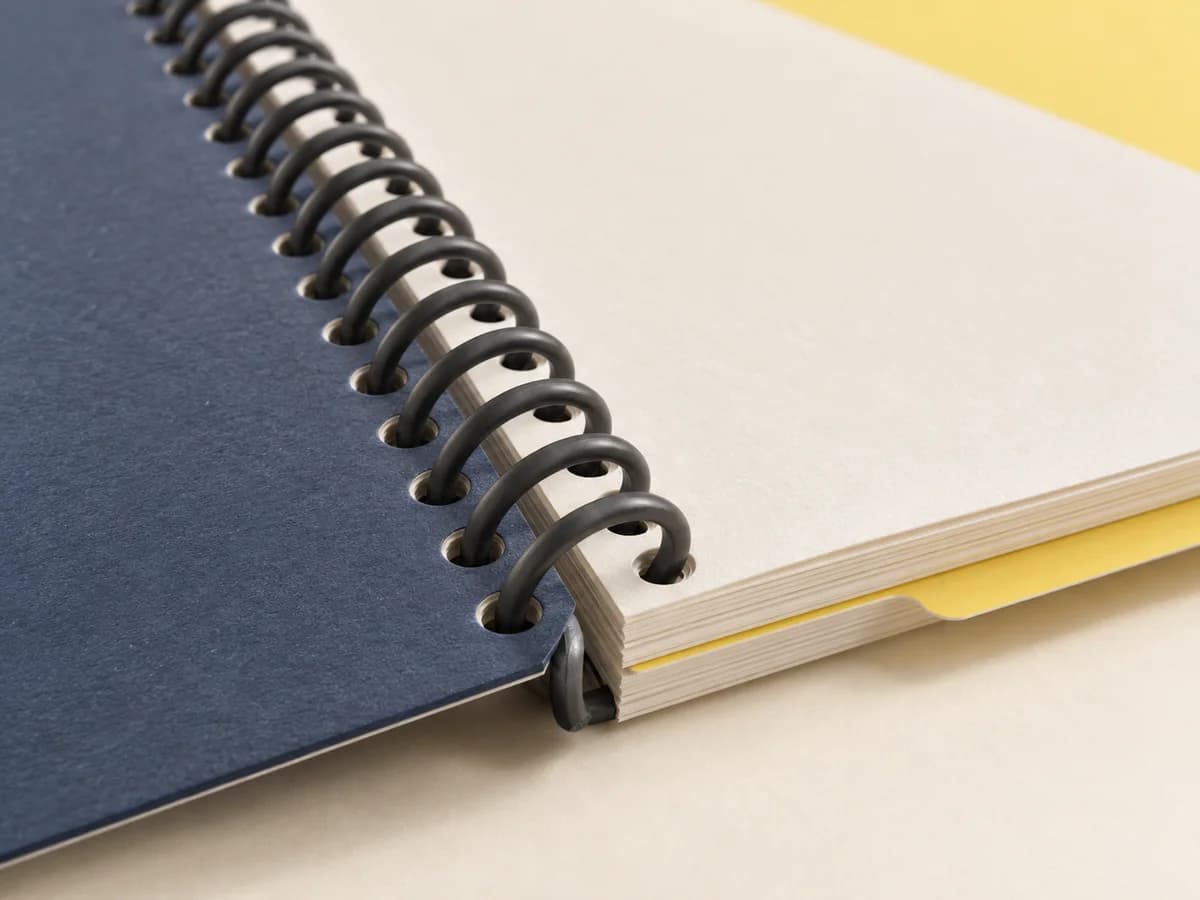
The punch pattern is part of the binding specification.
- 01Binding element
- Continuous coil is one helix; twin-loop wire closes paired loops around the pages. Their hole patterns and finishing methods differ.
- 02Punch row
- Hole pitch, shape and distance from the edge govern where the binding sits. Leave critical text and graphics outside this zone.
- 03Complete page stack
- Include both covers, dividers and inserts when selecting the element. Paper GSM is not a reliable replacement for measured stack thickness.
Specifications & materials
Compare the options and what they change.
Numeric dimensions and paper weights are selection references, not guaranteed Lemon production limits or a stocked-material list. The quoted specification identifies the available grade and construction.
| Engineering spec | Reference or option | Selection effect |
|---|---|---|
| Finished dimensions | 8.5 × 11 in (215.9 × 279.4 mm); 6 × 9 in (152.4 × 228.6 mm) | Interior trim references, not manufacturing limits. Full-size exercises, technical diagrams and recipes. Portable manuals; protect usable writing space beside the punch row. |
| Format and component count | Complete book: interior, cover and separately identified components | Send trim size, page count, quantity, binding edge, continuous coil or twin-loop wire, paper, covers and any tabs. Include destination and the intended writing or reference use. |
| Punch system | 4:1 continuous-coil reference; 3:1 or 2:1 twin-loop wire references | Pitch means holes per inch; match the binding element to the actual punch die. |
| Interior stock | 80, 100 or 120gsm uncoated references | Choose for pen behavior, opacity and page count rather than maximum weight. |
| Covers and binding diameter | Printed card or protective cover; element sized to measured stack | Covers, tabs and inserts add thickness. An undersized element restricts turning. |
| Pitch reference | 4:1 coil = 6.35mm centers; 3:1 = 8.47mm; 2:1 = 12.70mm | Calculated from 25.4mm/in; rounded values describe reference systems, not punch-position tolerances. |
| Binding clearance | Die-specific hole diameter, edge offset and selected element diameter | Measure the complete stack; maintain a template-defined content exclusion zone beside the holes. |
Writable uncoated pages
80/100/120gsm references for notes and exercises.
Try the intended pen and inspect the back of the sheet before approving double-sided work.
Image-led or protected pages
Coated reference stocks or selected protective covers for repeated reference.
Film on the cover does not make interior sheets water-resistant.
Stiffer covers can protect loose page edges while a writable interior supports exercises. Laminating the cover changes its surface and stiffness; it does not give the interior the same resistance to spills or ink.
A decision for this product
Coil and twin-loop wire are different systems.
4:1 / 3:1 / 2:1
These are supplier pitch examples, not interchangeable components. The final die, hole size, edge clearance and stack thickness must be specified together.
Selection illustration · not a production template or test result
Selected direction
Fold-back working pages
Continuous coil · Fold-back working pages
An uninterrupted helix with secured ends; inspect end finishing.
Twin-loop wire · Aligned presentation pages
Paired loops with a closed seam; check closure and resistance to crushing.
See the trim proportions.
These are publishing references, not required sizes. Compare the usable page shape before adapting an existing layout.
Selected: 8.5 × 11 in. Proportions only; not actual size.
Trim dimensions describe the cut page. Artwork bleed, cover overhang, tabs and modules are separate allowances.
Surface finish options
Printed covers and jackets
Choose the finish for the printed cover or jacket, not automatically for the interior. Check color, rub marks, hinges and compatibility with the cover stock. Cloth and synthetic wraps need a separate material trial.
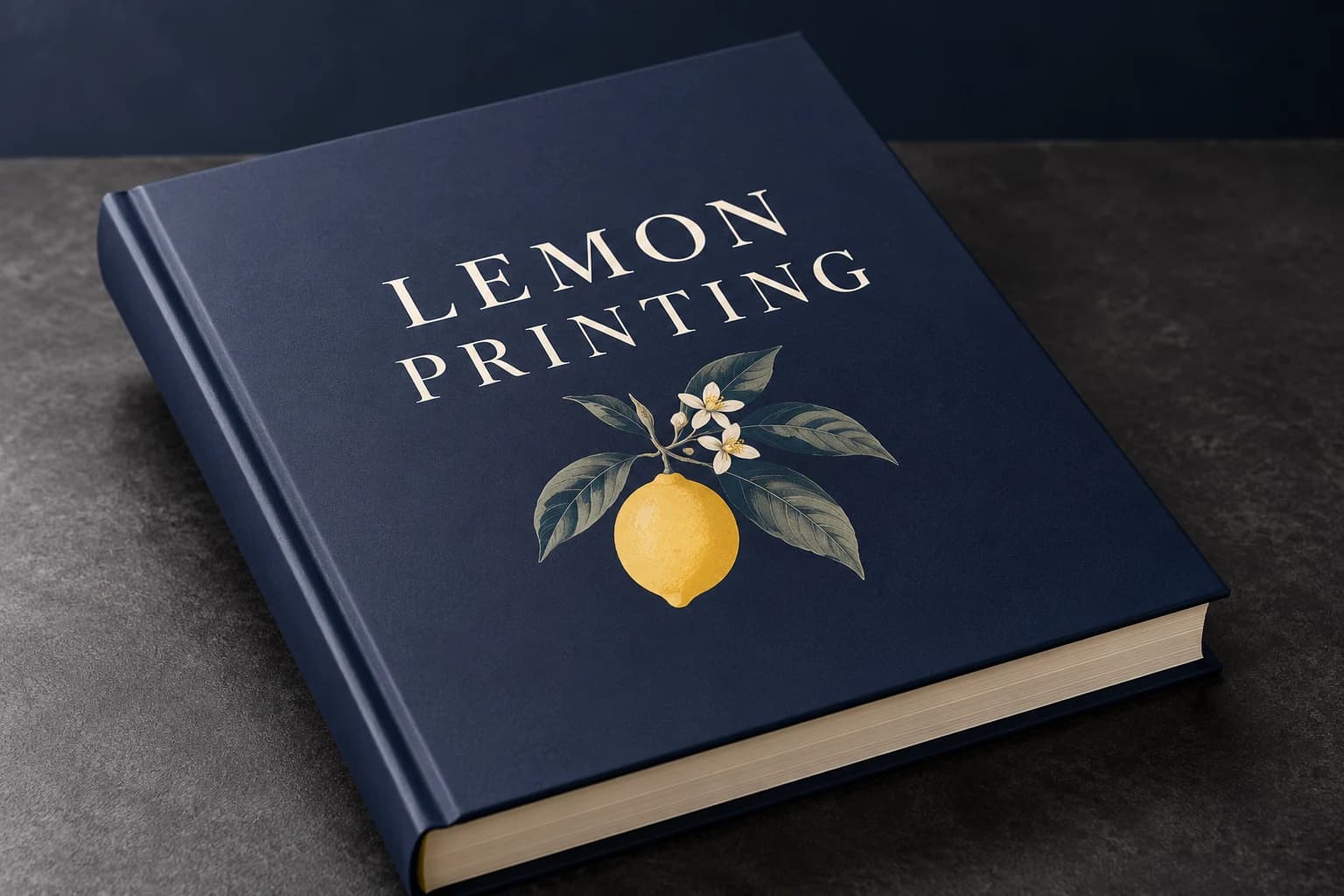 Matte lamination View effect & artwork guidance
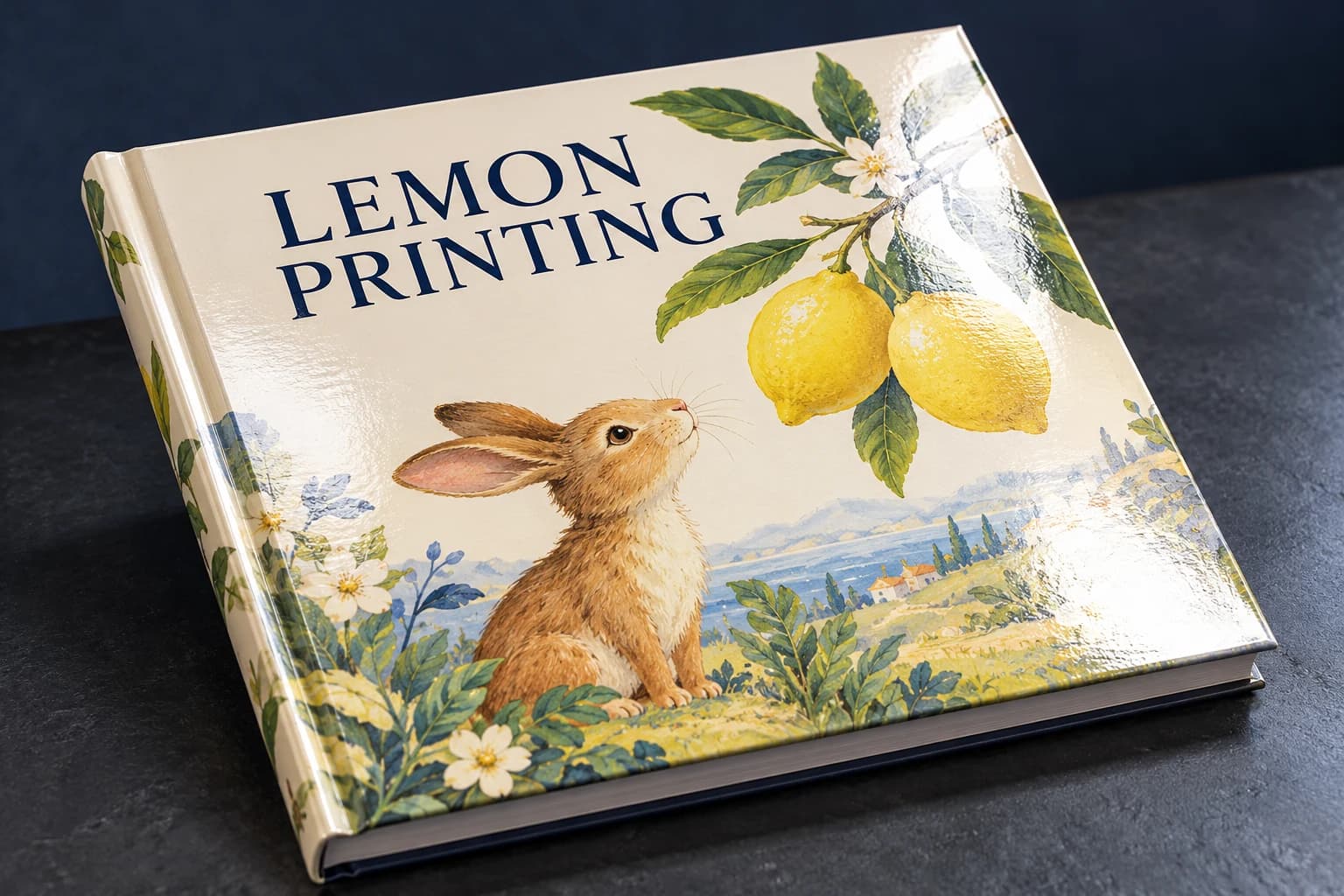 Gloss lamination View effect & artwork guidance
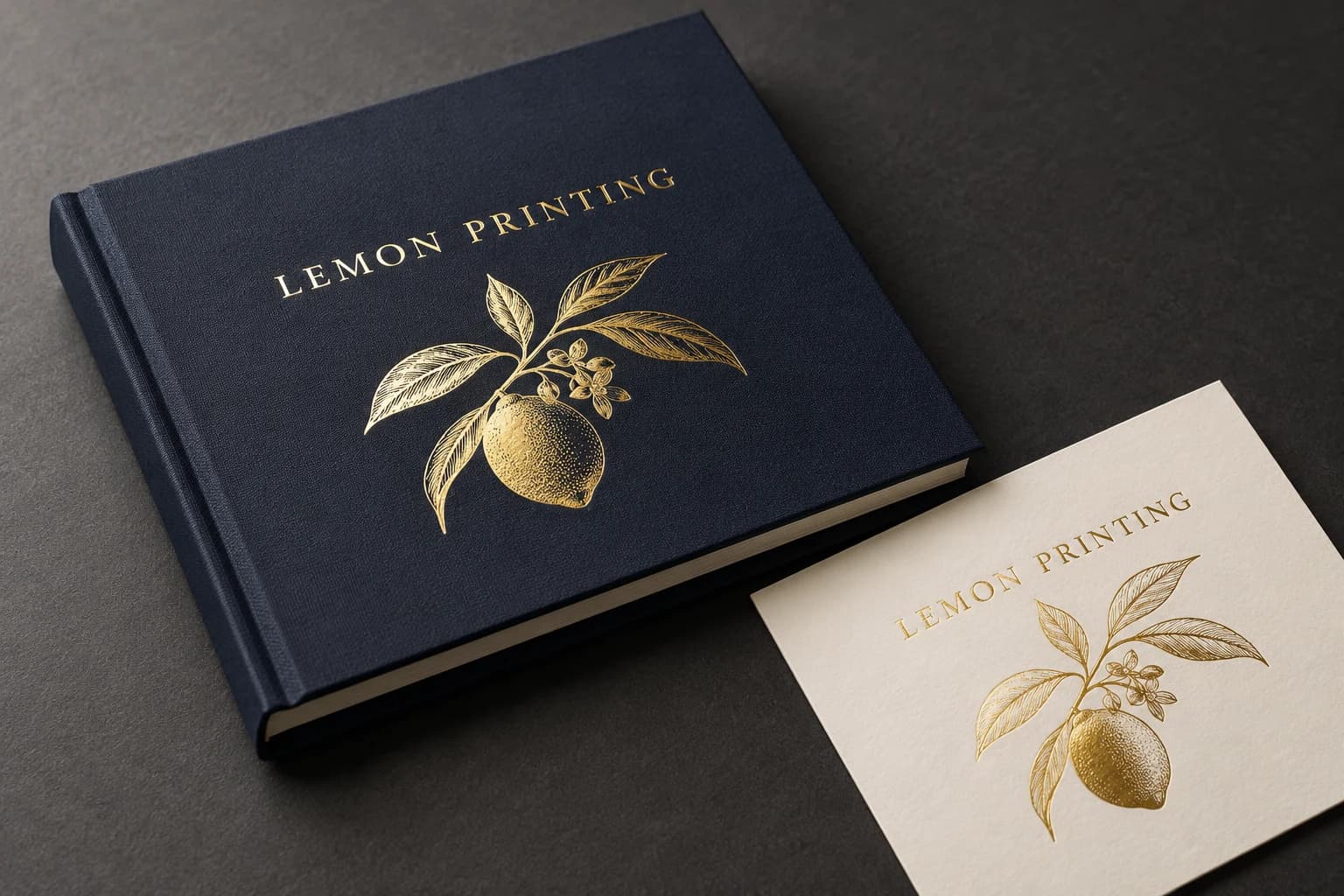 Gold foil stamping View effect & artwork guidance
 Spot UV View effect & artwork guidance
Illustrative finish samples, not photographs of this product. Final suitability follows the confirmed stock, construction and approved sample.
Compare all surface finishesHow it is made
Construction decisions with a practical effect.
Punching before insertion
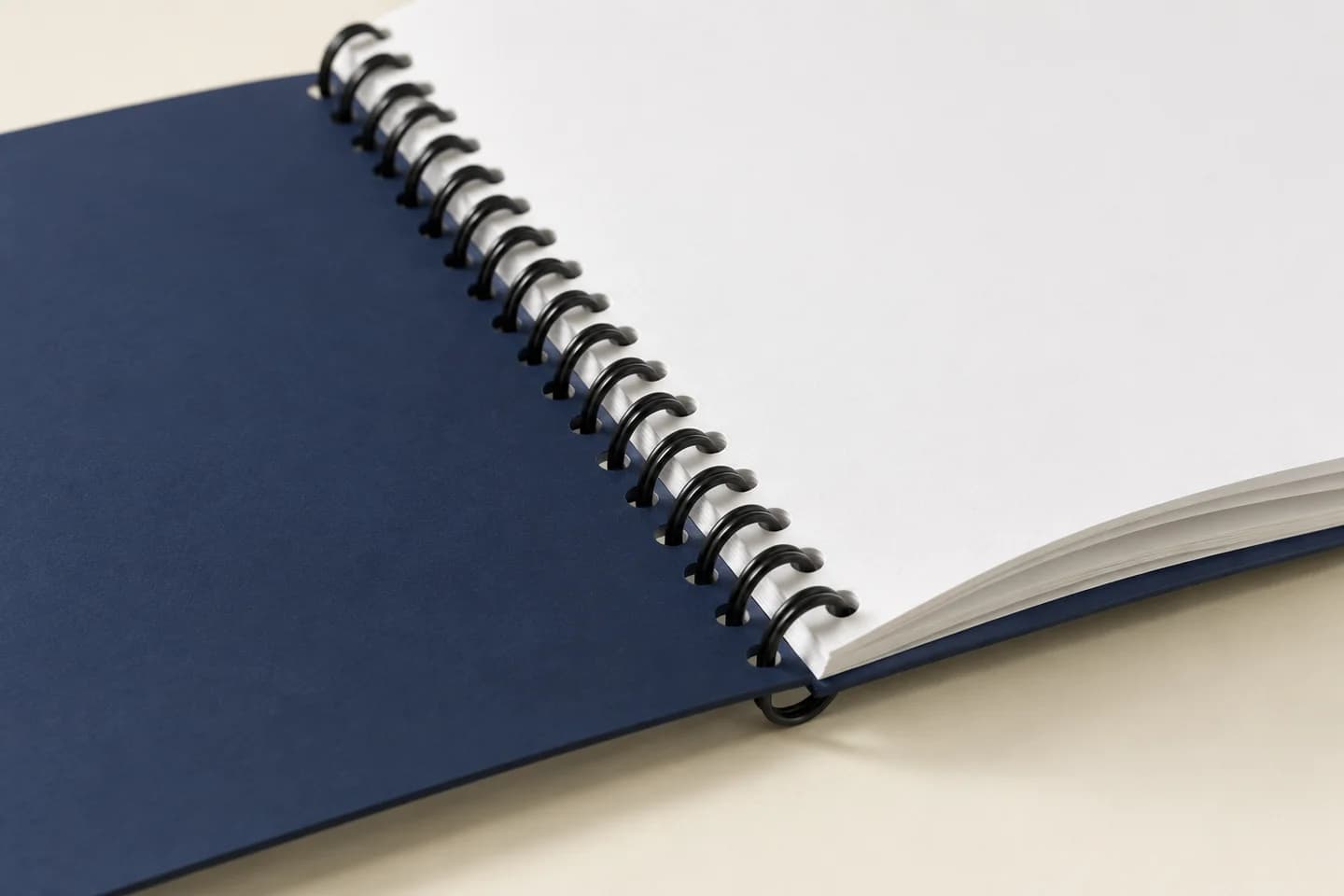
The hole pattern, edge distance and paper stack are set before the element is inserted. Keep diagrams, page numbers and answer boxes clear of the punch area; the punch template determines the actual safe zone.
Coil finishing and wire closure
Continuous coil ends are cut and secured to prevent unthreading. Twin-loop wire is closed around the stack. Inspect end finishing, closure alignment and turning across the whole book, including dividers.
Details that change the finished book
Match the binding element, punch row and page stack.
Both constructions give working pages access at the binding edge. Select them by page turning, transport and presentation, then match the physical components.
Match the pitch to the punching die
Pitch counts holes per inch: 4:1 coil and 3:1/2:1 wire are reference systems, not interchangeable parts. Verify the selected hole pattern before imposing the artwork.
Check the complete turning path
Turn the first, middle and last pages, then fold the cover back. A too-small element or poorly centered punch row can make thick sections catch.
Inspect the binding ends or wire seam
Coil ends must retain the pages; twin-loop wire needs uniform closure. Add protection around exposed binding for transport instead of relying on a tight carton alone.
Match the specification to the project
Spiral-Bound Book configurations in use.
Training workbook
Writable uncoated sheets · continuous coil
The reader can fold the pages back while completing exercises. Place response fields beyond the punch strip.
Presentation manual
Twin-loop wire · coated diagrams · dividers
Aligned pages and section tabs help navigation. Allow for the closed wire seam and protect the element from crushing.
Kitchen or desk reference
Stiff covers · open working pages
Cover stiffness supports handling, but moisture behavior depends on the actual stock and finish; a film cover does not protect untreated interior pages.
Solve the risk before production
What can go wrong, and how to check it.
Pages catch during turning
Cause: The element is too small or the hole pattern and stack are incompatible.
Fix and check: Measure the complete stack and turn front, middle and last pages on the bound dummy.
Small text is punched away
Cause: A glued-book layout was reused without a punch allowance.
Fix and check: Overlay the punch template and move essential content outside the hole and edge-clearance zone.
The binding deforms in transit
Cause: The exposed element takes side pressure from adjacent books or an unsupported carton wall.
Fix and check: Protect the binding edge and set carton counts by the assembled format. Review a packed sample for movement and pressure on the element.
When to choose another format
Spiral-Bound Book or another format?
| Alternative | Structure | Use and trade-off |
|---|---|---|
| Perfect-bound manual | Adhesive spine, printable wrap | Compact storage, but typically less convenient for hands-free writing. |
| Notebook or journal | Writing layout as the main product | Use when ruling and pen performance matter more than instructional content. |
Samples & order planning
Test the physical question before the bulk run.
A sample for the actual product
Use a fully punched and bound dummy to test stack clearance, page turning, fold-back use and secured ends. Add a printed sheet for the intended pen test.
Printed working-page proof
Check ruled areas, diagrams and text beside the overlaid punch template at actual size.
Full-stack turning sample
Include both covers and all dividers; test page movement and fold-back at the beginning, middle and end.
Order Details for Spiral-Bound Book Printing
Quantity and quotation
Quote complete finished books per title or version. Send trim size, page count, quantity, binding edge, continuous coil or twin-loop wire, paper, covers and any tabs. Include destination and the intended writing or reference use.
Sample scope and schedule
Free samples are available, with preparation completed within 15 days. Confirm which materials, finishes and construction the sample represents. Courier arrangements and transit time are separate. The quotation records bulk production timing and the minimum quantity for your configuration.
Packing and delivery
Protect exposed elements from crushing and snagging. Pack stacks so adjacent elements do not interlock; carton planning includes the binding projection.
- 01
Supply single pages in reading order and state the binding edge.
- 02
Use the actual punch template for hole positions and the text safety zone.
- 03
Include every divider and insert in the assembly sequence.
- 04
Prepare 300ppi images and bleed to the supplied trim template; keep finishing layers separate.
Configuration details
A coil and twin-loop wire need different punching plans.
A continuous coil winds through the page block; Wire-O closes paired wire loops around it. The cover overhang, hole pattern and actual block thickness need to match the chosen system. Changing the binding after artwork approval can move content into the punched zone.
- Artwork zones
Trim bleed, punched-edge exclusion and readable text area
Show each zone on the approved template; increasing bleed does not create punching clearance.
- Block measurement
Covers, dividers and folded inserts included
Choose the binding around the complete assembled thickness and test full page turning.
Explore the relevant formats
Product questions
Details worth settling before ordering.
Is coil diameter chosen by page count?
Choose it from the complete stack thickness, including covers and tabs. Two papers with the same GSM can need different binding diameters.
Can I run an image across the center?
A punched binding creates a visible gap and hole zone. Divide images intentionally and keep critical details on either side of the binding.
Is the punch safety zone always 3mm?
No. Trim bleed and punch clearance serve different purposes. The selected die supplies the hole shape and edge offset; the content-safe area must also allow for the binding element and turning path. Use that punch template instead of a universal margin.
Can loose pages be replaced later?
A permanent coil or closed twin-loop element is not intended as a reusable ring mechanism. For frequent page replacement, compare a ring-binder manual and include hole pattern, tabs and hardware in its specification.
Your spiral-bound book project
Send a brief that can become a specification.
Send trim size, page count, quantity, binding edge, continuous coil or twin-loop wire, paper, covers and any tabs. Include destination and the intended writing or reference use.
Related formats & guidance