Card Printing · Formats & construction
Tarot Card Printing
Tarot decks need legible symbolic artwork, a consistent back and a card size the reader can shuffle.
- 78-card traditional framework or a defined custom manifest
- Opacity-controlled deck stock
- Traditional framework
Start with the intended use, finished size and quantity. The material and construction can follow.
The product in use
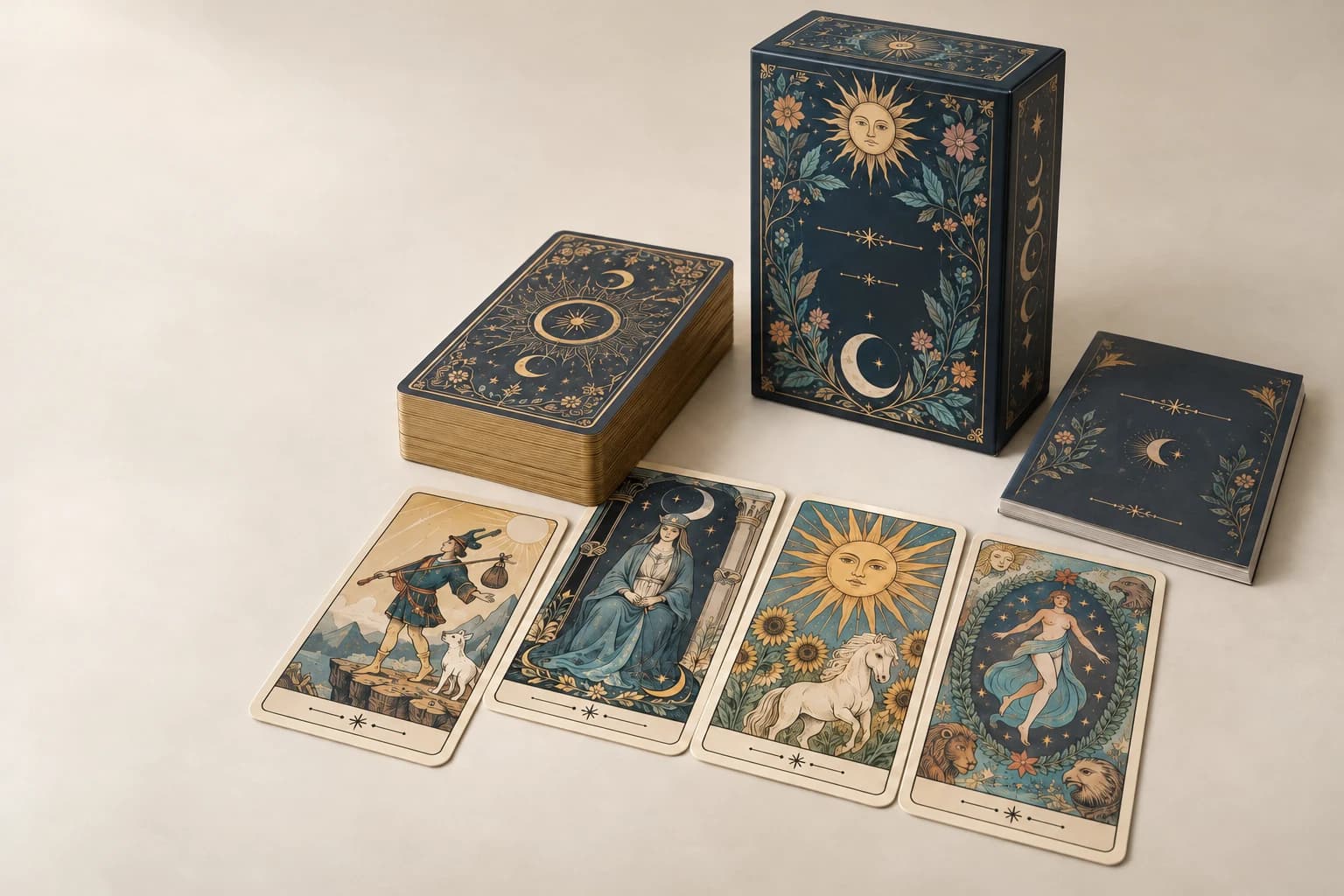
Illustrated faces and a consistent reverse in a complete deck
A tarot deck combines illustrated faces, a consistent reverse and a defined card manifest. A traditional 78-card framework and a custom expanded system require different collation plans. Card proportions affect image detail and handling; reverse design matters when cards are used in both orientations.
What makes up the finished product?
- Printed faces
- Identify every front and its matching reverse; a shared back still requires a defined orientation.
- Card construction
- Surface, opacity, thickness and corner shape work together to determine handling and readability.
- Packed unit
- Define individual cards or a complete deck, plus any guide, box and pack assortment.
Specifications and materials
Tarot Card Printing specifications
Use these reference options to build the project brief. Dimensions are design examples; material availability, tooling and production timing depend on the confirmed specification.
| Parameter | Reference or option | Why it matters |
|---|---|---|
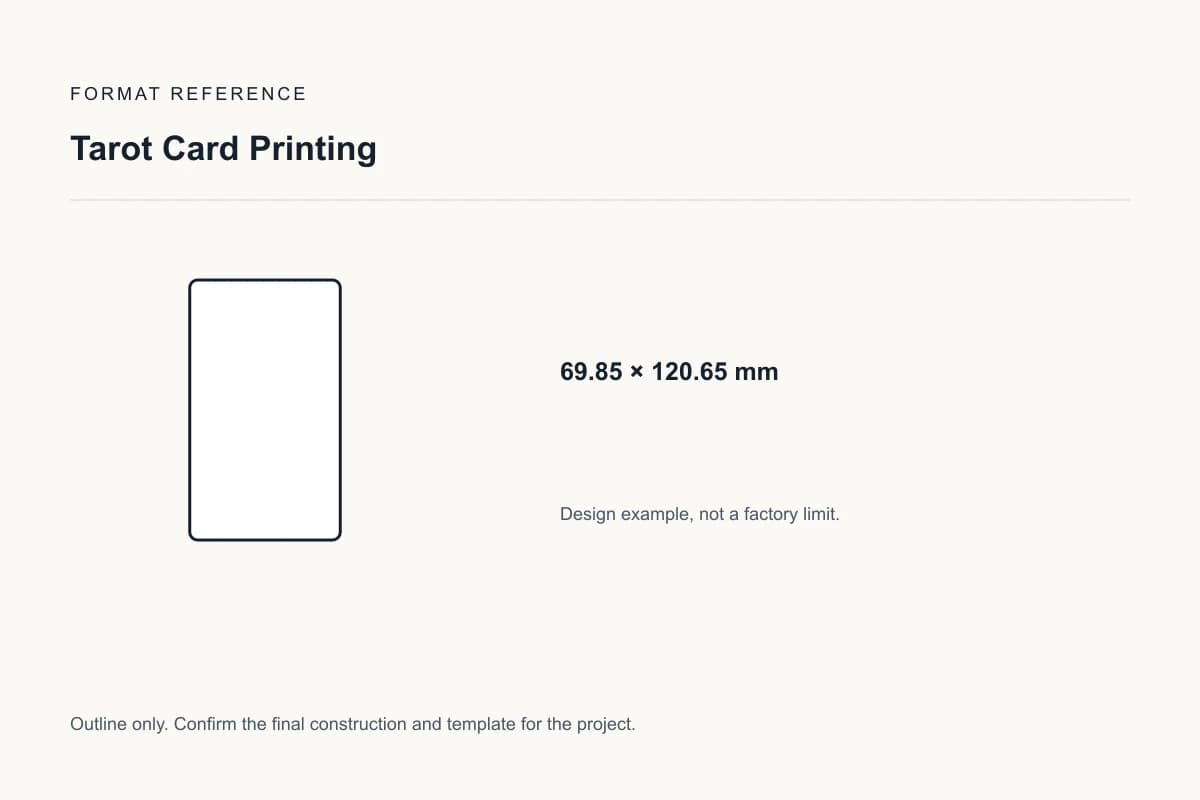
| Finished dimensions | 69.85 × 120.65 mm | This is the 2.75 × 4.75 inch published deck example, not an exact 70 × 120 mm conversion or a mandatory format. Design reference, not a factory limit. |
| Deck composition | 78-card traditional framework or a defined custom manifest | State extra cards and guide components separately rather than assuming a fixed packed total. |
| Artwork and collation | Unique face count, reverse groups, copies per design and cards per packed unit | A full manifest prevents missing cards, mixed versions and incorrect front-to-back pairings. |
| Cut and handling | Finished size, specified corner geometry and surface finish | Assess bend, edge condition, stacking and any writing or scanning function on the finished card. |
| Material construction | Opacity-controlled deck stock or Coated illustrated card | Compare the actual grade and construction. View the darkest face against the common reverse under stronger light, then shuffle a full deck. |
| Format and order unit | complete decks or individual cards per defined design | List components and versions separately so quantities refer to the same finished unit. |
| Finishing choice | Foil and decorative edges need handling trials; visual approval alone does not establish shuffle performance. | Approve the proposed material and process combination on an appropriate sample. |
Compare the material and its effect.
Choose the surface and construction for the way the finished product will be used. The options below are selection references, not a guaranteed inventory list.
Opacity-controlled deck stock
Card stock with a specified core and finished caliper
A deck needs consistent stiffness and enough opacity to conceal its faces. A generic coated-card GSM does not establish either.
Sample check: View the darkest face against the common reverse under stronger light, then shuffle a full deck.
Coated illustrated card
300 or 350 g/m² supplier reference grades
These grades provide an illustration-card comparison. Deck suitability still depends on opacity, coating friction and the finished stack.
Sample check: Trial the trimmed stack in its sleeve or box rather than selecting by GSM alone.
Selected sample focus — Opacity-controlled deck stock: View the darkest face against the common reverse under stronger light, then shuffle a full deck.
Format & usable space
Tarot Card Size, Deck Structure & Extra Cards
69.85 × 120.65 mm
This is the 2.75 × 4.75 inch published deck example, not an exact 70 × 120 mm conversion or a mandatory format.
This is a design reference, not a required size or a manufacturing limit.
Deck composition
78-card traditional framework or a defined custom manifest
State extra cards and guide components separately rather than assuming a fixed packed total.
View the original format reference
Surface finish options
Readable card faces and packaging accents
Low-glare film and restrained metallic accents are alternatives to discuss. Check text contrast and handling; foil on a tuck box is separate from foil on card faces, which needs its own sample approval.
 Matte lamination View effect & artwork guidance
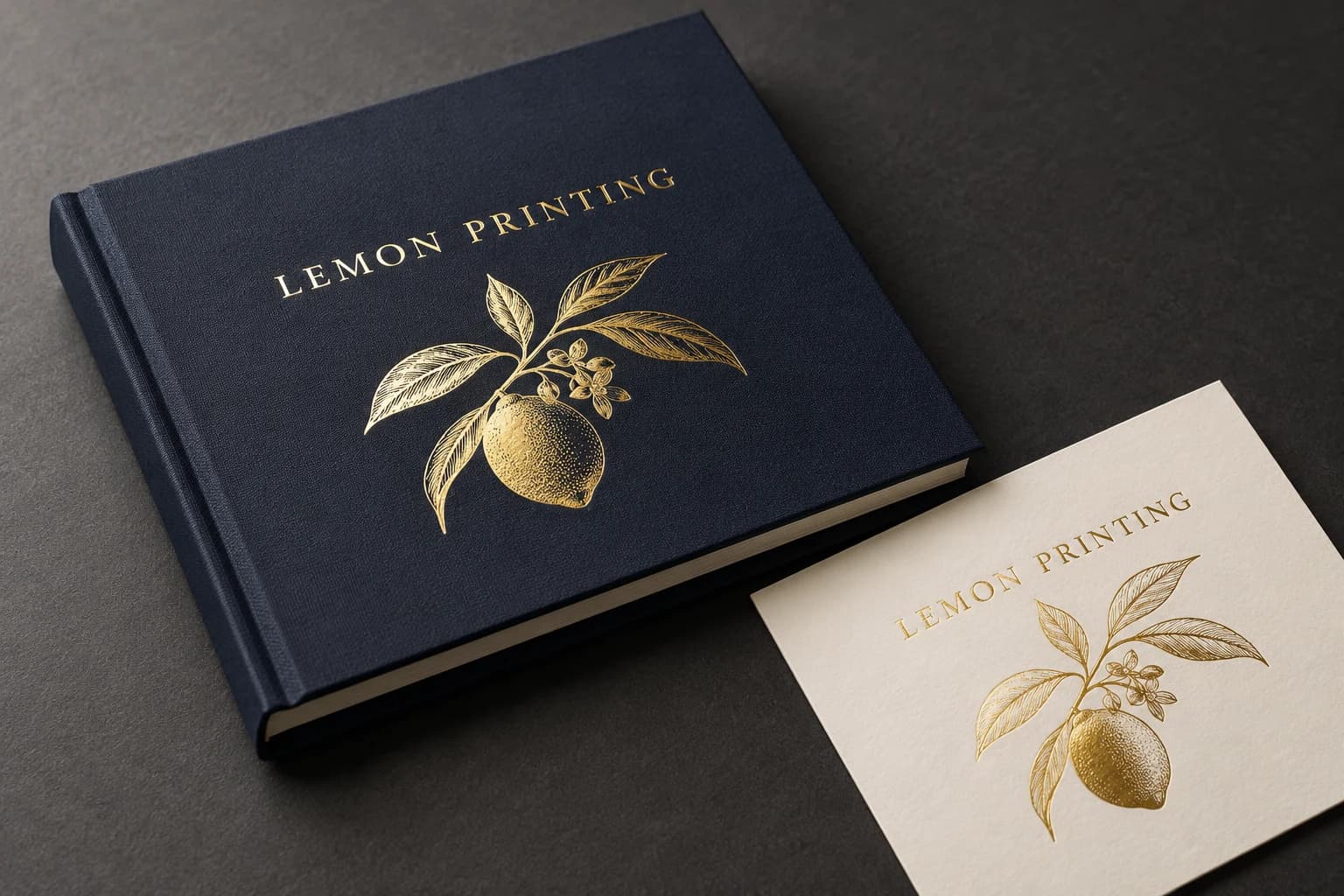 Gold foil stamping View effect & artwork guidance
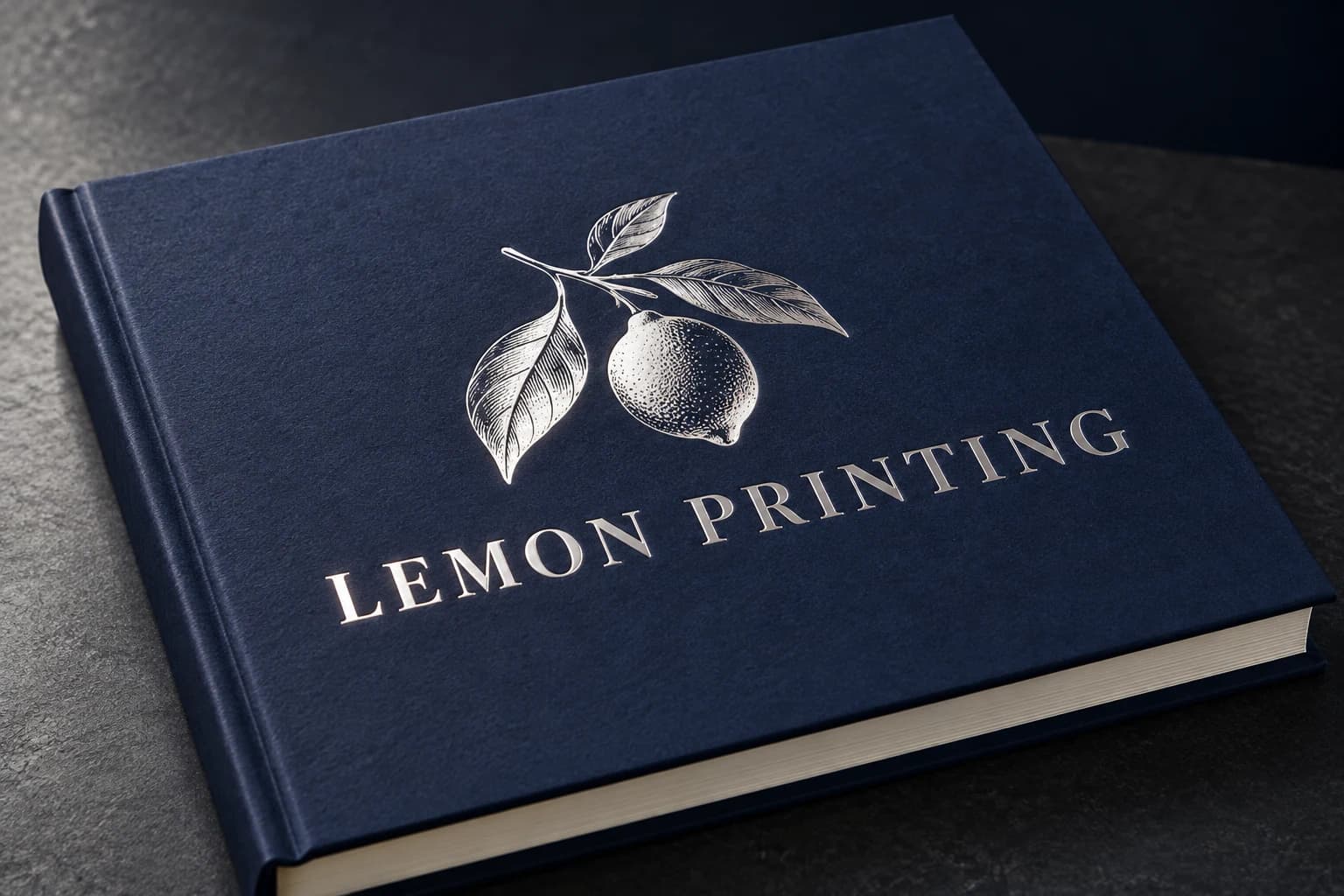 Silver foil stamping View effect & artwork guidance
Illustrative finish samples, not photographs of this product. Final suitability follows the confirmed stock, construction and approved sample.
Compare all surface finishes
Details that change the finished product
Inspect the printed cards as a complete unit
Confirm the deck manifest before packing
Compare stiffness, opacity and surface friction on a complete deck. Adding laminate can change both the deck height and the feel of a shuffle.
Deck composition
State extra cards and guide components separately rather than assuming a fixed packed total. A complete card set checks front-to-back matching, cutting, handling and the supplied pack count.
Surface and finishing compatibility
Foil and decorative edges need handling trials; visual approval alone does not establish shuffle performance. A deck needs consistent stiffness and enough opacity to conceal its faces. A generic coated-card GSM does not establish either. View the darkest face against the common reverse under stronger light, then shuffle a full deck.
Traditional Tarot Frameworks & Expanded Sets
Traditional framework
Prepare a 78-card manifest and state any additional instruction cards separately.
Original expanded set
List every additional card and check the complete deck thickness against its packaging.
Solve the risk before production
Keep Trimmed Tarot Backs Consistent Across the Deck
The critical finished-product check
Identifiable backs can reveal a card through trim or color differences. Use a consistent back file and assess the complete trimmed deck under the same light.
Orientation reveals a card unexpectedly
Why it happens: A directional back or uneven border defeats a layout intended for reversed cards.
Fix and check: Decide whether backs should be rotationally neutral, then inspect the trimmed deck in both orientations.
When to choose another format
Tarot, Oracle & Conventional Playing Cards
| Alternative | Use and trade-off |
|---|---|
| Oracle Card Printing | A custom oracle system allows a different count and organization from a traditional tarot structure. |
| Playing Card Printing | Standard playing cards prioritize familiar ranks, suits and handling rather than a large illustrated face. |
Sample and approval
Review Tarot Faces, Backs & the Complete Deck
Free samples are available, with preparation completed within 15 days. Confirm the sample scope; courier arrangements and transit time are separate.
Structural sample
Checks dimensions, fit and assembly using unprinted or representative materials. It does not establish final color.
Printed proof
Checks text, image reproduction and artwork on the agreed proof medium. It may not reproduce final assembly or every finish.
Complete finished sample
A complete card set checks front-to-back matching, cutting, handling and the supplied pack count.
From brief to delivery
Order Details for Tarot Card Printing
Build and approve the order in five steps
Send the project brief
Send 78-card or custom manifest, guide booklet, handling reference and packed deck thickness. Include finished dimensions, quantity by version, destination and required arrival date. If a configuration is undecided, describe the intended use.
Compare the quoted configuration
Compare the same quantity basis: complete decks or individual cards per defined design. Check that the quote identifies materials, finishing, included components, sample scope, packing and freight.
Approve the appropriate sample
A complete card set checks front-to-back matching, cutting, handling and the supplied pack count. A print proof checks artwork and color; a complete finished sample also checks assembly. Record what the selected sample does and does not reproduce.
Confirm files and release production
Approve the final artwork revision and the deck composition specification. Record the agreed quantity, payment conditions, packing and production schedule in the order.
Confirm packing and dispatch
State cards per deck or bundle, box components, assortment rules and carton labels. Confirm production completion and transit as separate dates, using the delivery destination and required arrival date.
- Supply front and back files with a matching ID list. Keep trim bleed separate from safe text and corner-cut areas; supply finishing masks as named separations.
- Extend edge-to-edge trim artwork by 3 mm unless the approved template specifies a different bleed. Use approximately 300 effective ppi for continuous-tone images at their placed size; keep fine linework as vectors where possible.
Project questions
Planning Tarot Card Printing
How should alternate or extra cards be handled?
Give each an ID and state whether it is included in every deck, supplied separately or limited to an edition. Do not leave extra cards outside the packing manifest simply because the main deck follows a familiar framework.
How should I specify quantities and versions?
Count complete decks or individual cards per defined design. State 78-card or custom manifest, guide booklet, handling reference and packed deck thickness; components, language versions and different structures must be listed separately.
What determines the minimum quantity and delivery schedule?
The selected stock, construction, finishing, version count and sample scope determine production planning. Request quantity breaks for the same configuration and an arrival-date plan that separates sampling, manufacturing and transit. No minimum or lead time is implied by the design examples above.
Specify the finished product.
Send 78-card or custom manifest, guide booklet, handling reference and packed deck thickness. Include finished dimensions, quantity by version, destination and required arrival date.