Book Printing · Formats & construction
Business Book Printing
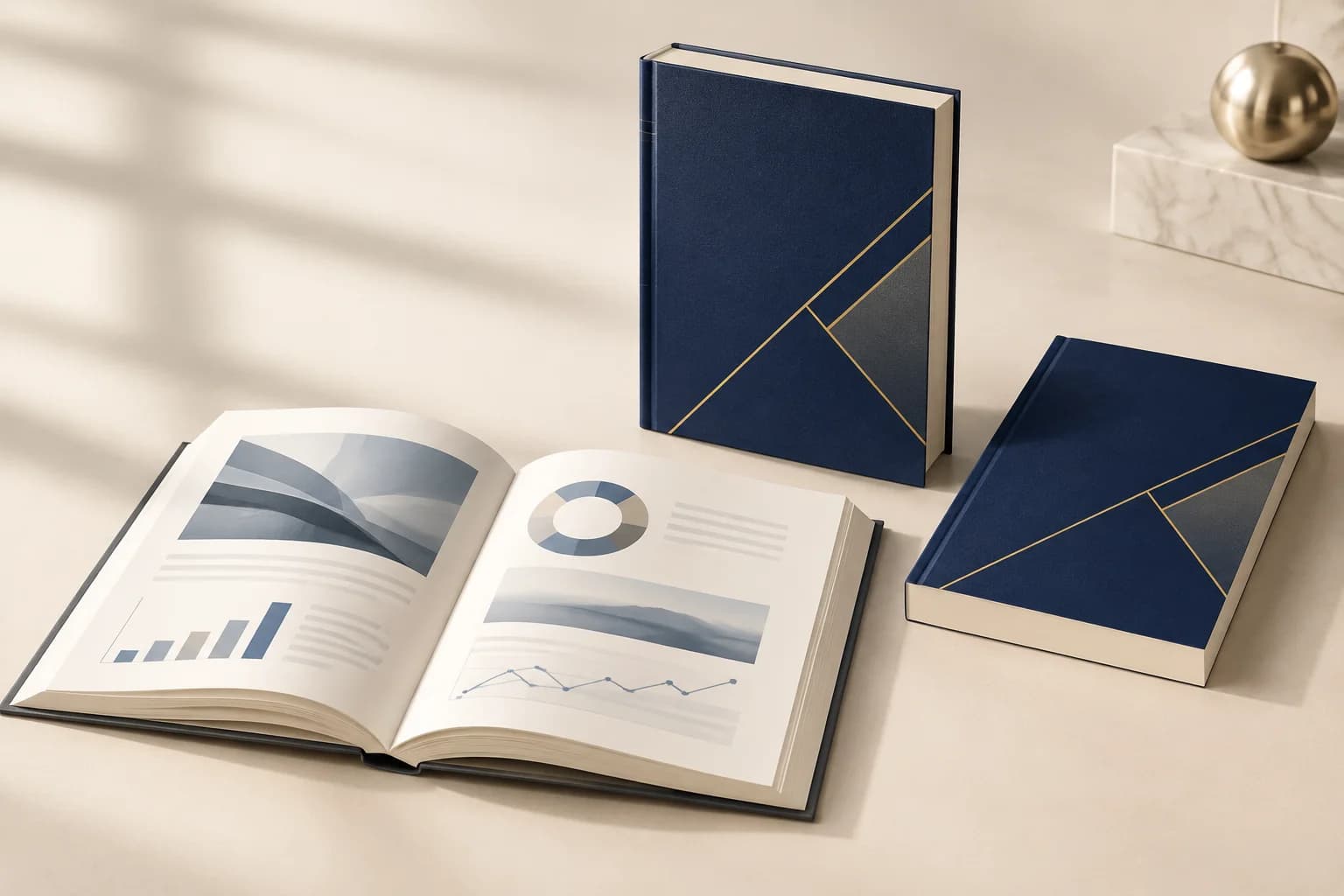
Turn business ideas, company knowledge and leadership stories into a readable printed edition. Choose a portable paperback or a presentation hardcover, with text and charts planned around the reader.
- Paperback for portability; hardcover for presentation
Start with the intended use, finished size and quantity. The material and construction can follow.
The product in use
Built for reading, referencing and sharing
A business book needs to work as both a sustained read and a reference. Clear chapter openings, a usable index and legible charts help readers move between an argument and its supporting evidence. A paperback suits conference distribution and everyday reading; a rigid case gives a company history or executive edition a more substantial cover. Neither format automatically opens flat: binding, paper and the inner margin determine how comfortably readers reach the gutter.
What makes up the finished product?
- Text block
- Paper opacity and thickness affect show-through, carrying weight and the spine.
- Navigation
- Contents, index and consistent chapter openings help readers retrieve information.
- Cover structure
- A flexible cover and a rigid case serve different handling and presentation needs.
Specifications and materials
Business Book Printing specifications
Use these reference options to build the project brief. Dimensions are design examples; material availability, tooling and production timing depend on the confirmed specification.
| Parameter | Reference or option | Why it matters |
|---|---|---|
| Trim size | 152.4 × 228.6 mm (6 × 9 in) reference; project-specific alternatives | Choose the trim before final pagination. This is a publishing reference, not a production limit. |
| Interior paper | Woodfree uncoated for text; coated paper for image-led editions | Compare opacity, surface and measured thickness. GSM alone does not determine spine width. |
| Color plan | Black-only text, full-color interior or specified color sections | Provide the exact page map. Isolated color pages and grouped sections can require different production plans. |
| Binding | Perfect-bound paperback or casebound hardcover | Keep essential text away from the inner margin; neither choice is an automatic lay-flat construction. |
| Cover | Printed cover with matte or gloss lamination; optional foil artwork | Approve the spine after paper and pagination are fixed. Use a separate finish mask for foil. |
| File preparation | Reading-order interior PDF and separate cover PDF | Embed fonts; retain vector charts. Use the approved bleed, color profile and cover template. |
Format & usable space
Trim Size, Charts and Reading Space
152.4 × 228.6 mm (6 × 9 in)
A common trade-book starting point for text-led business titles. A wider layout gives tables more room; a smaller trim improves portability but can increase page count.
This is a design reference, not a required size or a manufacturing limit.
Format choice
Paperback for portability; hardcover for presentation
Evaluate the complete bound sample rather than choosing from a cover photograph alone.
View the original format reference
Surface finish options
Printed covers and jackets
Choose the finish for the printed cover or jacket, not automatically for the interior. Check color, rub marks, hinges and compatibility with the cover stock. Cloth and synthetic wraps need a separate material trial.
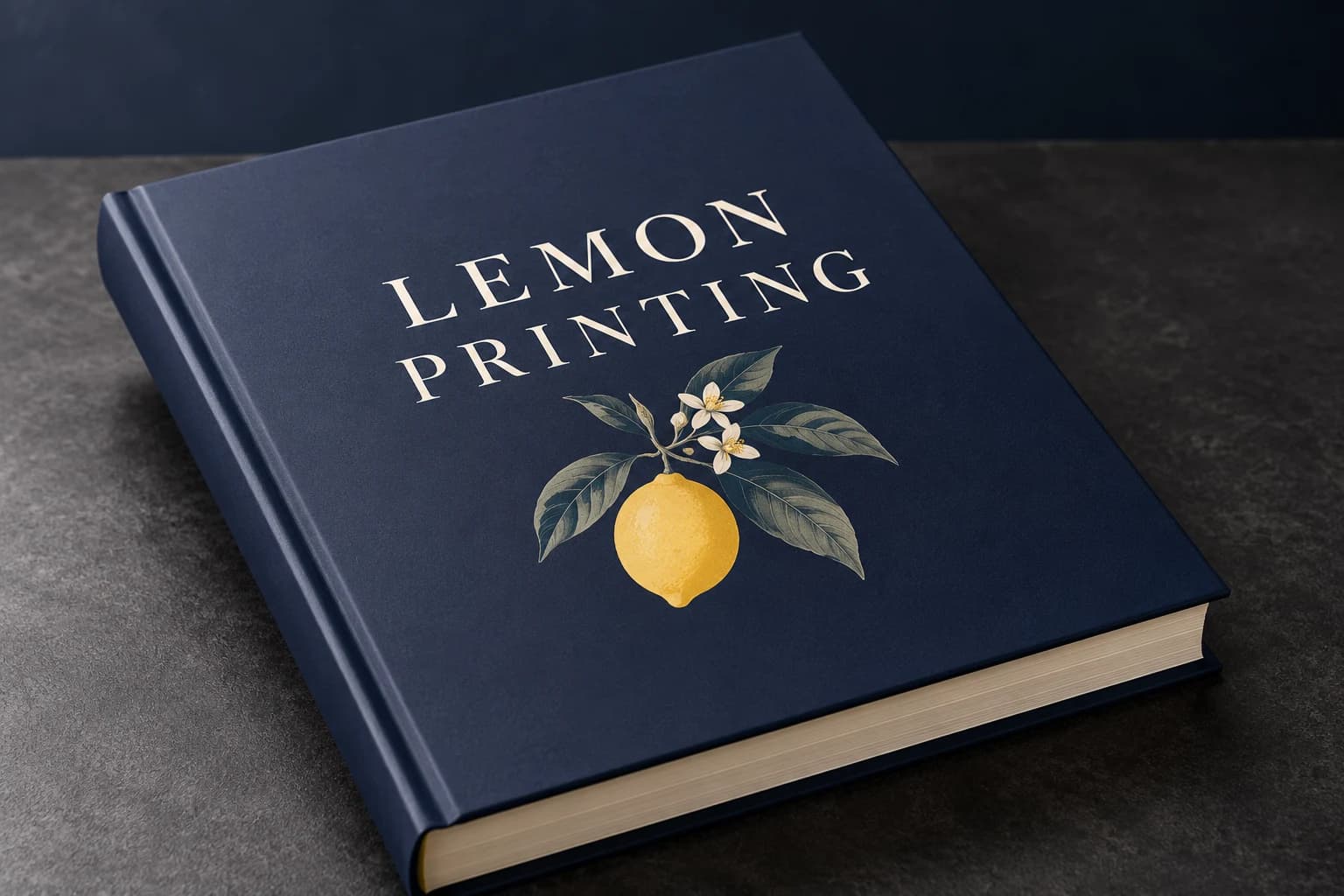 Matte lamination View effect & artwork guidance
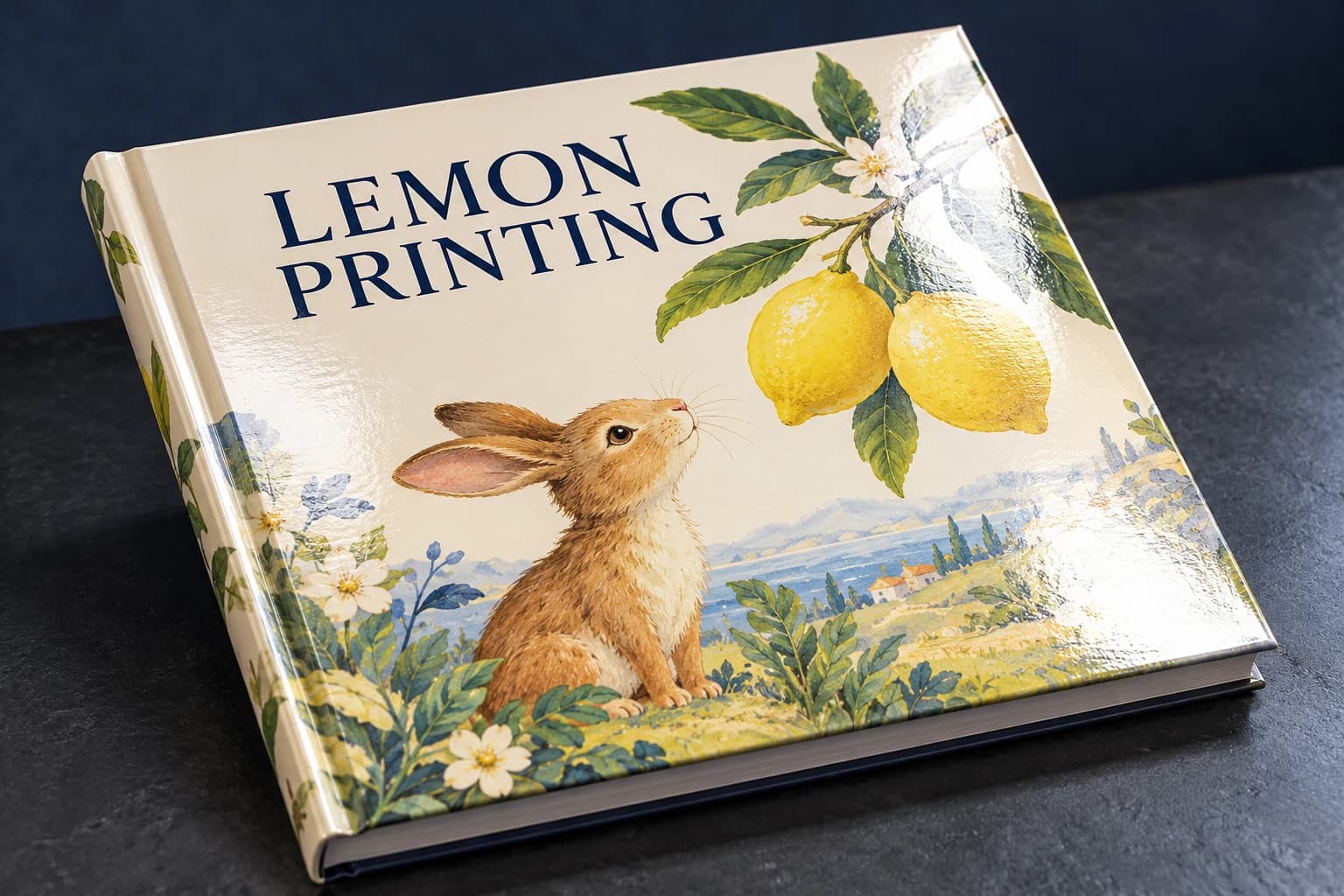 Gloss lamination View effect & artwork guidance
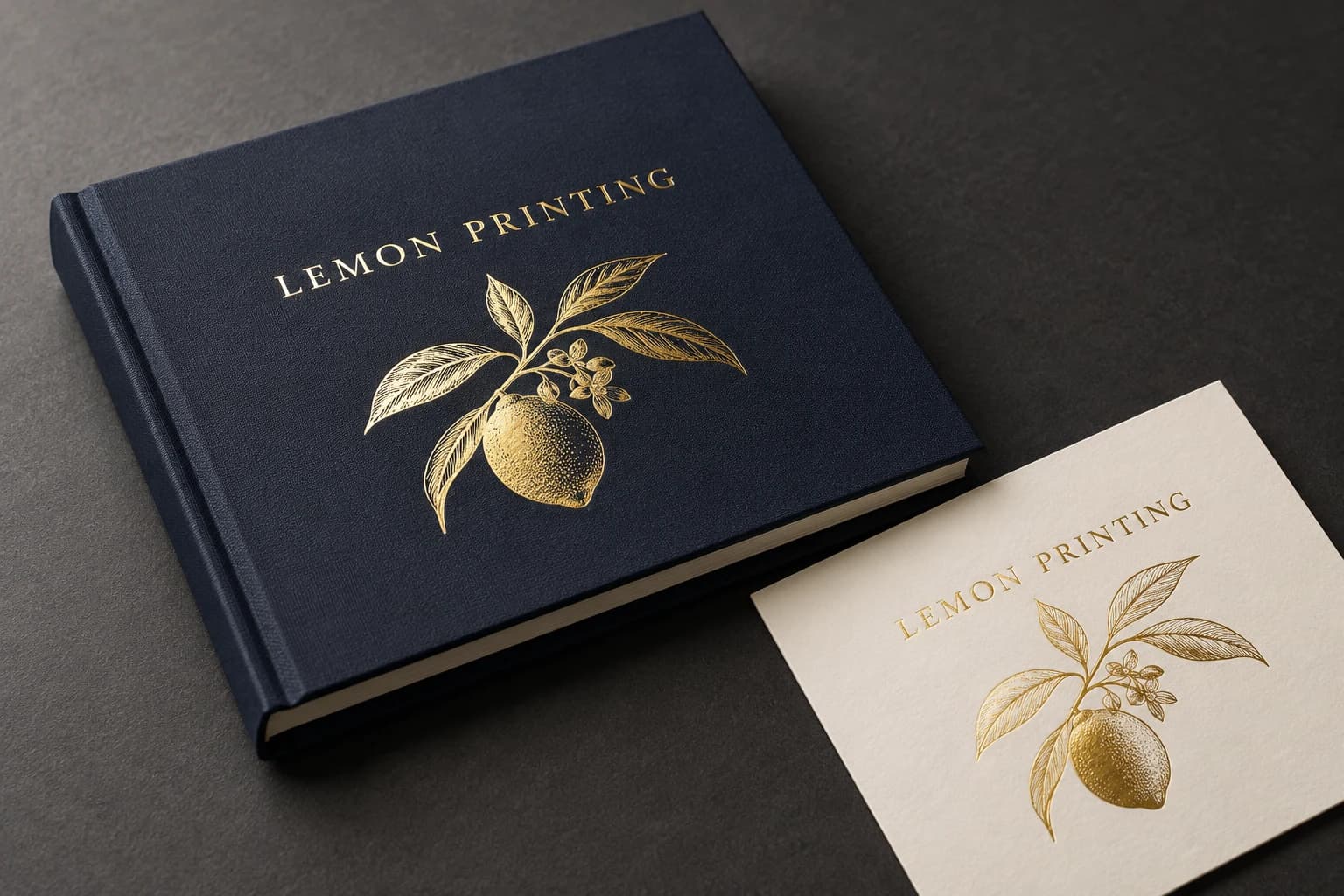 Gold foil stamping View effect & artwork guidance
 Spot UV View effect & artwork guidance
Illustrative finish samples, not photographs of this product. Final suitability follows the confirmed stock, construction and approved sample.
Compare all surface finishes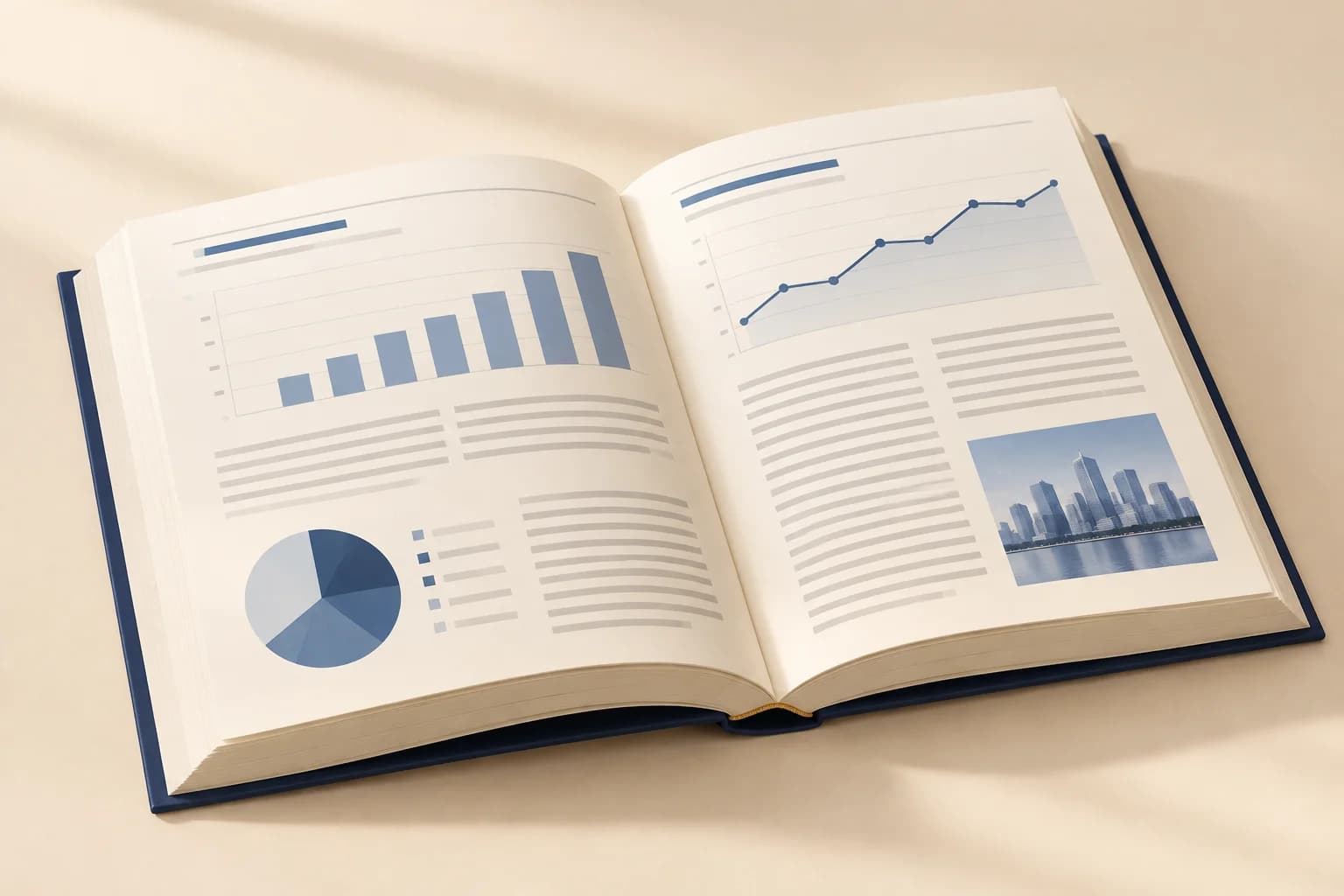
Details that change the finished product
Construction decisions with a practical effect
Make data readable on paper
Keep chart lines and lettering as vectors where possible. For a black-only edition, check that categories remain distinct in grayscale and that fine reversed lettering survives the chosen stock and print process.
Build the spine from the selected paper
The text block depends on leaf count, actual paper thickness and binding allowance. A conventional duplex interior with 240 pages has 120 leaves; covers and endpapers are separate. Finalize the cover drawing after the paper and page count are agreed.
Balance the cover with distribution
A flexible paperback keeps a conference or training edition easier to carry. A casebound edition adds rigid boards and endpapers for presentation. Check opening resistance, hinge movement and cover scuffing on the selected sample.
Business Editions for Different Readers
Author and leadership editions
A text-led paperback with clear chapter navigation supports sustained reading and distribution at talks. Prioritize opacity and readable type over decorative finishing.
Company histories
A casebound edition can combine narrative, milestones and archival photographs. Proof a representative image-and-text spread so the paper serves both.
Training and reference books
Allow more space for tables, diagrams and annotations. If users need fold-back opening or extensive writing, compare a workbook or wire-bound format.
Solve the risk before production
Keep Charts and Reference Pages Usable
The critical finished-product check
A chart that works on a screen can lose meaning in print when its labels are too small or colored series become similar gray tones. Test the final-size layout and use line styles, symbols or direct labels as well as color.
Sample and approval
Review the Pages Readers Will Use Most
Free samples are available, with preparation completed within 15 days. Confirm the sample scope; courier arrangements and transit time are separate.
Structural sample
Checks dimensions, fit and assembly using unprinted or representative materials. It does not establish final color.
Printed proof
Checks text, image reproduction and artwork on the agreed proof medium. It may not reproduce final assembly or every finish.
Complete finished sample
Check the most demanding chart, text spread and index alongside the cover, gutter and paper opacity.
From brief to delivery
Plan Your Business Book Order
Build and approve the order in five steps
Define the edition
Send the title, language, quantities, trim size, page count and intended use.
Agree the print plan
Compare paper, binding, color-page map, cover finish and delivery scope on the same quantity basis.
Approve and release
Approve the correct PDF revision and the agreed sample. Confirm packing labels and destination before production release.
- Supply one complete interior PDF in reading order, including intentional blank pages, and a separate cover based on the approved spine drawing. Check the contents page, index, running heads and all cross-references after pagination is final.
- Keep charts as vectors and embed fonts. Review continuous-tone images at their final placed size; approximately 300 effective ppi is a useful starting point for close reading. Extend full-bleed artwork to the approved bleed boundary.
Project questions
Planning Business Book Printing
Is a business book different from a company brochure?
A business book develops an extended argument or reference across chapters. A brochure is usually designed for a shorter sales message. Choose the book format when readers need sustained reading, navigation and a shelf spine.
Can some pages be color and others black and white?
Yes, the production plan can be evaluated around a page-by-page color map. Identify every color page and whether images can be grouped into sections. Keep the quoted page map with the approved PDF so a later edit does not silently change the print scope.
What should the sample check?
Check final-size chart labels, show-through, page turning, inner margins and cover finish. A PDF proof checks content and layout; a physical bound sample is needed to assess paper feel, thickness and opening behavior.
What information is needed for pricing?
Provide complete-book quantities per title, language and binding, trim size, interior page count, paper, color plan, cover finish and delivery destination. Quantity breaks should compare the same specification; production and transport time are separate.
Specify the finished product.
Send trim size, final interior page count, quantity per title and language, paperback or hardcover preference, paper choice and color-page requirements. Include cover finishes, destination and required arrival date.