Table of Contents
- How Far Ahead Should Yearbook Printing Be Planned?
- Reverse Yearbook Schedule by Milestone
- Recommended Production Routes for Fixed Delivery Dates
- The File Freeze: When Editorial Changes Must Stop
- Digital Proof, Physical Proof and Final Approval Timing
- Printing, Binding and Finishing Checkpoints
- Packing, Freight Booking and US Delivery Planning
- What to Do When the Yearbook Schedule Slips
- Timeline Details to Include in a Quote Request
- Frequently Asked Questions About Yearbook Deadlines
- Send Your Required Delivery Date for Schedule Review
A reliable yearbook printing timeline starts with the required delivery date, then works backward through freight, packing, finishing, binding, printing, proof approval and file preparation. This guide explains the milestones, buffers and quote details buyers should plan before placing a bulk yearbook order.
How Far Ahead Should Yearbook Printing Be Planned?

A yearbook printing timeline should begin with the date the books must arrive, not the date the files are expected to be finished. Work backward from that date through freight, export packing, binding, finishing, printing, proof approval and file preparation.
There is no universal lead time for every yearbook. Final production time depends on page count, quantity, finished size, paper, cover construction, binding, special finishes, packing requirements and destination. A short digital run with a simple softcover has a different schedule from a large offset order with a hardcover case, sewn binding and ocean freight.
For a school yearbook schedule, identify three dates at the beginning:
- Required arrival date: when the books need to be physically available at the school, warehouse or distribution point.
- Final approval date: the last date the printer can receive an approved proof and release the job.
- Internal content deadline: the date editors, staff and contributors must complete pages and corrections.
Allow additional time when several people must approve the book, when the delivery date cannot move, or when freight must be coordinated across multiple locations.
Reverse Yearbook Schedule by Milestone

The most useful yearbook production schedule is a reverse schedule with one owner and one approval point for every milestone. The dates below are planning stages, not universal promises; the printer should confirm the actual production and transport plan against the specifications.
| Milestone | What must be completed | Schedule risk |
|---|---|---|
| Required arrival | Books received, counted and ready for distribution | Missed freight connection, customs or final-mile delay |
| Freight booking and packing plan | Carton count, delivery address and shipping method confirmed | Incorrect weight, address changes or late booking |
| Production complete | Printing, binding, finishing and inspection finished | Rework, material availability or binding capacity |
| Final proof approval | Approved content, color expectations and specifications released | Late corrections restart the proofing cycle |
| File freeze | Print-ready interior and cover files locked | Editorial changes affect pagination or cover details |
| Preflight and proof preparation | Fonts, images, bleeds, page order and technical files checked | Missing links, incorrect trim or unsuitable color files |
| Editorial completion | All pages, captions, names, advertisements and index content supplied | Multiple contributors deliver inconsistent files |
Buyer Tasks, Printer Tasks and Approval Owners
Assign a named owner to each decision. The buyer or yearbook committee normally owns content accuracy, names, captions, page order, quantity and delivery information. The printer owns preflight feedback, proof production, manufacturing controls and shipping documentation. One designated approver should send final approval so that conflicting instructions do not reopen the job.
Where to Place Schedule Buffers
Place buffers before final approval and before the required arrival date. A pre-approval buffer covers missing files and correction rounds. A logistics buffer covers packing, freight handoff, customs processing and local delivery. Do not treat unused proofing time as guaranteed shipping time; the stages have different risks.
Recommended Production Routes for Fixed Delivery Dates
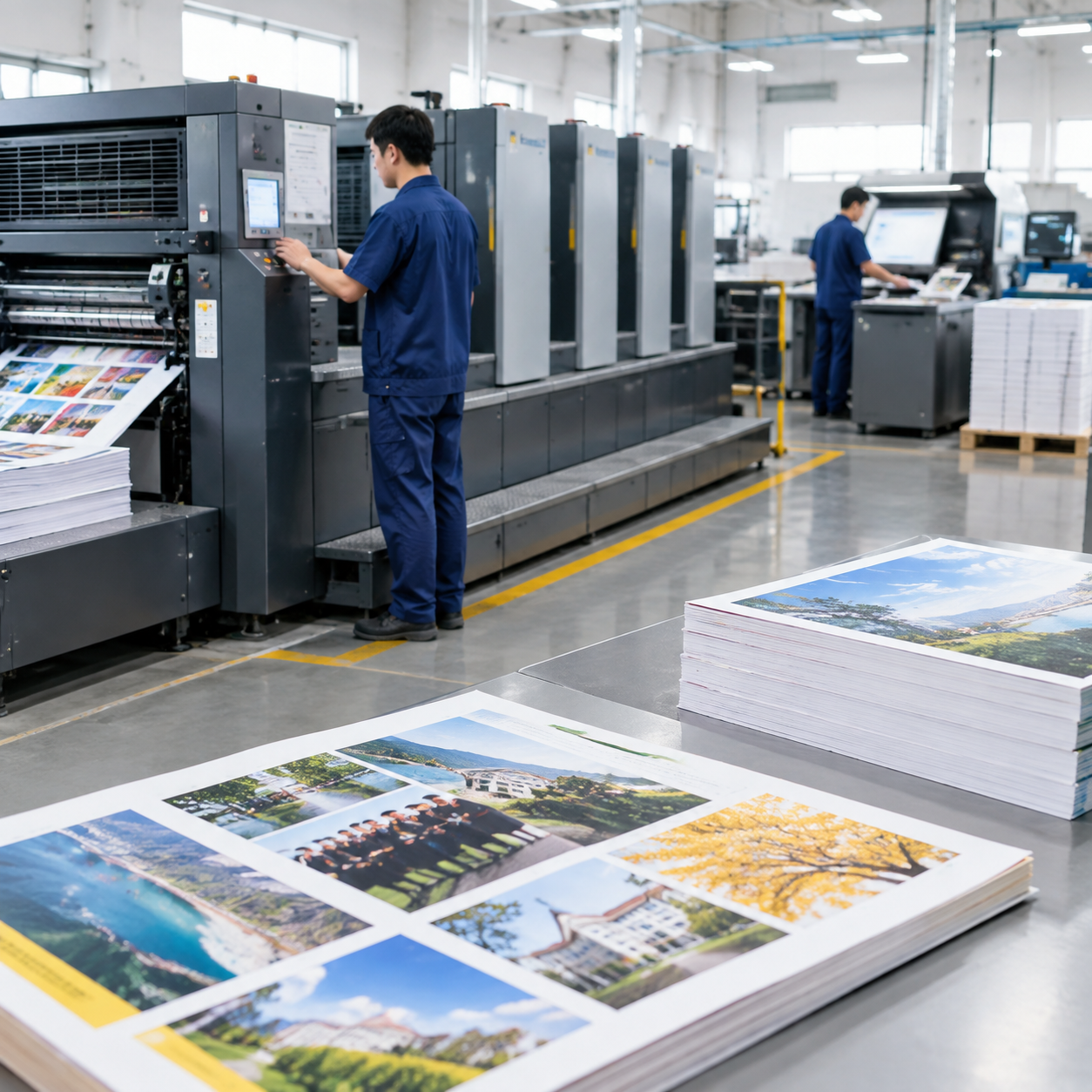
Choose the production route after confirming quantity, page count and delivery requirements. Digital printing is usually better suited to shorter runs or variable content, while offset printing can be more efficient for larger quantities with a stable design. The correct choice depends on the complete specification and the printer’s available equipment.
Digital Short Runs and Offset Bulk Runs
| Route | Best fit | Planning considerations |
|---|---|---|
| Digital short run | Lower quantities, late content changes or multiple versions | Can reduce setup requirements, but unit economics may be less favorable at high volume. Confirm page count, binding capacity and color consistency across the run. |
| Offset bulk run | Larger quantities, repeatable pages and consistent color requirements | Requires more disciplined prepress and a firm file freeze. Plate setup and press scheduling should be confirmed before approval. |
| Split or phased delivery | Organizations with separate school, district or event dates | Requires clear carton labeling, quantities by destination and a shipping plan. It may increase handling or freight complexity. |
Lemon Printing operates a self-owned facility in the Guangzhou-Shenzhen manufacturing corridor with more than 130 skilled workers and 8+ offset and digital presses. Its prepress, printing, binding, finishing, quality inspection, packing and export preparation are handled in-house. That structure can simplify communication across production stages, but the final schedule still depends on the job specification, approved files, quantity and destination.
The File Freeze: When Editorial Changes Must Stop

A file freeze is the agreed point after which editorial changes stop and the approved files move into production. For a yearbook, the freeze should include the interior PDF, cover file, page order, quantity, finished size, paper, binding and finishing instructions.
Changes after the freeze can affect more than one page. Adding or removing a page may alter the page count, imposition, spine width and binding setup. A changed cover can require a new proof, while a replacement image may affect color review. Late name corrections may be manageable, but they still need to be assessed before the printer confirms whether the job can remain on schedule.
Before freezing files, check:
- All student, staff, sponsor and advertiser names.
- Page count and blank-page requirements.
- Trim size, bleed, safe margins and cover spine information.
- Image resolution, color mode, fonts and embedded or outlined text.
- Cover and interior file naming, page order and version numbers.
- Quantity by destination and the final shipping address.
Use one version-controlled approval email or purchase-order attachment. “Approved for production” should be explicit and should identify the exact file version.
Digital Proof, Physical Proof and Final Approval Timing

A digital proof is useful for checking content, page order, trim and layout. A physical proof is more useful for reviewing the actual paper, cover construction, binding appearance and how images reproduce on the selected materials. Neither proof replaces careful review of the approved files.
Build the yearbook proofing timeline around the number of reviewers and correction rounds. Send the proof to one coordinated approval owner, collect comments in one document and return a single consolidated response. Separate editorial corrections from production questions so the printer can identify what must change and what is already approved.
Why a Physical Proof Can Affect the Critical Path
A physical proof can affect the critical path because it requires production, inspection and transport before approval. It is especially relevant when the cover uses lamination, foil, spot UV, embossing or a particular board and paper combination. Ask whether the physical proof represents the final materials and construction or is only a digital-content check.
Approve color with realistic expectations. Screen images, digital proofs and printed sheets use different viewing conditions and color systems. The buyer should identify important brand colors, but should also ask the printer how those colors will be controlled on the selected press and paper.
Printing, Binding and Finishing Checkpoints

Production should be managed as a sequence of checkpoints rather than one single “printing” date. The printer should confirm when materials are ready, when presswork begins, when binding starts, when finishing is complete and when inspection and packing are released.
- Prepress: confirm files, bleeds, page order, imposition and cover specifications.
- Press setup: confirm the selected offset or digital press, paper and proof reference.
- Printing: monitor registration, image reproduction, ink or toner coverage and sheet handling.
- Drying or curing: allow the printed surface to stabilize before subsequent operations when required by the materials and process.
- Binding: check signatures or sections, cover alignment, spine formation, sewing or adhesive performance as applicable.
- Finishing: inspect lamination, foil, spot UV, embossing, trimming and corner quality where specified.
- Final inspection: sample finished books for pagination, damage, appearance and construction before packing.
Binding choice can influence the schedule. Perfect binding uses adhesive and a wraparound cover; sewn or casebound construction adds more operations; Wire-O uses punched pages and a wire element. Explain the intended use and opening behavior in the quote request so the printer can recommend a workable construction.
Packing, Freight Booking and US Delivery Planning

Production completion is not the customer delivery date. After manufacturing, the books still need inspection, carton packing, export preparation, freight movement, customs processing and final-mile delivery to the correct address.
Why Production Completion Is Not the Customer Delivery Date
For bulk yearbook delivery from China to the United States, the logistics plan should state the shipping method, destination, delivery terms, carton information and who is responsible for import-related requirements. Transit time can vary by route, booking, port or airport conditions, customs processing and domestic delivery.
Before packing, confirm:
- Exact consignee name, delivery address, phone number and receiving hours.
- Carton labeling, school or department identifiers and quantities by destination.
- Carton dimensions, gross weight and expected carton count.
- Whether delivery requires a liftgate, appointment, inside delivery or special receiving procedure.
- Whether the shipment is going to one location or multiple destinations.
Keep a logistics buffer between the estimated arrival and the event, distribution day or school ceremony. The final MOQ, production time, pricing and shipping depend on product specifications, quantity, finishing and destination.
What to Do When the Yearbook Schedule Slips

When a yearbook schedule slips, identify the affected milestone and the decisions that can still be changed. A late editorial file, late proof approval and late freight booking require different responses.
- Confirm the new facts: ask which stage is complete, which stage is blocked and what information the printer needs.
- Protect the file freeze: avoid reopening approved pages unless the correction is essential. Group any necessary changes into one controlled revision.
- Review production options: ask whether a different press, binding method, finish, quantity split or delivery route is technically available.
- Prioritize the delivery: identify which cartons or locations are most time-sensitive if a phased shipment is possible.
- Recalculate the arrival plan: obtain an updated production-completion estimate and a separate freight estimate.
Do not assume that removing a finish automatically restores lost time. Some changes introduce new proofs, material changes or setup work. Any revised plan should be confirmed in writing with the printer and the buyer’s approval owner.
Timeline Details to Include in a Quote Request

A quote request produces a more useful yearbook printing deadline when it includes both product specifications and schedule constraints. The printer needs enough detail to separate manufacturing time from freight time and to identify the approval milestones.
Specification, Quantity, Finish and Destination Variables
| Information | What to provide | Why it affects the schedule |
|---|---|---|
| Product | Yearbook format, finished size, portrait or landscape orientation | Affects imposition, equipment setup and packing |
| Interior | Page count, color pages, paper type and approximate ink coverage | Affects press planning, materials and drying or curing requirements |
| Cover | Hardcover or softcover, board, paper, lamination and artwork | Cover construction and special finishes add operations |
| Binding | Perfect bound, sewn, casebound, saddle stitch or Wire-O as applicable | Different binding lines have different capacity and handling steps |
| Quantity | Total copies, overage expectations and quantity by destination | Determines production route, carton count and shipping plan |
| Approvals | Digital proof, physical proof, number of reviewers and final approver | Defines the proofing timeline and decision path |
| Delivery | Required arrival date, full address, receiving rules and preferred shipping method | Separates manufacturing completion from final delivery planning |
Also state whether the date is flexible, whether partial delivery is acceptable and whether the books are tied to a graduation, reunion, fundraiser or other fixed event. Ask the printer to return a milestone schedule showing the expected file deadline, proof approval date, production completion and shipping estimate.
Frequently Asked Questions About Yearbook Deadlines

The answers below provide planning principles. The confirmed schedule must be based on the final product specification, approved files, quantity and delivery destination.
Send Your Required Delivery Date for Schedule Review

A dependable yearbook printing timeline starts with a complete specification and a fixed arrival date. Lemon Printing can review the production route and identify the milestones that need to be protected before approval.
FAQ
What is the most important date in a yearbook printing timeline?
The most important date is the required arrival date at the school, warehouse or distribution point. Work backward from that date and separately account for production completion, packing, freight, customs and final-mile delivery.
When should yearbook files be frozen?
Files should be frozen after all editorial corrections, page order, cover details and specifications are approved, with enough time remaining for preflight, proof review and manufacturing. The exact date depends on the job and delivery route.
Is a physical proof necessary for a school yearbook?
Not always. A digital proof can be sufficient for layout and content review, while a physical proof is useful for checking paper, cover construction, binding and special finishes. It adds time because it must be produced and reviewed before final approval.
Can a printer start production before the final proof is approved?
Some preparatory work may be possible, but bulk production normally depends on approved files and specifications. Ask the printer which activities can proceed without creating rework or changing the approved production plan.
Does the production completion date equal the delivery date?
No. Production completion is followed by inspection, packing, export preparation, freight, customs processing and final delivery. The quote should show manufacturing and shipping milestones separately.
What information helps a printer confirm a yearbook printing deadline?
Provide the finished size, page count, paper, cover, binding, finishing, quantity, proof requirements, shipping destination, receiving rules and required arrival date. Also identify whether partial delivery is acceptable.
Request a Yearbook Timeline Review
Send Lemon Printing your product type, quantity, finished size, page count, interior and cover paper, binding or finishing requirements, delivery destination and target arrival date. The confirmed MOQ, production time, pricing and shipping plan will depend on the complete specification and destination.