Table of Contents
- What Determines Yearbook Printing Cost?
- Yearbook Cost-Factor Comparison Table
- Quantity, Page Count and Press Setup
- Paper, Binding and Cover Finish
- Proofing, Packing and Freight
- Recommended Yearbook Configurations by Budget Priority
- Where to Simplify Without Making the Book Feel Cheap
- How Page Signatures Can Affect a Yearbook Quote
- Offset Versus Digital Cost Logic for Yearbooks
- Hardcover Features That Add Production Steps
- Foil, Spot UV, Embossing, Debossing and Specialty Packaging
- Hidden Quote Gaps That Cause Budget Trouble
- Proofs, Cartons, Pallets, Duties and Delivery Scope
- How to Compare Two Yearbook Printing Quotes
- Complete Yearbook Quote Request Checklist
- Why Final MOQ, Production Time, Pricing and Shipping Are Specification-Dependent
- Frequently Asked Questions About Yearbook Printing Cost
A useful yearbook printing quote must define quantity, page count, paper, binding, cover construction, finishing, proofing, packing and delivery scope. This guide explains how each choice affects production and what buyers should include when requesting comparable prices.
What Determines Yearbook Printing Cost?
Yearbook printing cost is determined by the complete production specification, not only the number of copies. The main variables are finished size, page count, quantity, paper, color coverage, binding, cover construction, finishing, proofing, packing and delivery scope.
Several of these variables interact. A higher yearbook order quantity can reduce the setup cost allocated to each copy, while a heavier paper may increase both manufacturing and freight costs. Changing the page count can affect press imposition, binding thickness and carton weight at the same time.
Buyers should therefore ask for a specification-based quote rather than a general price per book. Lemon Printing handles prepress, printing, binding, finishing, inspection, packing and export preparation in-house at its factory-backed facility. Buyers evaluating custom book printing options can use one specification to review these connected production stages.
Yearbook Cost-Factor Comparison Table

The most useful cost comparison identifies what changes the unit price and what may create a separate charge. Use the table below to prepare a school yearbook printing quote that another supplier can reproduce on the same basis.
| Cost factor | Production effect | What to state in the request |
|---|---|---|
| Quantity | Distributes setup across more copies and may influence press choice | Required quantity plus any separately priced quantity breaks |
| Finished size | Affects sheet use, imposition, board cutting and shipping volume | Width × height, orientation and measurement unit |
| Page count | Changes paper use, press forms, binding work and spine width | Number of interior pages; state whether endsheets are excluded |
| Interior paper | Changes image appearance, opacity, bulk and weight | Paper type, weight in gsm and preferred surface |
| Binding | Determines folding, gathering, sewing or adhesive operations | Casebound, sewn casebound, PUR perfect bound or another method |
| Cover and finishes | May require board, lamination, dies, screens or multiple passes | Cover material, board thickness and each finish with its location |
| Proofing | Adds a preproduction checkpoint and possible courier shipment | PDF proof, printed color proof, binding dummy or finished sample |
| Packing and freight | Affects cartons, pallets, chargeable weight and delivery responsibility | Copies per carton, pallet needs, destination and requested shipping scope |
For a broader explanation of setup, materials and finishing charges, see this commercial printing cost breakdown.
Quantity, Page Count and Press Setup
Quantity affects cost per copy because prepress, plate making, press setup and binding setup are allocated across the production run. This does not mean every increase produces the same percentage reduction.
Request prices at realistic quantity breaks, such as the required quantity and one higher alternative. Also state whether the printer may supply an agreed manufacturing overrun or must deliver an exact quantity. Page count should be final or close to final because adding pages can create another press form, change spine dimensions and increase freight weight.
Paper, Binding and Cover Finish
Paper should be compared by type, weight and actual suitability—not by weight alone. GSM means grams per square meter, while caliper means paper thickness. Two papers with the same gsm can have different bulk, opacity, stiffness and printed appearance.
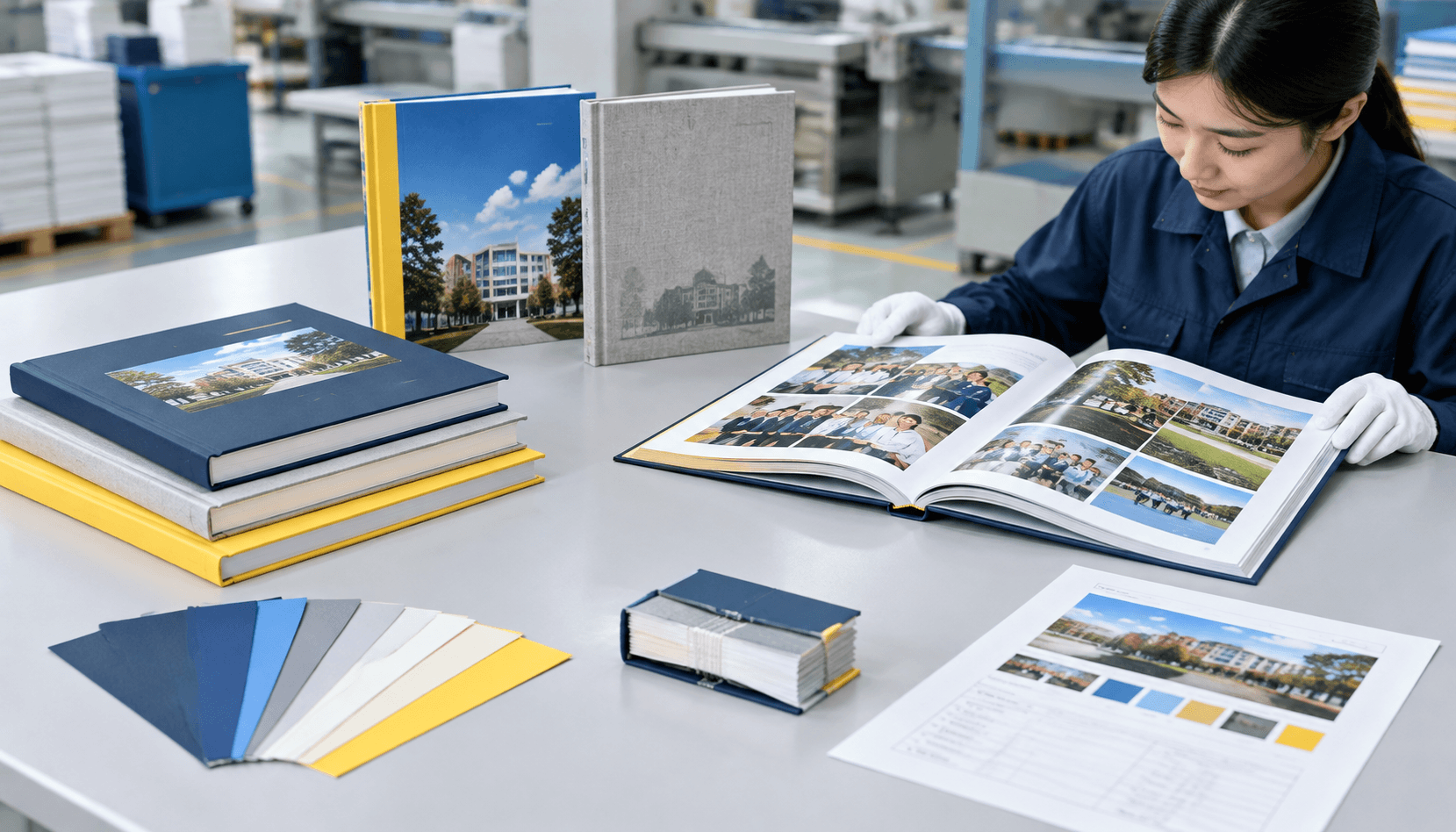
Gloss or silk-coated paper can support photo reproduction, while uncoated paper provides a softer surface but behaves differently with dense images. For hardcovers, specify whether sections are thread sewn or adhesive bound into the case. Also define cover board, printed paper or other covering material, lamination and endsheet stock. A useful comparison of book binding options can help buyers match durability expectations to construction.
Proofing, Packing and Freight
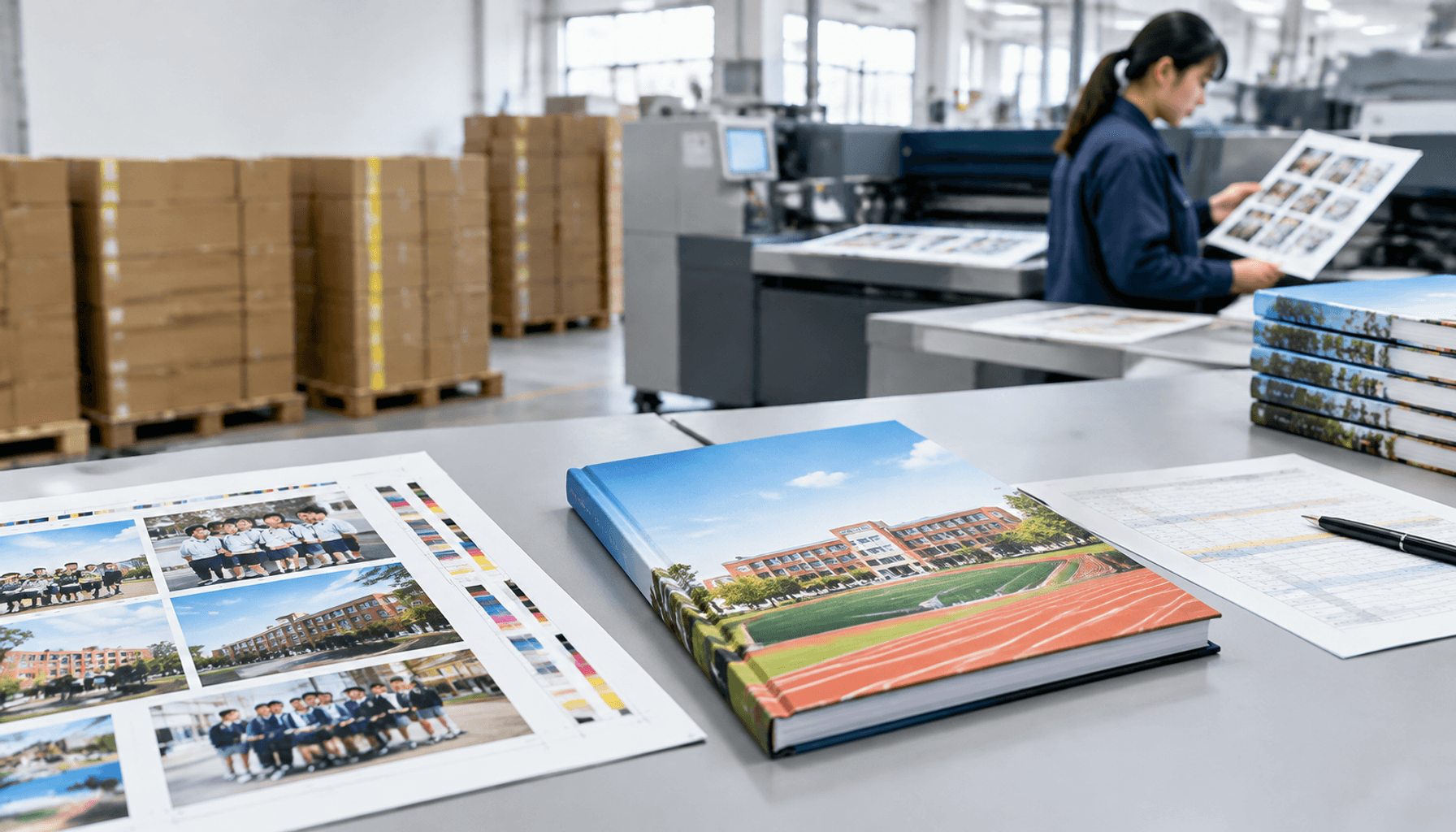
Proofs, export packing and freight are part of the purchasing cost even if they are shown separately from printing. A PDF proof checks content, page order and basic prepress issues, but it is not a dependable physical reference for paper, binding or exact printed color.
A printed proof or finished sample adds time and expense but may be appropriate for image-heavy yearbooks or complex covers. Buyers should also state carton limits, pallet requirements, destination postal code and whether freight is requested to a port, airport, warehouse or named address. The printing proof approval checklist explains what to review before bulk production.
Recommended Yearbook Configurations by Budget Priority

A practical configuration starts with the book’s expected use and then assigns spending to the features readers will notice. These examples are starting points for quotation, not fixed products or universal cost tiers.
| Budget priority | Possible specification direction | Main trade-off |
|---|---|---|
| Control the unit cost | Standard trim size, efficient page count, one interior paper, laminated printed cover and limited special finishing | Less cover decoration and fewer material transitions |
| Balance durability and presentation | Casebound construction, suitable coated interior stock, durable lamination and one focused cover feature | More binding and finishing work than a basic softcover |
| Premium commemorative finish | Sewn casebound construction, selected endsheets, specialty cover surface and registered decorative finishes | More setup, proofing and handling stages |
| Short run or variable content | Digitally printed interior or hybrid production after file review | Different unit-cost logic and possible limits on paper or finishing combinations |
Ask the printer to quote the preferred configuration and one controlled alternative. Changing one factor at a time makes the cost difference easier to understand.
Where to Simplify Without Making the Book Feel Cheap
Cost can often be controlled by simplifying secondary features instead of reducing basic production quality. Start with choices that remove setup operations or material changes.
- Use one interior paper rather than changing stock between editorial and photo sections.
- Select a trim size that fits the printer’s production equipment efficiently.
- Keep the page count compatible with the proposed signature plan.
- Use one well-positioned foil or spot UV element instead of several separate applications.
- Choose standard export cartons instead of individual presentation boxes.
- Retain readable image resolution, sufficient margins and appropriate binding construction.
Removing protective lamination, selecting paper without testing opacity or weakening the binding may lower the quote but can create visible or functional problems.
How Page Signatures Can Affect a Yearbook Quote
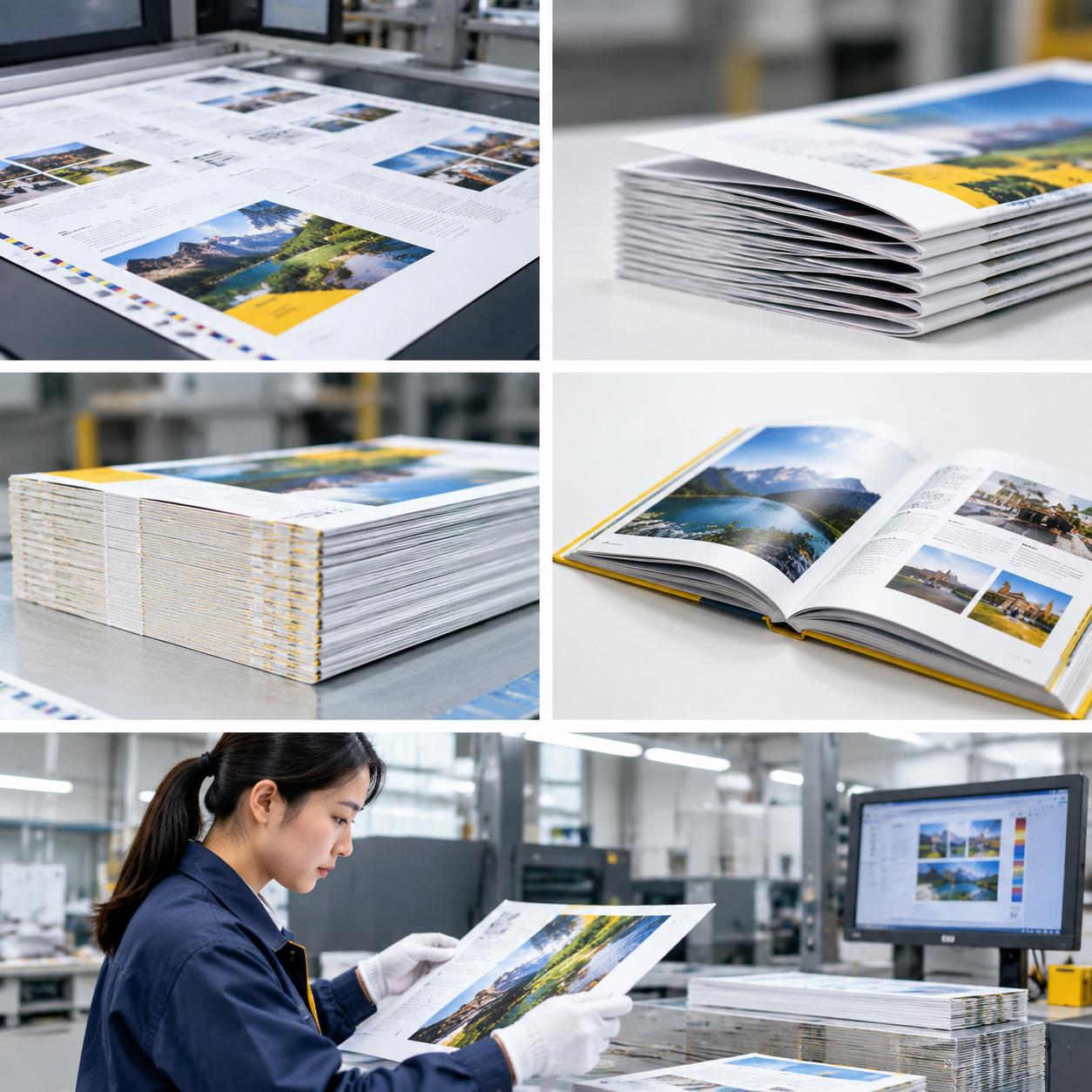
A signature is a large printed sheet that is folded into a grouped sequence of pages for binding. Yearbook interiors are commonly planned in signatures, but the most efficient page multiple depends on press format, finished size, paper, folding scheme and binding method.
A printer may impose 8, 16 or another number of pages in one form. If the supplied page count does not fit the selected plan, the quote may require a smaller form, blank pages or a revised imposition. For example, adding only two editorial pages could require more than two pages of production capacity.
Do not add blank pages before asking the printer. Submit the intended page count and request an imposition review. Keep cover artwork provisional until the text paper, page count and construction are confirmed because these determine the final spine width.
Offset Versus Digital Cost Logic for Yearbooks
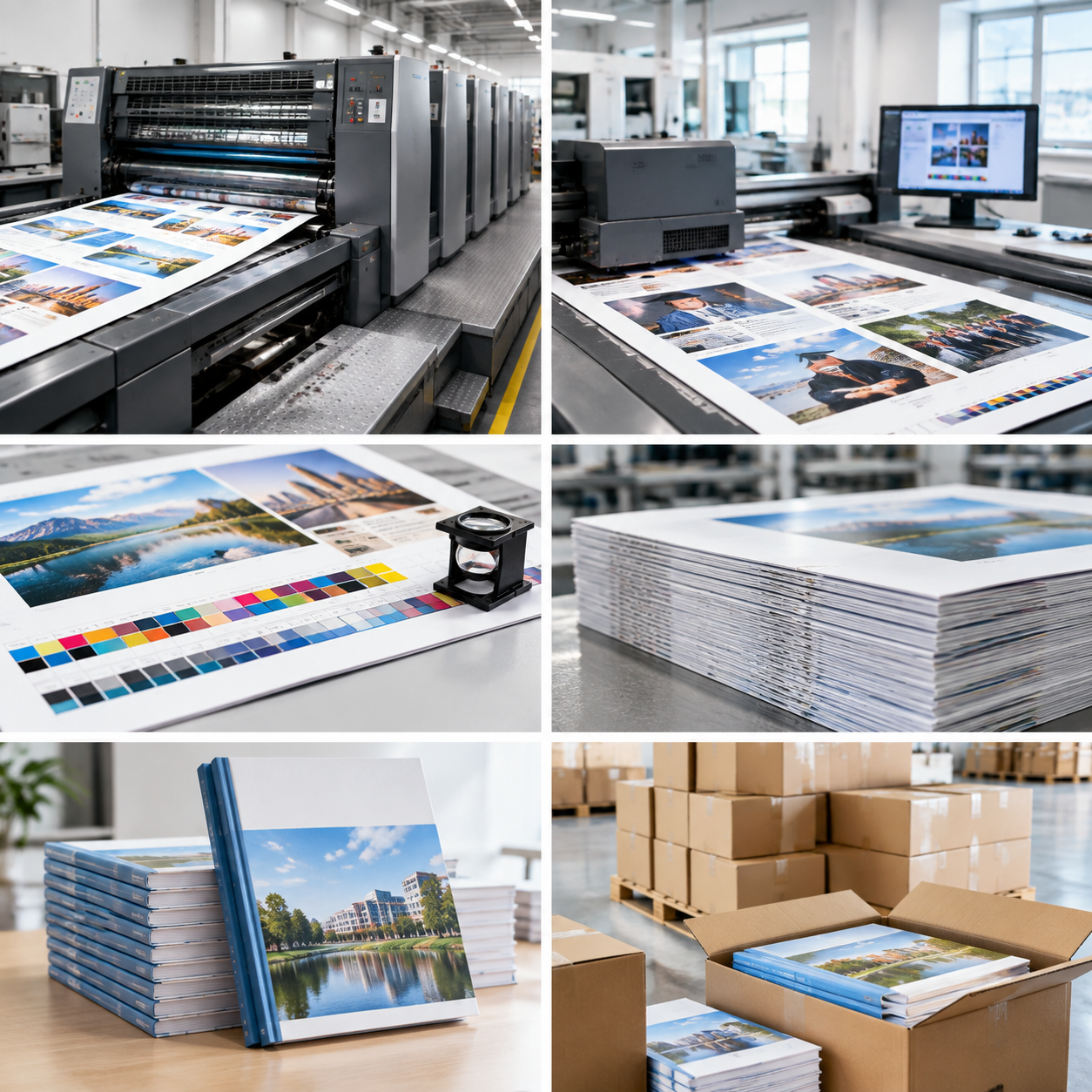
Offset printing has higher fixed setup requirements, while digital printing avoids plate making and can be more practical for some short or variable runs. The economical crossover is specification-dependent, so quantity alone should not decide the process.
| Consideration | Offset printing | Digital printing |
|---|---|---|
| Setup | Requires plates, make-ready and press calibration | No offset plates; file processing and machine setup still apply |
| Run length | Fixed setup can be distributed across larger runs | Often considered for shorter quantities |
| Variable data | Identical sheets are the straightforward approach | Can support approved variable pages or covers |
| Paper and sheet format | Broad commercial choices, subject to press and finishing limits | Limited by the selected digital equipment and sheet format |
| Color evaluation | Uses press controls and an approved production target | Uses the digital device’s color workflow and limits |
Lemon Printing operates more than eight offset and digital presses. Its production team reviews size, page imposition, quantity, material and personalization requirements before recommending a press route.
Hardcover Features That Add Production Steps
Hardcover yearbook cost rises as construction adds materials, setup and handling. A casebound book may require printed and folded sections, gathering, sewing or adhesive binding, trimming, endsheet attachment, case making, casing-in and pressing.
Board thickness, spine shape, covering material, endsheet stock, head and tail bands, ribbon markers and dust jackets should be itemized. Thread sewing adds a production stage but may be chosen for durability and opening behavior. A square spine and a rounded spine also follow different case-making requirements.
Buyers unfamiliar with these components can review this hardcover book specification guide before requesting a hardcover yearbook cost.
Foil, Spot UV, Embossing, Debossing and Specialty Packaging
Each specialty finish should be quoted as a defined operation because it may require a die, screen, registration step, curing pass or additional inspection. Names alone are not enough.
| Feature | Quote information needed | Production concern |
|---|---|---|
| Foil stamping | Color, artwork area, position and substrate | Die preparation, heat and pressure suitability |
| Spot UV | Gloss area, registration relationship and base lamination | Registration tolerance and surface compatibility |
| Embossing or debossing | Artwork, depth expectation, position and whether combined with foil | Die set, board or cover response and reverse-side effect |
| Specialty packaging | Box style, material, printing, insert and packing method | Separate structural design, tooling, assembly and shipping volume |
Provide vector artwork for dies where possible and mark each finish on a separate file layer. Fine lines, close registration and finishes crossing hinges require technical review.
Hidden Quote Gaps That Cause Budget Trouble
A quote gap occurs when a necessary product or service is not included, defined or priced on the same basis. Typical gaps include unspecified proof methods, missing prepress correction limits, unclear overrun rules, nonstandard packing and incomplete freight scope.
Another common problem is comparing similar-sounding materials. “Coated paper,” “hardcover” and “foil logo” do not define paper weight, board construction, binding method or finish area. Ask suppliers to note substitutions and exclusions rather than silently filling gaps with their own assumptions.
Proofs, Cartons, Pallets, Duties and Delivery Scope
Printing and delivered cost should be separated clearly. The quote should identify the proof, bulk packing method, pallet status, shipping mode, named destination and which party handles import clearance, duties and local delivery.
- Proof: State the type, quantity, courier inclusion and number of correction rounds.
- Cartons: Define copies per carton where lifting limits or distribution plans apply.
- Pallets: Confirm whether pallets are required and whether destination rules affect material or dimensions.
- Duties and taxes: Ask whether they are included, excluded or payable by the importer.
- Delivery: Provide a full postal code and identify residential, school, warehouse or commercial receiving conditions.
Use Lemon Printing’s bulk printed product shipping guide to prepare carton, freight and destination questions.
How to Compare Two Yearbook Printing Quotes
Compare quotes line by line against one controlled specification. A lower total is not directly comparable if it uses different paper, binding, proofing or delivery terms.
- Normalize quantity and page count. Confirm the same number of finished copies and interior pages.
- Check material identity. Compare paper type, gsm, board, endsheets and covering material.
- Verify construction. Distinguish sewn case binding from adhesive-only construction and confirm spine style.
- Map every finish. Check size, location, color and number of applications.
- Review proof and quality scope. Identify what will be approved before production and what inspection is included.
- Separate manufacturing and logistics. Compare cartons, pallets, freight, duties and delivery responsibility.
- Record exclusions. Ask about file corrections, extra proofs, storage, split shipment and destination charges.
Complete Yearbook Quote Request Checklist
A complete yearbook printing quote request gives the printer enough information to plan materials, imposition, press route, binding, packing and delivery. Include the following details:
- Product type and intended use
- Required quantity and useful alternative quantity breaks
- Finished width × height and orientation
- Interior page count, excluding the cover and identifying any unprinted pages
- Full color or other color requirement for the interior and cover
- Interior paper type, gsm and surface
- Binding method, including sewing or adhesive preference
- Cover board thickness, covering material, lamination and spine style
- Endsheet specifications and whether they are printed
- Foil, spot UV, embossing, debossing, ribbon, dust jacket or other features
- Personalized names, covers, pages or variable data requirements
- Requested proof type and approval process
- Packing requirements, carton limits and pallet needs
- Delivery country, city, postal code and receiving conditions
- Requested freight scope and shipping mode, if known
- Target date, including any fixed school distribution or event date
- Artwork status and file format
Attach reference photographs or a previous edition if materials or construction must be matched. Physical samples should be described as references rather than assumed to be automatically reproducible.
Why Final MOQ, Production Time, Pricing and Shipping Are Specification-Dependent
Final MOQ, production time, pricing and shipping depend on product specifications, quantity, finishing and destination. Material availability, proof approval, press scheduling, binding complexity, packing method and freight routing can all change the production plan.
For this reason, an early budget indication should not be treated as the final order quotation. Confirm the artwork, materials, quantity, proof scope and delivery terms before issuing a purchase order.
Frequently Asked Questions About Yearbook Printing Cost
There is no reliable universal price per yearbook because construction and delivery requirements vary substantially. The answers below address the quote questions buyers most often need to resolve before a printer can calculate a meaningful price.
FAQ
How much does custom yearbook printing cost per copy?
There is no dependable per-copy figure without a complete specification. Quantity, size, page count, paper, binding, cover construction, finishes, proofing, packing and destination all affect custom yearbook cost. Request the same specification at two or three realistic quantity levels to understand the unit-cost pattern.
Does a larger yearbook order quantity always reduce the unit price?
A larger run often distributes fixed setup costs across more copies, but the reduction is not constant. Additional paper purchases, binding capacity, packing, freight weight and quantity breakpoints also affect the result. Ask for priced quantity alternatives rather than assuming a fixed percentage saving.
Why does a hardcover yearbook cost more than a softcover book?
A hardcover requires board, covering material, endsheets and case-making operations. Casing-in, pressing, sewing, head and tail bands, ribbons, foil or other features can add further stages. The exact difference depends on the construction specified for both alternatives.
Must a yearbook page count be a multiple of four?
Printed book pages generally need to fit the printer’s imposition and binding plan, but the efficient multiple may be 8, 16 or another number rather than only four. It depends on page size, press sheet, paper and binding. Ask the printer to review the planned page count before adding blank pages.
Can each yearbook have a personalized student name or cover?
Personalization may be possible through variable-data printing, individually applied foil, labels or another approved workflow. The buyer must define what changes, provide organized data and approve a matching method. Personalization can affect press selection, proofing, sorting, packing and cost.
Should a school yearbook printing quote include freight and import duties?
The quote should state clearly whether freight, customs clearance, duties, taxes and local delivery are included or excluded. Provide the complete destination and requested shipping scope. A factory price, port price and delivered price represent different responsibilities and should not be compared as if they were equivalent.
What files are needed for an accurate yearbook quote?
A final print-ready file is not always necessary for an initial quote, but the printer needs the intended size, page count, color requirements and finish locations. Provide sample layouts, a cover concept and separate finish layers where available. Final production values, including spine width, should be confirmed after paper and page count approval.
Request a Specification-Based Yearbook Quote
Send Lemon Printing your product type, required quantity, finished size, interior page count, paper preferences, binding and cover construction, special finishes, delivery destination and target date. Include artwork or a previous-edition reference if available. The production team will review the specification before confirming the applicable MOQ, production plan, price and shipping scope.