Book Printing · Formats & construction
Hardcover Notebook Printing
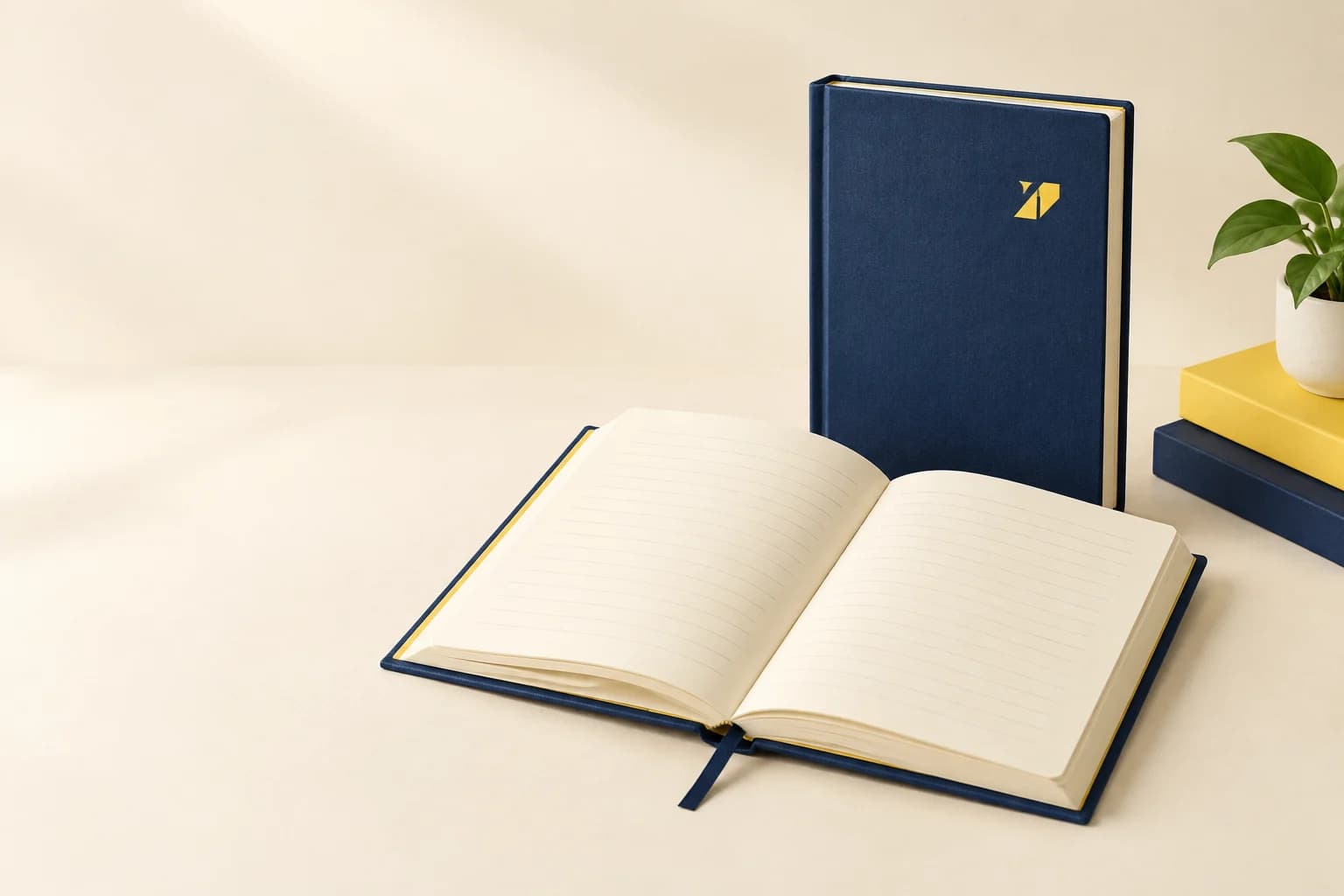
Combine a rigid case with ruled, dotted or plain writing pages. Select the paper and binding for the pens, desk use and carrying habits of the intended user.
- Rigid cover with plain, ruled or dotted pages
- Uncoated paper assessed with intended pens
- Case, endpapers and block sized together
Start with the intended use, finished size and quantity. The material and construction can follow.
The product in use
A firm cover around pages made for writing
The case protects the page block and provides a firm surface when the notebook is carried or used away from a desk. Inside, ruling density, page shade and opacity affect everyday writing more directly than cover decoration. A sewn block can support repeated use, but the complete notebook still needs an opening check.
What makes up the finished product?
- Rigid case
- Cover boards protect the writing block and establish the outside shape.
- Writing block
- Paper surface and ruling determine the everyday writing experience.
- Endpapers and accessories
- These connect or complement the block and add thickness where installed.
Specifications and materials
Hardcover Notebook Printing specifications
Use these reference options to build the project brief. Dimensions are design examples; material availability, tooling and production timing depend on the confirmed specification.
| Parameter | Reference or option | Why it matters |
|---|---|---|
| Trim size | 148 × 210 or 210 × 297 mm design references | Compare the usable writing field after the inner margin. |
| Writing stock | 90 or 100 g/m² uncoated supplier references | Test opacity, feathering and penetration with the actual pen. |
| Page count | State printed page faces and leaves explicitly | A leaf has two faces; 160 pages means 80 leaves before separately counted endpapers. |
| Ruling | Plain, lined, square grid or dot grid | Supply spacing and contrast; faint lines must remain visible in print. |
| Binding and case | Bound paper block with separate rigid case | Check opening and endpaper movement near the beginning and end. |
Compare the material and its effect.
Choose the surface and construction for the way the finished product will be used. The options below are selection references, not a guaranteed inventory list.
Writing paper
90 or 100 g/m² uncoated references
Changes opacity, hand feel and block thickness.
Sample check: Test the actual pen and ink.
Printed paper case
Printed wrap with chosen laminate
Carries a full-color brand or illustration.
Sample check: Check hinge flex and surface rub.
Cloth or leatherette case
Material and decoration specified separately
Adds a different touch and marking method.
Sample check: Review the actual covering and stamped swatch.
Selected sample focus — Writing paper: Test the actual pen and ink.
Format & usable space
Hardcover Notebook Printing: Format & Configuration
148 × 210 mm
A5 reference gives a portable writing area.
This is a design reference, not a required size or a manufacturing limit.
Ruling example
Choose 5 mm dot-grid or 7 mm ruled as design examples
A tighter grid serves diagrams and smaller handwriting; wider rules give larger handwriting more space. These are layout choices, not mandatory standards.
See the trim proportions.
These are publishing references, not required sizes. Compare the usable page shape before adapting an existing layout.
Selected: Everyday notebook. Proportions only; not actual size.
Trim dimensions describe the cut page. Artwork bleed, cover overhang, tabs and modules are separate allowances.
View the original format reference
Surface finish options
Printed covers and jackets
Choose the finish for the printed cover or jacket, not automatically for the interior. Check color, rub marks, hinges and compatibility with the cover stock. Cloth and synthetic wraps need a separate material trial.
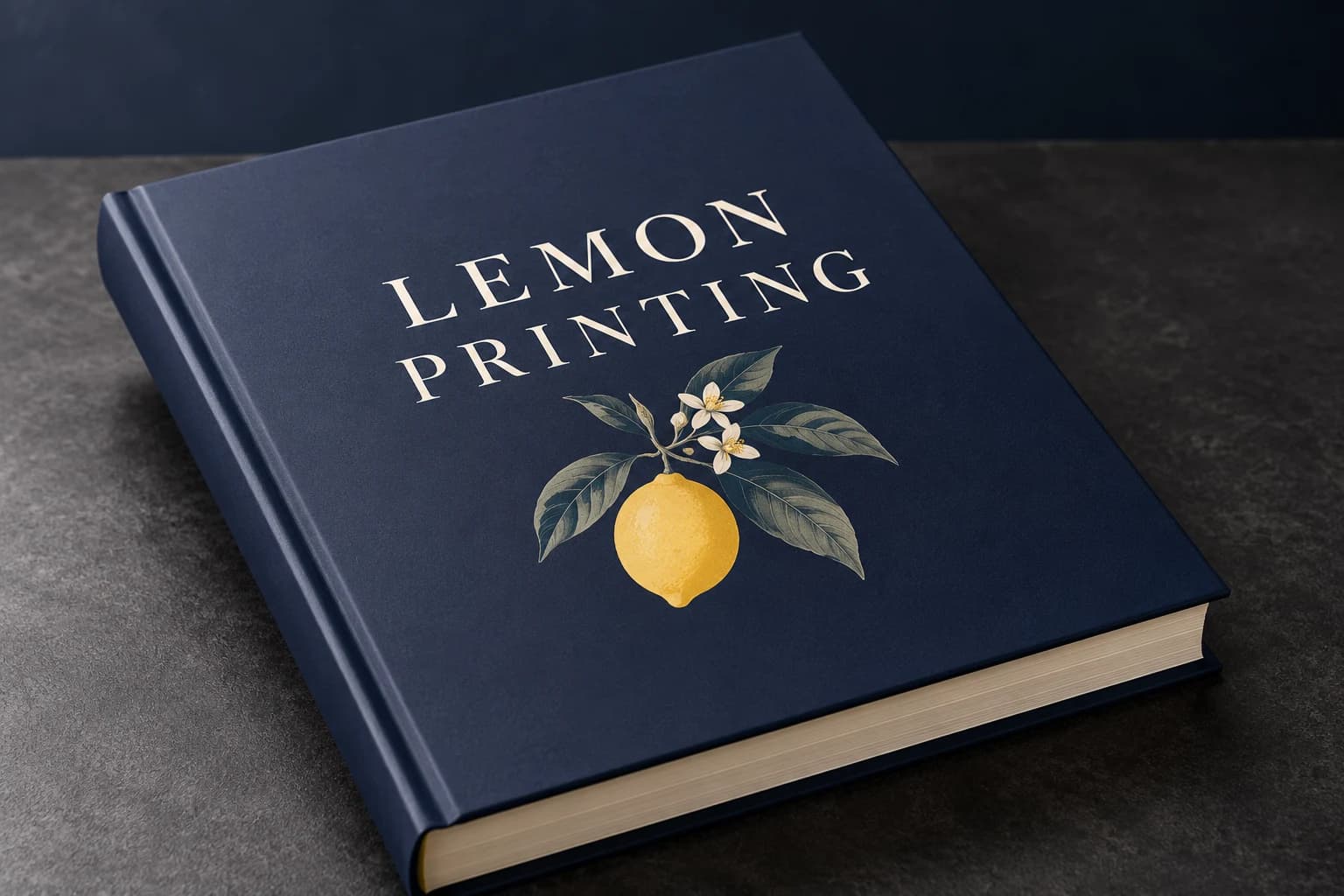 Matte lamination View effect & artwork guidance
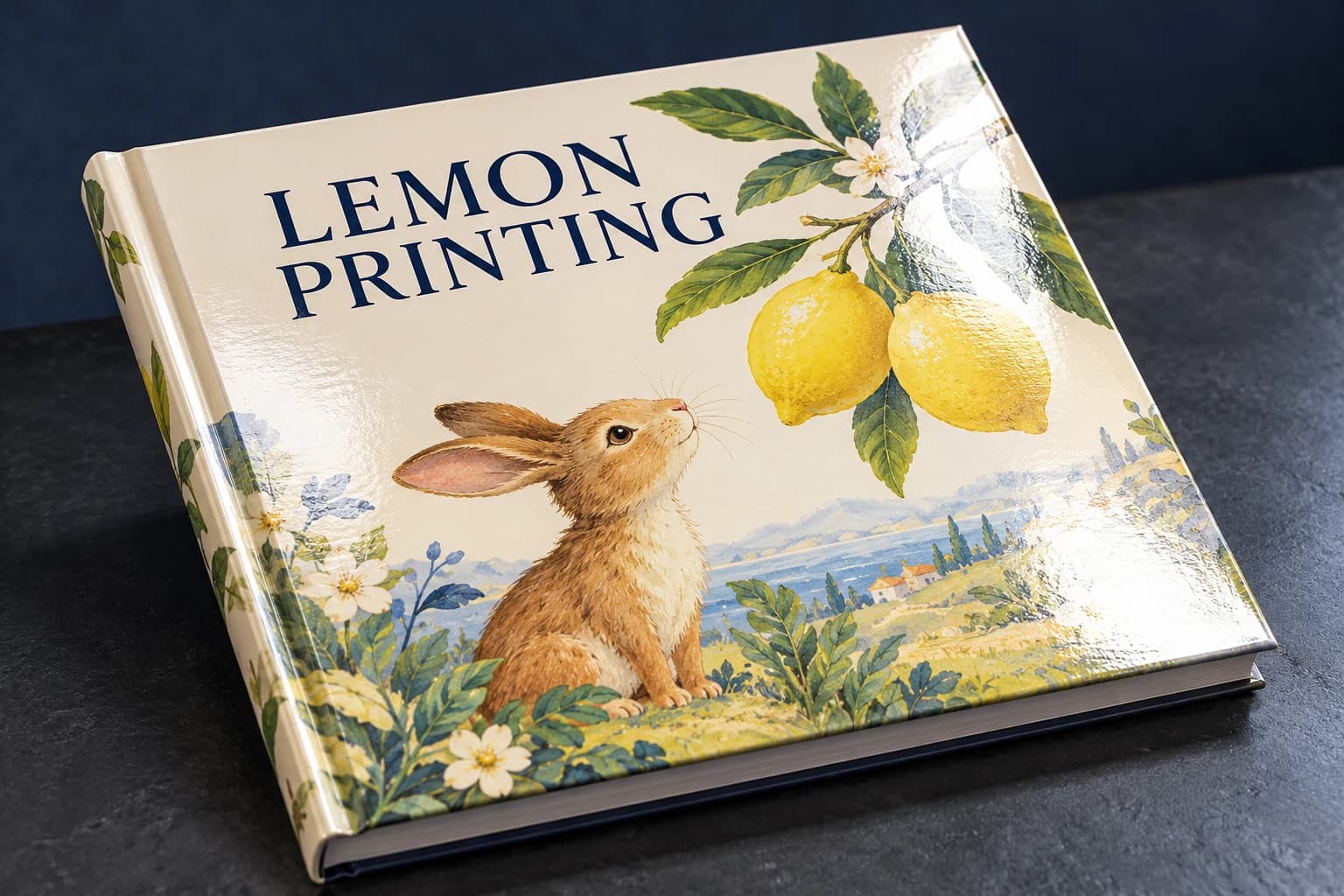 Gloss lamination View effect & artwork guidance
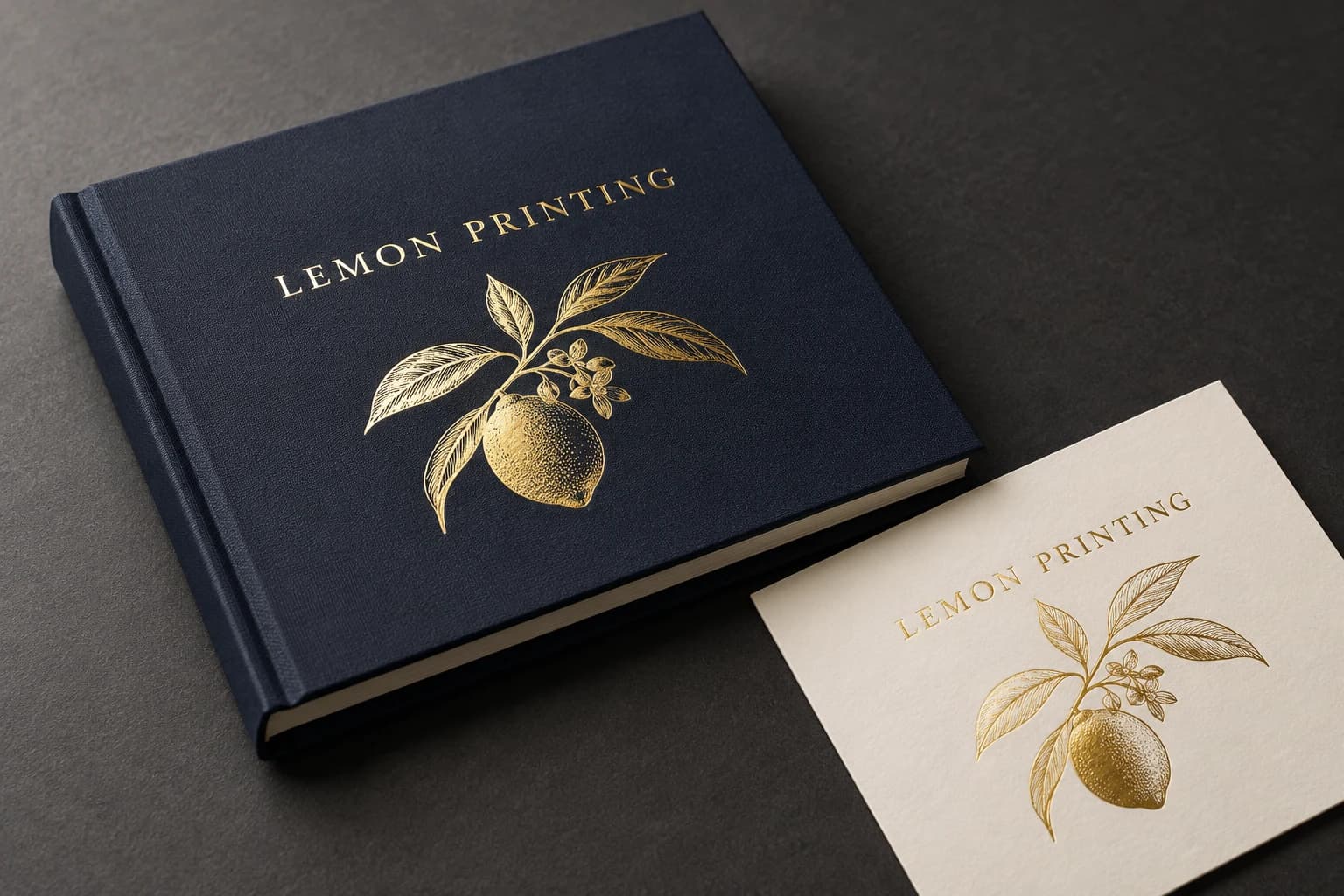 Gold foil stamping View effect & artwork guidance
 Spot UV View effect & artwork guidance
Illustrative finish samples, not photographs of this product. Final suitability follows the confirmed stock, construction and approved sample.
Compare all surface finishes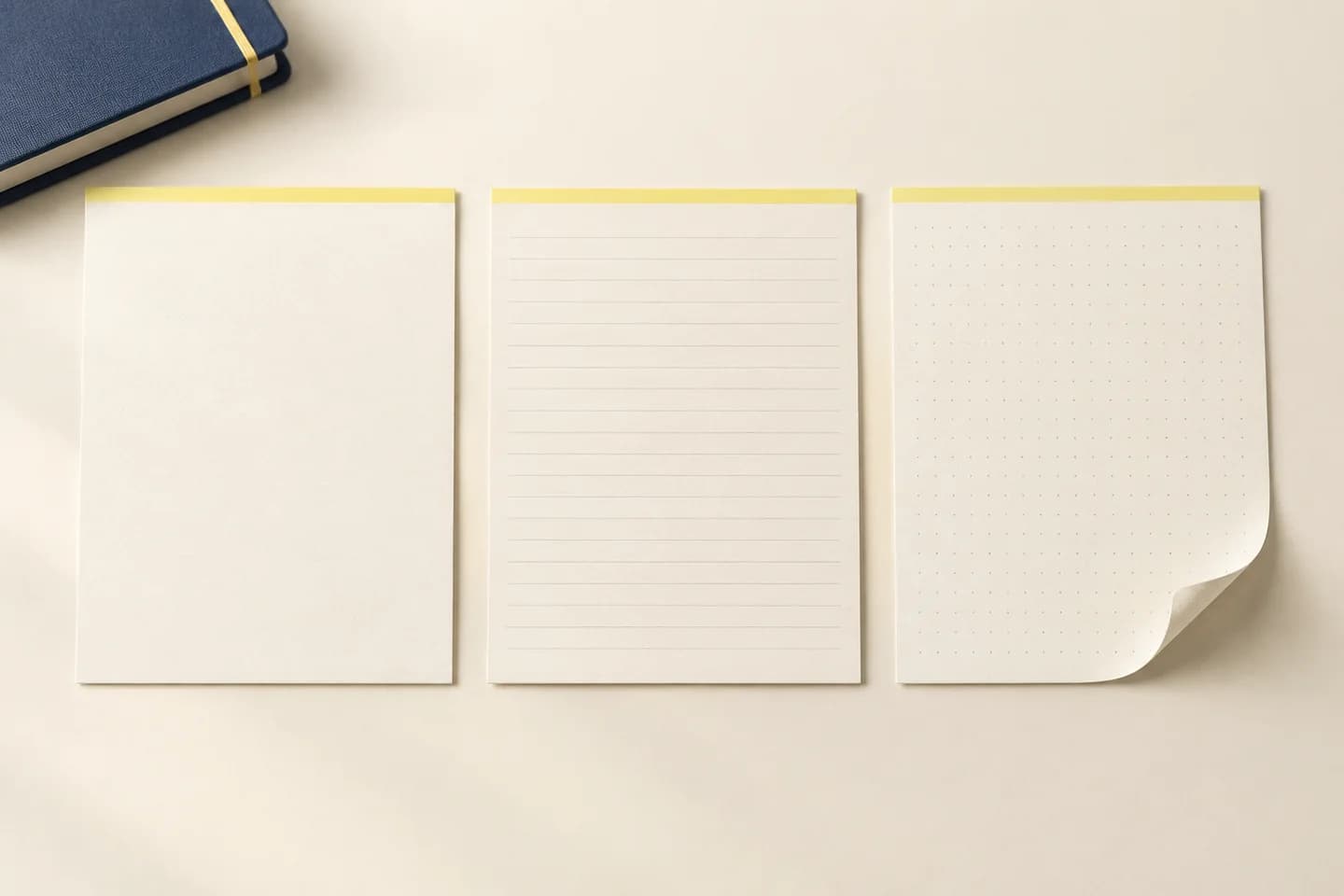
Details that change the finished product
Writing performance starts inside the case
Match the sheet to the pen
Ballpoint, gel and fountain pens behave differently. A pen trial on the selected grade is more useful than a broad fountain-pen-friendly claim.
Keep ruling consistent
Set line spacing, margins and page numbering in a master layout. Check front-to-back orientation and the visibility of light ruling.
Size the case from the block
Actual caliper, page count and binding determine the block thickness. Leave room for endpapers and any pocket without forcing the book to gape.
Hardcover Notebook Printing: Uses & Configurations
Branded stationery
Choose a repeatable ruling and a cover design that remains legible on the selected material.
Meeting notes
A structured notes layout can separate decisions and actions without crowding the writing field.
Personal notebooks
Balance carry size, page count and pen response for everyday use.
Solve the risk before production
Hardcover Notebook Printing: Finished-Product Checks
The critical finished-product check
Dark writing can show through or penetrate the reverse. Test the intended pen on the proposed grade, inspect both sides after drying, and distinguish optical show-through from ink penetration.
The notebook will not close neatly
Why it happens: Pockets or accessories add unplanned thickness.
Fix and check: Build them into the dummy and assess the closed profile.
The inner writing column is awkward
Why it happens: Ruling continues into the restricted gutter.
Fix and check: Set the inner margin from a bound writing trial.
When to choose another format
Alternatives to Hardcover Notebook Printing
| Alternative | Use and trade-off |
|---|---|
| Notebook & Journal Printing | Use the notebook-and-journal range to compare formats; this product adds a separate rigid case around the writing block. |
| Spiral-Bound Book Printing | Spiral binding supports fold-back use but exposes the binding and requires a punched margin. |
Sample and approval
Sample & Proof Checks for Hardcover Notebook Printing
Free samples are available, with preparation completed within 15 days. Confirm the sample scope; courier arrangements and transit time are separate.
Structural sample
Checks dimensions, fit and assembly using unprinted or representative materials. It does not establish final color.
Printed proof
Checks text, image reproduction and artwork on the agreed proof medium. It may not reproduce final assembly or every finish.
Complete finished sample
Write on front and reverse pages, open the first and last sections, test ruling visibility and check any elastic, ribbon or pocket with the book closed.
From brief to delivery
Order Details for Hardcover Notebook Printing
Build and approve the order in five steps
Define the writing use
State pens, trim, ruling and complete notebooks per design.
Choose paper and structure
Compare the proposed sheet, binding, case and accessory list.
Write in the sample
Check both sides, inner margin and the first and last openings.
Freeze the ruled edition
Approve numbering, master ruling, cover template and components.
Protect the cases
Separate designs and prevent accessories from marking neighboring copies.
- Supply the exact ruling master, spacing, inner margins and any numbered-page sequence.
- Count page faces and endpapers separately, then create the case from the final block.
- Provide cover decoration on the final template with separate vector foil or deboss layers.
Project questions
Planning Hardcover Notebook Printing
Are pages and leaves the same?
No. One leaf has two page faces. State both the intended printed page count and the treatment of endpapers.
Can the notebook use fountain-pen ink?
Select the paper through an actual pen and ink trial. GSM alone cannot establish resistance to feathering or penetration.
Will it stay flat on a desk?
Opening depends on the complete block and attachment. Assess writing near the front, center and back of the sample.
Can an elastic and pocket be added?
They can be specified as components. Their thickness and attachment must be included in the assembled sample and closed-book profile.
Specify the finished product.
Send trim, page count or leaf count, ruling file, intended pens, cover material and quantity per design. Identify ribbons, elastic and pockets separately.