
Book Printing · Formats & construction
Leatherette Book Printing
Leatherette gives a book a leather-effect surface without specifying genuine leather. Choose a flexible cover or a rigid case around the edition’s handling and decoration.
- Leather-effect covering; no genuine-leather claim
- Flexible cover or rigid board case
- Foil and debossing tested on the actual covering
Start with the intended use, finished size and quantity. The material and construction can follow.
The product in use
Specify the material behind the leather effect
Leatherette describes an appearance rather than one material. Coated paper and polymer-coated coverings can differ in thickness, stretch, touch and decoration response. A flexible cover bends with the book, while a covered board case holds a more rigid shape. Material composition and the underlying construction belong in the specification together.
What makes up the finished product?
- Leather-effect covering
- The surface may be a coated paper or another backed composite; composition must be identified.
- Flexible support or board
- The support establishes bend and edge shape.
- Block and endpapers
- Binding and attachment establish page retention and opening.
Specifications and materials
Leatherette Book Printing specifications
Use these reference options to build the project brief. Dimensions are design examples; material availability, tooling and production timing depend on the confirmed specification.
| Parameter | Reference or option | Why it matters |
|---|---|---|
| Trim size | A5 or 6 × 9 inch design references | Keep page trim separate from cover overhang or flexible-cover extension. |
| Cover substrate | Leather-effect coated paper or polymer-coated covering | Specify composition and backing; this page does not offer genuine leather. |
| Cover structure | Flexible construction or wrapped board case | Choose for bend, shelf form and the intended opening. |
| Interior paper | 90 or 100 g/m² uncoated reference grades; application-specific alternatives | Opacity and caliper determine reading comfort and block thickness. |
| Decoration | Foil or blind debossing on a tested material | Coating, grain and support affect edge definition and depth. |
Compare the material and its effect.
Choose the surface and construction for the way the finished product will be used. The options below are selection references, not a guaranteed inventory list.
Coated paper covering
Leather-effect embossed paper
Provides a patterned surface with paper-based construction.
Sample check: Do not describe it as animal leather.
Polymer-coated covering
Composition and backing specified by grade
Changes flexibility and stamping response.
Sample check: Review the grade’s technical information and sample.
Reading paper
90 or 100 g/m² uncoated references
Supports writing or long-form text depending on the grade.
Sample check: Check opacity and actual pen behavior if writing is intended.
Selected sample focus — Coated paper covering: Do not describe it as animal leather.
Format & usable space
Leatherette Book Printing: Format & Configuration
148 × 210 mm
A5 reference balances hand-held reading and space for text.
This is a design reference, not a required size or a manufacturing limit.
Cover behavior
Flexible hand feel or rigid shelf shape
Choose a flexible construction when bending and carrying matter; choose boards when the edition needs a firm case. Neither choice alone guarantees lay-flat opening.
See the trim proportions.
These are publishing references, not required sizes. Compare the usable page shape before adapting an existing layout.
Selected: Portable reading edition. Proportions only; not actual size.
Trim dimensions describe the cut page. Artwork bleed, cover overhang, tabs and modules are separate allowances.
View the original format reference
Surface finish options
Printed covers and jackets
Choose the finish for the printed cover or jacket, not automatically for the interior. Check color, rub marks, hinges and compatibility with the cover stock. Cloth and synthetic wraps need a separate material trial.
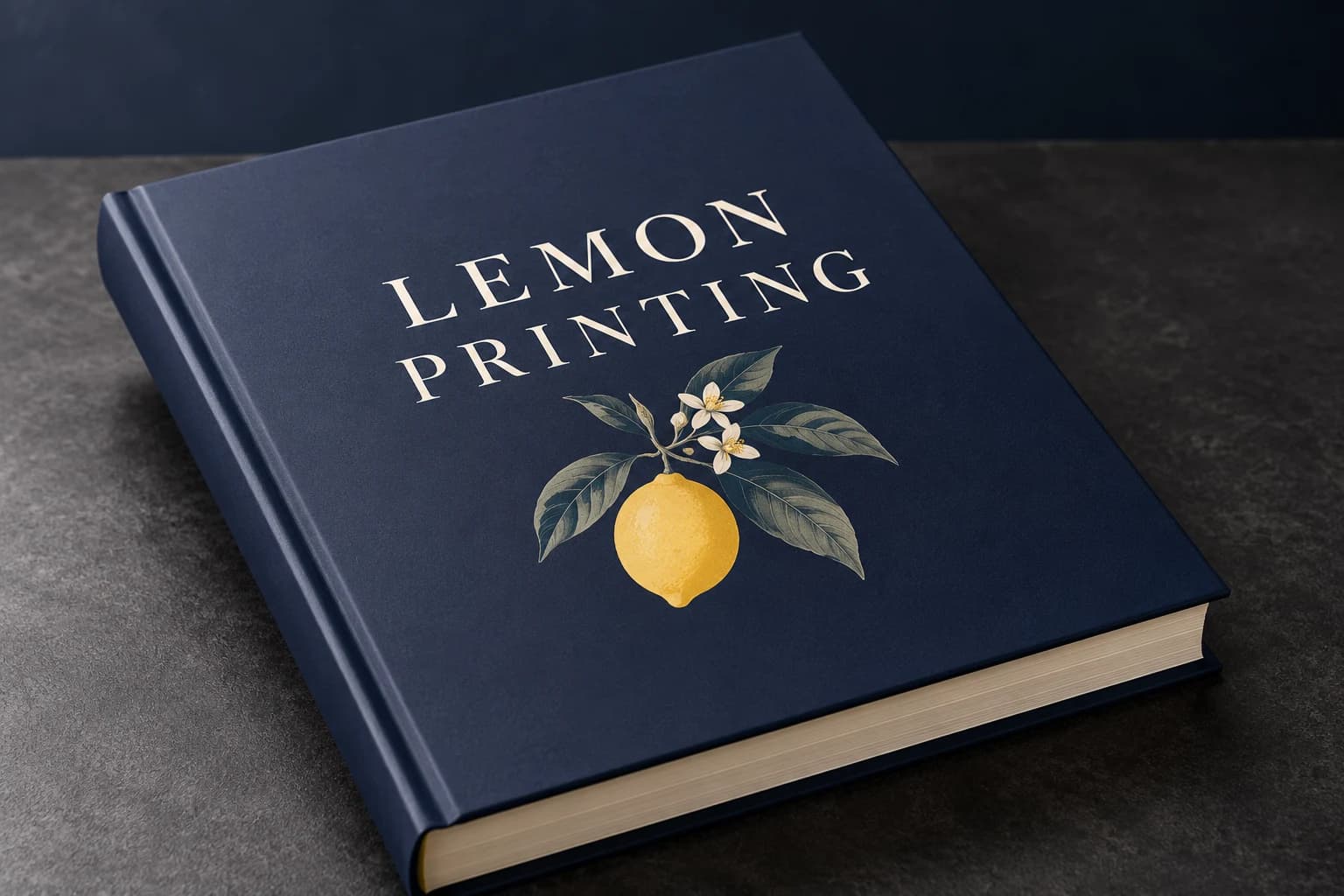 Matte lamination View effect & artwork guidance
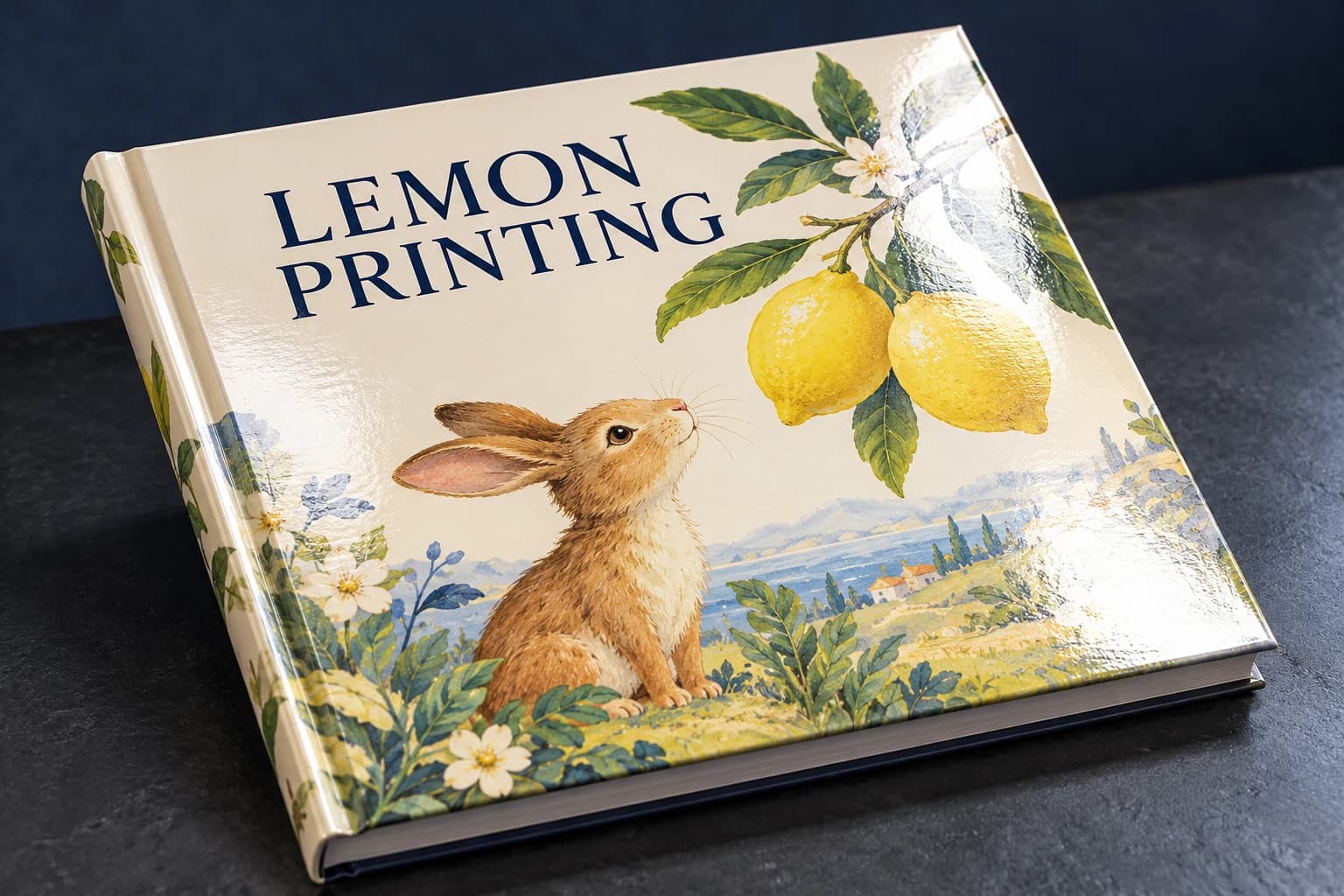 Gloss lamination View effect & artwork guidance
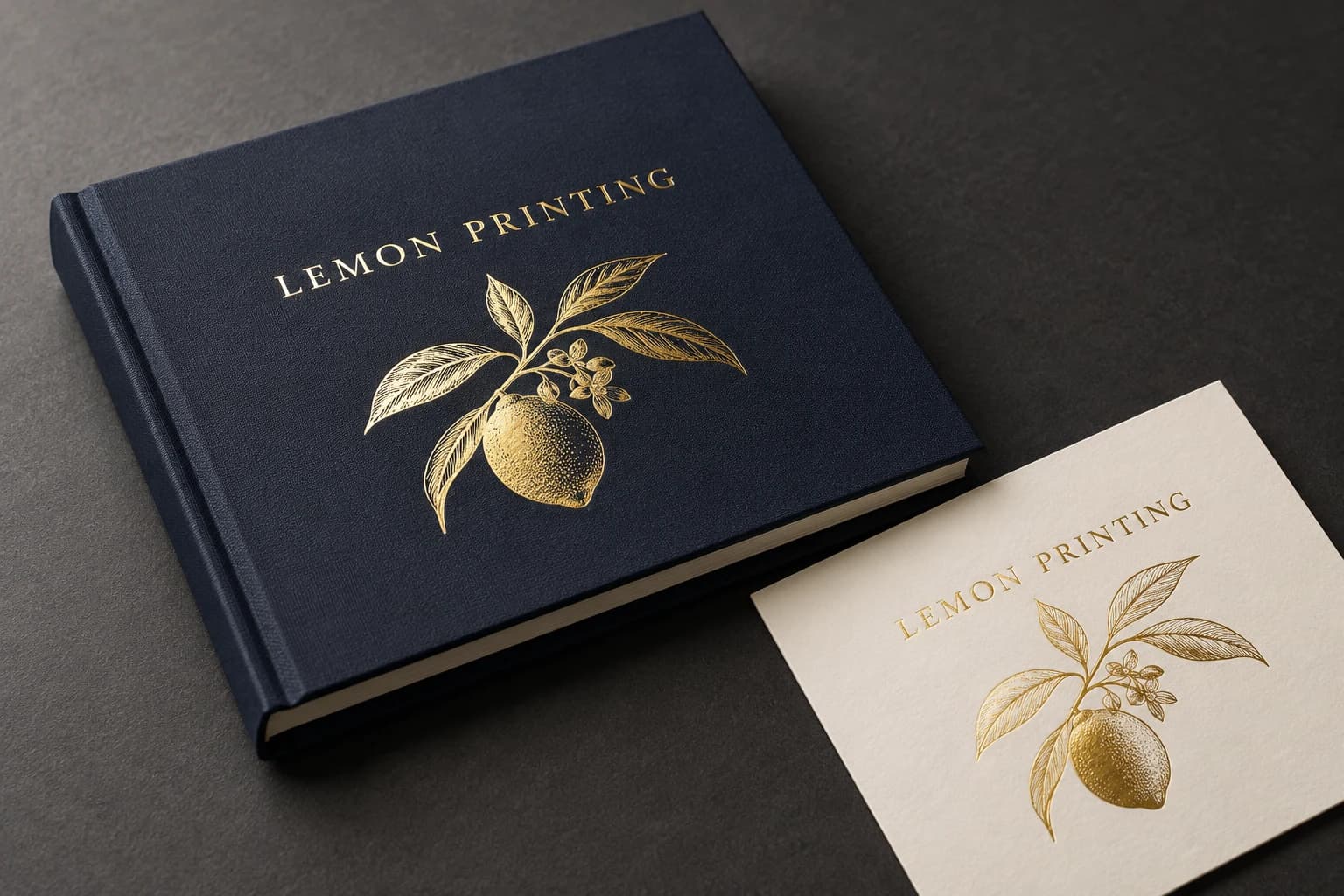 Gold foil stamping View effect & artwork guidance
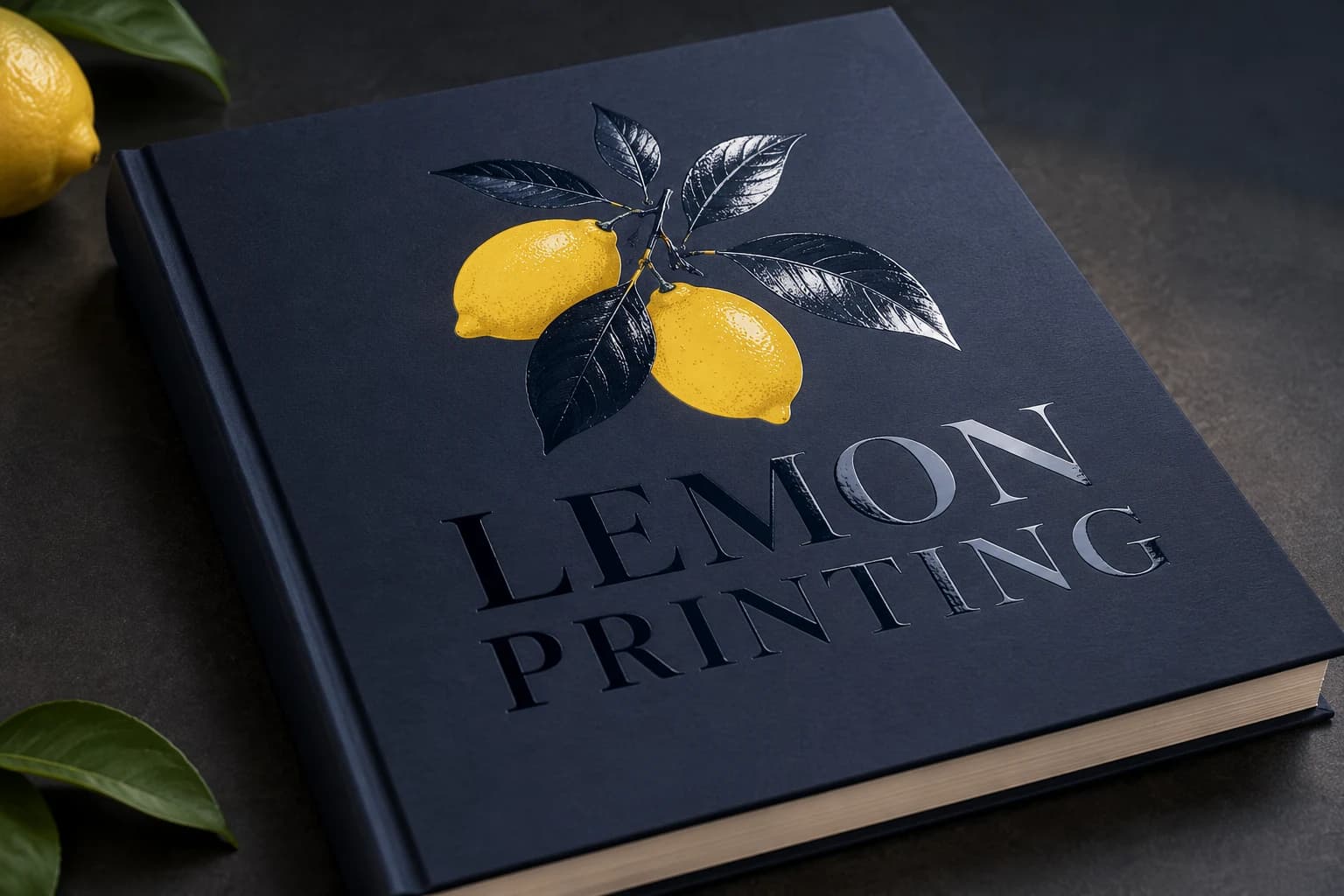 Spot UV View effect & artwork guidance
Illustrative finish samples, not photographs of this product. Final suitability follows the confirmed stock, construction and approved sample.
Compare all surface finishes
Details that change the finished product
Cover composition before decoration
Distinguish the cover layers
Name the surface, backing and support in the order. Two coverings with a similar grain can react differently to adhesives or stamping heat.
Control the spine transition
A flexible cover and a rigid case use different hinge geometry. Set the spine and joints from the final block rather than scaling an older cover.
Test the actual finishing combination
Evaluate foil adhesion and the depth of a blind impression on the proposed covering. Fine negative detail can close up in a textured or deeply pressed surface.
Leatherette Book Printing: Uses & Configurations
Reading editions
A flexible leather-effect cover can suit a portable text edition.
Journals and records
Pair the covering with uncoated pages chosen for the actual writing tool.
Gift editions
Use a concise foil mark and ribbon to distinguish the edition without relying on ornate full-cover print.
Solve the risk before production
Leatherette Book Printing: Finished-Product Checks
The critical finished-product check
A deep impression can distort a thin covering or show the underlying board edge. Test the intended tool, material and support together; a surface swatch alone cannot establish the finished cover shape.
Foil flakes after flexing
Why it happens: The foil and coating combination is unsuitable or the design crosses a moving hinge.
Fix and check: Test adhesion after repeated opening and move decoration off the hinge.
The covering description misleads buyers
Why it happens: A leather-like appearance is used as proof of material composition.
Fix and check: State leatherette and the actual composition in the approved specification.
When to choose another format
Alternatives to Leatherette Book Printing
| Alternative | Use and trade-off |
|---|---|
| Hardcover Book Printing | A printed paper case favors full-color cover imagery; leatherette emphasizes texture and selective decoration. |
| Flexibound Book Printing | Flexibound describes a construction, while leatherette describes a covering; either must be specified independently. |
Sample and approval
Sample & Proof Checks for Leatherette Book Printing
Free samples are available, with preparation completed within 15 days. Confirm the sample scope; courier arrangements and transit time are separate.
Structural sample
Checks dimensions, fit and assembly using unprinted or representative materials. It does not establish final color.
Printed proof
Checks text, image reproduction and artwork on the agreed proof medium. It may not reproduce final assembly or every finish.
Complete finished sample
Check flexing, hinge movement, foil rub and impression detail on a complete sample in the selected covering.
From brief to delivery
Order Details for Leatherette Book Printing
Build and approve the order in five steps
Define the reading format
State trim, page count, version count and whether writing is required.
Identify the covering
Specify imitation leather, composition, color and flexible or rigid support.
Test decoration and opening
Review the actual covering with the intended foil and spine construction.
Freeze the approved build
Record covering grade, final template, interior revision and accessories.
Protect the finished surface
Plan abrasion protection and version identification before dispatch.
- Supply reading-order interior pages using the agreed print PDF preset and embedded fonts.
- Place foil and blind impressions on separate vector layers using the final cover template.
- Include the spine, hinges and any cover extension; page bleed does not substitute for case turn-ins.
Project questions
Planning Leatherette Book Printing
Is this genuine leather?
No. This page covers imitation-leather materials. The chosen covering composition must be recorded in the order.
Can leatherette be used on a flexible book?
Yes, where the covering and backing suit the flexible construction. The complete sample should demonstrate the intended bending and opening.
Does the material prove a certification?
No. Environmental or chemical claims require evidence for the exact grade and order; an appearance or supplier example is insufficient.
Can fine foil detail follow the textured grain?
Texture can interrupt very fine detail. A stamped sample establishes whether strokes, spaces and small lettering remain legible.
Specify the finished product.
Send trim, page count, quantity, flexible or rigid cover choice, covering reference and foil/deboss artwork. Identify accessories, destination and required arrival date.