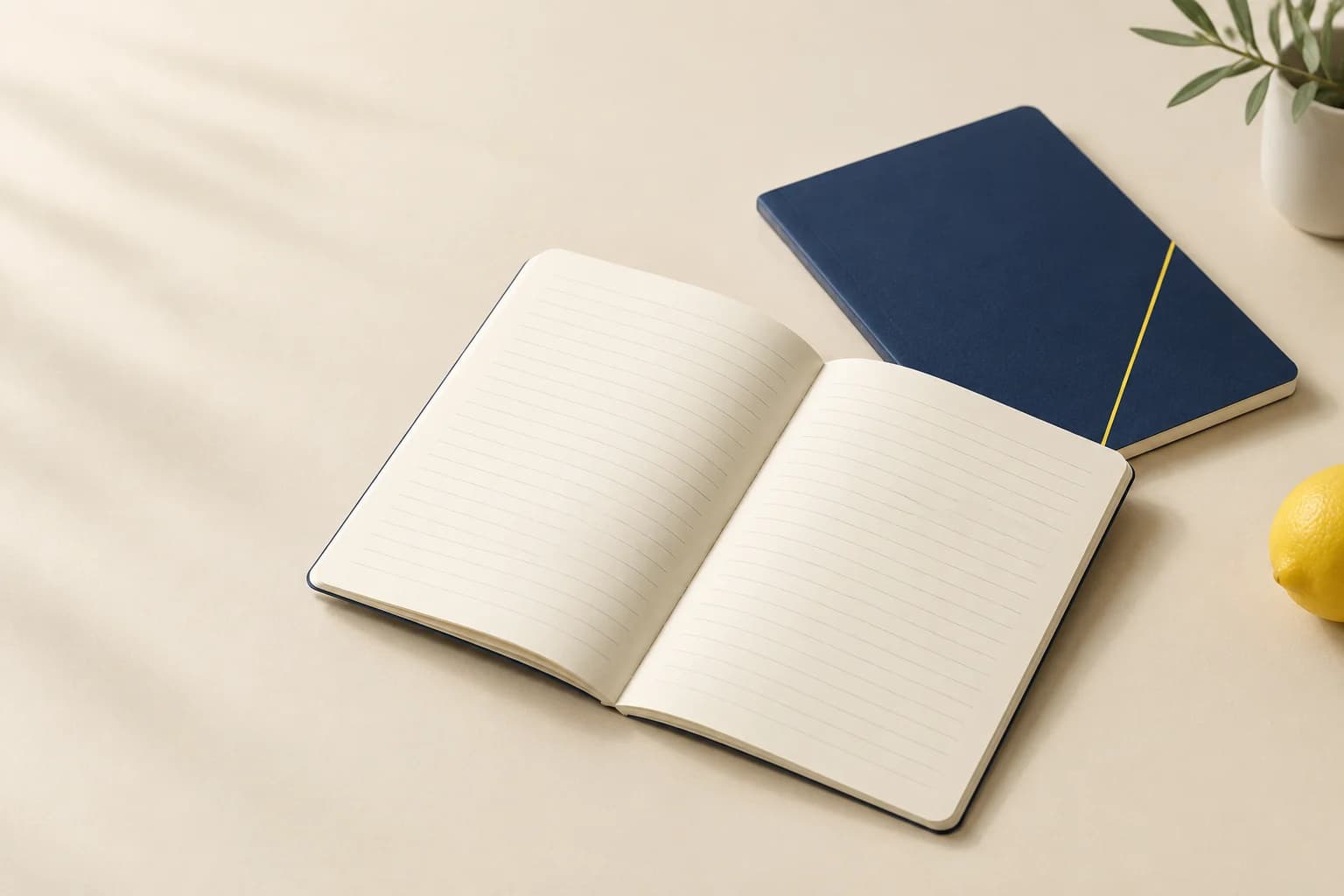
Book Printing · Formats & construction
Softcover Notebook Printing
A flexible cover keeps a writing book light to carry. Match a stitched or adhesive-bound format to the page count, ruling and expected length of use.
- Flexible printed cover
- Stitched slim edition or glued page block
- Ruling planned for the usable writing area
Start with the intended use, finished size and quantity. The material and construction can follow.
The product in use
A lighter cover with deliberate page planning
A softcover notebook bends more readily than a rigid case and takes less room in a bag. Slim folded-and-stitched notebooks and square-spine glued notebooks behave differently: one nests sheets through a fold, while the other forms a separate page block. Choose the structure before finalizing the ruling and inner margin.
What makes up the finished product?
- Flexible card cover
- The printed outside bends with the notebook.
- Writing sheets
- Surface, shade and ruling support the intended pens and tasks.
- Fold stitches or glued spine
- The binding establishes page counting, opening and usable inner margin.
Specifications and materials
Softcover Notebook Printing specifications
Use these reference options to build the project brief. Dimensions are design examples; material availability, tooling and production timing depend on the confirmed specification.
| Parameter | Reference or option | Why it matters |
|---|---|---|
| Format | A5 or A6 design references | Assess writing space after trim and binding margins. |
| Interior paper | 90 or 100 g/m² uncoated supplier references | Select through a writing test and opacity check. |
| Cover | Flexible card selected with crease and finish | Paper mass alone cannot establish folding behavior. |
| Binding | Fold-line stitching for slim formats or an adhesive-bound block | Nested sheets need a page plan in multiples of four; glued blocks follow their own production plan. |
| Ruling | Lined, dotted, grid or plain | Provide line spacing, margins and the complete printed sequence. |
Compare the material and its effect.
Choose the surface and construction for the way the finished product will be used. The options below are selection references, not a guaranteed inventory list.
Uncoated writing sheet
90 or 100 g/m² references
Supports writing with grade-dependent ink response.
Sample check: Trial the intended pen on both sides.
Flexible card cover
Grade selected for folding and handling
Balances protection and bend.
Sample check: Assess crease cracking after the chosen finish.
Cover film or varnish
Compatible with the proposed card and fold
Changes surface feel and rub behavior.
Sample check: Check hinge and fold performance on an assembled sample.
Selected sample focus — Uncoated writing sheet: Trial the intended pen on both sides.
Format & usable space
Softcover Notebook Printing: Format & Configuration
148 × 210 mm
A5 design reference for notes carried between meetings or lessons.
This is a design reference, not a required size or a manufacturing limit.
Binding choice
Slim stitched notebook or square-spine glued notebook
Use a stitched format for a compact folded stack; choose a separate glued block when the page plan and thickness call for a different spine.
See the trim proportions.
These are publishing references, not required sizes. Compare the usable page shape before adapting an existing layout.
Selected: Portable writing book. Proportions only; not actual size.
Trim dimensions describe the cut page. Artwork bleed, cover overhang, tabs and modules are separate allowances.
View the original format reference
Surface finish options
Printed covers and jackets
Choose the finish for the printed cover or jacket, not automatically for the interior. Check color, rub marks, hinges and compatibility with the cover stock. Cloth and synthetic wraps need a separate material trial.
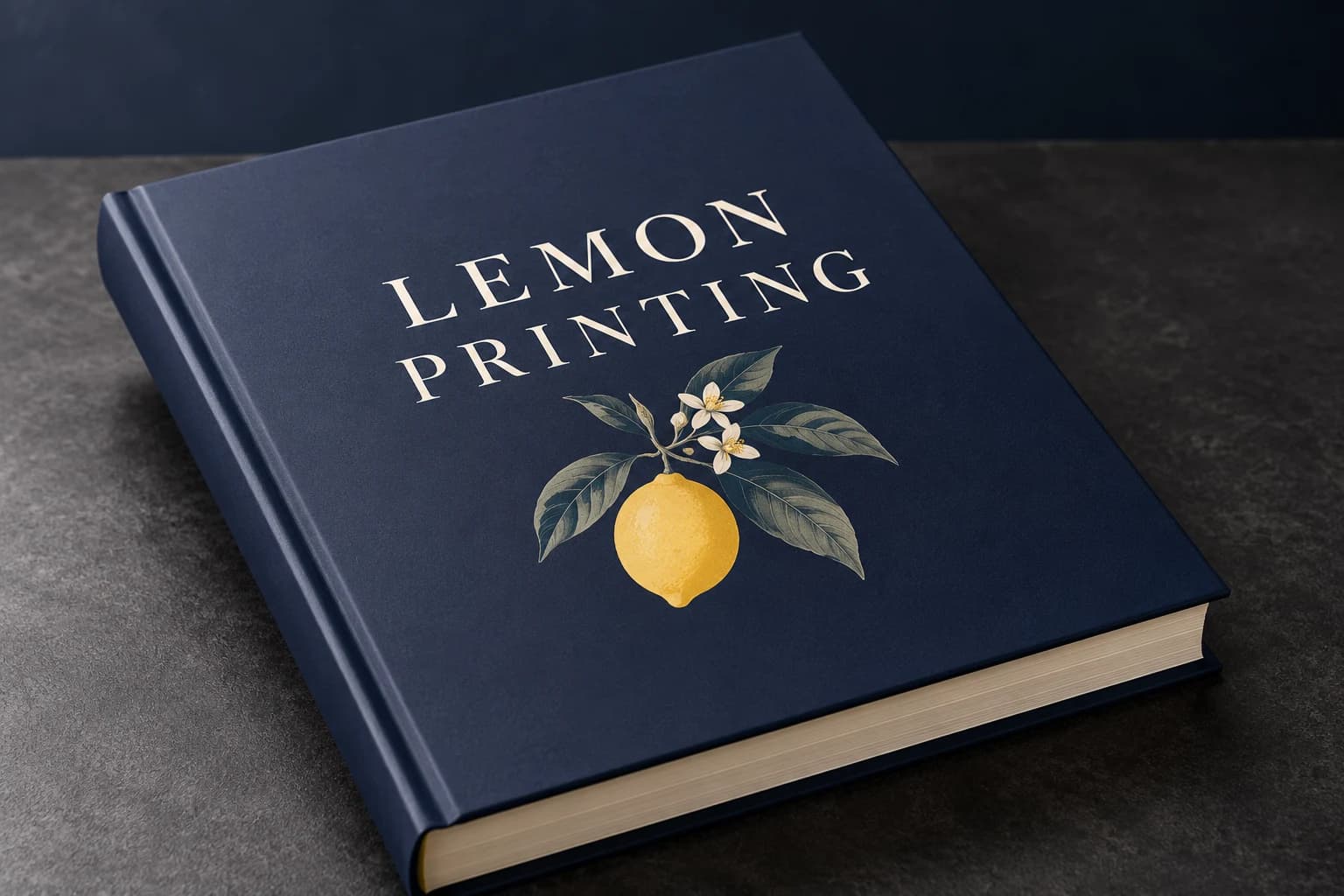 Matte lamination View effect & artwork guidance
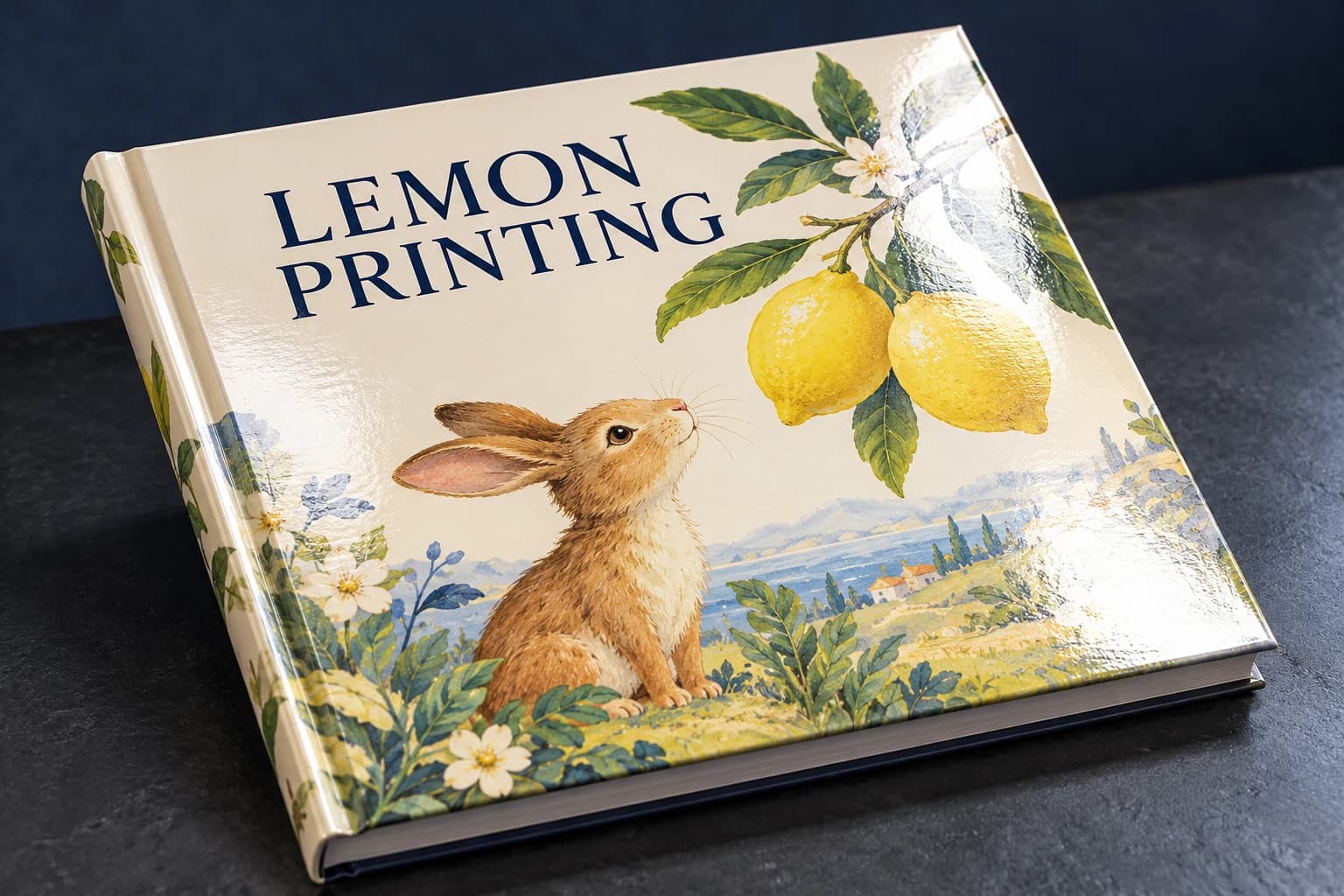 Gloss lamination View effect & artwork guidance
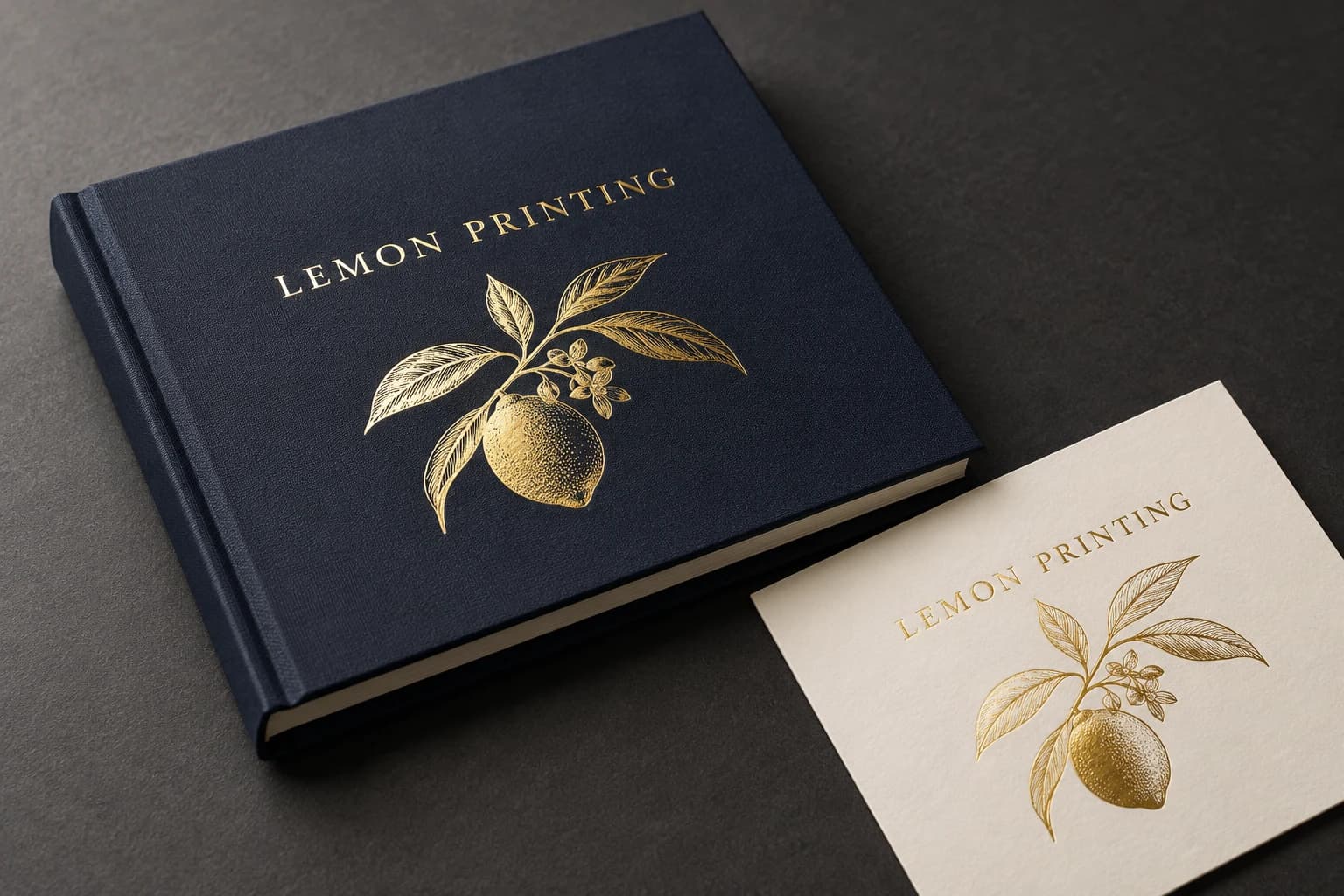 Gold foil stamping View effect & artwork guidance
 Spot UV View effect & artwork guidance
Illustrative finish samples, not photographs of this product. Final suitability follows the confirmed stock, construction and approved sample.
Compare all surface finishes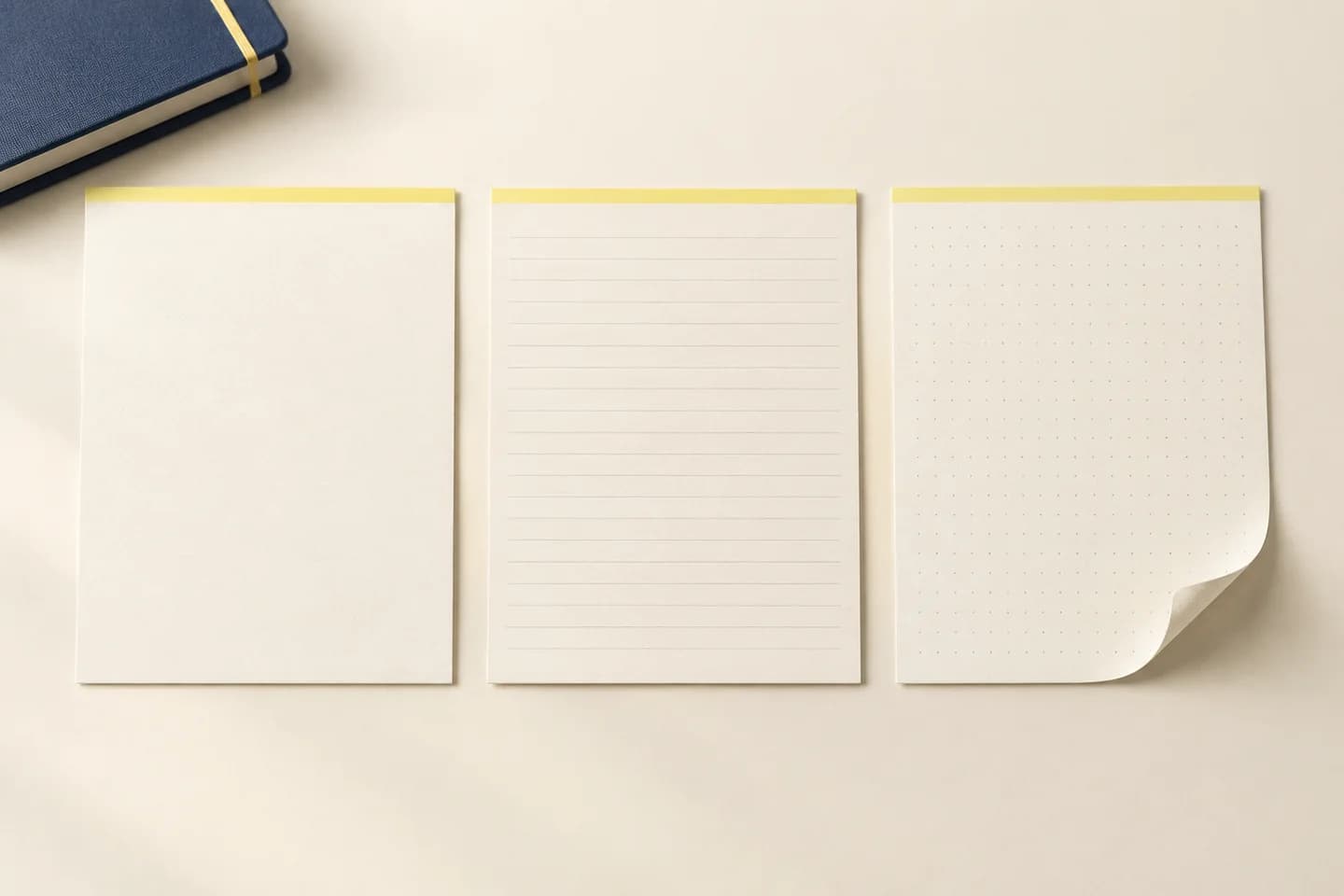
Details that change the finished product
Make the fold or spine suit the writing block
Design for the folded stack
In a stitched construction, inner sheets project before trimming. Keep page numbers and ruling clear of the fore-edge after creep compensation.
Keep the cover flexible
A suitable crease and grain orientation help the cover bend. Inspect dark printed folds for whitening or film lift.
Make reverse-side writing usable
Compare opacity and pen penetration using the actual ruling and ink. A clean front face alone does not establish two-sided writing quality.
Softcover Notebook Printing: Uses & Configurations
Training notes
A slim format keeps handouts and exercise notes easy to carry.
Event stationery
Use a simple ruling and cover identity for short-duration note-taking.
Pocket records
A small format works best with brief entries and a spacious inner margin.
Solve the risk before production
Softcover Notebook Printing: Finished-Product Checks
The critical finished-product check
A heavy cover can crack at the fold or pull the notebook open. Test grain, crease and finish on the folded sample; reducing stiffness can serve the product better than adding a heavier stock.
Inner ruling is trimmed too closely
Why it happens: Nested sheets creep toward the fore-edge.
Fix and check: Apply measured compensation and inspect the finished inner pages.
The writing area feels cramped
Why it happens: A pocket trim is paired with the same ruling as a larger notebook.
Fix and check: Simplify the ruling and test the actual finished writing field.
When to choose another format
Alternatives to Softcover Notebook Printing
| Alternative | Use and trade-off |
|---|---|
| Saddle Stitch Book Printing | This construction guide explains nested-sheet page counting; notebook paper and ruling still need a writing-specific trial. |
| Notebook & Journal Printing | Compare other notebook constructions when rigid covers, accessories or long-term reference are more important than lightness. |
Sample and approval
Sample & Proof Checks for Softcover Notebook Printing
Free samples are available, with preparation completed within 15 days. Confirm the sample scope; courier arrangements and transit time are separate.
Structural sample
Checks dimensions, fit and assembly using unprinted or representative materials. It does not establish final color.
Printed proof
Checks text, image reproduction and artwork on the agreed proof medium. It may not reproduce final assembly or every finish.
Complete finished sample
Write at the inner margin, inspect reverse-side ink behavior, fold the cover repeatedly and review trimmed ruling near the fore-edge.
From brief to delivery
Order Details for Softcover Notebook Printing
Build and approve the order in five steps
Define the writing task
State trim, pens, ruling and the expected use period.
Choose the binding
Compare page count and real paper thickness in the proposed structure.
Test a trimmed sample
Inspect folds, ruling, writing and reverse-side ink response.
Approve the page plan
Record cover counting, ruling revision and final binding template.
Bundle by version
Protect flexible corners and keep cover and ruling variants separate.
- Supply the ruling master at the finished trim and state line spacing and inner margins.
- For a folded stitched format, count the cover faces and interior separately and preserve the multiple-of-four page plan.
- Use the final cover template and agreed bleed; do not draw a printable spine on a fold-line stitched cover.
Project questions
Planning Softcover Notebook Printing
Can any page count be saddle stitched?
Each nested folded sheet contributes four page faces, so the complete page plan must account for that structure. Usable thickness depends on the chosen paper.
Does a softcover notebook need lamination?
Not always. Compare surface rub, fold flexibility and the intended length of use; a film is a design choice rather than a universal requirement.
Why can dark covers crack at the fold?
The fold stresses the paper and printed surface. Grain, crease, stock and coating all affect the result.
Can the same ruling file fit A5 and A6?
It should be redesigned or checked at each final size. Scaling changes line spacing, text size and the usable writing field.
Specify the finished product.
Send trim, page or leaf count, ruling, quantity per cover and preferred stitched or glued format. Include intended pens and any tear-out pages.