Table of Contents
- Choose trim size, page count and paper as one decision
- Start with how the finished book will be used
- Reading comfort, writing space and image presentation
- Retail display, classroom handling and portability
- How trim size changes the book structure
- Plan page count around binding and layout
- Blank pages, section openers and signature planning
- Why page count alone does not determine spine width
- Select paper weight, opacity and surface
- Coated paper for images versus uncoated paper for writing
- How format affects the quote and shipping plan
- Book specification worksheet for a printer
- FAQ: Book trim size and paper selection
- Request a specification-based book quote
Book trim size, page count and paper weight should be planned together. This guide explains how format choices affect readability, binding, book thickness, quotation accuracy and shipping.
Choose trim size, page count and paper as one decision
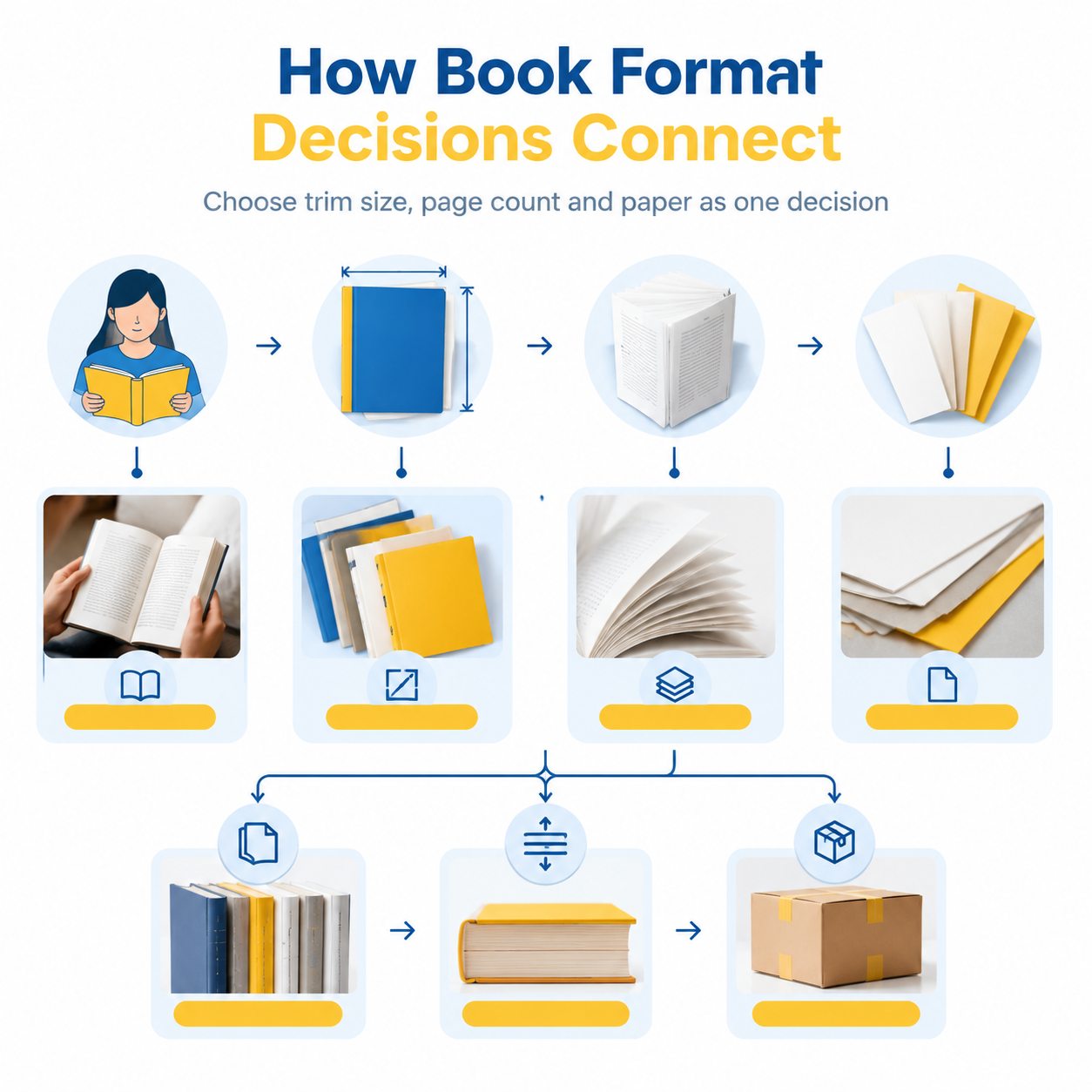
Choose the book trim size, page count and paper together rather than treating them as separate design decisions. A larger page may improve image presentation, but it can also increase the amount of paper, the finished book thickness, carton volume and shipping cost. A heavier interior stock may reduce show-through, while making the book thicker and changing the binding specification.
Definition: Book trim size is the final width and height of a book after the printed sheets have been folded, bound and trimmed. It is different from the flat sheet size used during printing and from the bleed size in the artwork file.
For a printer to quote accurately, the format should be recorded as a complete specification: finished width and height, estimated or final page count, interior paper, cover material, binding, finishing, quantity and destination.
Key takeaways
- Start with how readers will hold, read, write in or display the book.
- Check whether the chosen page size suits the manuscript, images and layout grid.
- Ask the printer to confirm page-count, signature and binding requirements before final artwork.
- Use the actual paper caliper, not GSM alone, to estimate book thickness.
Lemon Printing handles prepress, printing, binding, finishing, inspection, packing and export preparation in-house. Its custom book printing service can be specified for paperback, hardcover, sewn, casebound, saddle-stitched and Wire-O projects.
Start with how the finished book will be used

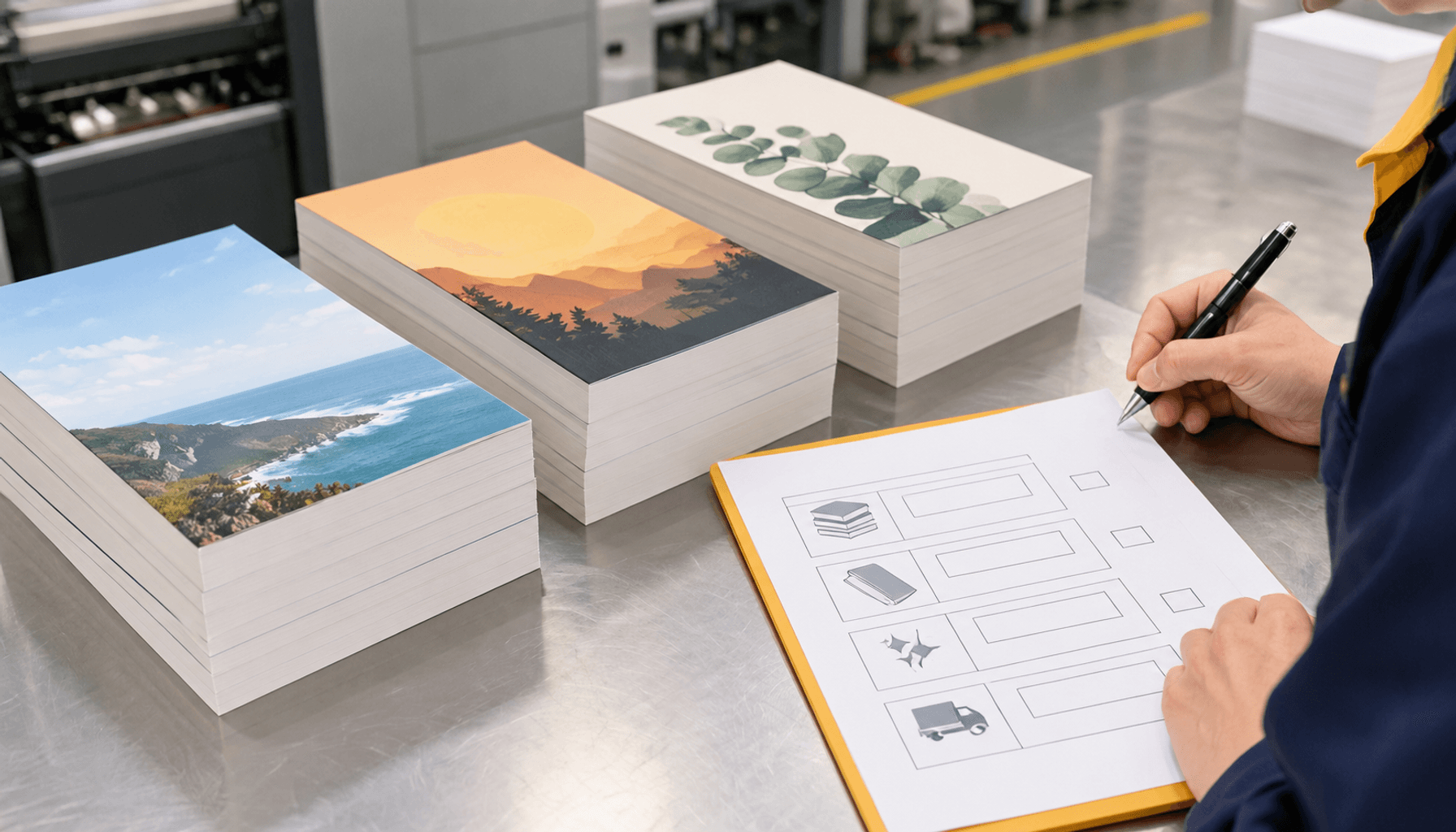
The intended use should set the first boundaries for book format selection. A novel, workbook, art book, classroom manual and retail catalog may all be called books, but they have different requirements for handling, writing space, image scale and durability.
- Describe the reader. Consider age, hand size, reading position and whether the book will be carried frequently.
- Describe the activity. Decide whether the reader will only read, write, draw, reference, compare images or use the book at a desk.
- Describe the sales or distribution channel. Retail shelves, classrooms, events, mail fulfillment and wholesale cartons place different limits on size and packaging.
- Set a practical cost boundary. Larger trim sizes and heavier stocks can affect material consumption and freight, even when the copy count stays the same.
Do not begin with a preferred size simply because it looks familiar. First write a one-sentence use case, such as: “A softcover training manual for repeated desk use, with space for handwritten notes.” That sentence gives the designer and printer a better starting point than “make it standard size.”
Reading comfort, writing space and image presentation
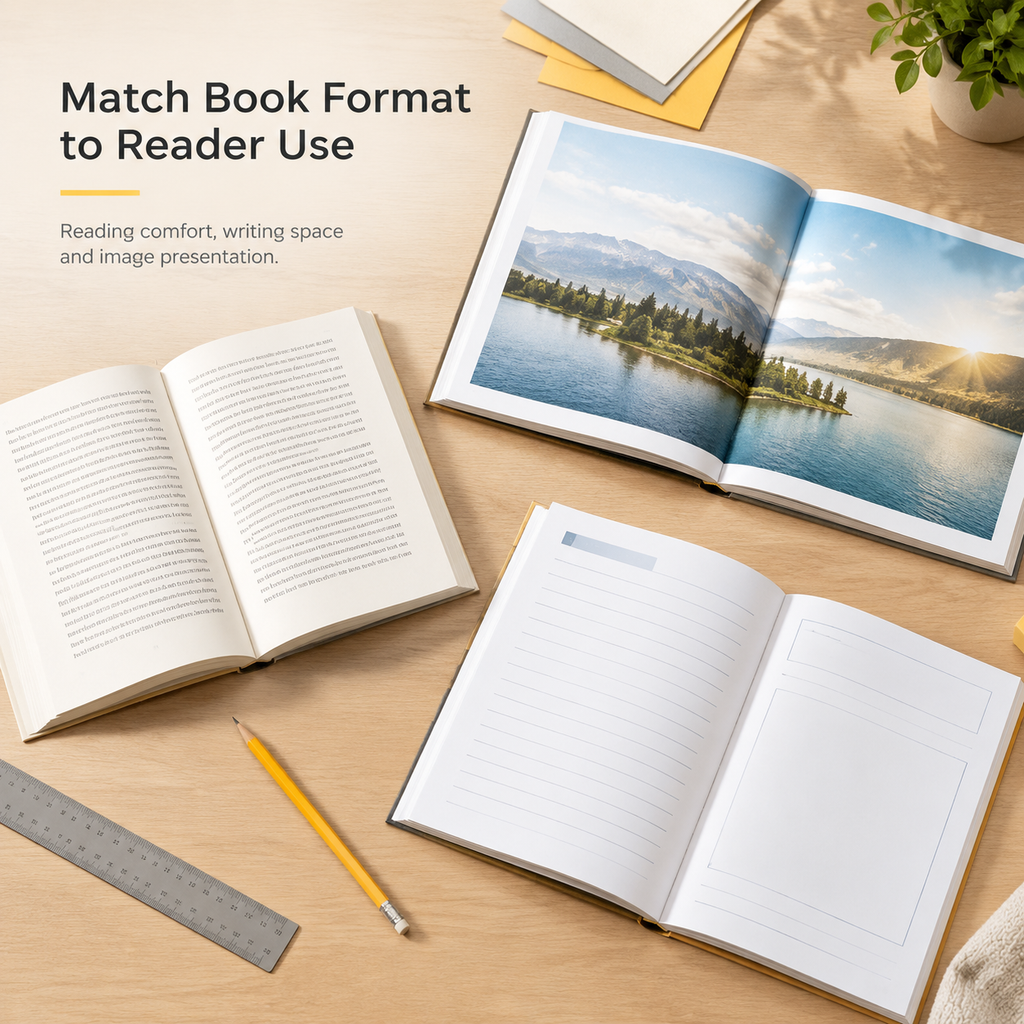
Choose a page shape that supports the dominant content. Text-heavy books generally benefit from a comfortable line length and sufficient inner margins. Workbooks need enough usable space for answers, while image-led books may need a wider page or a spread that shows artwork at a useful scale.
A larger trim does not automatically make a book easier to read. If the text block becomes too wide, readers may lose their place between lines. Designers can control this with columns, larger margins or a different type size, but those changes may increase the page count. Conversely, forcing a long manuscript into a small trim can create dense pages, small type or an unnecessarily high page count.
For writing products, specify the writing tool and use environment. Pencil and ballpoint writing usually require a different surface expectation from dry-erase or marker use. Paper whiteness, texture and opacity also affect how marks appear. Request a paper sample or proof when writing comfort is central to the product.
For photography or illustrations, confirm whether images cross the gutter, the center area where pages meet. A sewn or casebound structure may open differently from a perfect-bound book, so the image layout and binding decision should be reviewed together.
Retail display, classroom handling and portability

Display and handling requirements can eliminate otherwise attractive sizes. A large coffee-table format may present photographs well but need stronger cartons and more shelf or storage space. A compact manual may travel well but provide less room for diagrams, tables or notes.
| Example finished format | Often suitable for | Primary trade-off to check |
|---|---|---|
| 5 x 8 in / approximately 127 x 203 mm | Novels, compact guides and portable reading | Limited width for wide tables, diagrams or generous writing areas |
| 6 x 9 in / approximately 152 x 229 mm | Trade books, manuals and general nonfiction | Good general-purpose balance, but still verify line length and cover proportions |
| 8 x 10 in / approximately 203 x 254 mm | Workbooks, portfolios, catalogs and image-led books | More page and carton area; may need stronger packing for export |
| A4 / 210 x 297 mm | Training documents, reports and reference material | Useful for office printing, but less compact for casual reading or retail display |
These are planning examples, not universal standards. The best choice depends on the final layout, local retail expectations, binding equipment and shipping plan. Confirm whether the stated dimensions mean the closed finished size; printers may otherwise interpret a spread or open size differently.
How trim size changes the book structure
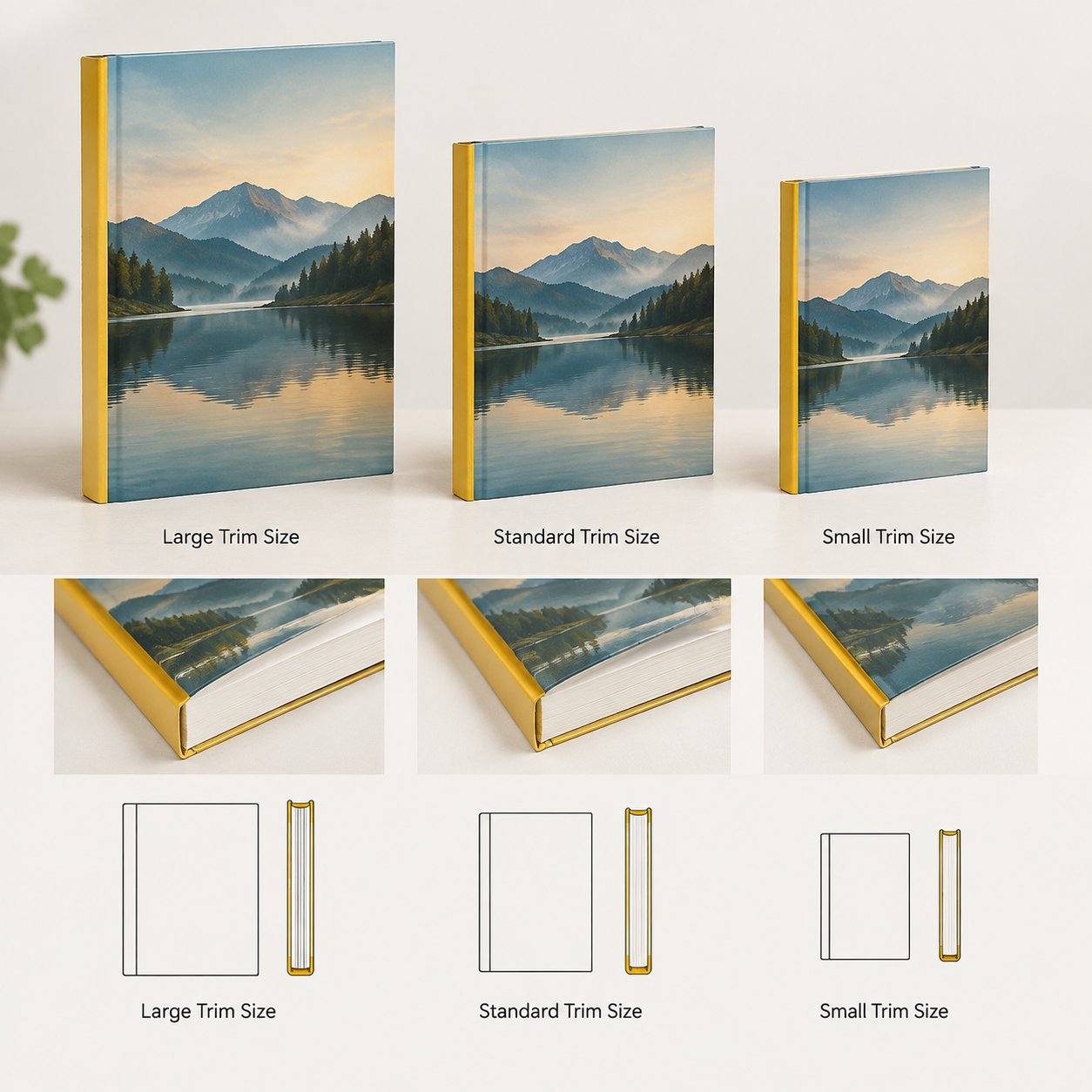
Changing the trim size changes more than the cover dimensions. It affects the number of words or images that fit on each page, the number of spreads, the cover layout, the binding edge and the amount of printed material required.
For a text manuscript, ask the designer to test at least two candidate sizes using the intended typeface, type size, leading and margins. A small change in width can move headings, tables and chapter endings. A page count that looks efficient in one format may produce awkward blank areas in another.
For image-led work, check the relationship between source image proportions and the page. Cropping a landscape image into a portrait page may remove important content or require additional pages. A square or near-square trim can reduce cropping for some portfolios, but it may create less efficient paper use or require a custom cover and carton plan.
Trim size also affects the cover file. The front cover, spine and back cover are normally supplied as one spread, and the spine width depends on the completed text block and cover construction. Ask for the printer’s cover template after the interior specifications are sufficiently stable.
Plan page count around binding and layout
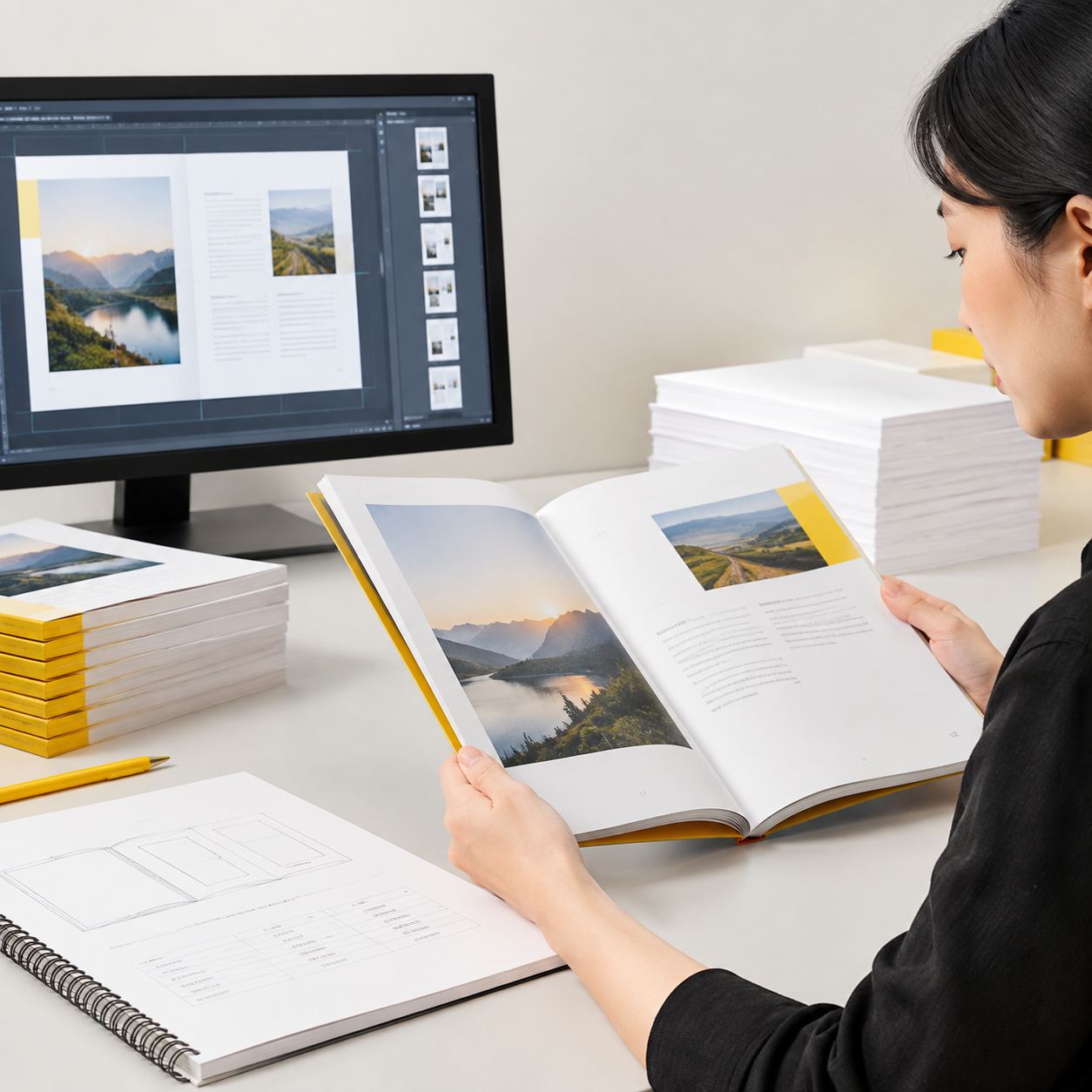
Plan the book page count after testing the layout, but before releasing the final cover file. Page count influences paper consumption, book thickness, binding suitability, spine width and carton weight.
Count the interior pages consistently. Decide whether the cover, endpapers, title page, copyright page, contents, blanks, inserts and foldouts are included or excluded from the stated page count. In most book specifications, the cover is listed separately from the interior, but conventions can differ between suppliers and markets.
Page count is also affected by design choices:
- Trim size and type size determine how much text fits on each page.
- Chapter openers, full-page illustrations and deliberate blank pages add pages without adding much copy.
- Tables and captions may require a larger page or a separate layout treatment.
- Color sections, inserts and foldouts can require different paper or finishing instructions.
For a reprint, provide the previous printer’s final page count and a physical sample if possible. For a new project, send a representative interior PDF or manuscript estimate. The printer can then check whether the selected binding and press plan are suitable.
Blank pages, section openers and signature planning
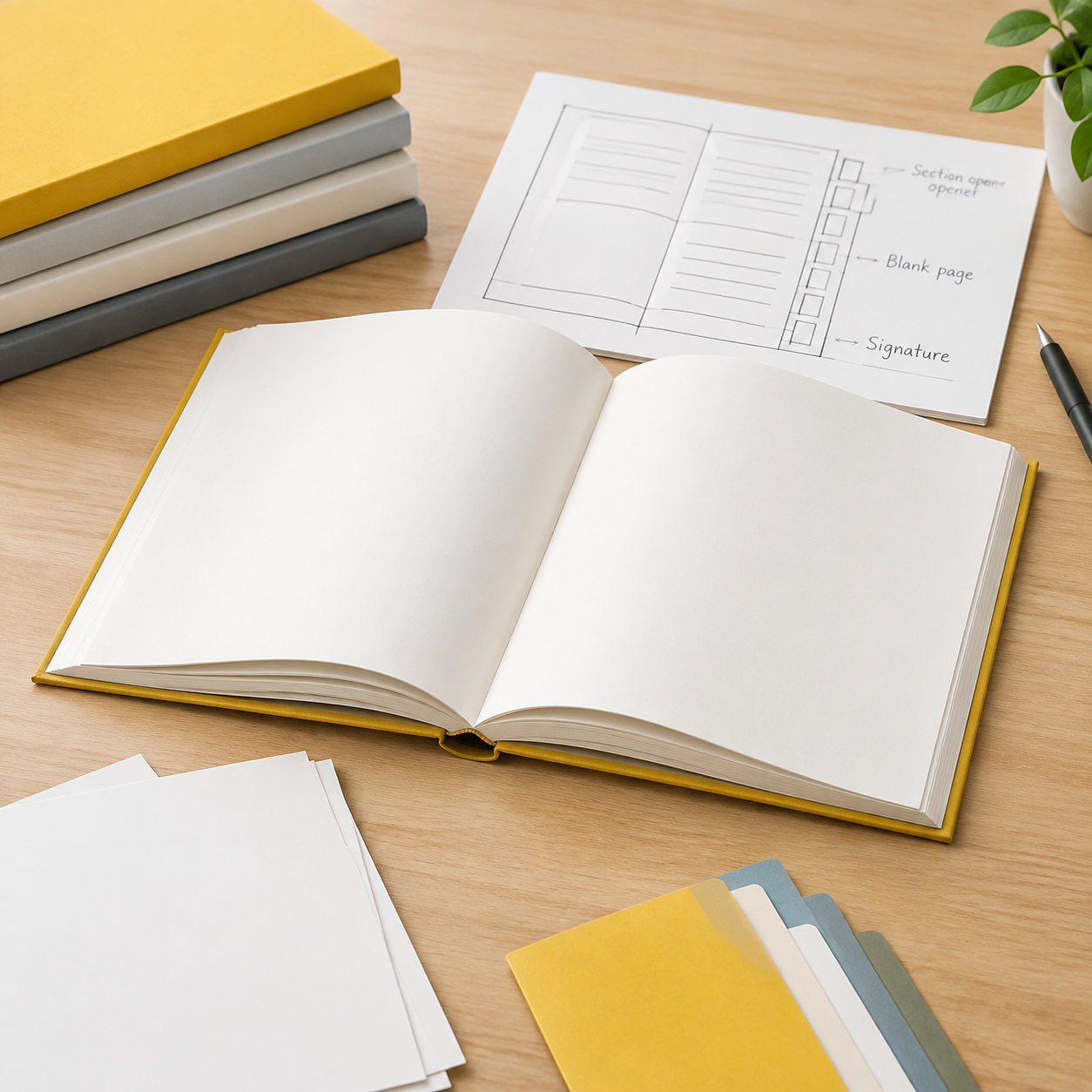
Blank pages and section openers should be planned deliberately because printing presses produce folded sections, often called signatures. A signature is a group of pages imposed on a large sheet and folded into the correct reading order. The practical page increment depends on the press, sheet size, binding method and printer’s imposition plan.
Do not add blank pages just to reach a guessed multiple. First ask the printer whether the proposed book page count should be adjusted for the selected binding. A perfect-bound book, sewn book, saddle-stitched booklet and Wire-O book can have different practical requirements.
Review the final pagination in a reader’s sequence, not only as individual PDF pages. Check that:
- New chapters open on the intended right- or left-hand page.
- Blank pages carry no accidental running heads, folios or background objects.
- Tables and images are not split across an unsuitable fold.
- Page numbers and contents references match after any page adjustment.
Why page count alone does not determine spine width
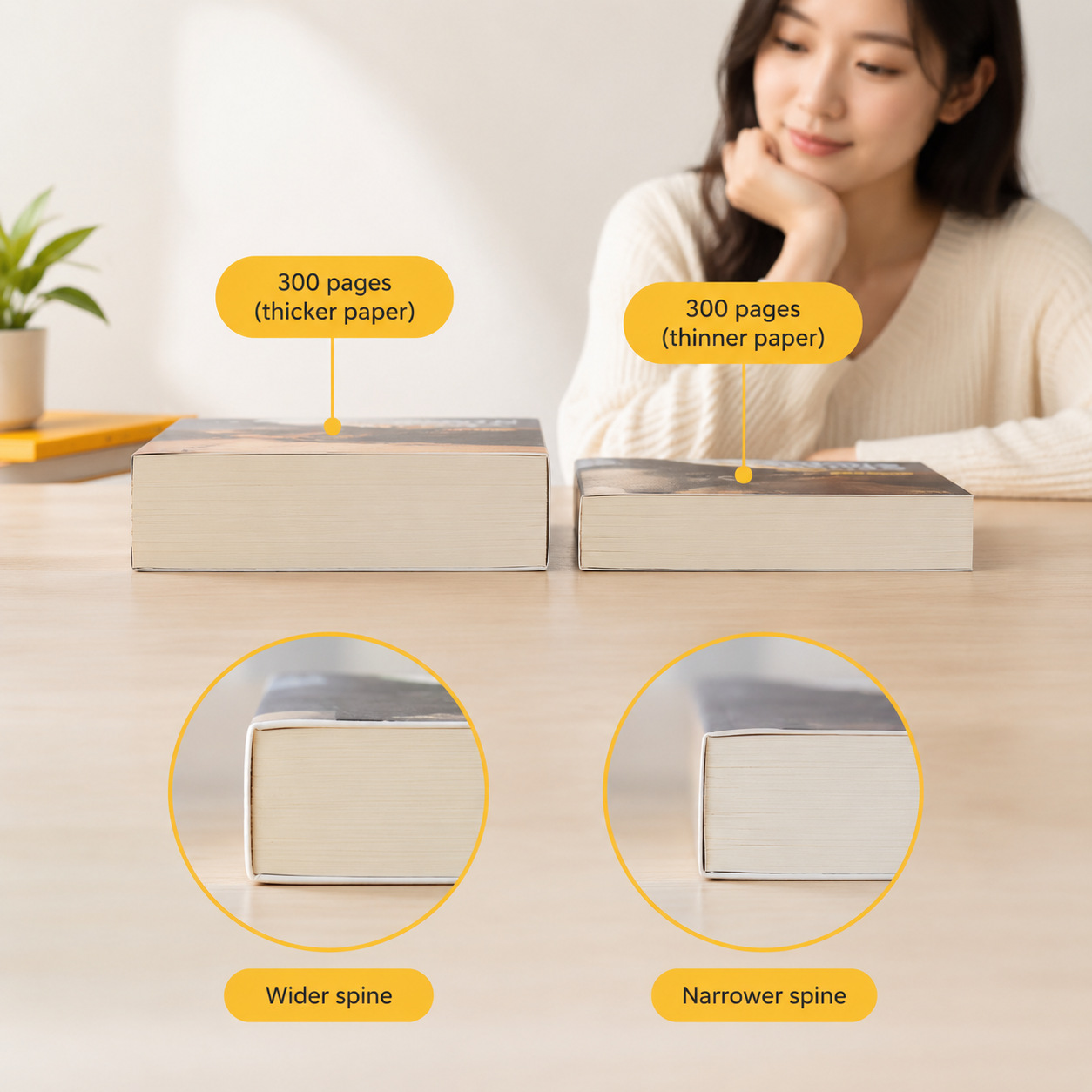
Page count alone cannot determine book thickness because paper caliper and cover construction vary. Caliper is the physical thickness of one sheet, usually measured in microns or points. Two papers with similar GSM, or grams per square meter, can have different calipers because their fibers, coating and bulk differ.
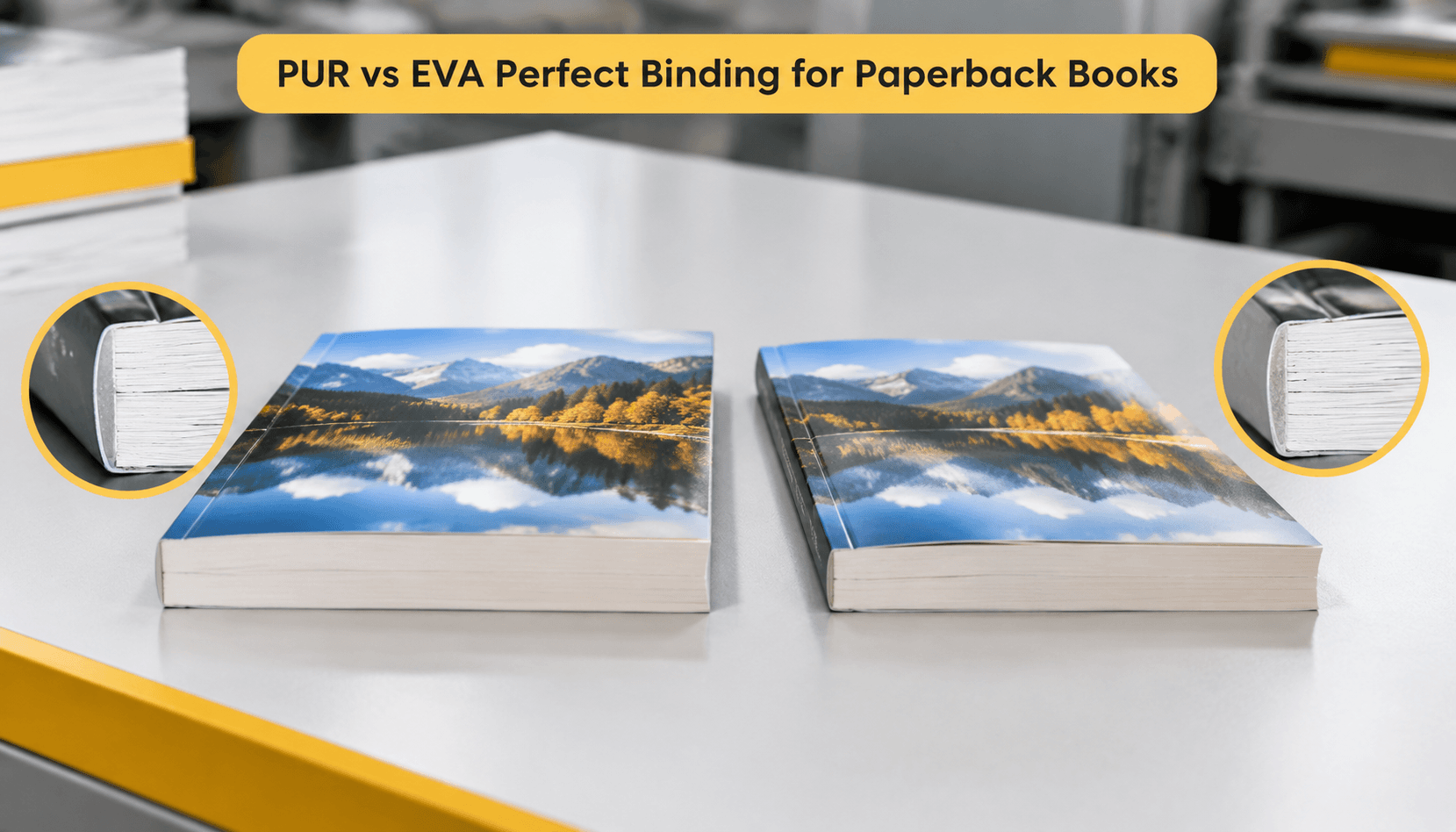
Book thickness is also affected by the binding method, cover stock, lamination, endpapers, boards and sewing or glue allowance. A hardcover book with boards has a different cover and hinge structure from a paperback with a laminated cover. A Wire-O book needs clearance for the wire and may require a different cover layout.
Give the printer the final or target page count, paper name or GSM, binding and cover construction. Ask for a spine calculation based on the selected stock or a physical sample. For a repeat order, keep the paper specification and supplier consistent if matching the previous spine is important.
Lemon Printing can review the interior and cover specification together during prepress. Its commercial printing process includes specification review, proofing and production preparation before bulk manufacturing.
Select paper weight, opacity and surface
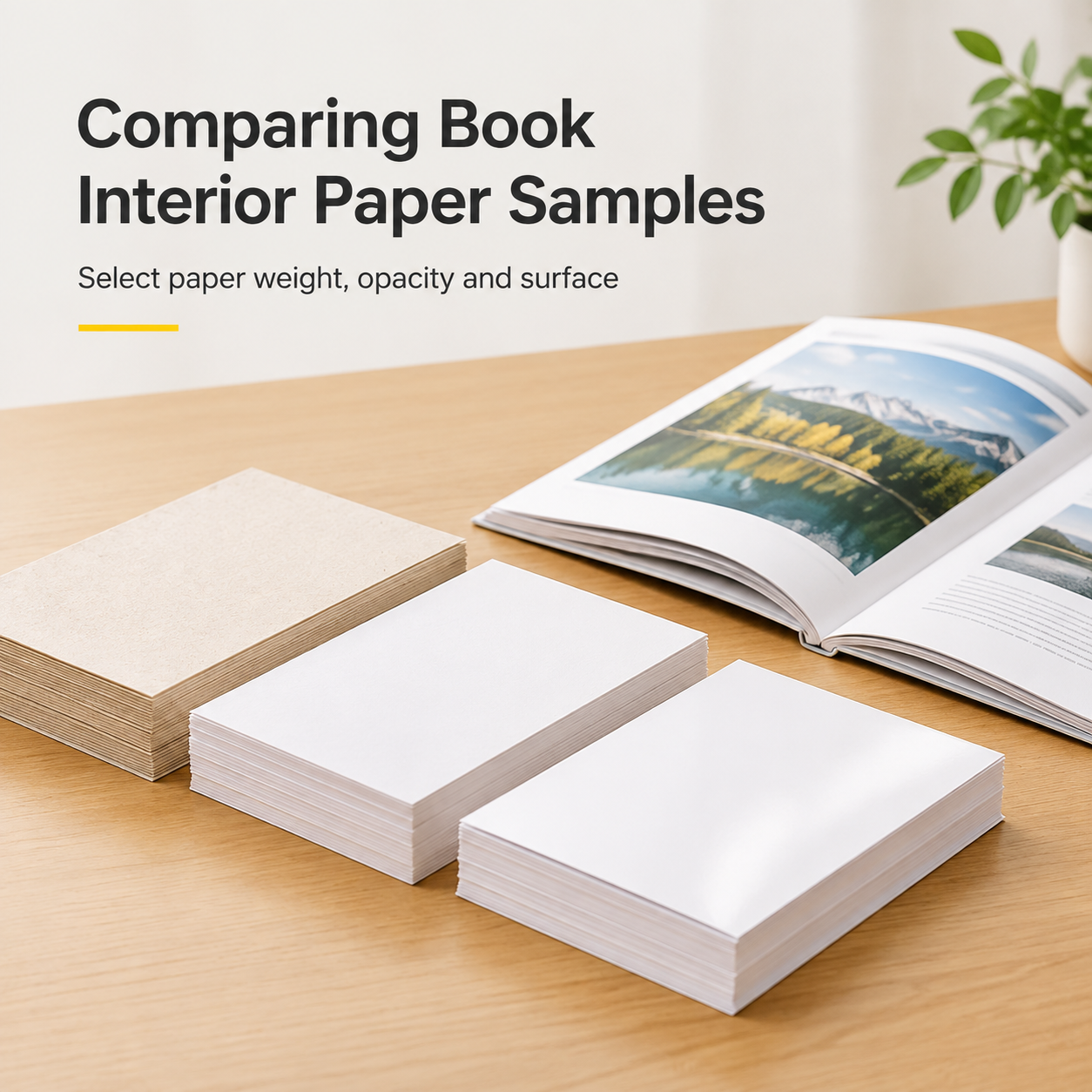
Select book paper by considering weight, caliper, opacity, surface, color and intended use—not GSM alone. GSM describes the mass of paper per square meter; it does not directly describe how thick, opaque or bulky the finished sheet will feel.
As an initial discussion range, many text interiors use relatively light uncoated stocks, while workbooks, manuals and image-led books may require a heavier or coated stock. The correct book paper weight depends on the page size, ink coverage, binding, writing requirements and target book thickness. These ranges are starting points for sampling, not universal specifications.
- Opacity: how much the printing on the reverse side shows through. Low opacity can be distracting in text or workbook pages.
- Bulk or caliper: the physical thickness of the paper. Higher bulk can make a book feel substantial without directly following GSM.
- Surface: the texture and treatment that affect ink appearance, glare, writing and tactile feel.
- Paper color: bright white and natural or cream tones create different visual impressions and contrast levels.
Request a paper swatch or printed sample for important projects. A plain unprinted paper sample cannot show show-through, ink density or image reproduction as reliably as a representative proof.
For quality-sensitive books, Lemon Printing’s quality control program includes prepress review, on-press monitoring, post-press inspection and packing verification. The buyer should still approve the material and proof against the intended use.
Coated paper for images versus uncoated paper for writing
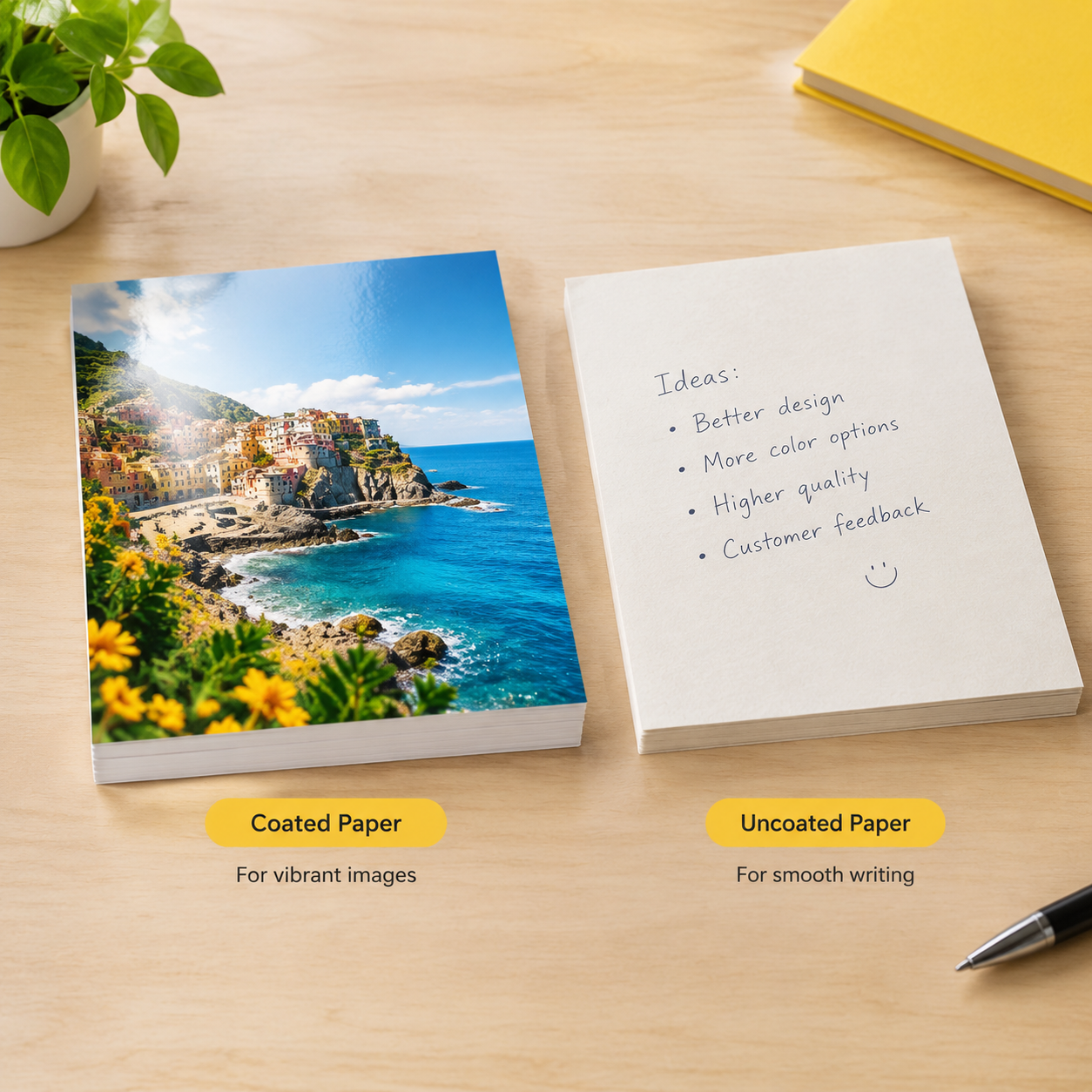
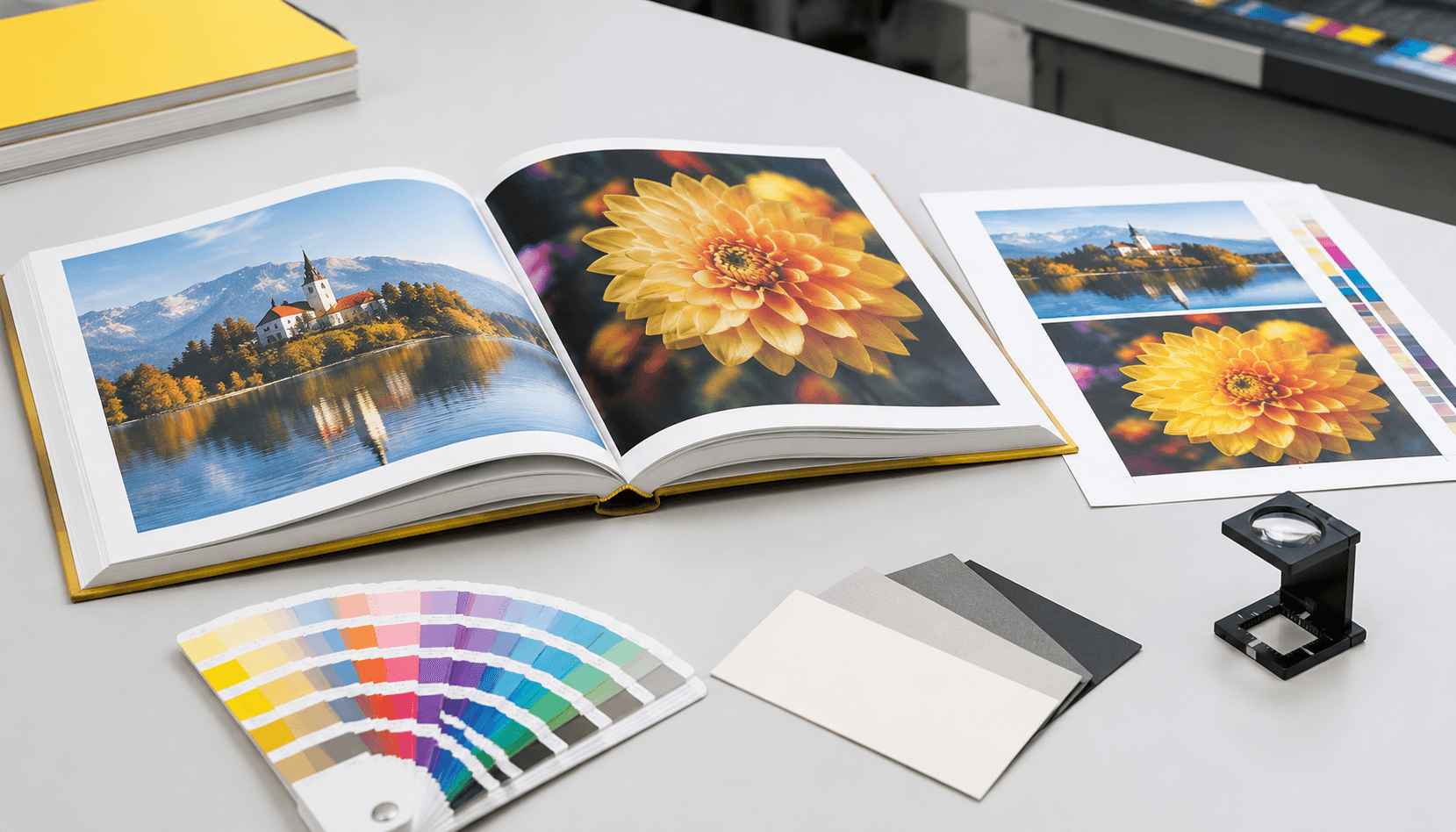
Coated paper is usually considered when sharp, high-contrast image reproduction is a priority; uncoated paper is often preferred when comfortable reading, writing or a softer tactile surface matters more. Neither surface is automatically better for every book.
| Paper direction | Strengths | Checks before approval |
|---|---|---|
| Coated interior | Typically supports crisp image detail and strong color appearance | Glare, writing performance, fold cracking risk and finished thickness |
| Uncoated interior | Often more comfortable for extended reading and handwriting | Ink absorption, image sharpness, show-through and paper shade |
| Natural or cream uncoated | Can create a softer reading appearance and reduce visual brightness | Color balance, contrast and whether brand colors remain acceptable |
If a book combines long text with full-page images, test a representative spread instead of choosing paper from a cover sample. Confirm whether the cover is coated separately from the book interior paper. The cover may need lamination or another finish for handling, while the interior may need writing or reading comfort.
How format affects the quote and shipping plan

Format affects both the manufacturing quote and the shipping plan because size, page count and paper determine material use, finished dimensions, carton packing and shipment weight. A lower unit printing price is not necessarily the lowest landed cost if the larger format creates more cartons or a heavier shipment.
Before requesting prices, prepare these inputs:
- Finished trim size and whether measurements are closed or open.
- Quantity, number of versions and whether versions share the same specifications.
- Interior page count, color requirement and paper weight or named stock.
- Cover material, binding, lamination, foil, spot UV, embossing or other finishing.
- Packing requirements, such as shrink wrapping, individual cartons, labels or mixed-version packing.
- Delivery destination, preferred shipping method and target date.
The factory may need to compare offset and digital production. Offset printing can be suitable for repeatable bulk production, while digital printing may be useful for shorter runs or variable content; the practical choice depends on quantity, page count, color coverage and scheduling.
Final MOQ, production time, pricing and shipping depend on the complete product specification, quantity, finishing and destination. Request carton dimensions and estimated shipping weight after the book format is stable rather than relying only on a unit price.
Book specification worksheet for a printer
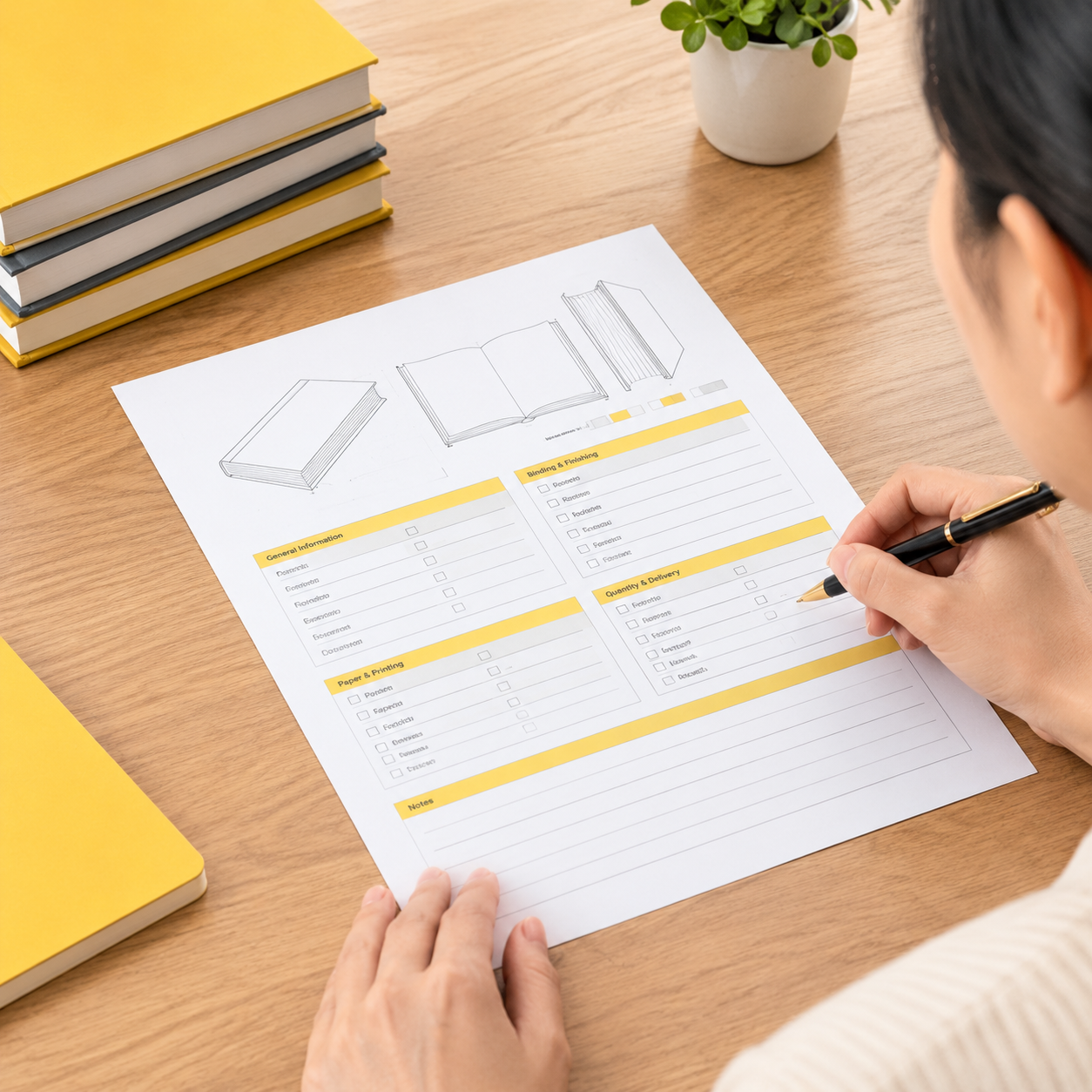
A specification worksheet turns a design idea into a quote that different printers can compare. Complete the fields below before sending files or requesting a production schedule.
- Product type: novel, workbook, catalog, manual, lookbook, journal, yearbook or other.
- Finished trim size: width x height in millimeters or inches; state whether it is closed size.
- Quantity: total copies, number of versions and expected repeat-order quantity.
- Interior: page count, black-and-white or full color, ink coverage and any inserts or foldouts.
- Interior paper: GSM or named stock, coated or uncoated, white or natural, and writing requirements.
- Cover: paperboard or boards, cover GSM, printed sides and surface finish.
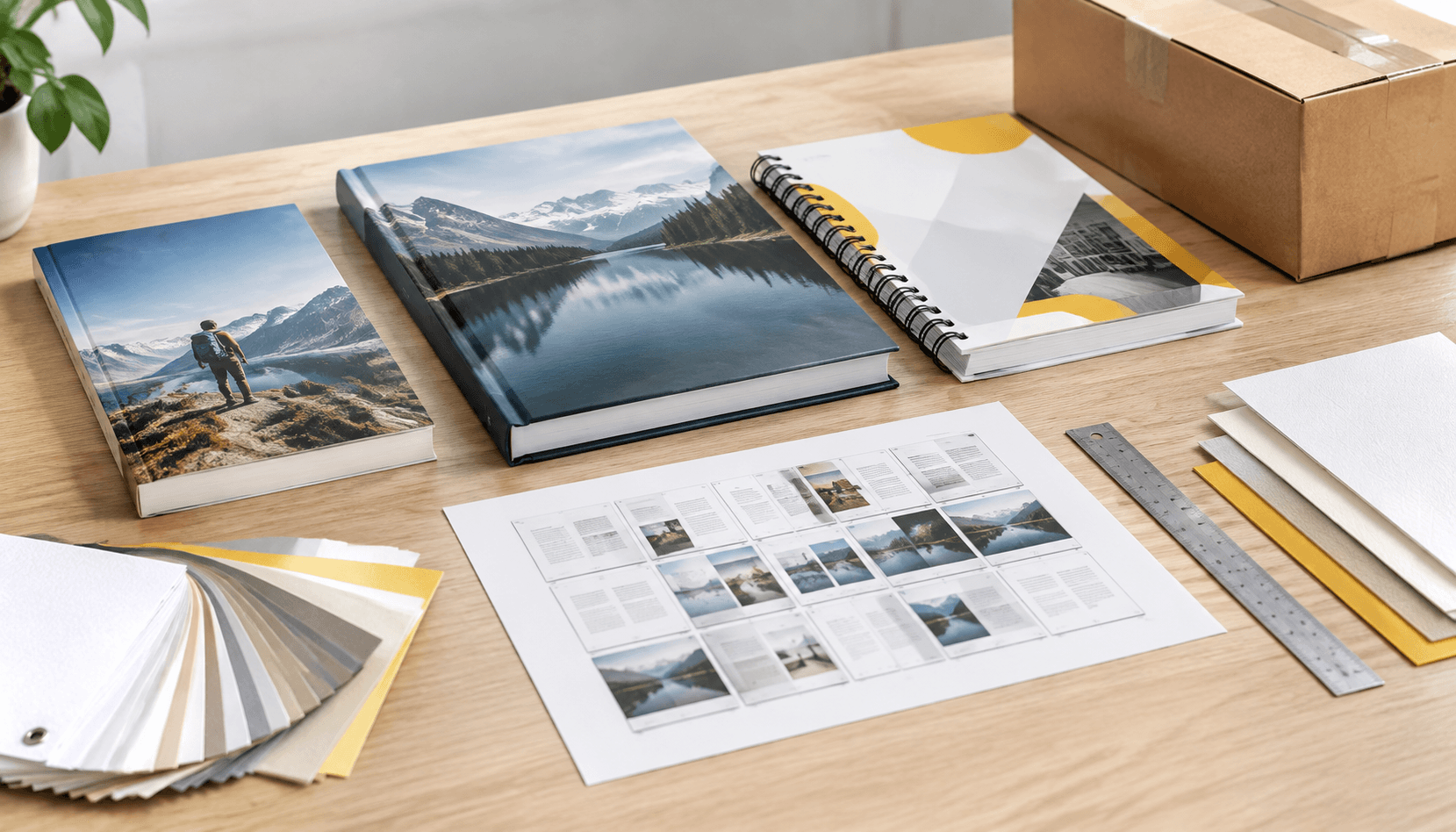
- Binding: perfect bound, sewn, casebound, saddle stitch, Wire-O, spiral or another construction.
- Finishing: matte or gloss lamination, aqueous coating, foil, spot UV, embossing, rounded corners or other details.
- Proofing: digital proof, contract color proof, physical dummy or printed sample.
- Packing and delivery: inner packing, carton labels, destination, shipping method and target date.
Attach a reference PDF, sample book or marked-up sketch when the format is unusual. Ask the printer to confirm the closed trim size, spine or cover template, page-count adjustment, paper caliper, proof method and packing assumptions in writing. Lemon Printing’s in-house production covers prepress, printing, binding, finishing, quality inspection, packing and export preparation, which helps keep these handoffs within one production workflow.
FAQ: Book trim size and paper selection
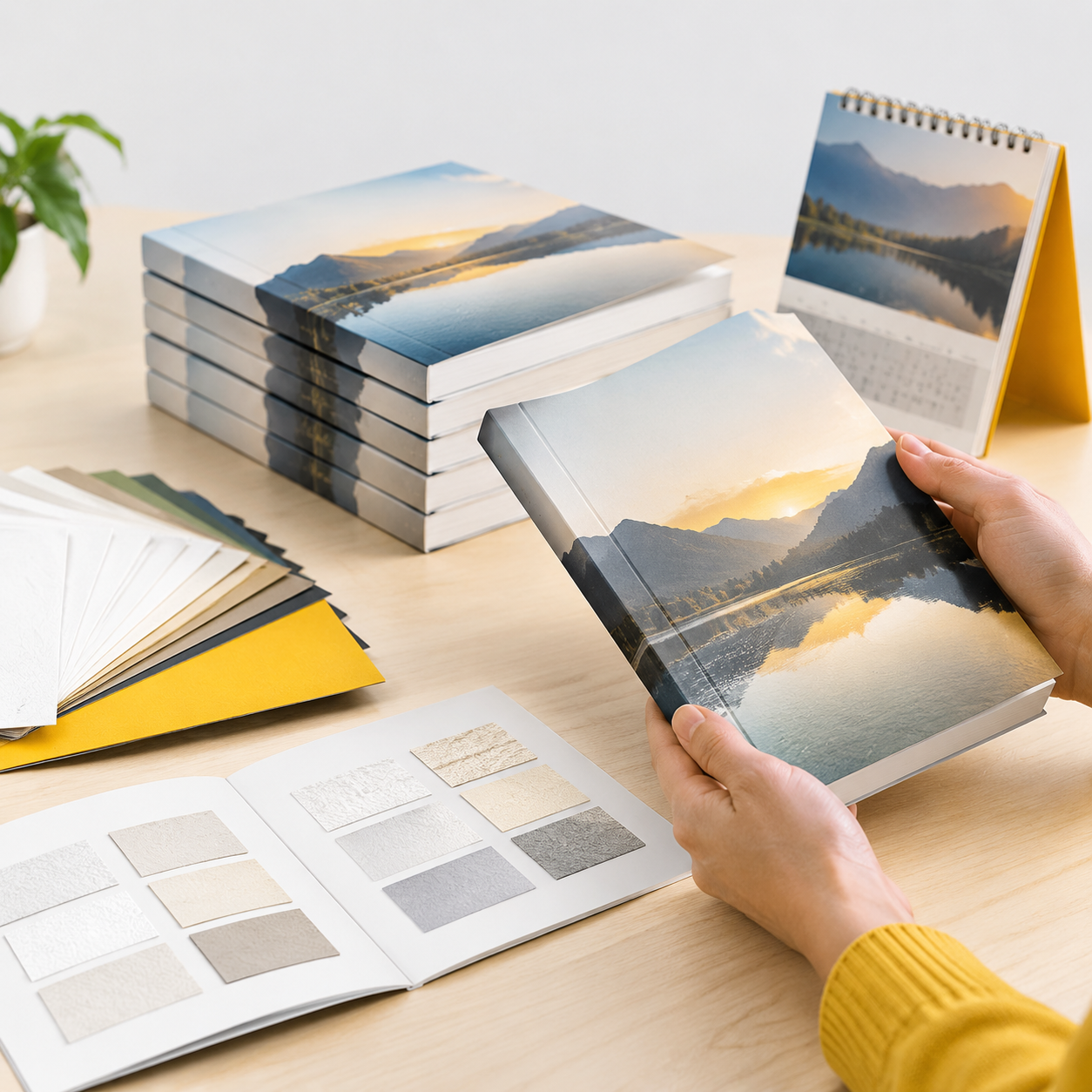
The right format is the one that balances reader use, layout efficiency, material performance, binding requirements and landed cost. The questions below address common specification issues before quotation.
Request a specification-based book quote

Send the printer a complete specification instead of asking only for a price per book. Include the product type, quantity, finished size, interior page count, paper, binding or finishing, delivery destination and target date. If the size or paper is not finalized, identify the options you want compared.
A practical quote should state the assumptions behind the price, including page count, paper, cover construction, packing and shipping basis. It should also identify any open decisions that could change the quote later, such as a paper substitution, page-count adjustment or change from paperback to hardcover.
Lemon Printing is a factory-backed commercial printer established in 2015 in the Guangzhou–Shenzhen manufacturing corridor. Its self-owned facility has more than 130 skilled workers and 8+ offset and digital presses, with key production stages handled in-house for international B2B buyers.
FAQ
What book trim size should I choose for a general nonfiction book?
A mid-size format such as approximately 6 x 9 inches is often a practical starting point for general nonfiction, but it is not a universal answer. Test the actual manuscript, type size, margins, tables and image proportions before approving the format.
How does book page count affect the quote?
Book page count affects the amount of interior paper, printing time, finished thickness, binding method, cover spine and carton weight. The final effect depends on trim size, paper caliper, color coverage, binding and quantity.
Is heavier book paper always better?
No. Heavier paper may improve opacity or create a more substantial feel, but it can increase book thickness, material consumption and shipping weight. Select paper based on reading, writing, image, binding and budget requirements.
Should I use coated or uncoated paper for a book interior?
Coated paper is commonly considered for strong image reproduction, while uncoated paper is often more suitable for extended reading or handwriting. If the book combines text and images, approve a representative printed spread rather than choosing from appearance alone.
Can I calculate book thickness from GSM?
GSM alone is not enough. Paper caliper, or the actual thickness of one sheet, can vary between stocks with similar GSM. Binding, cover construction, endpapers and finishing also affect the finished thickness, so ask the printer for a calculation based on the selected stock.
Get a Clear Quote for Your Printing Project
Send Lemon Printing your product type, quantity, size, materials, binding or finishing requirements, delivery destination and target date. Our team will review the specifications and normally respond within one business day with practical production options, pricing and a project timeline.