Table of Contents
- PUR or EVA: which perfect binding is right for the book?
- What is the difference between PUR and EVA adhesive?
- How PUR adhesive behaves during opening and handling
- Where EVA perfect binding remains a practical choice
- Compare the binding against paper, page count and use
- Coated versus uncoated interior paper
- Short manuals, thick books and frequently handled editions
- The spine and page-pull checks buyers should request
- How adhesive choice affects a repeat book order
- What to specify in a perfect-binding quote
- FAQ: PUR and EVA perfect binding
- Get a binding recommendation for your book
PUR and EVA can both produce clean paperback books, but the better choice depends on paper coating, page count, handling frequency, spine performance and repeat-order requirements. This guide explains the production trade-offs buyers should specify before requesting a quote.
PUR or EVA: which perfect binding is right for the book?
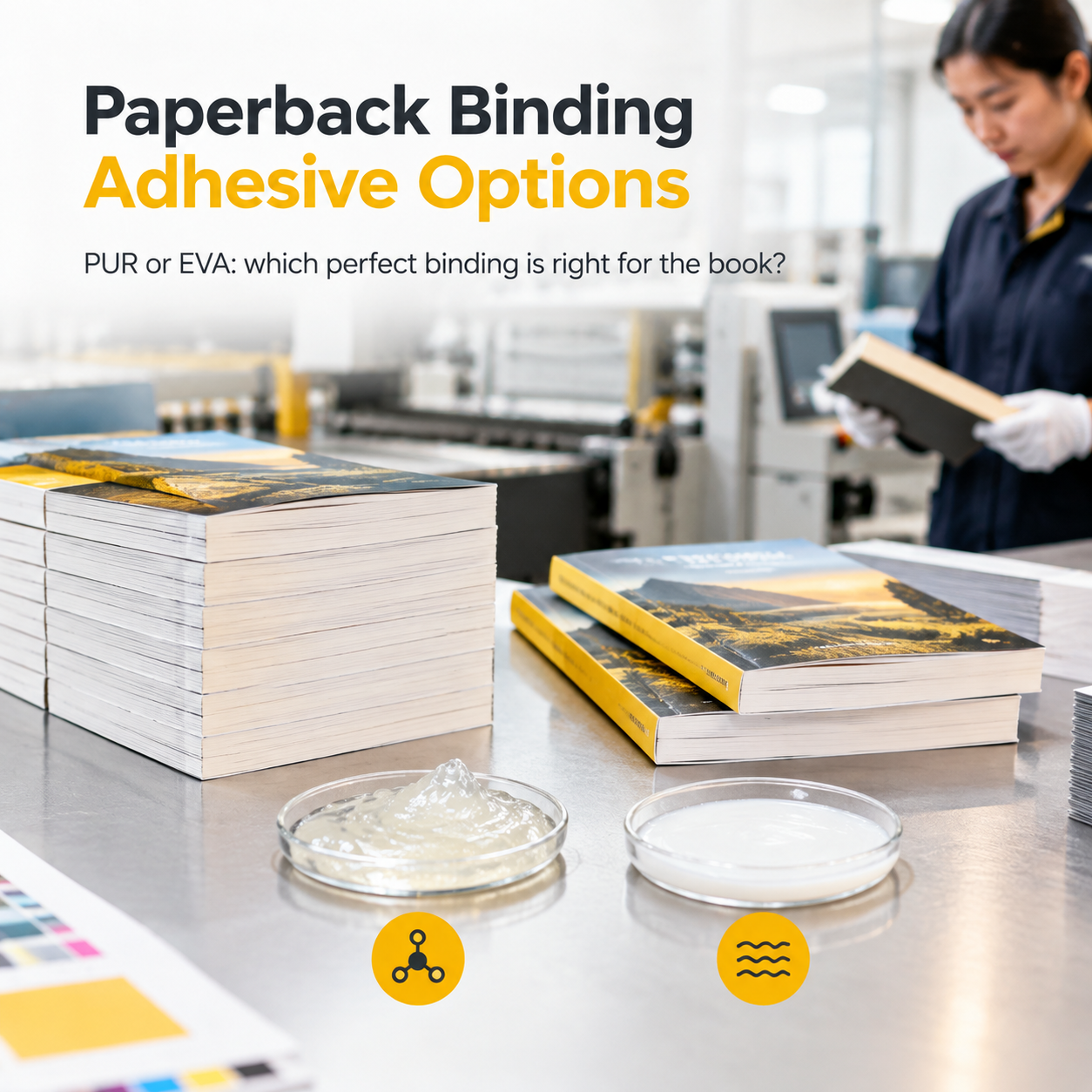
PUR is usually the safer starting point for coated paper, frequently handled books and projects where flexible spine performance matters. EVA remains a practical choice for many standard paperback books, short-run manuals and cost-sensitive specifications when the paper and handling requirements are less demanding.
The common purchasing mistake is to request only perfect bound and leave the adhesive undefined. Perfect binding describes the construction: loose pages are gathered, the spine edges are prepared, adhesive is applied and a cover is wrapped around the text block. The adhesive still affects how the spine behaves during opening, transport and repeated use.
Key takeaways:
- Choose PUR when coated stock, repeated opening or higher book spine durability is a priority.
- Choose EVA when the book uses suitable paper, has moderate handling demands and the production specification is straightforward.
- Page count matters, but it does not decide the adhesive by itself. Paper coating, grain direction, milling, adhesive application and cover construction also matter.
- For a heavily used manual that must open very flat, consider whether sewn binding or another construction is more suitable than either adhesive option.
For publishers, educators and corporate buyers, the right comparison is not simply which adhesive is stronger. It is which adhesive gives an acceptable balance of spine performance, appearance, production control and total landed cost for the intended use.
What is the difference between PUR and EVA adhesive?
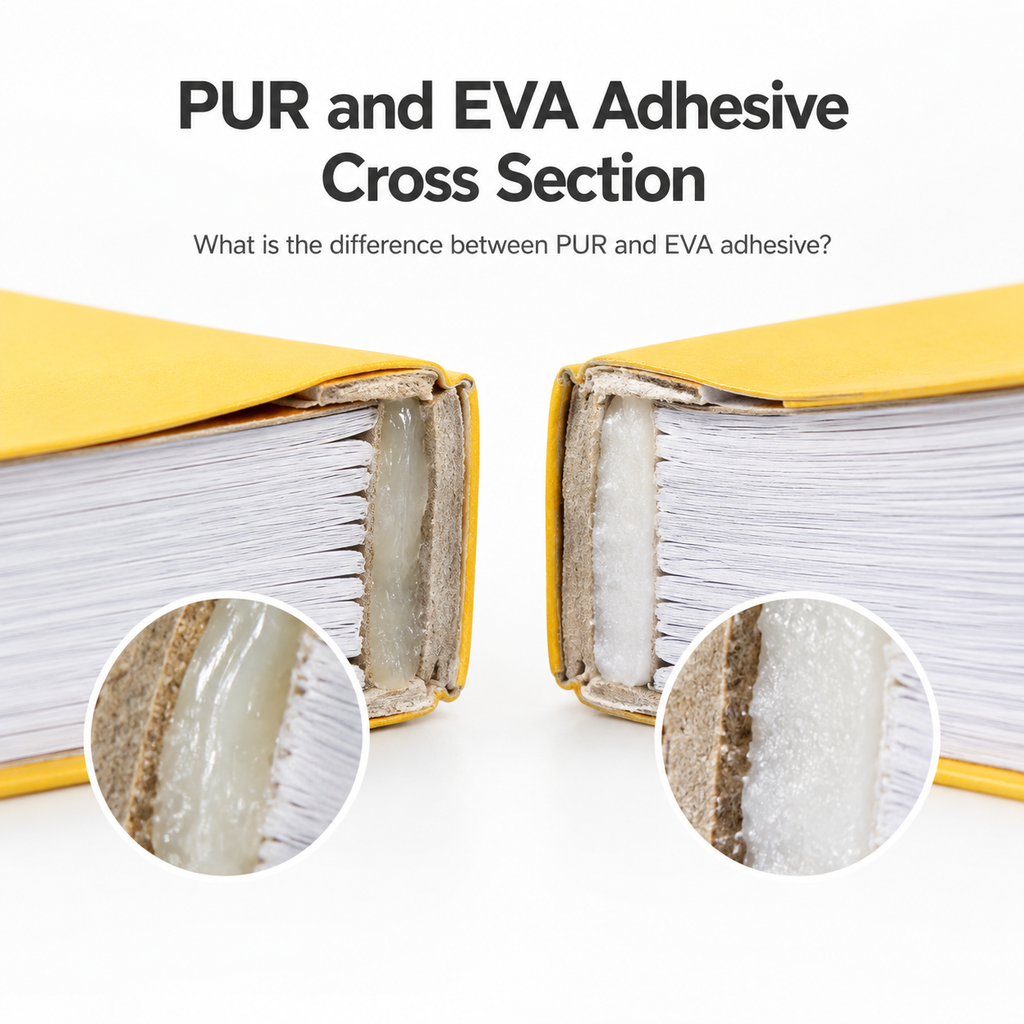
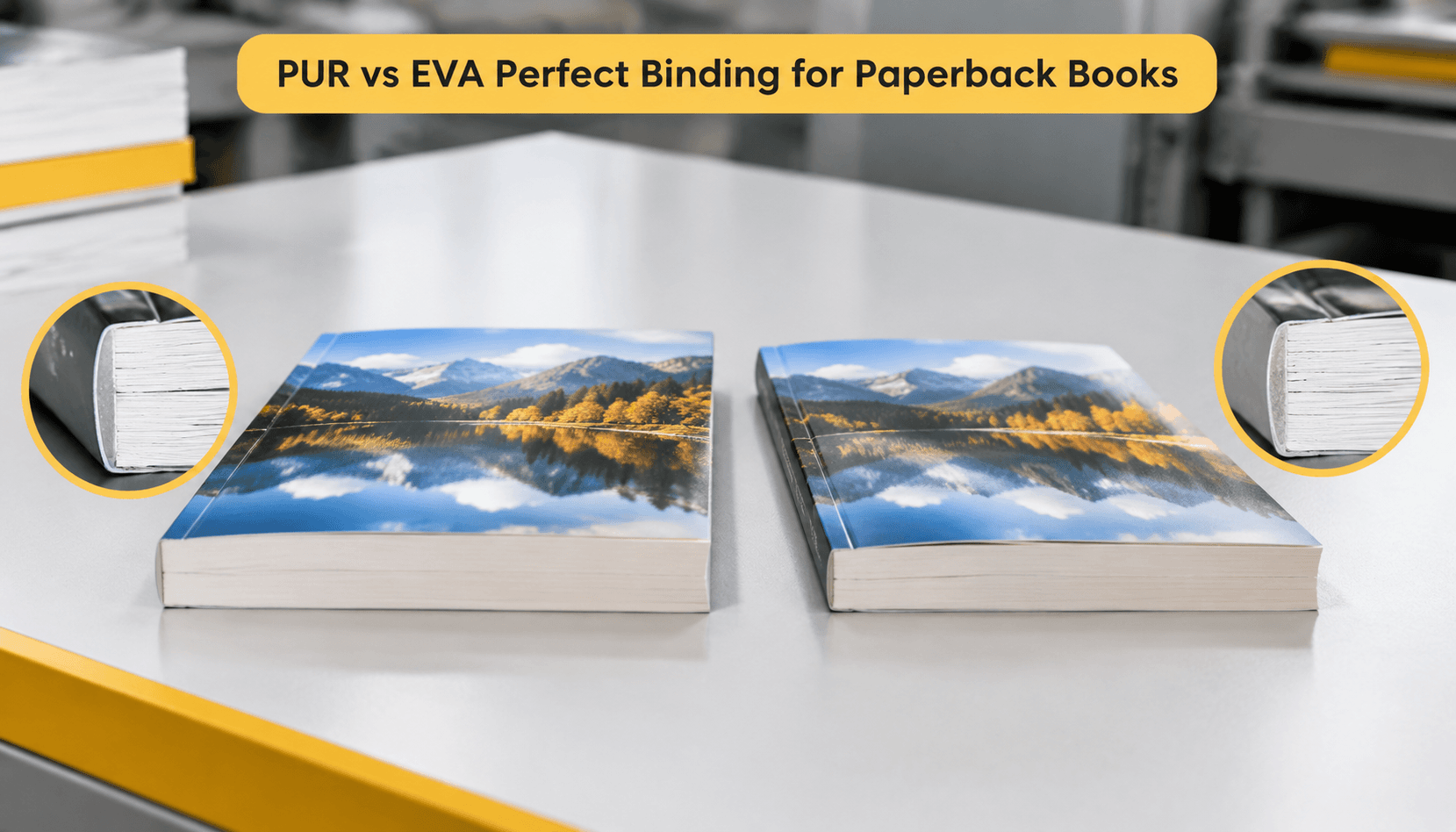
PUR and EVA are both adhesives used in perfect bound book printing, but they set and flex differently. EVA is a conventional hot-melt adhesive that sets as it cools. PUR is a moisture-reactive polyurethane adhesive that continues curing after application and normally produces a more flexible bond.
| Factor | PUR perfect binding | EVA perfect binding |
|---|---|---|
| Adhesive type | Moisture-reactive polyurethane | Ethylene-vinyl acetate hot melt |
| Typical behavior | Flexible bond with good resistance to repeated flexing when properly applied and cured | Fast-setting hot-melt bond suitable for many standard paperback constructions |
| Paper considerations | Often preferred for coated, difficult-to-bond or mixed paper specifications | Works well when the paper surface and spine preparation are compatible with the adhesive |
| Handling requirement | Useful where the book will be opened and closed repeatedly | Suitable for moderate handling when the construction is well matched to the use |
| Production planning | Requires controlled application and curing considerations before packing or heavy handling | Sets quickly, but cooling, milling and application control still affect the result |
| Best buying question | Can the supplier confirm the adhesive, spine preparation and curing plan? | Can the supplier confirm compatibility with the selected paper and expected handling? |
“Stronger” needs a practical definition. A strong adhesive bond is not enough if the paper fibers are poorly prepared, the spine is under-milled, the glue layer is inconsistent or the book is forced open beyond its construction. PUR often offers better flexibility and resistance to page pull in demanding applications, but final performance depends on the complete production setup.
How PUR adhesive behaves during opening and handling
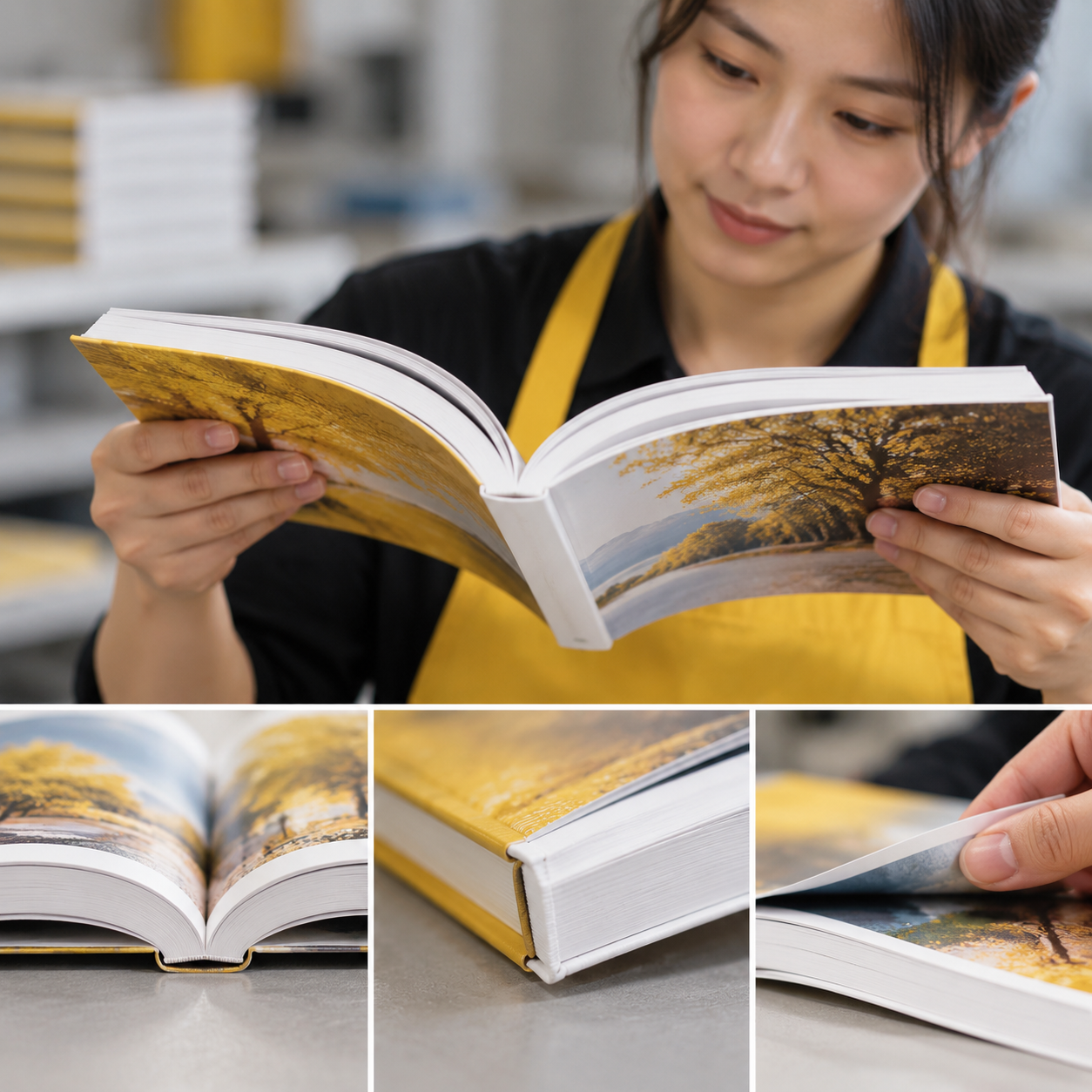
PUR is valued for a flexible spine bond that can tolerate repeated opening better than a less flexible adhesive in a comparable construction. This makes PUR a strong candidate for manuals, reference books, catalogs and other paperbacks that are handled frequently.
PUR does not turn a perfect bound book into a lay-flat book. The cover and text block still resist opening, and the binding is not equivalent to sewn sections or Wire-O. The correct expectation is improved adhesive flexibility and page retention, not unrestricted flat opening.
During production, the spine edge must be prepared so the adhesive can contact the page block consistently. Dust, loose fibers, excessive coating or an unevenly milled spine can reduce the effective bond. The adhesive layer also needs controlled coverage: too little can reduce page retention, while an unsuitable or excessive layer can affect the spine shape and cover fit.
Because PUR continues to cure, the supplier should explain how books are held, packed and inspected before shipment. This is especially relevant for export orders that will experience stacking, carton pressure and handling before reaching the end user. A buyer should ask for a physical sample or production-standard dummy when the book has a high handling risk.
Where EVA perfect binding remains a practical choice
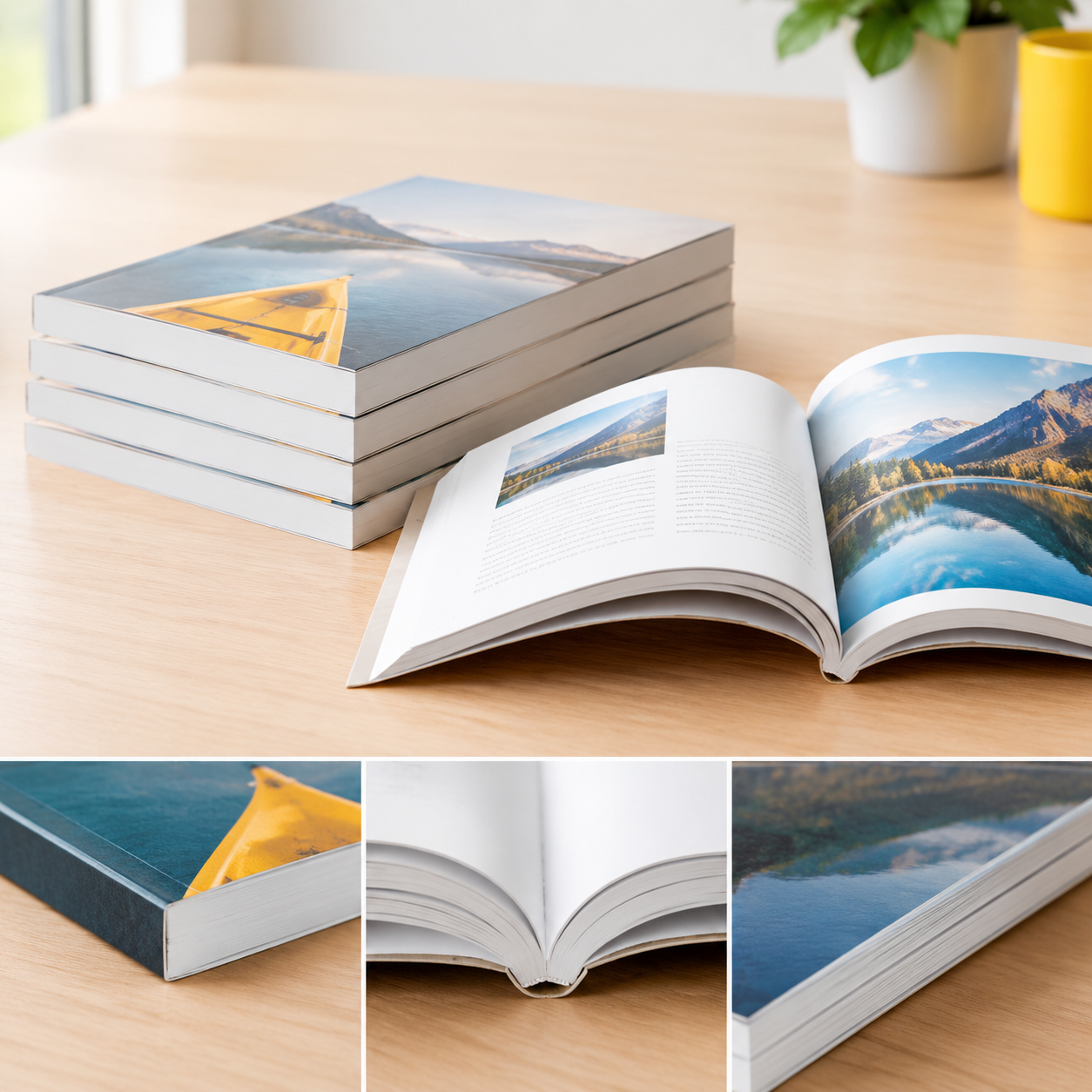
EVA perfect binding remains suitable for many paperback books when the paper, page block and handling expectations are compatible with a conventional hot-melt process. It can be a sensible choice for novels, promotional books, short catalogs, event programs and standard manuals that are not expected to open and close continuously.
EVA is not automatically a low-quality option. A well-made EVA-bound book can have a clean square spine and reliable page retention when the supplier uses suitable paper preparation, adhesive coverage and pressing conditions. The risk comes from treating all EVA jobs as interchangeable, particularly when the interior uses heavily coated sheets or when the book will be used intensively.
Ask the printer to confirm whether the proposed EVA process has been used with the selected paper and page range. If the specification changes from uncoated text stock to glossy coated stock, or from a short booklet to a thick reference book, the adhesive recommendation should be reviewed rather than carried over automatically.
For a buyer comparing quotes, an EVA specification is incomplete unless it also states the interior paper, page count, cover stock, spine preparation and intended use. Price comparisons made without these inputs are not like-for-like.
Compare the binding against paper, page count and use

The correct adhesive choice depends on the interaction between the paper surface, page count and handling pattern. A short coated catalog can present more adhesive risk than a longer uncoated novel if the coated surface is difficult to bond and the catalog is repeatedly opened.
| Book condition | Initial direction | Why it matters | Buyer action |
|---|---|---|---|
| Uncoated pages, moderate use | EVA may be suitable | Many uncoated stocks provide a practical surface for standard perfect binding | Confirm the paper, page range and sample result |
| Gloss, silk or heavily coated pages | Review PUR first | Coating can reduce the effective bonding surface and increase page-pull risk | Request paper-specific binding advice and a sample check |
| Frequently handled training manual | PUR is often the safer direction | Repeated opening places more flexing stress on the spine | Define opening expectations and request spine and page-pull checks |
| Very thin book | Review the full cover and spine construction | A narrow spine gives less adhesive contact area and can be harder to square | Confirm minimum page or spine requirements with the printer |
| Thick reference book | Review PUR, sewn or another construction | More pages increase flexing and load on the spine during use | Share exact page count, paper bulk and intended opening behavior |
This is a production decision, not a universal ranking. The same book may need a different recommendation if its paper, trim size, page count or usage changes.
Coated versus uncoated interior paper
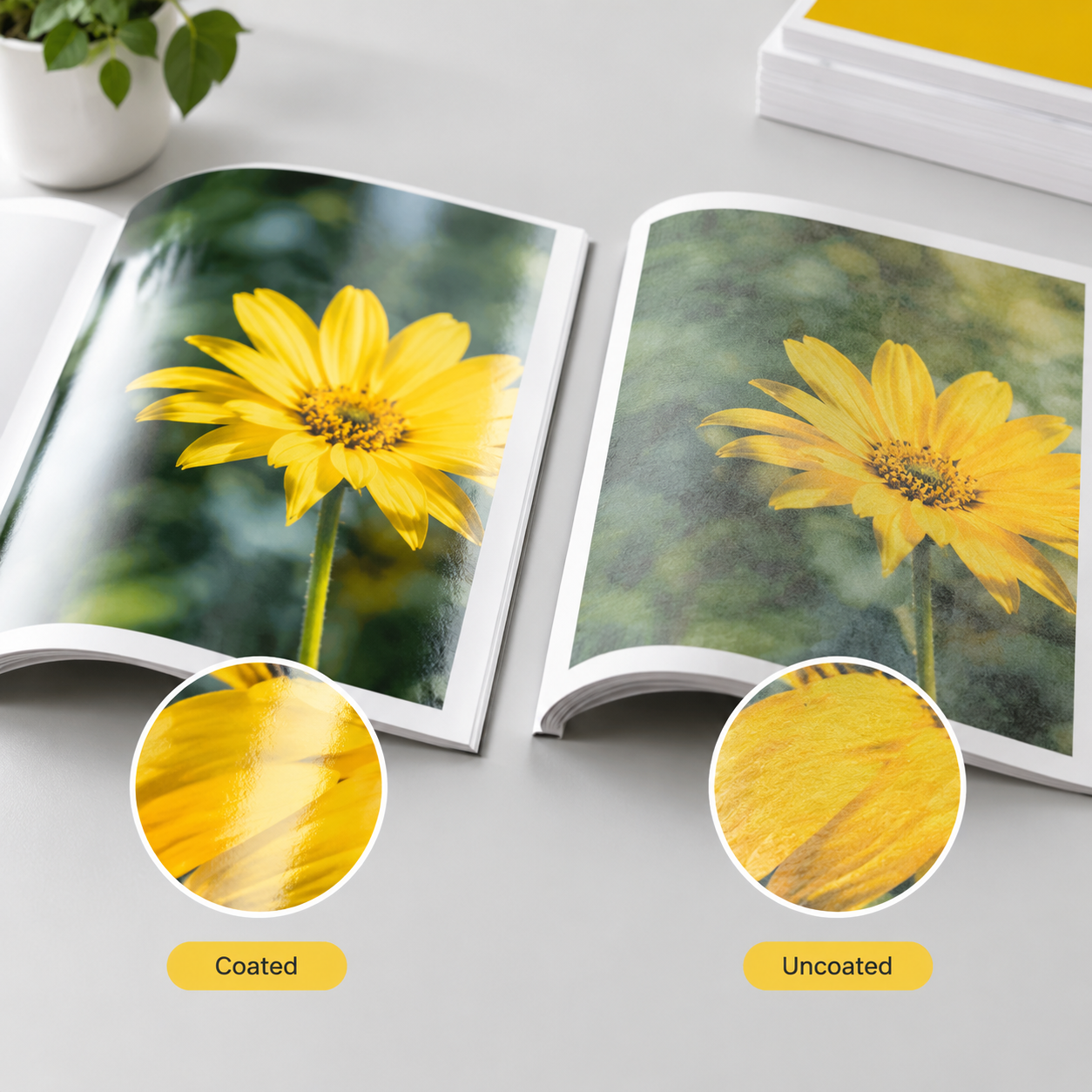
PUR is generally the better adhesive to investigate for coated paper, especially when the book will be opened repeatedly. Coated paper has a smoother treated surface, so the printer must pay closer attention to spine preparation and adhesive compatibility.
Coated paper is common in image-heavy catalogs, art books, lookbooks and promotional publications. Its surface supports sharp image reproduction, but the coating can make the page edge less forgiving during binding. This is why a quote should identify paper type and finish rather than simply say “premium paper.”
Uncoated paper is often more forgiving for standard paperback applications, but it still requires correct milling, clean page edges and consistent glue application. High bulk, rough textures, recycled fibers and unusual paper finishes can change how the adhesive interacts with the page block.
For a paper change during a repeat order, request a new production review. A substitution that looks similar by color or weight may behave differently at the spine because bulk, coating and surface strength have changed.
Short manuals, thick books and frequently handled editions
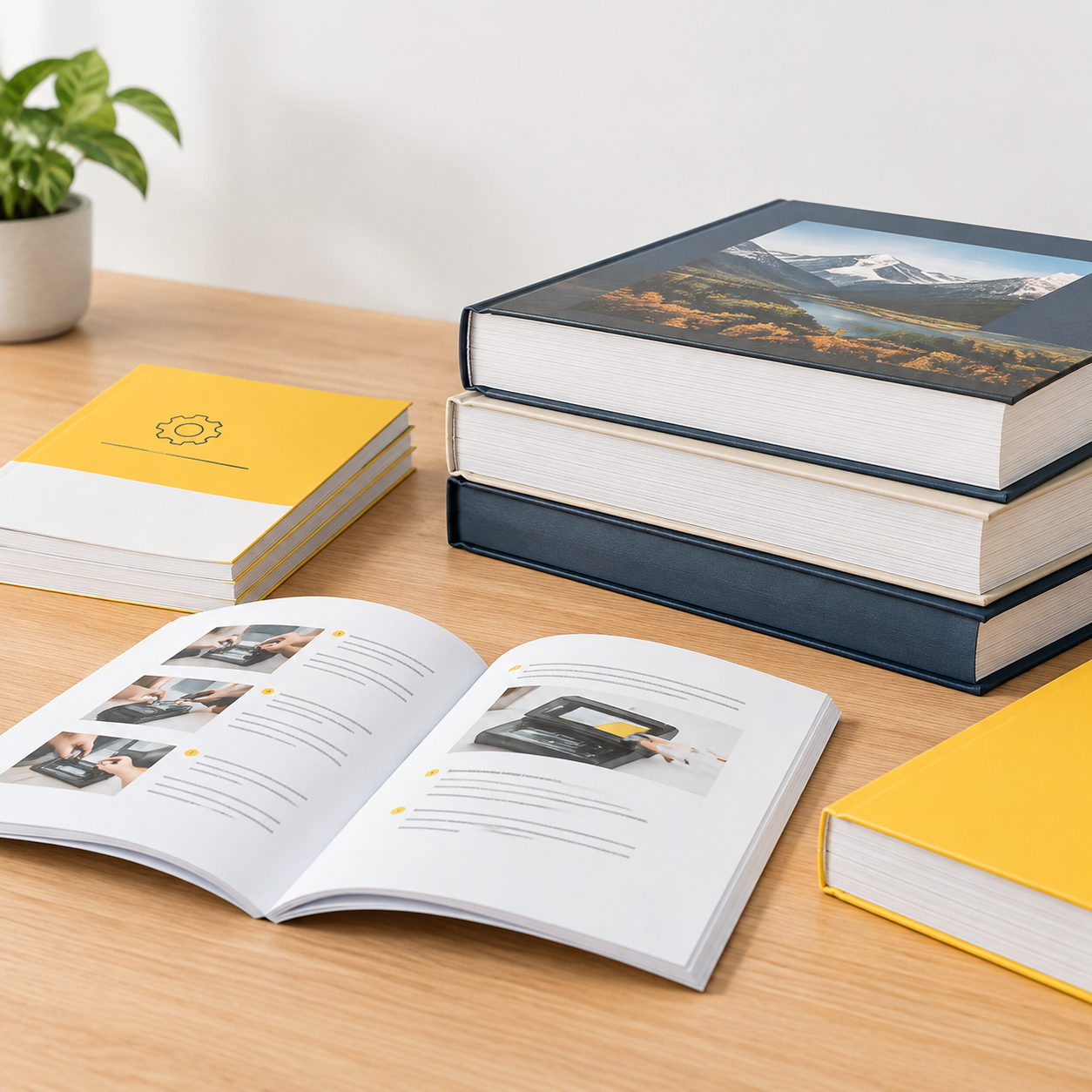
For a frequently handled manual, PUR is often the more defensible starting point, but the buyer should also question whether perfect binding is sufficient. Page count affects the amount of spine stress and the available adhesive contact area, yet it does not create a simple PUR-or-EVA cutoff.
A short manual may have a narrow spine and limited glue area. That can make spine squareness and page retention sensitive to production setup. A thick book has the opposite issue: more pages create greater leverage when the reader opens the book, particularly if the book is forced flat from the center.
Use the following decision sequence:
- Describe how the book will be used: occasional reading, retail handling, classroom use, field work or daily reference.
- Share the exact page count, paper type, paper weight or bulk and finished size.
- Explain whether the book must open flat, open comfortably or simply remain intact during normal reading.
- Ask the supplier to compare PUR with sewn binding or another structure if the book will be opened aggressively or repeatedly.
- Approve the binding only after reviewing a representative sample or an agreed production check.
A book that needs genuinely flat opening may be better served by sewn sections, Wire-O or another format. PUR improves the adhesive bond but does not change the basic limitations of a glued paperback.
The spine and page-pull checks buyers should request

Buyers should request checks that evaluate both the finished spine and the attachment of individual pages. A visually clean spine does not prove that the page block will withstand repeated handling.
Useful checks include:
- Spine appearance: Inspect squareness, cover alignment, glue squeeze-out, wrinkles, cracking and gaps along the spine.
- Page-pull observation: Open representative books through several sections and check whether pages release unusually easily from the adhesive line.
- Flexing check: Flex the book through a normal opening range rather than forcing it flat. Look for separation, cracking or movement at the spine.
- Cover attachment: Confirm that the cover is firmly attached and that the cover hinge is positioned consistently.
- Paper and adhesive match: Record the actual paper, adhesive type and spine preparation used for the approved sample.
- Pack-out inspection: Check whether pressure, heat or stacking during packing has marked the cover or distorted the spine.
For larger orders, agree how samples will be selected and what constitutes a rejection. Lemon Printing describes its quality work as covering prepress, printing, finishing and packing stages; buyers should still define the project-specific checks, tolerance expectations and inspection method in the purchase order.
Quality inspection is most useful when it is tied to a written specification, not when it is limited to a general statement that the books will be checked.
How adhesive choice affects a repeat book order
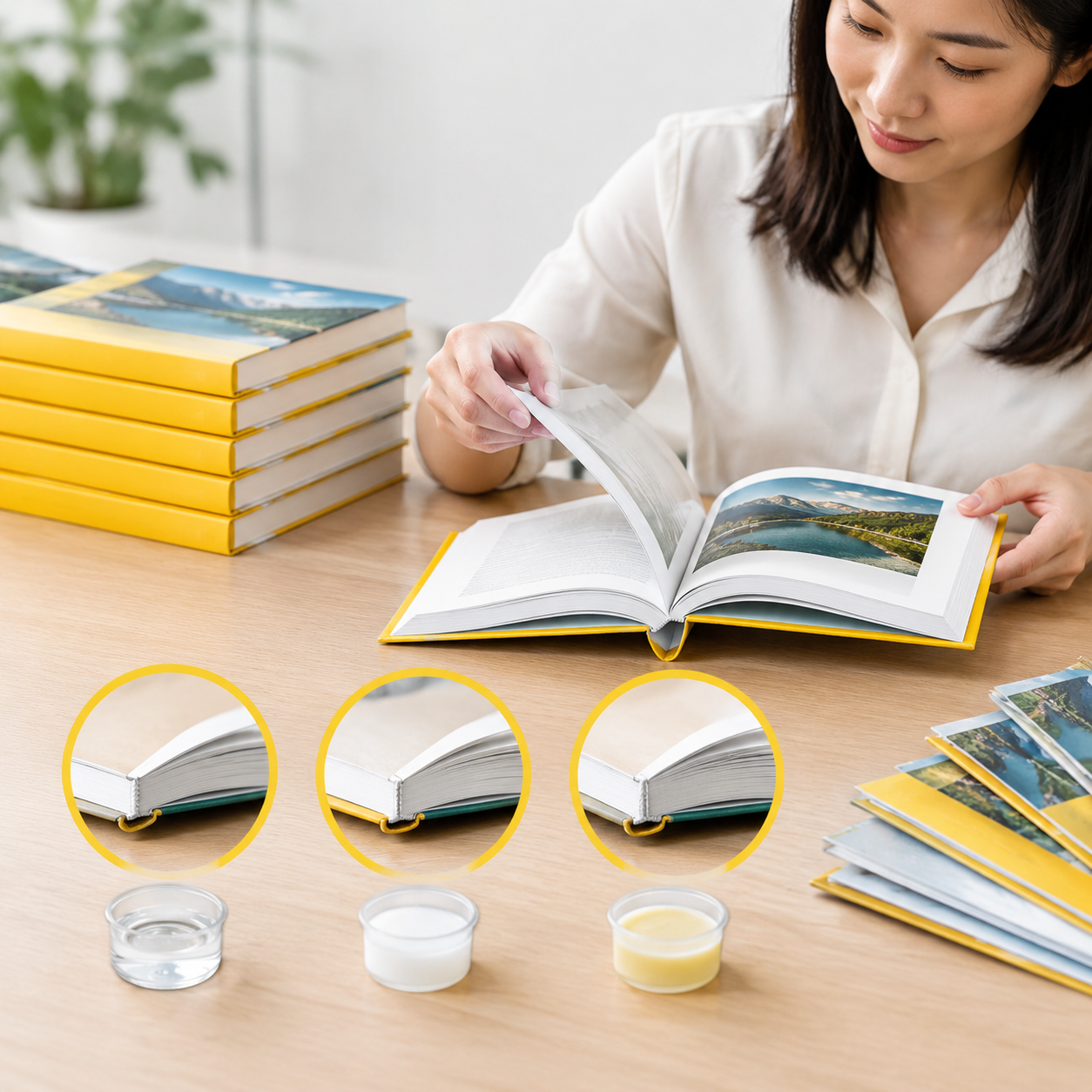
For repeat orders, adhesive selection should be treated as part of the manufacturing specification, not as an invisible factory preference. Keeping the adhesive, paper and spine preparation consistent reduces one source of variation between editions.
Record these details in the approved sample file or purchase specification:
- Adhesive type: PUR or EVA
- Interior paper name, finish, weight and supplier-approved substitute rules
- Finished size, page count and reading direction
- Cover stock, lamination or other surface finish
- Spine preparation method and any agreed construction limits
- Sample approval date and reference photos
- Inspection points for spine alignment, page pull and cover attachment
If a later order changes page count or paper, recalculate the spine and ask for a new binding review. If the original title used EVA but a new coated paper is proposed, the supplier should explain whether PUR is now more appropriate. If the order changes from a moderate-use retail book to a daily-use training manual, the original adhesive decision may no longer be suitable.
Repeat-order control is especially important for distributors and publishers managing multiple editions. A clear specification helps the printer reproduce the intended construction and helps the buyer compare any proposed change before production.
What to specify in a perfect-binding quote

A comparable perfect-binding quote should state the product construction, paper, adhesive, finishing, inspection requirements, quantity and destination. If the buyer does not know whether PUR or EVA is appropriate, the quote request should say so and ask the printer to recommend an option based on the intended use.
Quote input What to provide Product Paperback book, catalog, workbook, novel, manual or other product type Quantity Total copies, number of titles or edition breakdown Size Finished trim size and whether the size is closed or open Interior Page count, color or black-and-white printing, paper type, finish and weight Cover Cover paper or board, printing, lamination, coating and any special finish Binding Perfect binding; PUR, EVA or supplier recommendation; desired opening behavior Quality Proof requirement, spine and page-pull checks, inspection standard and tolerance concerns Logistics Delivery destination, packaging requirements, target date and preferred shipping arrangement Also attach a print-ready PDF or representative pages when possible. A prepress review can identify bleed, cover spread and spine-width issues before the adhesive decision becomes a production problem.
Final MOQ, production time, pricing and shipping depend on product specifications, quantity, finishing and destination. Ask for those items to be quoted against the same specification so different suppliers can be compared fairly.
FAQ: PUR and EVA perfect binding
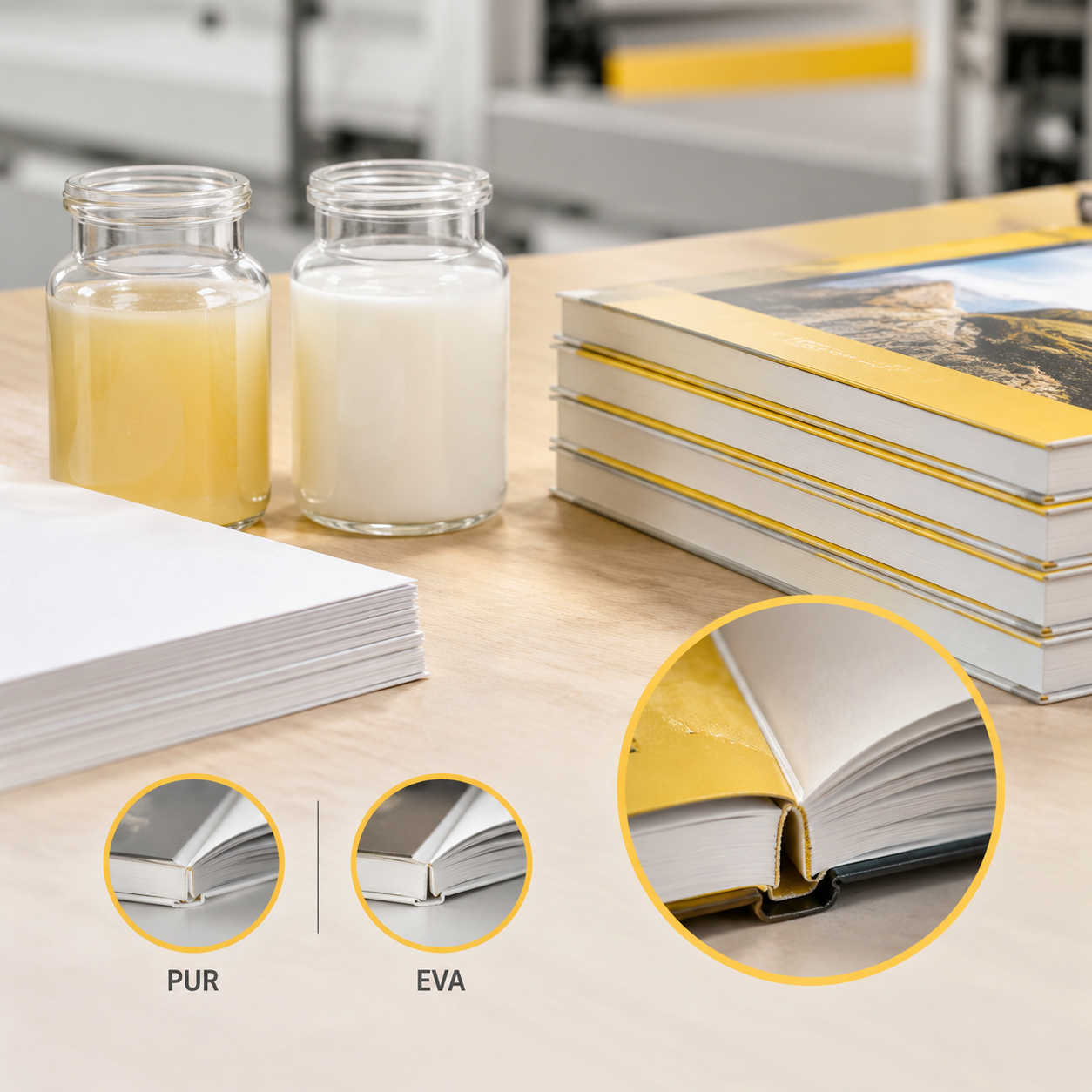
These questions address the practical decisions buyers commonly face when ordering paperback books, manuals and catalogs.
Use the adhesive as one part of the specification. The paper, page block, spine preparation, cover and intended use must be reviewed together.
Get a binding recommendation for your book

Choose PUR when coated paper, repeated handling or higher spine flexibility is central to the project. Choose EVA when the book has compatible paper, moderate use and a straightforward paperback specification. If the book must open very flat, compare both adhesive options with sewn or mechanical binding before approving the format.
The most useful request is specific: identify the book type, quantity, finished size, page count, interior and cover materials, intended handling, delivery destination and target date. Lemon Printing is a factory-backed commercial printer established in 2015 in the Guangzhou–Shenzhen manufacturing corridor, with more than 130 workers and 8+ offset and digital presses. Prepress, printing, binding, finishing, inspection, packing and export preparation are handled in-house for international B2B orders.
That production discussion should end with a written adhesive choice, an agreed sample or proof approach and clear inspection points. This is more reliable than accepting a quote that says only “perfect bound.”
FAQ
What is the difference between PUR and EVA perfect binding?
EVA is a conventional hot-melt adhesive that sets as it cools. PUR is a moisture-reactive polyurethane adhesive that continues curing after application and generally produces a more flexible bond. Both can be used for paperback book binding, but the better choice depends on paper, page count, handling and production controls.
Is PUR binding stronger than EVA binding?
PUR is often the better choice for flexible spine performance and repeated handling, but it is not universally stronger in every finished book. Milling, glue coverage, paper coating, cover construction and curing all affect page retention. Ask for a paper-specific sample or page-pull check instead of comparing adhesive names alone.
Which perfect binding is better for coated paper?
PUR is generally the first option to investigate for coated paper because the flexible bond can better suit a difficult-to-bond surface and repeated opening. The printer should still confirm the exact coating, paper and spine preparation before production.
What binding is suitable for a frequently handled manual?
PUR perfect binding is often a sensible starting point for a frequently handled manual. However, if the manual must open flat or withstand aggressive daily use, compare PUR with sewn, Wire-O or another construction. Adhesive choice alone cannot create lay-flat performance.
Does page count affect the choice between PUR and EVA?
Yes, page count affects spine thickness, adhesive contact area and the stress placed on the book during opening. It does not create a universal PUR-or-EVA cutoff. Paper bulk, coating, finished size, cover and intended use must be reviewed with the page count.
What should be included in a perfect-binding quote?
Include product type, quantity, finished size, page count, interior and cover paper, printing, cover finish, adhesive preference or recommendation, opening expectations, proof requirements, inspection checks, destination, packaging and target date. Final MOQ, production time, pricing and shipping depend on the complete specification.
Get a Clear Quote for Your Printing Project
Send Lemon Printing your product type, quantity, size, materials, binding or finishing requirements, delivery destination and target date. Our team will review the specifications and normally respond within one business day with practical production options, pricing and a project timeline.
For a PUR or EVA comparison, also include the page count, interior paper and finish, cover details, expected handling frequency and whether the book must open flat.