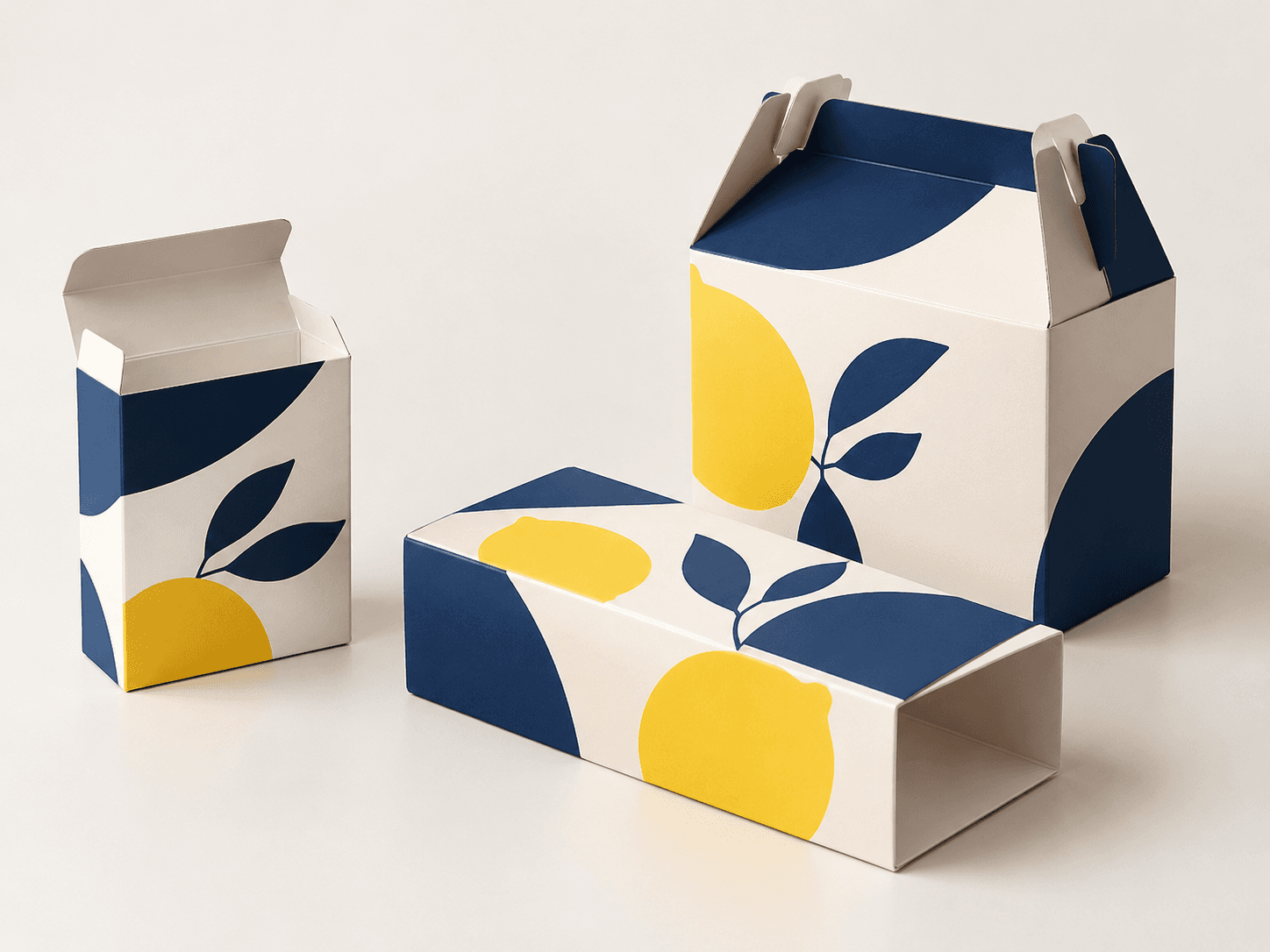
A folding carton has to protect and present the product while still opening, closing and assembling correctly. Attractive artwork cannot compensate for the wrong dimensions or an unapproved structural drawing. Before commissioning custom packaging boxes, agree the product fit, carton construction and artwork template as one specification.
Start with the product and packing operation
Supply the product’s packed dimensions and weight, including any pouch, bottle, protective wrap or accessory. Identify fragile areas, protruding parts and the position in which the product should be displayed. State whether staff will assemble and fill the carton manually or whether it must work with a packing line.
Confirm the dimension convention and whether measurements are internal or external. A snug fit on a drawing may be too tight once the board thickness and insert are included. An excessively loose fit can allow movement. Test a structural sample with the actual product before treating its artwork area as final.
Approve a dieline before placing artwork
The dieline identifies the cut edges, creases, flaps and construction features. Use the printer’s approved file at its stated scale. Do not resize it to fit an existing design or move a crease to make a logo line up. Structural changes need a revised drawing and, where relevant, another fit sample.
Ask which lines and layers should be non-printing, and how technical marks must be named. Keep glue areas clear according to the converter’s instructions. Coatings, inks or foil in a bonding area may affect the intended process, so those areas should be agreed explicitly. Label the drawing revision and match it to the version used for the sample.
Choose board and creases together
Board weight alone does not describe stiffness, thickness or how a carton will fold. Discuss the board grade, caliper, surface, grain direction and intended crease positions with the production team. A material substitution may change fit or crease performance even when the quoted gsm looks similar.
Sappi’s folding and creasing guidance explains why folding is a converting decision rather than just a line on artwork. Use the proposed material and finish to check folds; a white mockup made from a different stock cannot establish how a dark printed and coated surface will behave.
Keep the artwork printable and readable
Extend background artwork into the required bleed area and keep essential copy inside the printer’s safe margins. Confirm the actual allowances on the approved template instead of applying a universal value to every carton. Adobe’s bleed guidance explains that artwork beyond the trim edge is removed during finishing; the dieline still controls where the carton is cut.
Place small text, barcodes and essential instructions away from folds, flap overlaps and awkward viewing positions. Identify foil, embossing, spot coating and any inside printing in separate named artwork layers. For labels added after packing, also consider label printing and agree a suitable application area.
Use separate approvals for structure and appearance
- Structural sample: check product fit, closure, insertion and removal.
- Artwork proof: check text, panel orientation, graphics and version references.
- Material or finish sample: review color, surface, folding and handling.
- Packed sample: confirm how the completed product is protected for distribution.
Agree which approvals must be repeated when the product, board, insert or finish changes. Keep one release record with the drawing revision, artwork filename, quantity by version and approval contact. The production process should follow that approved specification.
Common folding carton problems
If the closure springs open, review the construction, board and crease setup before assuming the artwork is responsible. If the product catches on an insert, check the real packed dimensions and insertion path. If a fold shows cracking, ask for a review of stock, grain, crease and surface finishing. Each issue needs a physical sample or photograph tied to the production specification.
Folding carton FAQ
Can a presentation box use the same file as a folding carton?
Not automatically. A rigid presentation box and a folded carton have different constructions. Confirm the box type and use its approved template.
Is a retail carton a shipping carton?
Not necessarily. Explain the delivery route and any outer packing required. Assess the filled package as a complete system rather than relying on the retail box alone.
Can I approve color from a structural mockup?
Only if the supplier explicitly identifies that sample as representative of the intended print process and material. Otherwise, approve color through the separately agreed proof.
Request a packaging quote
Send your product dimensions, weight, carton style, board or finish preference, quantity by version, artwork status, packing method and delivery destination. Request a packaging quote and identify which details need structural advice.
Technical references
Sappi: folding and creasing guidance; Adobe: setting a print bleed. Use these as background guidance alongside the job-specific dieline and production instructions.