Offset and digital printing are production routes, not labels for quality. Both can produce useful commercial work when the route matches the format, artwork, quantity, schedule, and finishing plan. The practical question is which route gives the project the right balance of approval control, flexibility, and total production effort.
A good quote request describes the job before asking for a method. Include the product, quantity range, page count, size, color intent, finishing, delivery date, and whether each copy changes. That lets the production team compare routes against the real brief instead of applying a fixed rule of thumb.
Compare setup and run behaviour
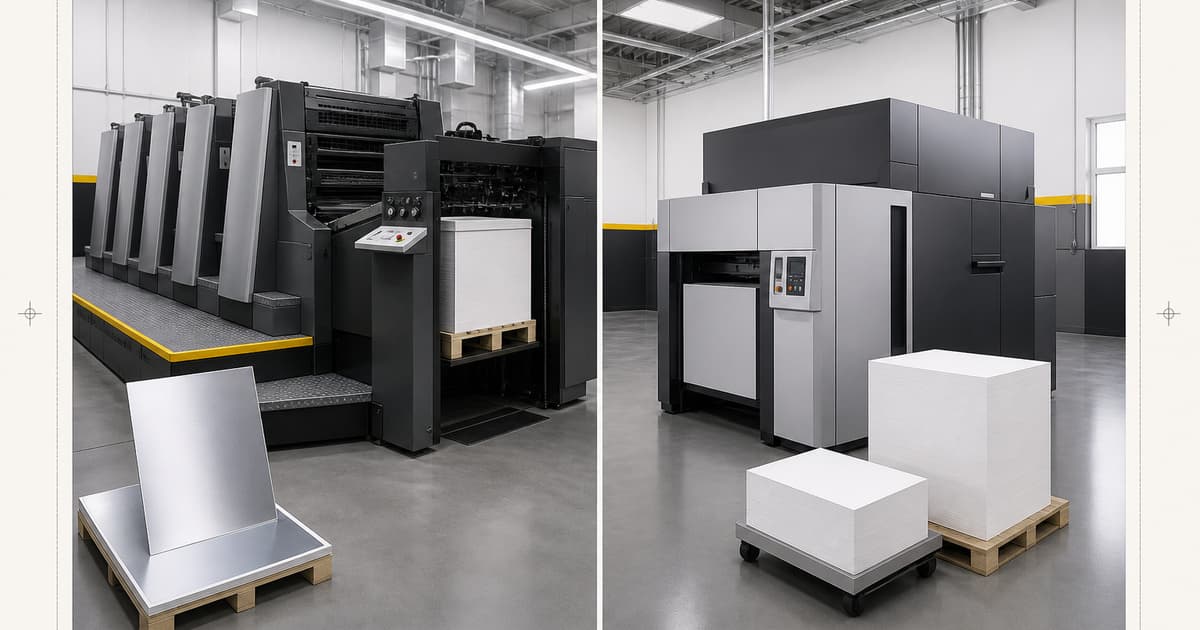
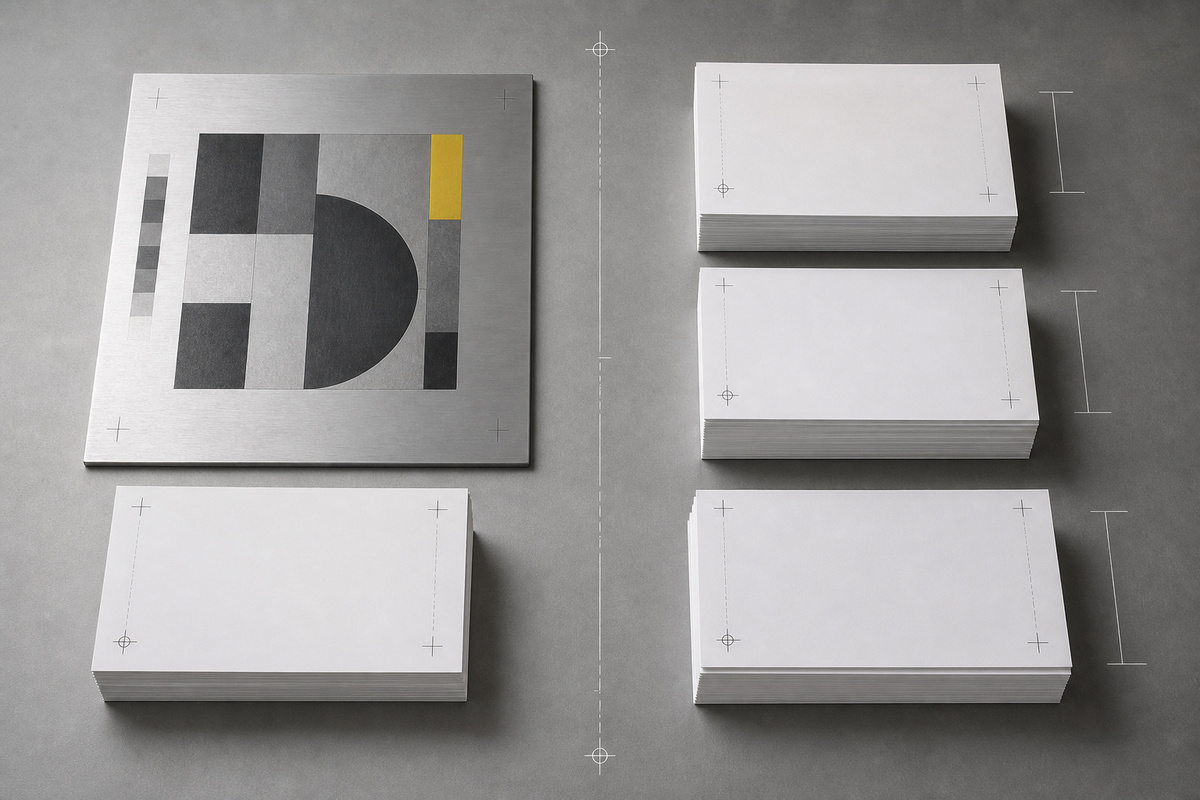
Offset printing uses a plate-based workflow and typically involves preparation before the production run. That setup can be a sensible fit when a stable design will be repeated and production planning can accommodate the required stages. Digital printing uses a different workflow that can be useful when the job needs file flexibility, shorter scheduling steps, or individualised output.
Neither description replaces a quote. The right route depends on sheet size, coverage, materials, finishing, capacity at the time of production, and how the job is packed and delivered. Discuss the run as a whole, including any reprints or editions, rather than using an arbitrary quantity threshold.
Ask what preparation the route needs
Makeready describes the preparation and checking that occurs before repeat production is settled. In a plate-based route, that can include preparing plates and bringing color and registration into the agreed condition. In a digital route, preparation may focus more on file readiness, queueing, calibration, and how the output is grouped. The details vary by job, but the decision is clearer when both routes are quoted against the same finished product and approval standard.
Do not separate press choice from substrates. A desired sheet, unusual size, heavy coverage, textured material, label stock, or a finish that needs careful handling may narrow the practical options. Give the supplier a physical or written material requirement and ask which route supports it. If the stock is flexible, request alternatives that preserve the reader experience rather than a comparison based on method names alone.
Consider color and content changes
Color expectations should be written down. Identify brand-critical colors, image-led pages, large solids, and approved references. If a special color is needed, say so at briefing stage rather than assuming it will be reproduced by a standard process. Proofing remains valuable because screens, papers, inks, and finishing affect what a reader sees.
Variable data is a meaningful distinction. Names, codes, regional offers, serial information, or versioned pages may make a digital workflow worth evaluating. Keep a clear data source, a field map, and a review plan. Personalisation is only useful when the files, privacy approvals, and final records are controlled as carefully as the layout.
Versioning also includes non-personal changes. A campaign may need different languages, markets, covers, calls to action, or inserts while retaining a shared core. Map each version before production: name the master content, identify the changing fields or pages, state the quantity for each group, and check the final output against that map. This prevents a production method from becoming a substitute for file control.
For color, distinguish a general expectation from a color-critical requirement. A brand reference, a specific spot color, a large solid, and a photograph can each call for a different conversation. Review proofs in suitable light and say what should be compared. The goal is a documented approval decision, not a claim that one route will automatically match every screen or sample.
Plan the schedule around approvals and finishing
A schedule is more than press time. It includes artwork readiness, preflight, proof review, manufacturing, drying or curing where relevant, finishing, packing, freight, and receiving. A last-minute change can affect multiple steps, especially if it changes pages, trim, die-cutting, or a versioned data set. Put a clear approval date in the plan and name the person who can release files.
Finishing should be assessed with the printing route, not added as an afterthought. Folding, binding, laminating, die-cutting, foiling, and special packing each influence sequence and handling. Review the production process when mapping decisions from artwork to delivery, and identify any finish that needs a physical sample.
Use a selection matrix, not a fixed cutoff
| Decision point | Offset tendency | Digital tendency |
|---|---|---|
| Setup and run economics | Plate and makeready work can suit stable, longer repeat runs when the full job supports that path. | Lower preparation can suit shorter or changing work, though per-unit economics still depend on equipment and the job. |
| Versioning and variable data | A fixed design can be efficient to repeat once the production route is set. | Individual names, codes, versions, or smaller grouped releases are often practical to evaluate. |
| Color and proof path | Spot colors and process-color control should be discussed with the press, stock, and approved proof. | Color control and proof expectations still depend on the device, substrate, calibration, and review route. |
These are tendencies, not rules. A stable catalog with the same interior and cover across a planned longer run may lead a buyer to ask an offset supplier about plate preparation, paper, spot colors, and the proof path. A training pack that needs names, regional inserts, and staggered releases may lead the same buyer to evaluate digital output and a controlled data workflow. Equipment, job design, supplier capacity, materials, finishing, and delivery requirements can change either conclusion.
For books, the decision also interacts with page count, paper, and binding; see book printing requirements before requesting a comparison. For folded marketing pieces, the brochure printing page can help clarify format and finish questions.
Identify the cost drivers that matter
Cost is shaped by more than quantity. Setup, materials, page count, ink coverage, personalisation, finishing, proofing, packing, and freight may all matter. The useful comparison is a pair of complete specifications with the same product outcome. If one option omits proofing, a finish, or delivery, it is not yet comparable.
Schedule and cost drivers often overlap. A file that arrives incomplete, a late version change, a proof that needs another review, or a finish that must be added after printing can change the production sequence. Ask each quotation to separate production assumptions from optional services and delivery scope. That gives the team a way to decide whether flexibility, a particular material, color review, or a delivery window is the priority.
Use the selection matrix as a discussion tool. Mark each row as essential, preferred, or flexible, then give examples from the job: a changing recipient name, a fixed paper feel, a color reference, multiple shipments, or a deadline tied to an event. The production team can explain where a route fits the constraints and where an alternate format, finish, or schedule would make the plan more practical.
The printing capabilities overview is a sensible place to frame which production requirements should be raised early. Be open about priorities: predictable color, a changing data set, a particular paper feel, a short approval window, or a delivery constraint. That context lets a supplier explain trade-offs without inventing a universal answer.
Prepare a decision-ready quote request
- Describe the finished product, not only the source file.
- Give quantities or a realistic range, plus any expected reprint pattern.
- Flag variable data, color-critical elements, and special finishes.
- Share the approval deadline, delivery destination, and required arrival date.
- Ask for assumptions to be listed so options can be compared fairly.
Include a sample spread or representative file where the artwork is demanding. Point out the smallest type, darkest solid, most important image, or changeable field. This gives the comparison a concrete reference and helps identify whether an expected finish, paper, or data treatment needs a separate proof or production check.
Finally, decide who can approve the route and what they need to see. A concise comparison that lists the common specification, the chosen proof, the schedule assumptions, and any open material questions is easier to release than a decision made from a method label alone.
Send the brief through the print consultation contact page. A sound method choice comes from the job’s priorities and constraints, not from a fixed quantity or a generic claim that one process always costs less.