Table of Contents
- Key Takeaways for Bulk Comic Printing Buyers
- How to Verify an Offset Comic Printing Manufacturer
- Top 10 Offset Comic Book Printers: Factory Profiles
- How to Compare Bulk Orders Using the Same Specifications
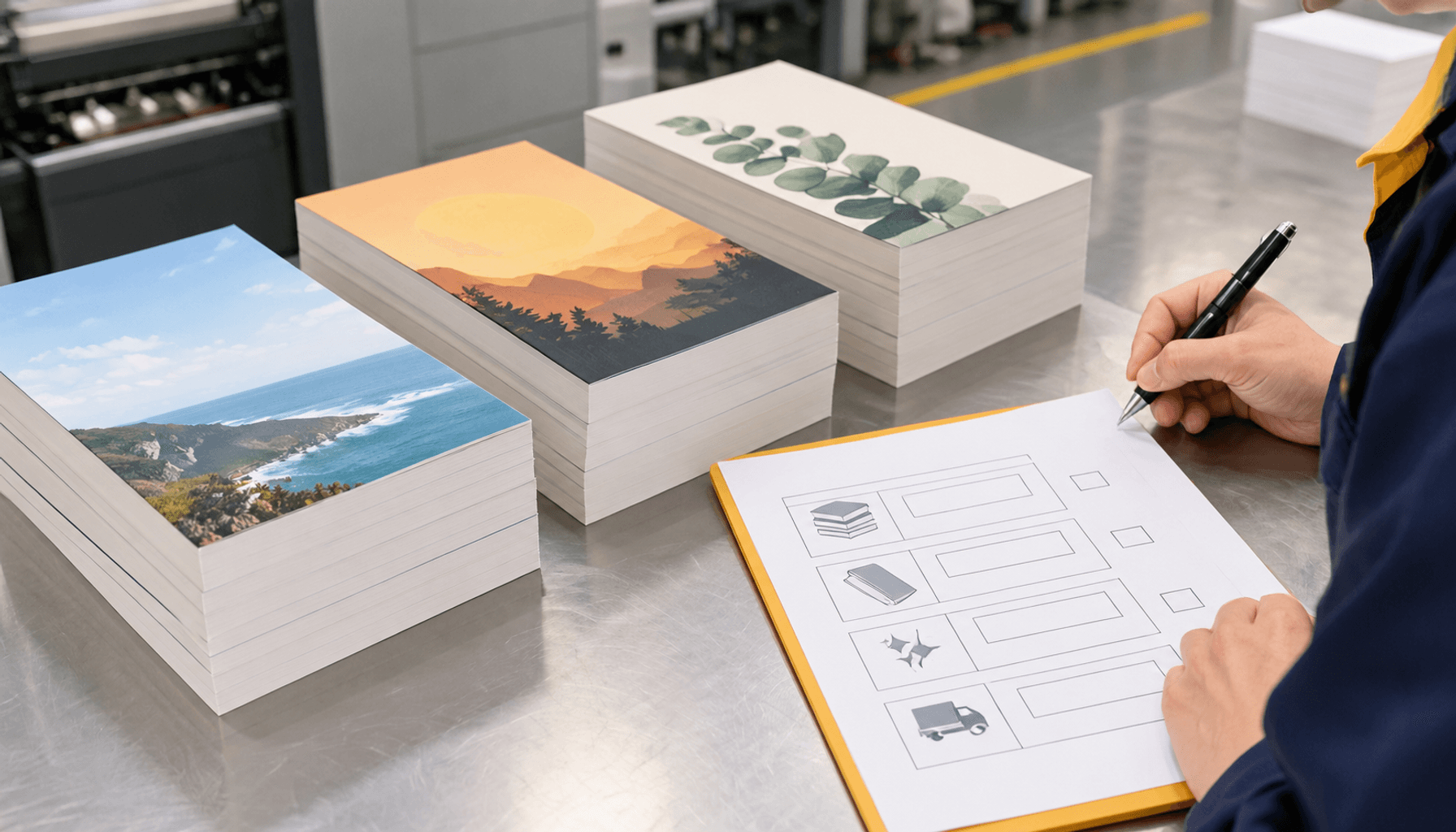
- Quote Checklist for Production Cost and Total Landed Cost
- FAQ About Bulk Offset Comic Printing
- Select Factories Against Documented Quality and Delivery Requirements
Compare ten offset book-manufacturing candidates against one defined comic specification. This buyer-focused shortlist explains what to verify about each factory, how to control color and binding quality, and which costs belong in a US-delivered quotation.
Key Takeaways for Bulk Comic Printing Buyers
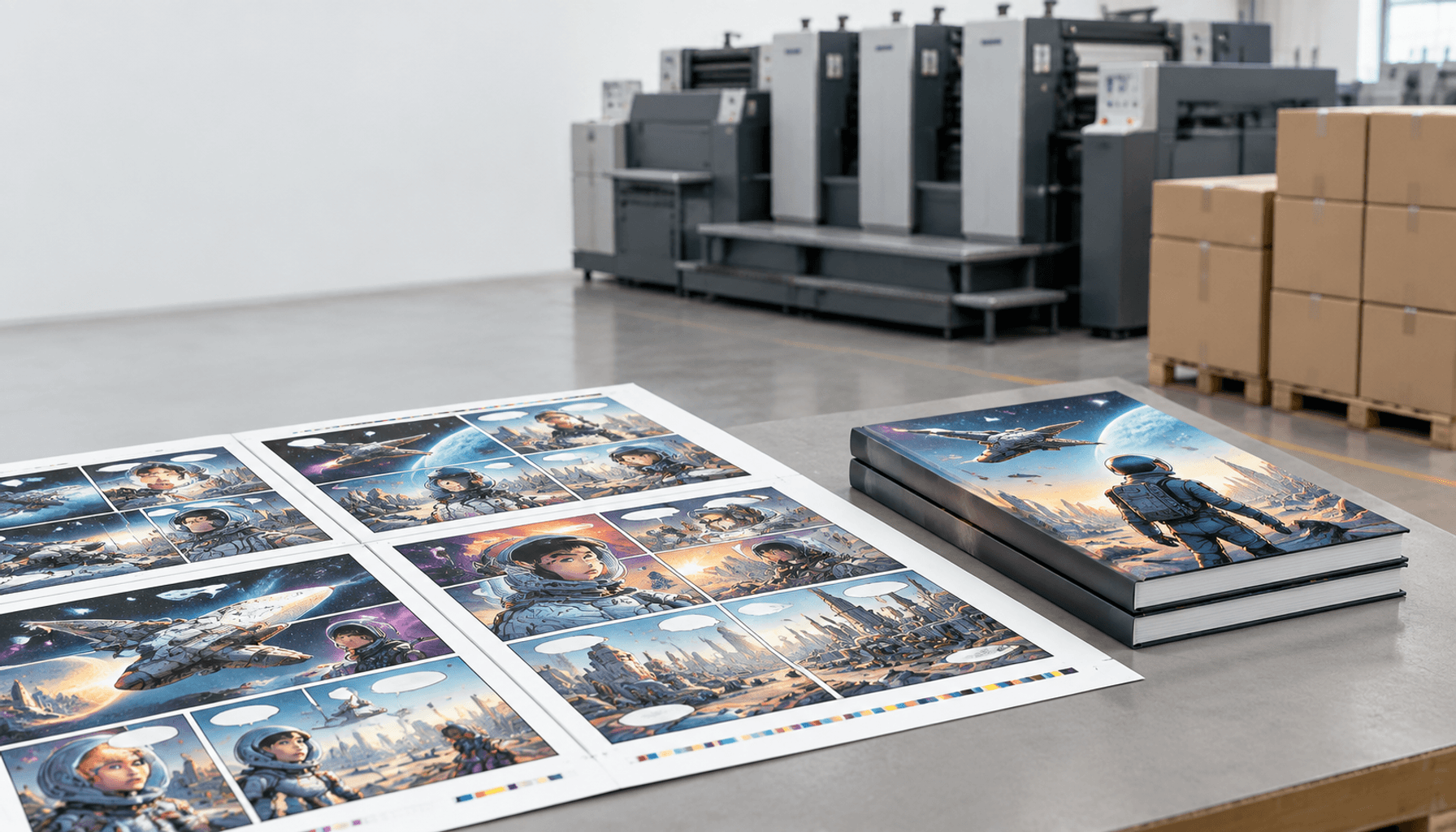
Offset comic book printers are easiest to compare when every factory prices the same comic, not its preferred substitute. For bulk comic book printing, a lower unit quote may reflect lighter paper, different binding, or freight excluded from the total.
- Verify the production route: a supplier selling offset printing does not necessarily operate the presses.
- Separate formats: a thin, saddle-stitched issue and a perfect-bound collected edition require different manufacturing checks.
- Approve measurable quality: agree on paper, color references, binding construction, and inspection criteria before production.
- Compare delivered cost: include packing, freight, import clearance, and final delivery—not just the press price.
The shortlist below uses one collected-comic specification to keep those differences visible.
How to Verify an Offset Comic Printing Manufacturer
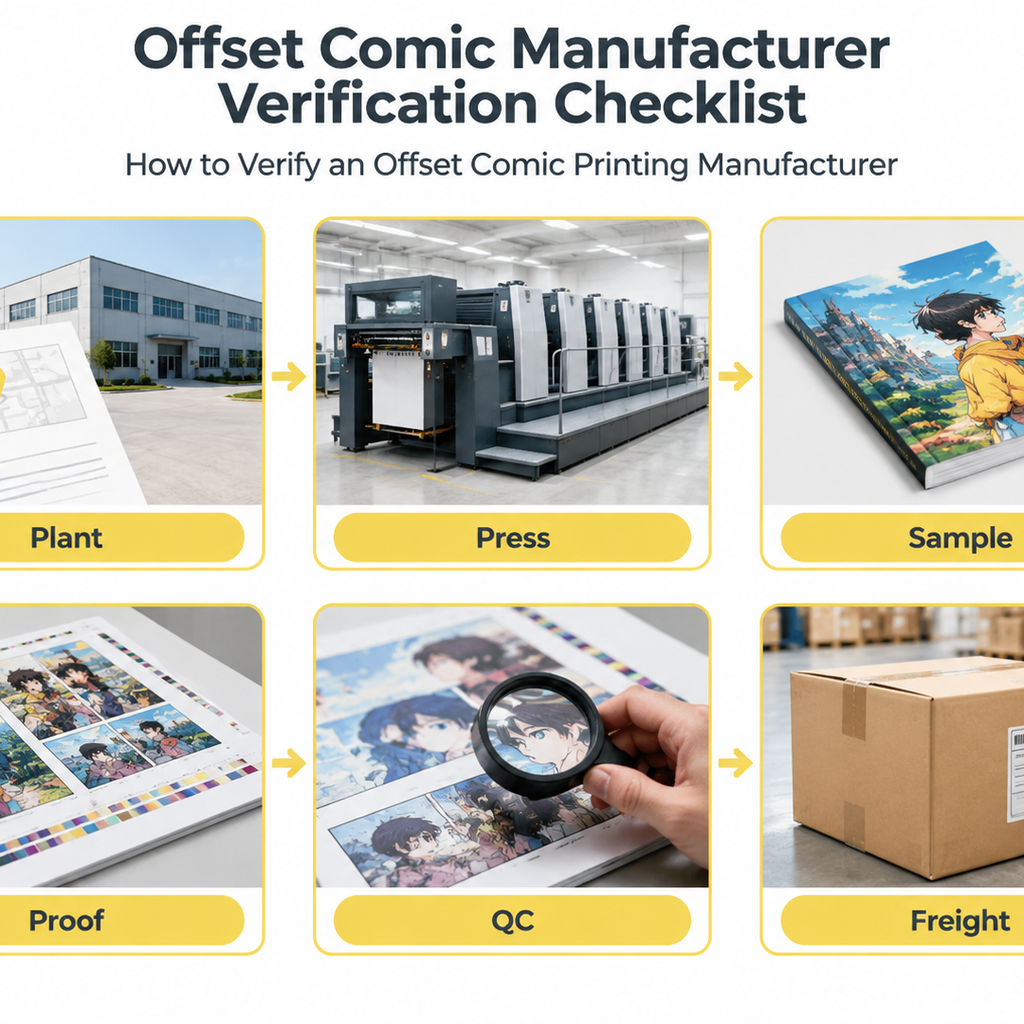
Verify an offset manufacturer by connecting its legal business name, production address, equipment information, and proposed job route. A press photograph alone does not establish ownership or show where your comics will be made.
Offset printing transfers ink from a printing plate to a rubber blanket, then onto paper. Plates and makeready—press setup before acceptable production sheets are produced—create upfront costs that must be spread across the run.
Confirm Press Facilities, Binding Operations, and Comic Capabilities
Ask for job-specific evidence rather than a general factory presentation.
- Confirm the press: request its model, sheet or web format, color configuration, and production location. Establish whether the quoted run will actually be offset.
- Trace post-press work: identify where folding, gathering, binding, lamination, trimming, and packing happen. Ask which operations are subcontracted.
- Inspect comparable work: request a bound sample with similar page count, stock, dense artwork, and small lettering.
- Connect evidence to the order: obtain a current equipment statement, live factory walkthrough, or independent inspection when the order value warrants it.
Check Official Manufacturing Sources and Selection Criteria
Use company-owned equipment, facility, and product information as your starting evidence—not marketplace badges or anonymous rankings.
The official sources linked below describe offset book or publication manufacturing. Some manufacturers emphasize illustrated books rather than comic periodicals. Where a source covers general capabilities, request a current equipment sheet and relevant comic sample before qualifying the factory. Published capability does not establish current capacity, subcontracting arrangements, or acceptance of your specification.
Top 10 Offset Comic Book Printers: Factory Profiles
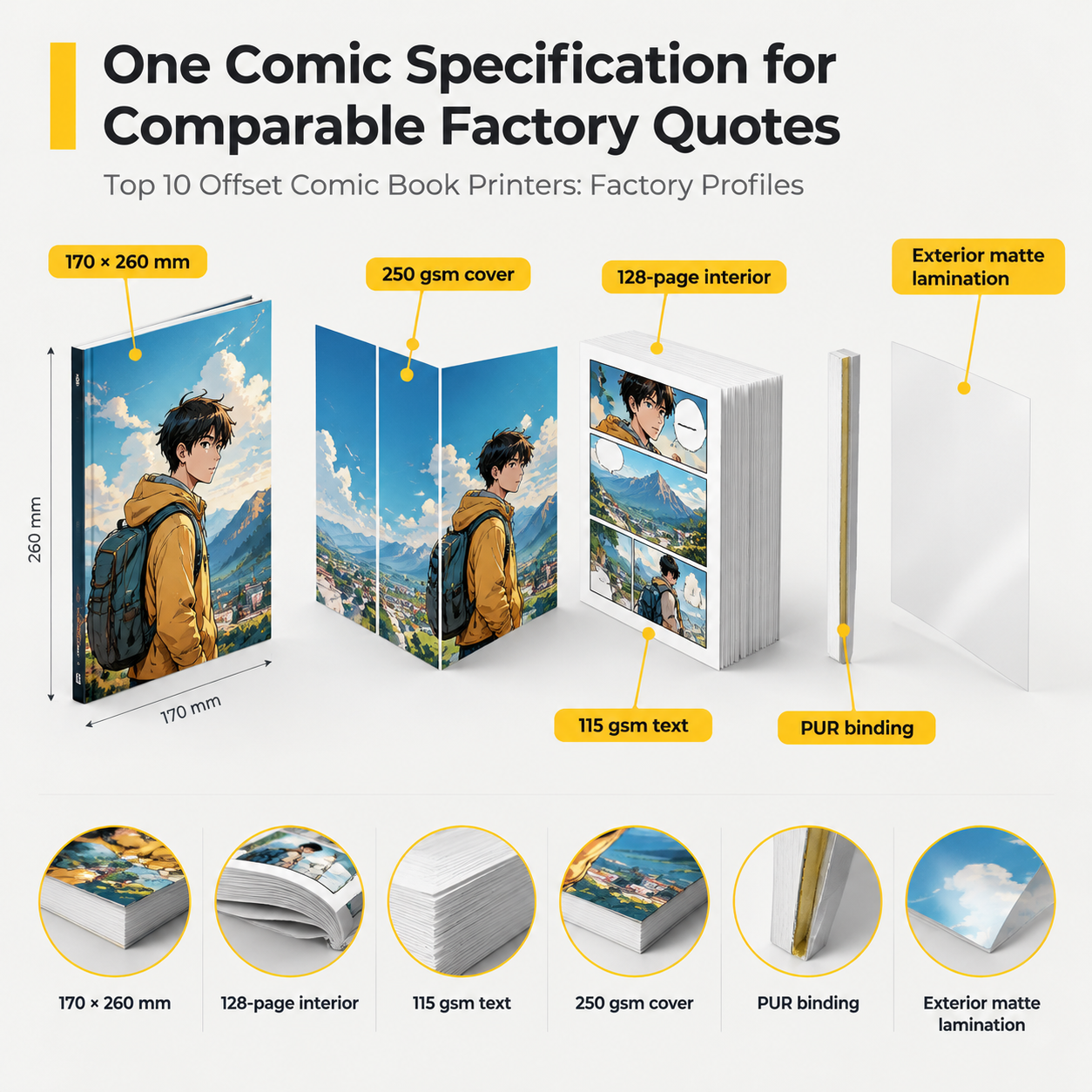
These ten manufacturing operations are candidates for the same request for quotation, or RFQ. Numbering is for reference, not a performance ranking. Lemon Printing publishes this guide and includes itself; this is not an independent factory audit.
Benchmark job: use the following hypothetical collected comic for every initial quotation:
- Quantities: 2,000, 5,000, and 10,000 copies, quoted separately.
- Finished size: 170 × 260 mm.
- Pagination: 128 interior pages plus a separate four-page cover.
- Printing: 4/4 CMYK—cyan, magenta, yellow, and black on both sides—for interiors and cover.
- Paper: 115 gsm matte-coated interiors and a 250 gsm coated cover; identify the actual stocks.
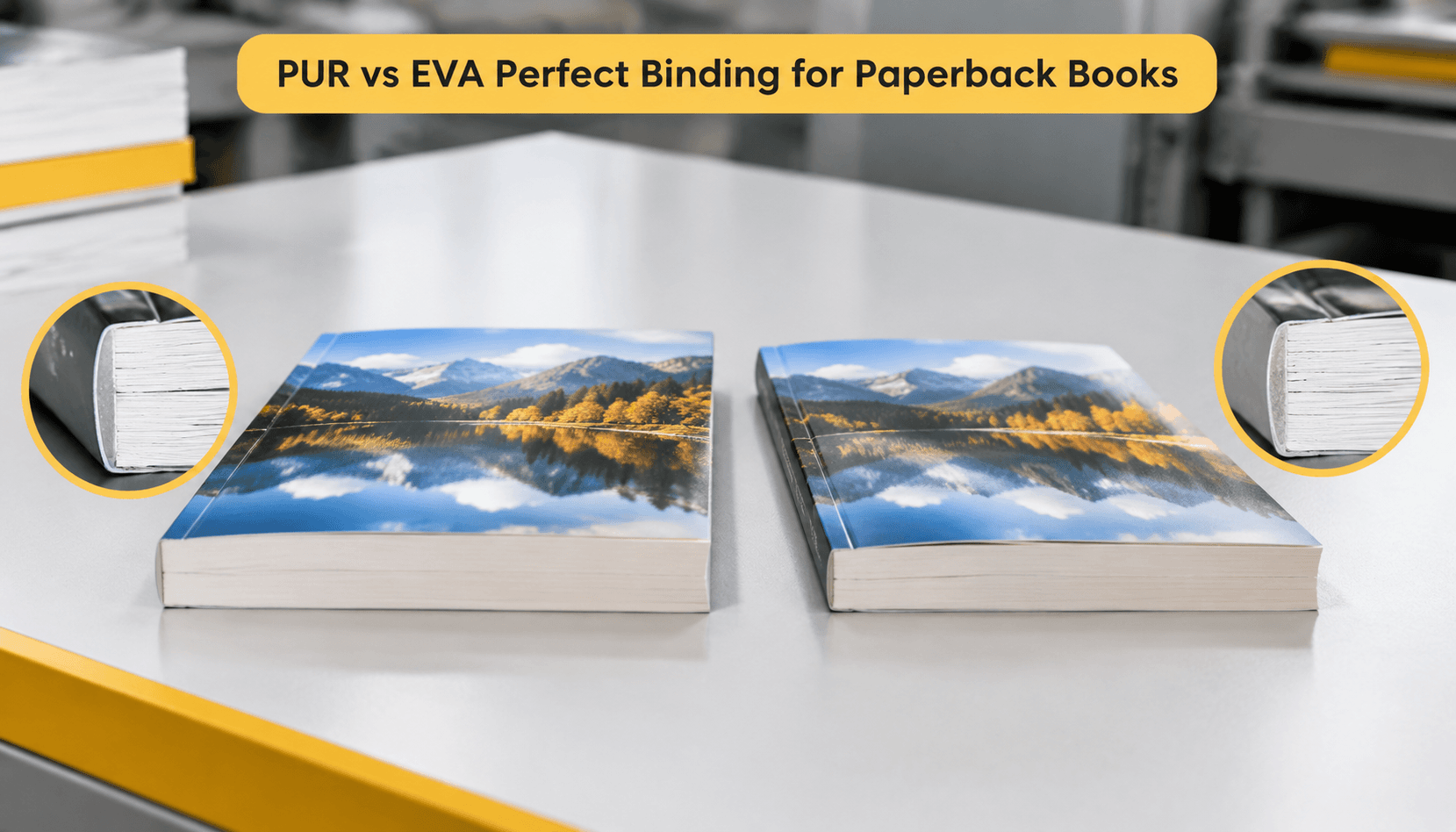
- Construction: PUR perfect binding, using reactive polyurethane adhesive; matte lamination on the cover exterior only.
- Delivery: a commercial receiving dock in Chicago, ZIP code 60601; confirm the full address and access conditions.
These quantities are comparison inputs, not advertised minimums. Ask each factory to confirm feasibility and list any alternative separately.
1. Lemon Printing — China
According to Lemon Printing’s factory overview, the company was established in 2015 and operates a self-owned facility in the Guangzhou–Shenzhen manufacturing corridor, with more than 130 workers and 8+ offset and digital presses combined. Prepress, printing, binding, finishing, inspection, packing, and export preparation are handled in-house.
For the benchmark comic, request the assigned offset press, exact paper, adhesive, and proofing route. The combined press count should not be read as eight offset presses. Its custom book printing options provide the relevant product starting point.
2. QinPrinting — China
Shanghai-based QinPrinting publishes a dedicated offset comic-book printing page covering comic production and binding choices. This is a more directly relevant product reference than a general commercial-printing listing.
For the benchmark, confirm the coated stock, PUR adhesive, and cover-lamination specification. Ask whether the proposed sample is a digitally printed mock-up, a contract color proof, or an actual offset sample; those approvals answer different questions.
3. Friesens — Canada
Friesens’ official manufacturing information presents offset book production and binding from its operations in Altona, Manitoba. Its illustrated-book work makes it relevant to collected comics.
For the benchmark, match paper by gsm, thickness, coating, and white shade—not merely a North American stock name. Obtain a US-delivered quotation that identifies border-clearance responsibilities; a Canadian production location does not remove import procedures.
4. Marquis — Canada
Marquis’ book-manufacturing information describes offset and digital production within its Canadian manufacturing network. The assigned plant matters because a group’s capabilities are not necessarily available at every location.
For this full-color comic, require written confirmation of the plant, offset process, and binding route. If the comic belongs to a continuing series, also ask how paper substitutions and retained color references are managed on reprints.
5. Worzalla — United States
Worzalla’s official manufacturing site describes illustrated-book production in Stevens Point, Wisconsin, with offset printing and binding capabilities. Confirm the current contracting entity and production scope when requesting a quote.
For the benchmark paperback, establish that the proposed softcover construction fits the plant’s current program. Request a comparable bound sample and examine small lettering, shadow detail in dark panels, cover scoring, and page adhesion.
6. Pollina — France
Pollina’s official production information covers industrial offset printing for books and publications in France. Its illustrated-publication capabilities make it a candidate for a collected-comic RFQ.
Ask whether the benchmark trim and page count fit the proposed press format efficiently. Keep any alternative size separate from the base quote. For US delivery, request export packing, shipping terms, and freight as explicit quotation items.
7. Leo Paper Group — China
Leo Paper Group’s official corporate site documents book manufacturing, offset production, and finishing capabilities through its manufacturing operations in China.
For this straightforward paperback comic, confirm the assigned facility and whether the requested quantity suits its production program. Ask for a plain benchmark quote before considering special finishes or packaging; decorative additions can obscure the underlying comparison of paper, printing, and binding.
8. Hung Hing Printing Group — China
Hung Hing’s official group information describes book and package printing, including offset manufacturing facilities. Its broader product range makes the specific production assignment worth checking.
Require the quotation to identify the book-production plant, interior paper, and binding operation. For the benchmark, inspect a sample made on comparable coated stock rather than assuming that packaging samples demonstrate suitable page flexibility or comic-book binding quality.
9. Thomson Press — India
Thomson Press’ official manufacturing information describes sheet-fed and web-offset printing alongside book-production capabilities in India. Sheet-fed presses print individual sheets; web presses print from paper rolls.
For the benchmark, ask which route is proposed and whether the exact paper and PUR construction are available. Separate paper-procurement time, manufacturing time, and US freight assumptions so that an apparently similar schedule does not conceal different starting points.
10. Solisco — Canada
Solisco’s official printing information describes offset publication and book manufacturing in Quebec. Its publication-production background makes press format and run length useful points of comparison.
Ask how the benchmark quantities fit the proposed equipment and whether another quantity materially changes setup allocation. Keep that alternative separate. Confirm coated-paper availability, finished-book binding, and border-to-dock delivery responsibilities before treating the quote as equivalent.
How to Compare Bulk Orders Using the Same Specifications
Offset becomes economical when its setup costs are spread across enough acceptable copies to outweigh the alternatives. There is no universal crossover quantity: press format, page count, paper utilization, finishing, and freight all affect the result.
For wholesale comic book printing, issue one dated specification and require suppliers to mark every deviation. Ask for setup and running costs to be identified where practical. The distinction between printing minimums and setup economics helps explain why a factory’s minimum order is not necessarily its most efficient quantity.
Paper, Page Count, Color Targets, and Approved Proofs
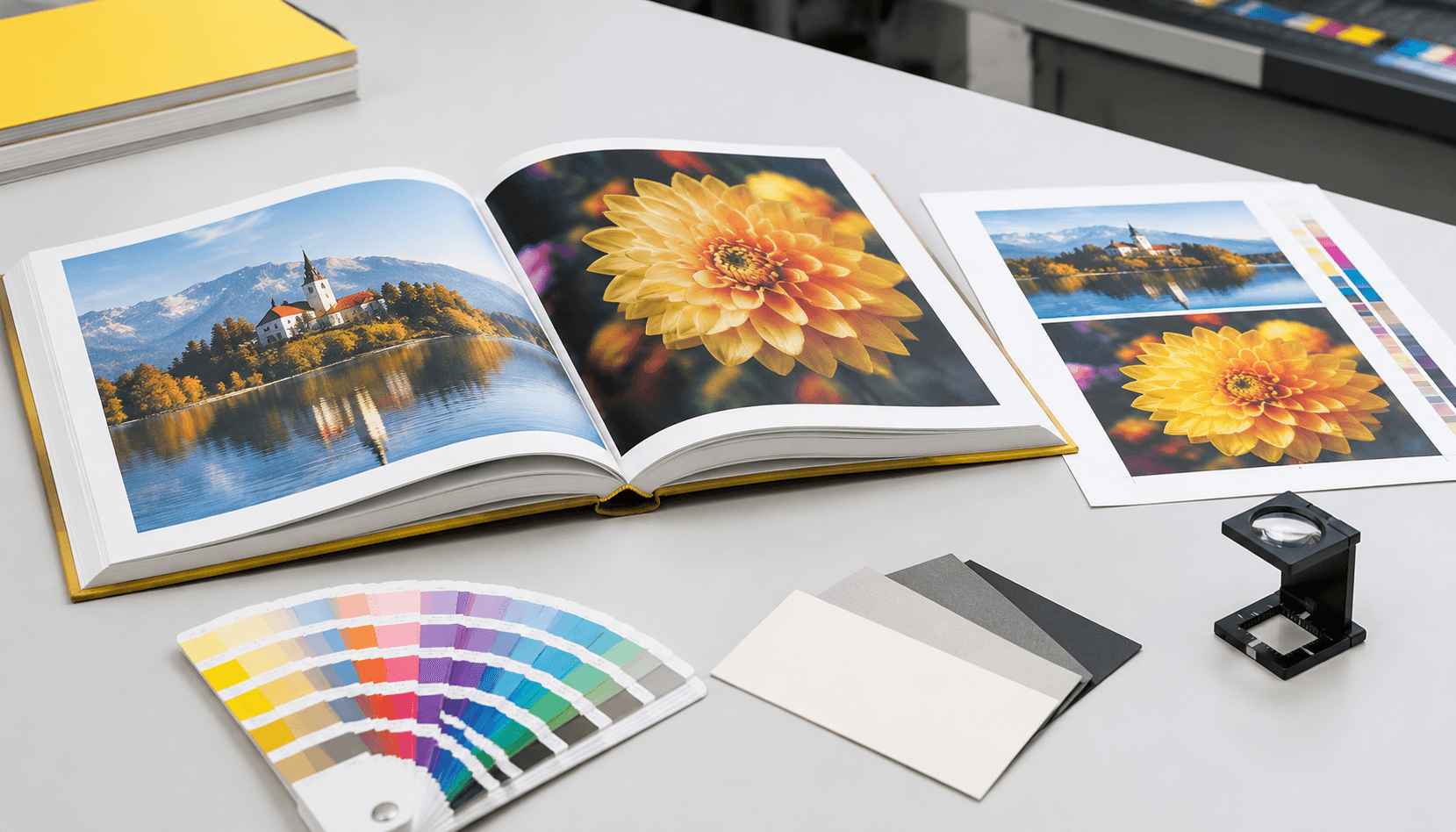
Comic book color consistency requires an agreed paper and color reference, followed by measured control during production. A PDF displayed on an uncalibrated screen is not that reference.
- Paper: specify gsm, or grams per square meter, plus thickness, coating, opacity, and white shade. Equal weight does not guarantee equal appearance.
- Pagination: separate cover and interior counts. Ask how pages are arranged into folded sections, called signatures; binding and press format influence efficient page increments.
- Artwork: agree on the CMYK profile and ink limits. Small black lettering is generally safer in black ink alone than in four-color black.
- Proofs: approve a contract color proof against the agreed printing condition and a separate construction sample where needed. A digital mock-up does not automatically predict offset color.
- Press control: agree on measurable color tolerances, standardized viewing light, and retained samples from the beginning, middle, and end of the run.
For full-color comic printing, identify difficult pages in advance: dark scenes, neutral grays, skin tones, and recurring costume colors. Lemon Printing’s quality-control checkpoints provide a framework for discussing inspection responsibilities.
Binding Inspection, Carton Packing, and Shipment Responsibilities
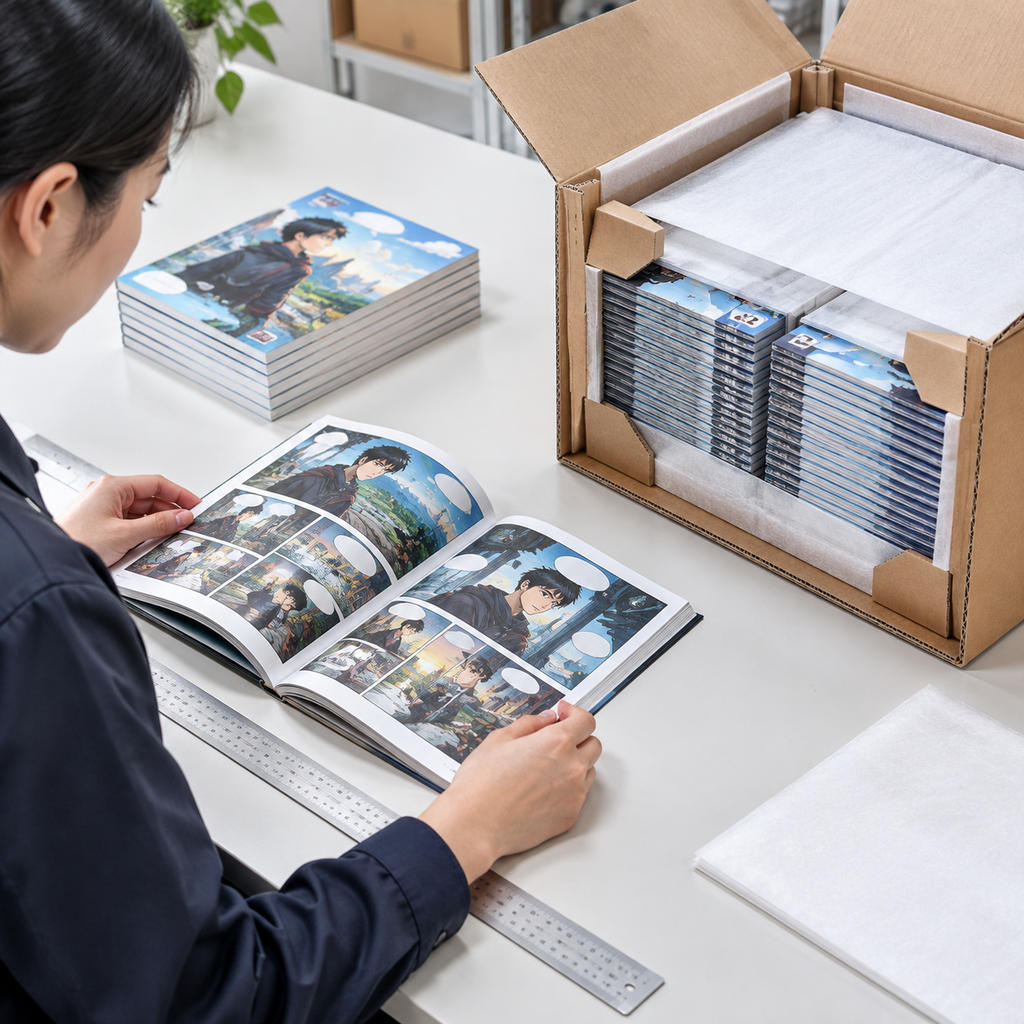
Comic printing quality control must cover finished books and packed cartons, not just attractive press sheets.
- Inspect construction: check page sequence, adhesion, cover scoring, spine alignment, trimming, and opening behavior. For saddle-stitched issues, inspect staple placement and creep—the outward movement of inner pages caused by folded-sheet thickness.
- Agree on tolerances: specify trim, registration, and binding acceptance limits. If ±1 mm trim variation is agreed, do not design a critical panel rule just 1 mm from the edge.
- Approve packing: document copies per carton, gross weight, carton strength, movement prevention, and moisture protection appropriate to the route.
- Record release evidence: retain inspection results, carton-label photographs, quantity records, and shipment documents.
Use the book packing guide for international shipping to define packaging requirements. Also name the party responsible for freight booking, insurance, customs clearance, and delivery appointments.
Quote Checklist for Production Cost and Total Landed Cost
US buyers should compare landed printing cost: the complete cost of getting the agreed quantity of acceptable comics to the receiving location. A factory-gate price and a delivered price are not equivalent.
Cost calculation: start with the quoted production total, then add only excluded proofing, setup, finishing, packing, freight, insurance, import charges, clearance, destination handling, and final delivery. Avoid counting bundled charges twice.
Require each quotation to state:
- Specification revision, quantity per title or cover version, and permitted overrun or underrun.
- Paper identity, proof type, binding adhesive, finishing, and packing details.
- Included costs, excluded costs, currency, payment terms, and quotation validity.
- Carton count, gross weight, shipment volume, and pallet requirements.
- Shipping method, delivery address, and the agreed Incoterms® rule with its named place.
- Milestones for paper readiness, proof approval, production, dispatch, and estimated arrival.
- Inspection acceptance criteria and the procedure for defects, shortages, or transit damage.
The ICC’s Incoterms guidance explains the allocation of delivery obligations, costs, and risks. Confirm classification and applicable import charges with a broker using US Customs and Border Protection’s import guidance; do not assume every printed product receives identical treatment.
Final MOQ, production time, pricing, and shipping depend on product specifications, quantity, finishing, and destination. Compare schedules only when their approval dates and shipping assumptions match.
FAQ About Bulk Offset Comic Printing
How can I verify that a comic printer operates offset presses?
Request the production address, current equipment details, and the assigned press for your order. Cross-check official facility information with a live walkthrough or inspection, and identify outsourced printing or binding before signing.
What quantity makes offset cheaper than digital comic printing?
There is no universal quantity. Compare actual quotations for the same paper, pagination, binding, and delivered quantity. Offset plate and setup costs favor longer runs, but paper utilization, finishing, and freight can change the result.
Can a printer guarantee that comic colors match my screen?
An ordinary screen is not a reliable print reference. Agree on paper, a printing condition, and an appropriate color proof. Define measurable tolerances and check production samples against that reference, not against different devices.
What belongs in total landed cost for US comic delivery?
Include production plus any excluded proofs, packing, freight, insurance, import charges, clearance, destination handling, and delivery fees. Establish who handles import entry and compare the same delivery point without counting bundled charges twice.
How do specifications and destination affect the schedule?
Paper procurement, proof approval, press capacity, binding, and extra finishes affect manufacturing. Shipment size, transport mode, customs, and receiving requirements affect delivery. Obtain a supplier-confirmed milestone schedule rather than relying on a generic turnaround claim.
Select Factories Against Documented Quality and Delivery Requirements
Select the factory that can document the required production route, match the approved specification, and explain its complete delivery responsibilities. The lowest unit price is useful only after those requirements are aligned.
Keep the signed specification, approved proofs, inspection criteria, packing instructions, and shipping terms together. That record supports both the first production run and a more consistent reprint.
FAQ
How can I verify that a comic printer operates offset presses?
Request the production address, current equipment details, and the assigned press for your order. Cross-check official facility information with a live walkthrough or inspection, and identify outsourced printing or binding before signing.
What quantity makes offset cheaper than digital comic printing?
There is no universal quantity. Compare actual quotations for the same paper, pagination, binding, and delivered quantity. Offset plate and setup costs favor longer runs, but paper utilization, finishing, and freight can change the result.
Can a printer guarantee that comic colors match my screen?
An ordinary screen is not a reliable print reference. Agree on paper, a printing condition, and an appropriate color proof. Define measurable tolerances and check production samples against that reference, not against different devices.
What belongs in total landed cost for US comic delivery?
Include production plus any excluded proofs, packing, freight, insurance, import charges, clearance, destination handling, and delivery fees. Establish who handles import entry and compare the same delivery point without counting bundled charges twice.
How do specifications and destination affect the schedule?
Paper procurement, proof approval, press capacity, binding, and extra finishes affect manufacturing. Shipment size, transport mode, customs, and receiving requirements affect delivery. Obtain a supplier-confirmed milestone schedule rather than relying on a generic turnaround claim.
Get a Clear Quote for Your Printing Project
Send Lemon Printing your comic format, quantity, finished size, interior and cover page counts, paper, binding and finishing requirements, delivery destination, and target date. Request a specification-based quote that separates production, proofing, packing, and freight responsibilities.