Table of Contents
- Key takeaways: What makes a desk calendar quote-ready
- Which desk calendar format fits your use and display space?
- Tent-style, easel, and other desk calendar constructions
- Page count, monthly layout, and write-on space
- How do binding and the stand affect stability and use?
- Compare desk calendar paper, printing, and finish options
- Paper choice for image reproduction and writable areas
- Desk calendar format and specification comparison table
- How to proof, pack, and plan desk calendar distribution
- What details should you include in a custom desk calendar printing quote request?
- Frequently asked questions about custom desk calendar printing
- Request a custom desk calendar quote
Key takeaways: What makes a desk calendar quote-ready
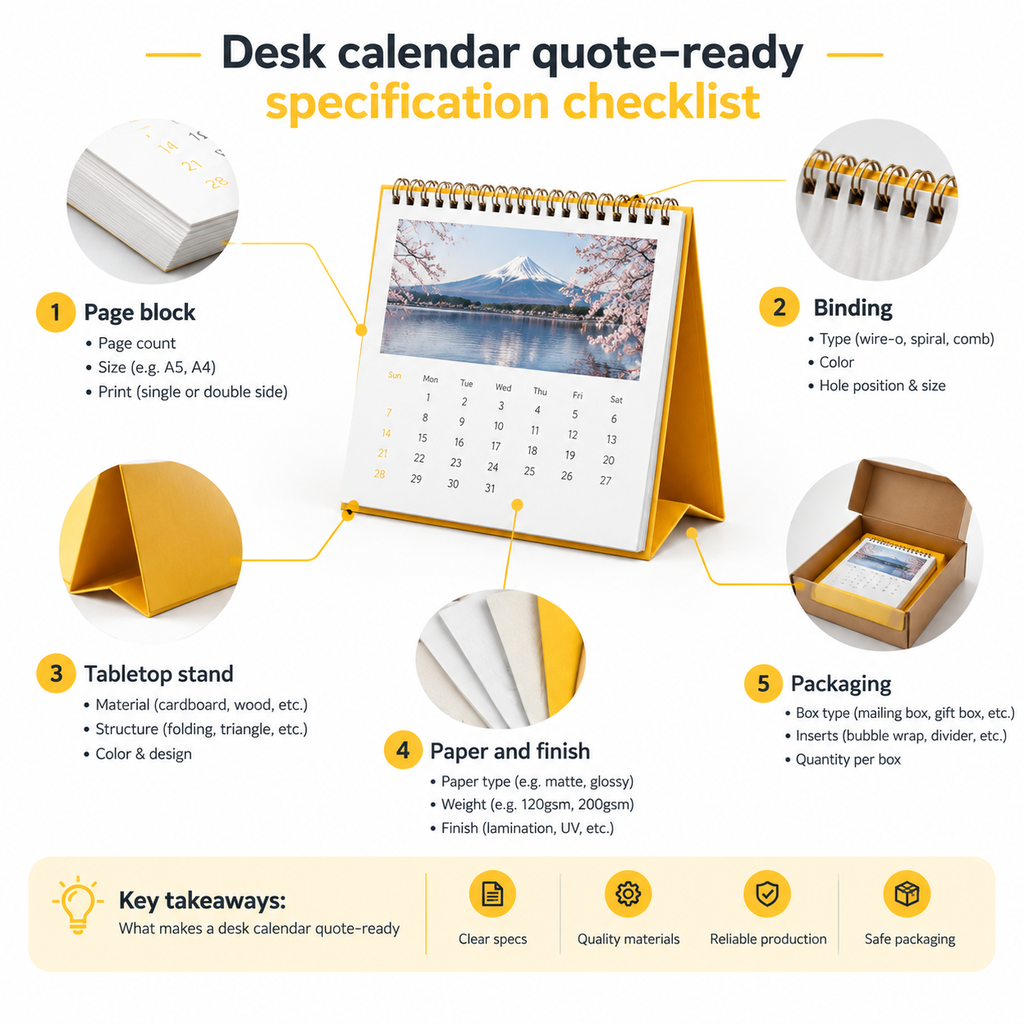
Custom desk calendar printing is the production of a tabletop calendar as an assembled product, not just a stack of printed sheets. The page block, binding, folded or rigid stand, finish, and packed dimensions all affect the final result.
A quote-ready specification should state:
- Finished width, depth, and height when the calendar is open and standing.
- Construction type, orientation, page count, date range, and monthly layout.
- Paper surface, paper weight or caliper, printing method, and finish.
- Binding style, stand material, fold or score positions, and assembly requirements.
- Quantity, individual packaging, master-carton requirements, destination, and target date.
These details allow a printer to compare the right production route. Lemon Printing’s custom calendar printing service covers desk, wall, planner, and tear-off calendar formats, with the final specification confirmed for each project.
Which desk calendar format fits your use and display space?
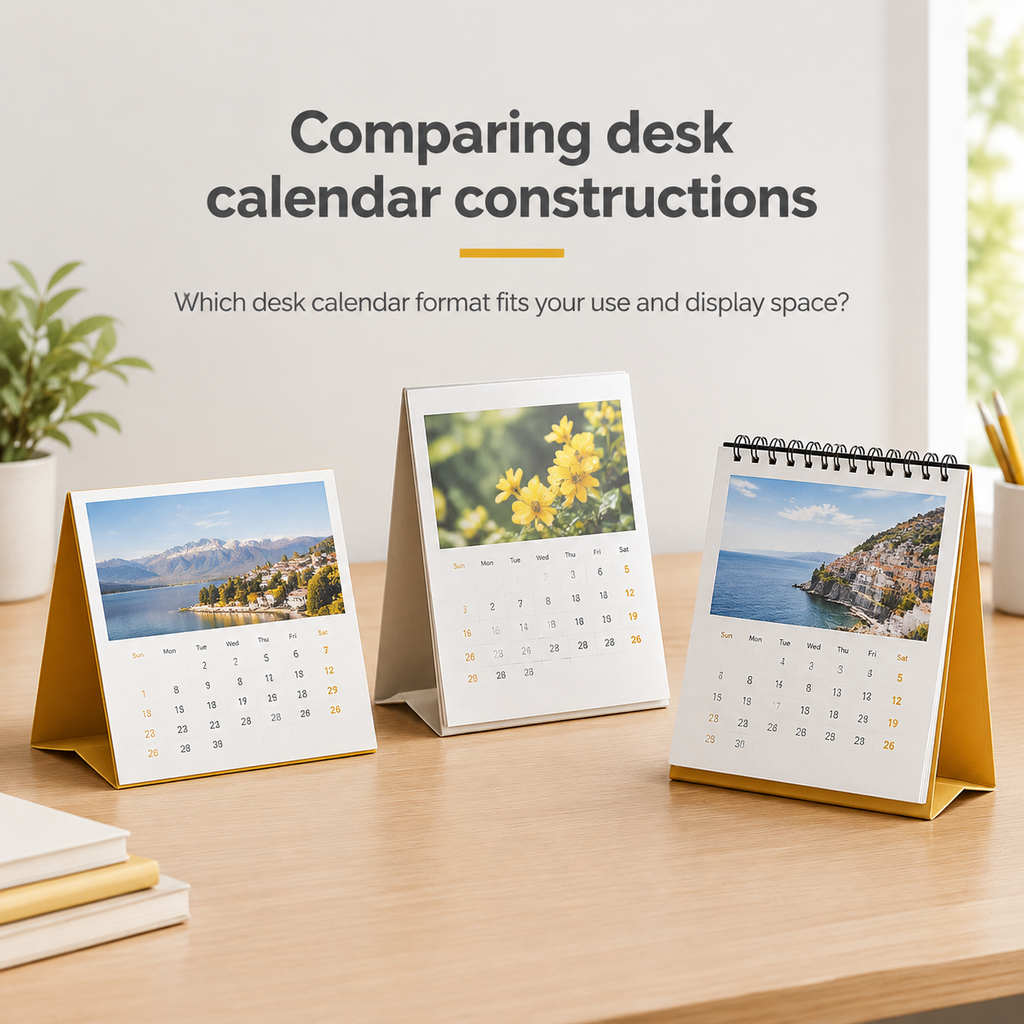
Choose the format by looking at the available desk footprint, viewing angle, page-turning behavior, and distribution method. A calendar that looks attractive in a product image may be awkward if its base is too deep, its pages are difficult to turn, or its packed size is unsuitable for shipping.
- Display space: Measure the usable width and depth of the desk, counter, reception area, or retail shelf. Give the printer the open dimensions, not only the flat sheet size.
- Viewing angle: Portrait formats suit narrow spaces and tall artwork. Landscape formats provide more horizontal room for monthly grids, photographs, or notes.
- Interaction: Decide whether users will flip pages frequently, write on dates, remove pages, or leave the calendar open to one month for long periods.
- Distribution: A corporate gift, retail item, event handout, and mail-out product may need different levels of stand strength and packaging protection.
For custom desk calendars, also record the folded or collapsed dimensions. These measurements affect carton planning, shipping volume, storage, and the amount of protection needed around corners and binding points.
Tent-style, easel, and other desk calendar constructions
Construction determines how the calendar stands, how it folds for packing, and how much mechanical stress the page block receives. Compare the complete assembly rather than choosing binding in isolation.
- Tent-style: A folded sheet or board creates a triangular support profile. It can be compact and economical for simple page blocks, but the fold, board stiffness, and contact points must be strong enough to prevent the calendar from flattening during use.
- Easel-style: A folded back panel or base supports the page block at an angle. This gives a clear display position, but the hinge, score, locking area, and rear footprint need to be checked in the assembled sample.
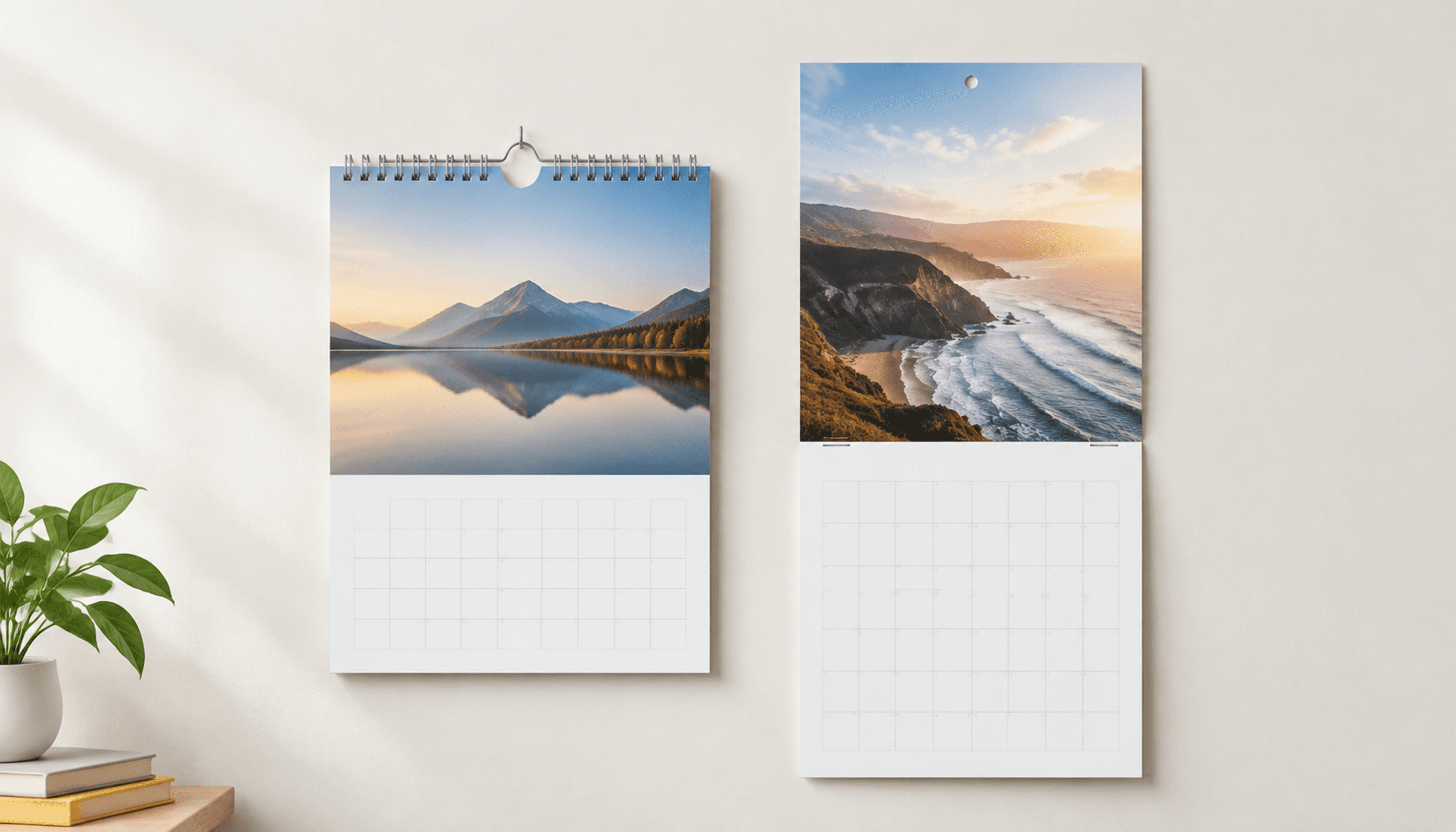
- Wire-O flip calendar: A drilled page block is held by double-loop wire, often with a separate or integrated base. It is convenient for regular page turning and can open cleanly, but the hole margin, wire size, page thickness, and stand geometry must be coordinated.
- Saddle-stitched compact calendar: Folded sections are secured with staples. This is a lightweight option for a thinner page block, but staples alone do not create a rigid tabletop stand, so the folded cover or a separate support must provide the stability.
Ask for a dimensioned dieline or an assembled sample that shows the fold line, binding position, stand footprint, and page clearance. Those details reveal problems that a flat artwork proof cannot show.
Page count, monthly layout, and write-on space
Choose the page count from the calendar coverage and the amount of content users need, then check how that page block affects thickness and stand balance. State leaves, printed sides, covers, and notes pages separately because suppliers may use the word page differently.
For example, a 12-month calendar may use 12 single leaves, one for each month. If the sheets are printed on both sides, six leaves can carry 12 printed sides, but the reverse-side layout may be less convenient for a tabletop product. A cover, year-at-a-glance page, notes page, or advertising insert changes the total count and thickness.
A practical calendar page layout should define:
- Month names, date numbers, week-start convention, language, and any holiday information.
- Grid size, weekend treatment, note areas, image areas, and brand or QR-code placement.
- Binding margin, fold clearance, bleed, trim, and the safe area for important text.
- Whether users need a writable space for appointments, reminders, or short notes.
Supply the actual calendar data for approval. Date errors, incorrect holidays, and late layout changes can affect proofing and production planning even when the paper and binding are already settled.
How do binding and the stand affect stability and use?
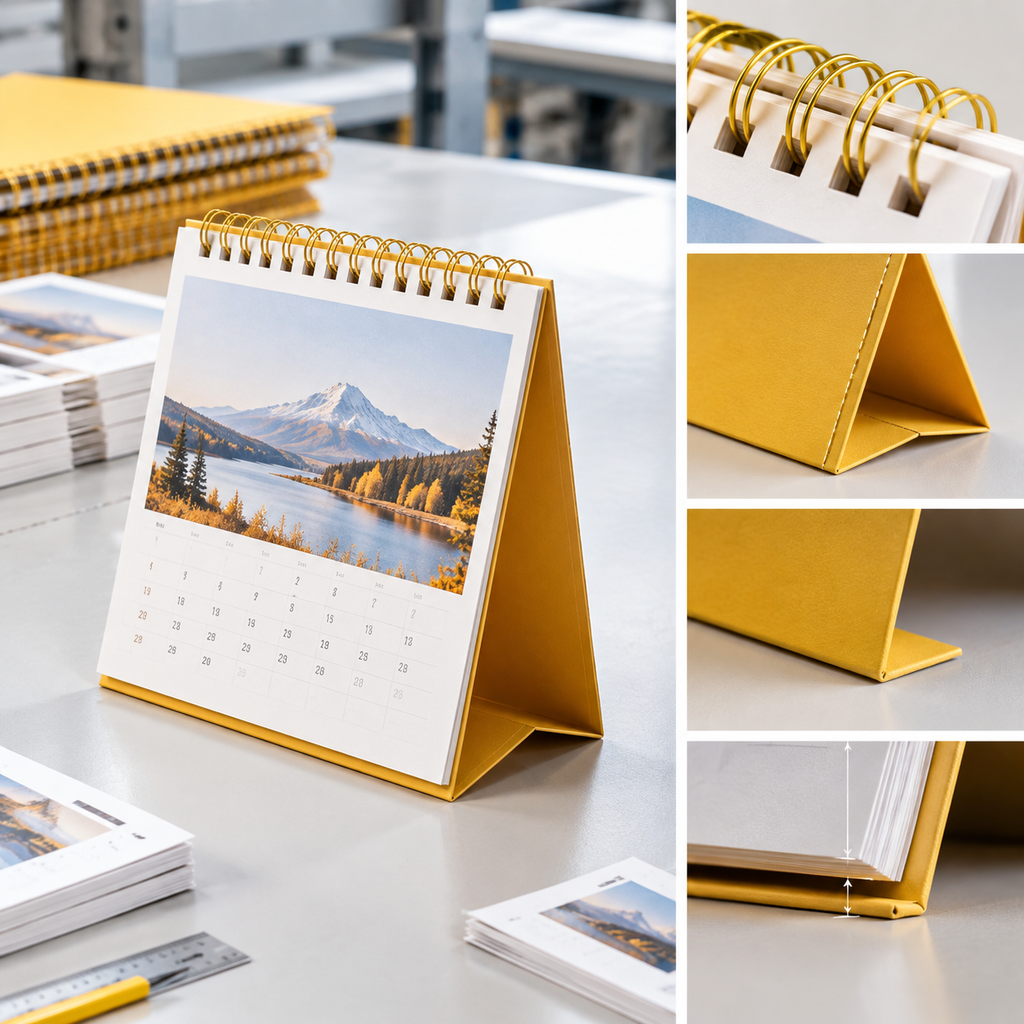
Binding keeps the page block aligned, while the stand carries the weight and controls the viewing angle. A good desk calendar binding choice therefore depends on the stand design, page thickness, and how often the user will turn pages.
- Wire-O: Useful when pages need to flip over the top or open with limited resistance. Confirm the drilled margin, wire diameter, page-block thickness, and whether the wire is exposed in the final product.
- Saddle stitch: Suitable for a thinner, lighter page block. Confirm that the folded cover or base remains open at the intended angle and that the staples do not interfere with the support.
- Folded paperboard or cover stand: The score location, board caliper, locking tab, and contact footprint determine whether the calendar stays upright. GSM alone does not fully describe board stiffness.
For an informed comparison, review the binding and paper guidance used for custom book printing and binding options, then ask the calendar supplier to apply the same thinking to the stand and packed assembly.
On a sample, check whether the calendar wobbles, slips on a smooth desk, tips when a page is turned, or loses its angle after repeated opening. Also verify that the stand does not cover dates, photos, or branding when the calendar is fully assembled.
Compare desk calendar paper, printing, and finish options
Choose paper by balancing image reproduction, writing performance, stiffness, and the visual finish required by the brand. A heavier sheet is not automatically a better sheet if it makes the page block too thick for the stand or reduces the usable writing area.
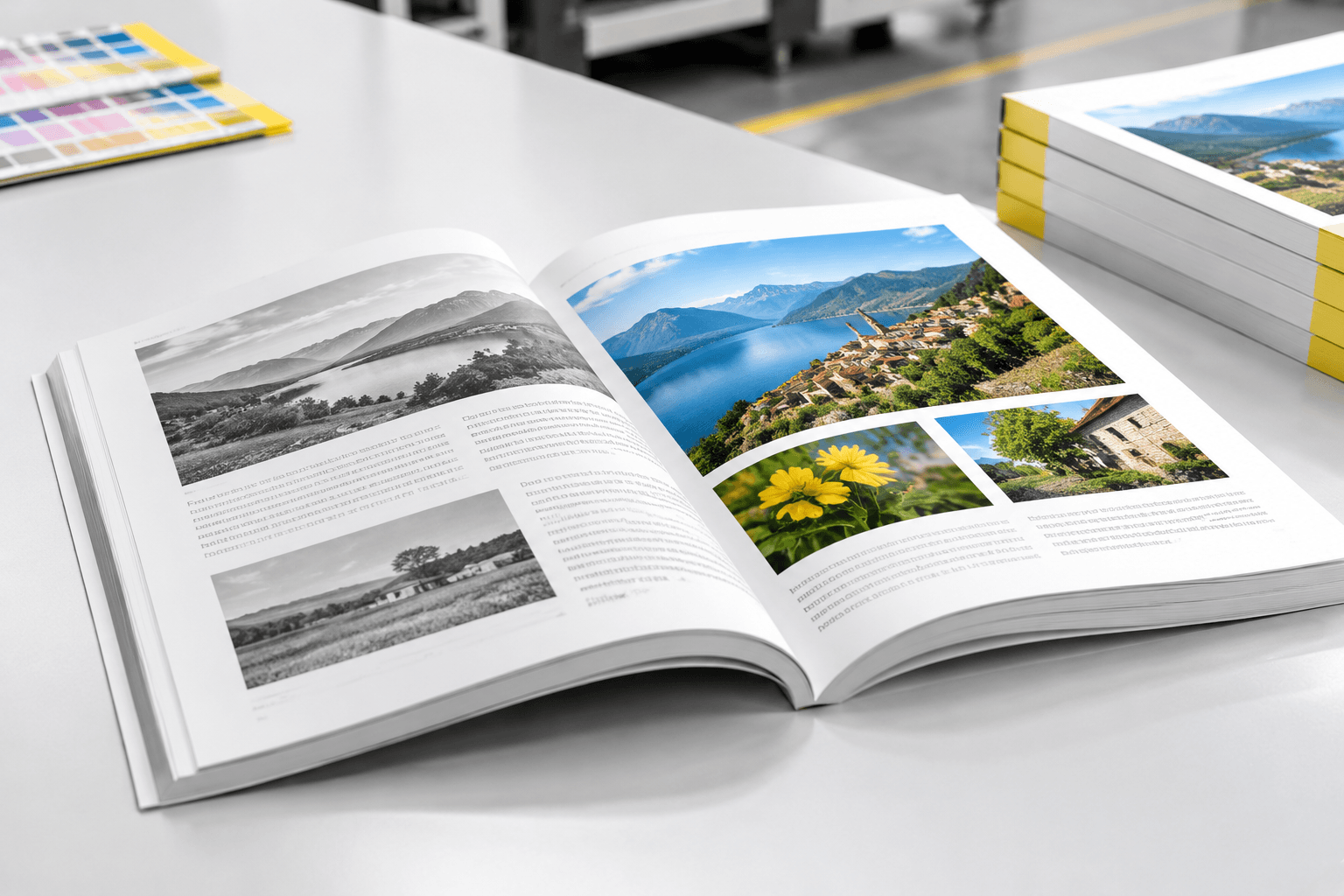
- Coated paper: Usually supports crisp photographs, fine graphics, and saturated color. Gloss surfaces can reflect overhead light, while matte surfaces reduce glare but may still be difficult to write on.
- Uncoated paper: Often provides a more natural writing surface and a softer visual texture. It may absorb ink differently and can render photographs with less apparent contrast than coated stock.
- GSM and caliper: GSM means grams per square metre and describes paper weight. Caliper describes thickness. Ask for both when the stand, fold, or binding depends on stiffness and page-block thickness.
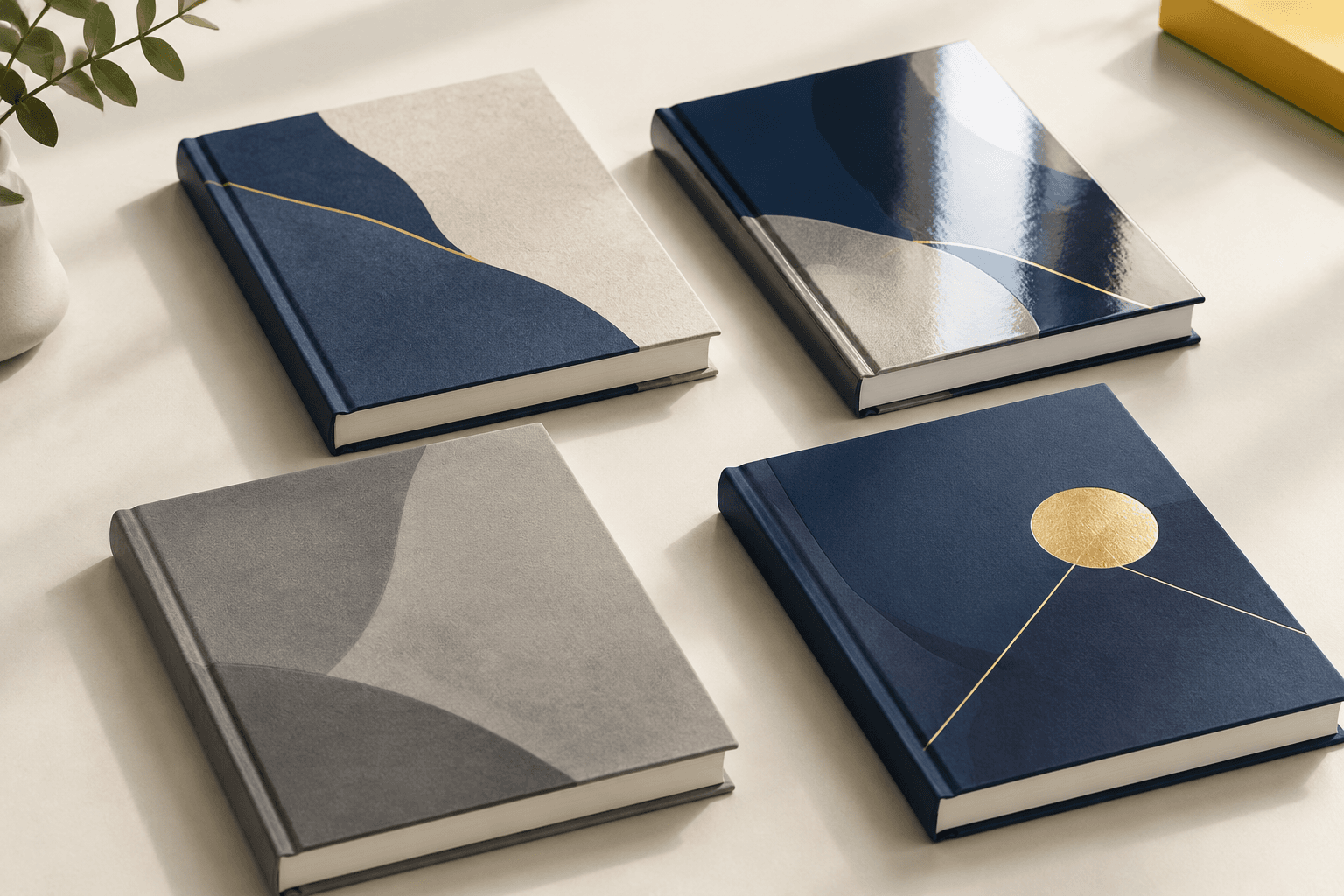
- Finishing: Matte or gloss lamination can protect printed surfaces, but a laminated writing area may resist some pens. Spot UV, foil, and other decorative finishes should stay clear of areas intended for routine writing unless the result has been tested.
The same surface and coating questions used in card printing finish options are relevant here, but a desk calendar adds page turning, folding, and writing tests. Offset or digital printing should be selected after reviewing quantity, artwork, color requirements, and any variable content.
Paper choice for image reproduction and writable areas
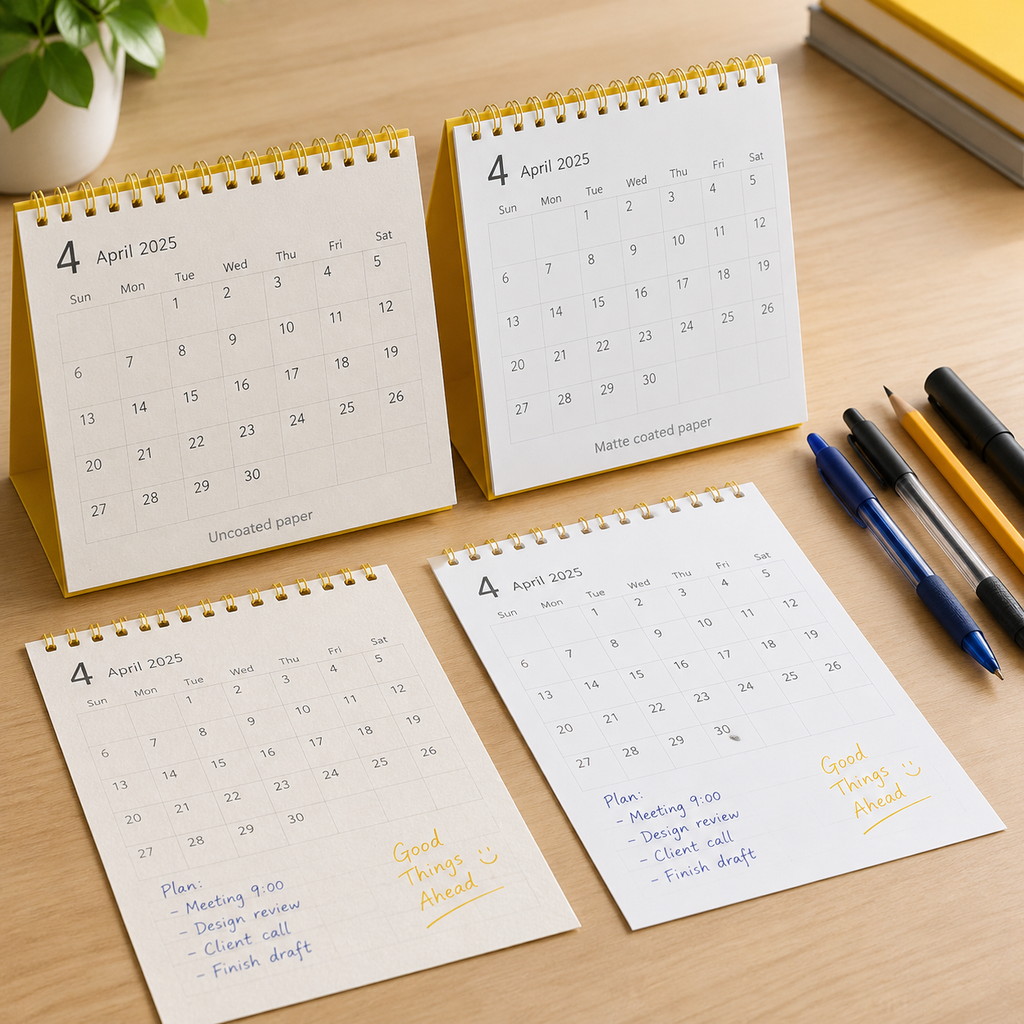
For calendars with writable dates or notes, start with a smooth uncoated stock or another surface that has passed a real pen test. Coated stock can produce stronger images, but matte coating should not be treated as automatically writable.
Test the exact paper and finish with the pens users are likely to carry, such as ballpoint, gel pen, pencil, or marker. Check drying time, smudging, show-through, erasing, and whether the calendar can be written on while standing upright. If only part of the page needs writing, reserve that area for a surface that accepts the intended pen and use the more image-focused finish elsewhere.
If procurement requires certified paper, ask for the relevant certificate or chain-of-custody details rather than relying on a general paper description. The FSC chain-of-custody overview explains how certified material is tracked through the supply chain.
Desk calendar format and specification comparison table
The table below provides a starting comparison. The final choice should be confirmed against the intended page count, stand dimensions, paper thickness, packaging method, and distribution route.
| Construction | Good fit | Main strengths | Points to verify | Quote details |
|---|---|---|---|---|
| Tent-style folded calendar | Compact branded gifts and simple monthly displays | Folds flat and can use a straightforward support profile | Fold strength, board stiffness, contact points, and open dimensions | Flat size, folded size, fold location, paper or board, page count, assembly |
| Easel-style calendar | Reception desks, retail counters, and display-led programs | Clear viewing angle and a defined rear support | Hinge or score durability, rear footprint, tipping, and page clearance | Stand material, angle, base depth, page block, packaging, assembly |
| Wire-O calendar with stand or base | Users who turn pages often | Convenient page turning and a structured page block | Hole margin, wire size, page thickness, alignment, and exposed wire | Binding color if relevant, drill pattern, page leaves, stand design |
| Saddle-stitched compact calendar | Lightweight, thinner products and short page blocks | Simple folded construction with low page-block weight | Staple position, fold memory, stand support, and opening behavior | Flat size, folded size, cover construction, paper, staples, packing |
How to proof, pack, and plan desk calendar distribution
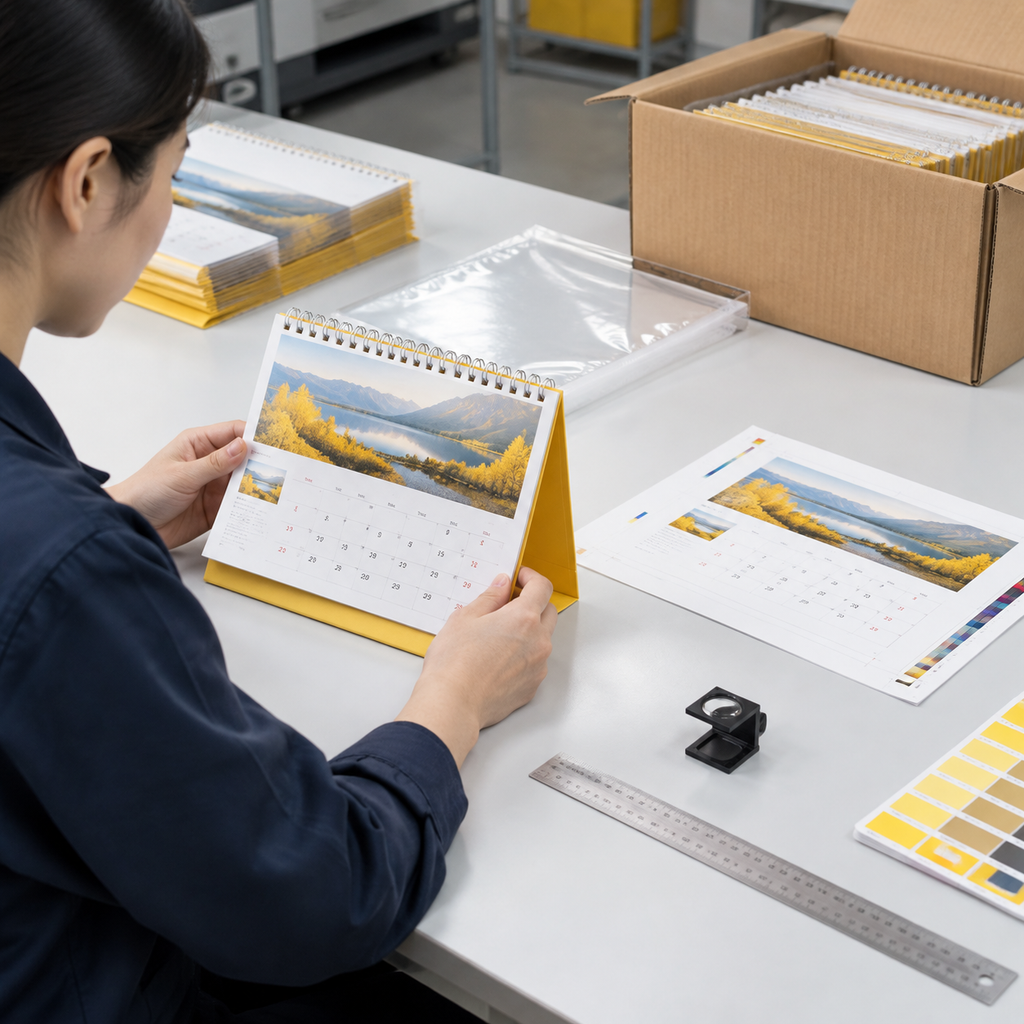
Use a digital proof to check artwork and a physical or assembled proof to check color, paper, binding, stand behavior, and writing performance. A flat PDF cannot prove that a desk calendar will stand correctly or fit its packaging.
- Preflight the files: Confirm finished size, bleed, safe area, page order, fonts, image resolution, and the agreed color setup. Use the printer’s template for holes, folds, scores, and trim.
- Check calendar data: Review every date, month sequence, language, week-start convention, holiday, QR code, and contact detail. Have one named person approve the final calendar content.
- Inspect the physical assembly: Open and close the stand, turn pages, check the viewing angle, and measure the actual footprint. Look for wobble, tipping, crooked binding, exposed edges, and print hidden by the fold or wire.
- Test finish and writing: Compare brand colors and fine type, then write on the intended areas with representative pens. Check drying, smudging, glare, and whether the finish is consistent across the page block.
- Approve the packing method: Confirm whether units ship flat or assembled, whether individual sleeves or boxes are needed, how many units go in each carton, and what labels or inserts are required. Record packed dimensions and approximate shipping weight for logistics planning.
- Control changes: Sign off the proof with the approved quantity, specification, and revision number. Changes after approval may affect material ordering, setup, production time, and cost.
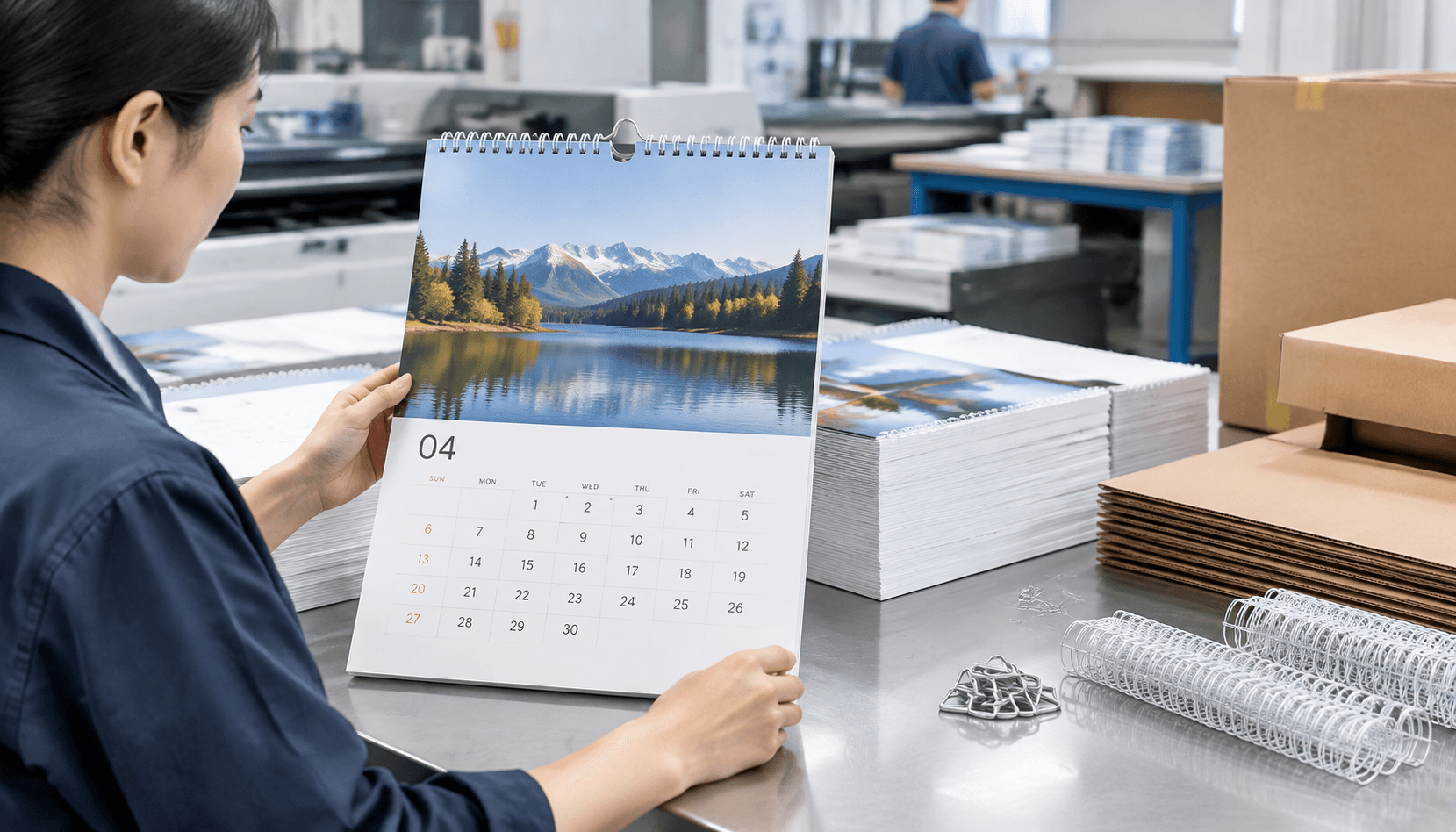
Lemon Printing states that its self-owned facility in the Guangzhou-Shenzhen manufacturing corridor handles prepress, printing, binding, finishing, inspection, packing, and export preparation in-house. Its stated quality process includes prepress checks, on-press monitoring, post-press inspection, and packing verification, with AQL 2.5 sampling inspection available as part of its quality approach. Confirm the inspection scope and acceptance basis for your specific order.
What details should you include in a custom desk calendar printing quote request?
A useful calendar printing quote request gives the printer enough information to price the complete assembled product, including the stand and packing. Send the following details in one specification sheet:
- Product and quantity: Desk calendar type, total quantity, expected repeat order, and whether different versions or languages are required.
- Finished format: Open standing width, depth, and height; portrait or landscape orientation; flat size; folded size; and any size tolerance that matters.
- Calendar content: Date range, number of month leaves, printed sides, cover or notes pages, language, holidays, week-start convention, and required calendar page layout.
- Paper and printing: Page stock, GSM or caliper, stand material, CMYK or special color requirements, coating, lamination, foil, spot UV, or other finishes.
- Binding and stand: Wire-O, saddle stitch, folded support, separate base, fold positions, stand angle, assembly method, and any sample or reference product.
- Packaging: Individual wrapping, gift box, insert, barcode or label, carton quantity, packed dimensions, and whether units ship flat or assembled.
- Logistics: Delivery destination, target date, preferred shipping method if known, and whether the shipment is for one location or multiple destinations.
- Files and proofing: Artwork status, expected file format, physical or digital proof requirement, color reference, and the person responsible for approval.
Ask the printer to list assumptions and separate the product, assembly, packaging, proofing, and shipping components of the quotation. Final MOQ, production time, pricing, and shipping depend on the product specifications, quantity, finishing, and destination.
Frequently asked questions about custom desk calendar printing
The most common buying questions concern the information needed for a quote, the choice of construction, page count, writing paper, and proof approval. The answers below provide a practical starting point, but the final recommendation should follow the complete product specification.
Request a custom desk calendar quote
The most reliable desk calendar order starts with an assembled-product specification: open dimensions, page block, binding, stand, paper, finish, proof method, packaging, quantity, destination, and target date. That information gives the printer a practical basis for recommending a format and preparing a comparable quote.
FAQ
What information is needed to quote custom desk calendar printing?
Provide the quantity, open and folded dimensions, orientation, construction, page count, date range, calendar data, paper, printing, finish, binding, stand, assembly, packaging, delivery destination, and target date. Also state whether you need a digital proof, physical proof, or assembled sample.
Final MOQ, production time, pricing, and shipping depend on the product specifications, quantity, finishing, and destination.
What desk calendar formats and binding options can buyers compare?
Common options include tent-style folded calendars, easel-style calendars, Wire-O calendars with a base or support, and compact saddle-stitched formats. Wire-O is useful for frequent page turning, while saddle stitch is generally better suited to a lighter page block. Tent and easel designs depend heavily on the fold or support structure.
How should I choose a desk calendar size and page count?
Start with the available desk footprint and the distance from which users will read the calendar. Then choose portrait or landscape orientation, monthly grid size, image area, and writing space. Specify leaves and printed sides separately, because a 12-month calendar can be built with different sheet arrangements. Check that the resulting page-block thickness remains stable in the stand.
What paper works for desk calendars with writable dates or notes?
Smooth uncoated paper is often a practical starting point for writable dates and notes, but the exact result depends on the paper surface, ink, and finish. Coated paper may reproduce photographs more strongly but can resist some pens, particularly after lamination. Test the actual stock with ballpoint, gel pen, pencil, or marker before approving bulk production.
What should I check on a desk calendar proof before bulk production?
Check every date, month sequence, language, holiday, page order, bleed, trim, safe area, binding margin, color, type size, and QR code. On an assembled sample, also check the stand angle, footprint, wobble, tipping, page-turn clearance, wire or staple alignment, writing performance, and packed dimensions. Approve the final revision and packing method in writing.
Get a Clear Quote for Your Printing Project
Send Lemon Printing your product type, quantity, size, materials, binding or finishing requirements, delivery destination and target date. Our team will review the specifications and normally respond within one business day with practical production options, pricing and a project timeline.