Table of Contents
- Can black and white book printing include color pages?
- Compare all-black interiors, full color, and color inserts
- When a separate color section is practical
- Why scattered color pages can change the production route
- Plan page order, paper compatibility, and binding
- Confirm gathering, paper caliper, and insert placement
- Prepare and approve mixed-color book files in five steps
- Lemon Printing book options and quote checklist
- Specify every color page location and required proof
- FAQ: black-and-white interiors and color inserts
- Get a Clear Quote for Your Printing Project
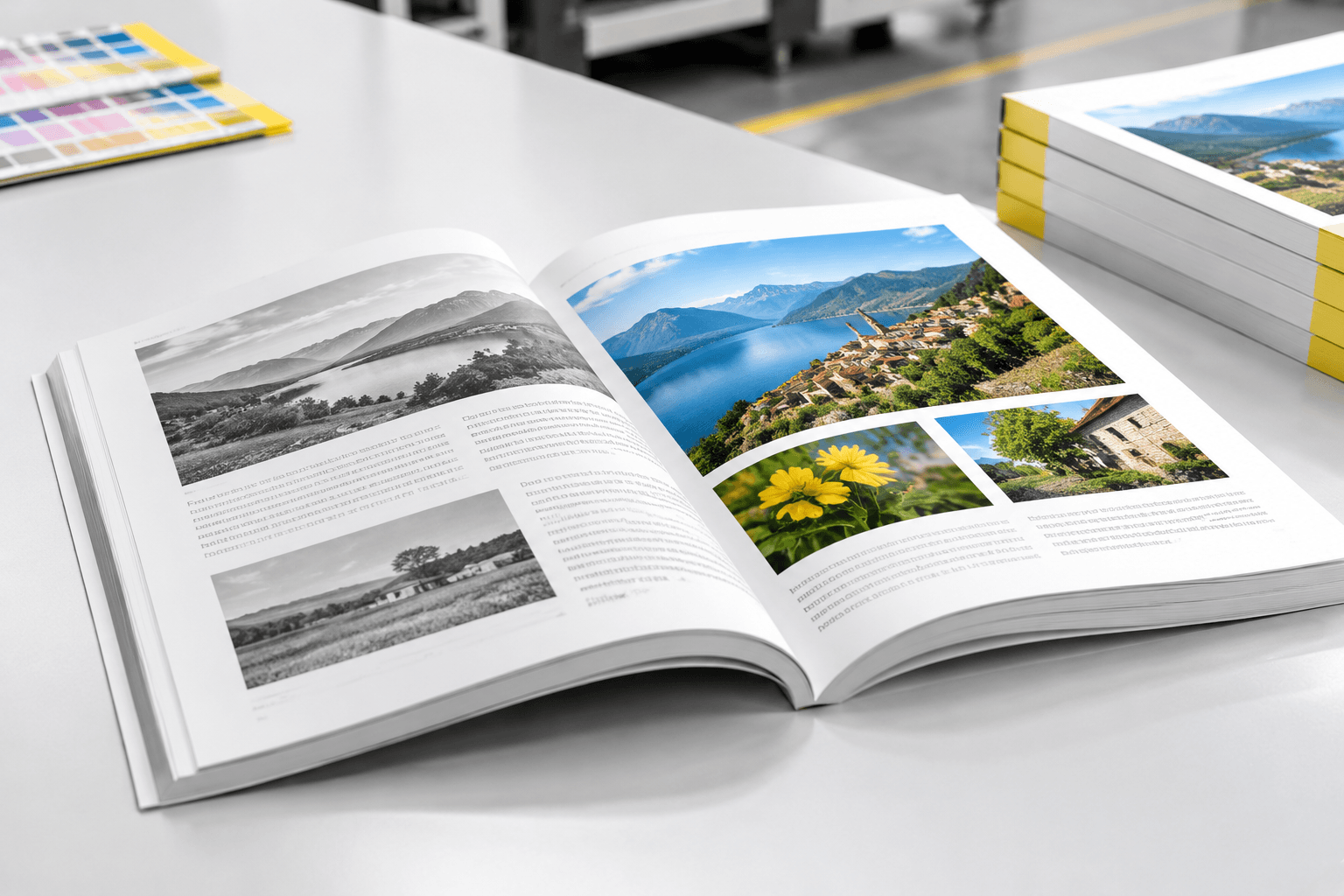
Black and white book printing can include selected color pages, but those pages must be planned as part of the press and binding route. A grouped color section is usually easier to produce than scattered color pages; the final decision depends on page location, paper compatibility, signatures, assembly, proofing, quantity, and destination.
Can black and white book printing include color pages?
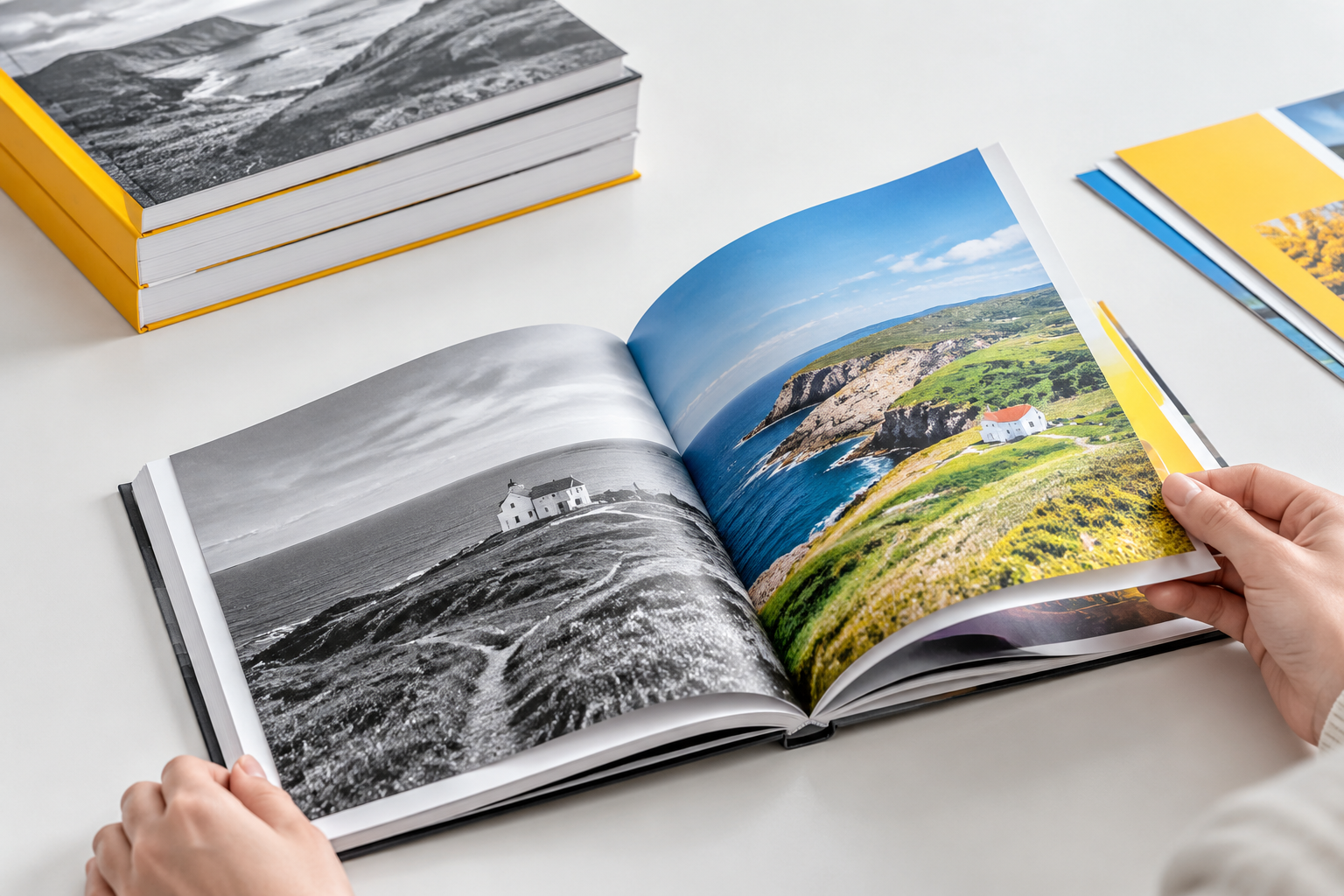
Yes. Black and white book printing can include selected color pages, but the printer must plan those pages as part of the press and binding route. A grouped color section is generally easier to produce than scattered color pages; neither arrangement should be assumed feasible from the PDF alone.
For a custom book printing project, separate the visual result from the production method. A page that looks black on screen can still contain cyan, magenta, or yellow separations. That matters when the quotation is based on black ink interiors.
- Grayscale
- Artwork made from black-to-white tones. It is not automatically K-only if the file contains cyan, magenta, or yellow data.
- K-only
- Only the black, or K, separation carries ink. Black text and grayscale images should be checked for this condition before production.
- Signature
- A group of pages arranged on a press sheet, printed, folded, and gathered into the book in sequence.
- Inserted section
- Separate color leaves or a color signature assembled into the main page block. This is different from placing a loose flyer inside a carton.
Compare all-black interiors, full color, and color inserts
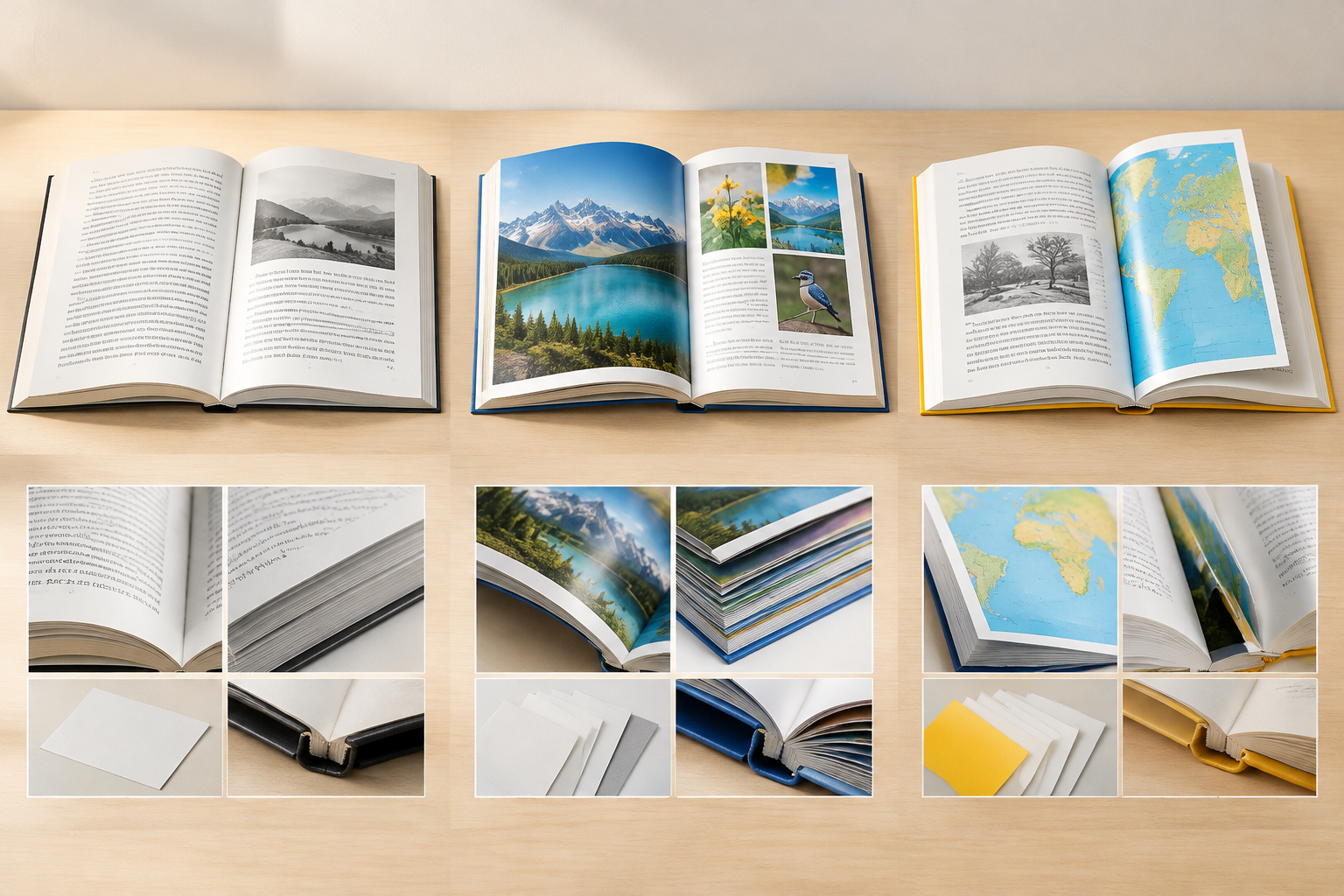
There is no universal winner on price. Full color can be the simpler route when color pages are frequent or scattered, while selective color can make sense when most pages are black ink and the color content is grouped. Compare the actual page map, paper, binding, and assembly rather than counting color pages alone.
| Interior route | Good fit | Production implications | Main risk |
|---|---|---|---|
| All-black or grayscale | Text-led books, novels, reports, and manuals with no essential color. | One black-ink interior specification and a consistent paper route. Grayscale images need careful tonal conversion. | Photos, charts, and maps may lose useful contrast if converted without review. |
| Full-color interior | Books with frequent images, colored diagrams, or color pages spread throughout. | Page placement is flexible, but the full interior follows a color-managed production route. | Printing color on every page may add cost when most pages contain only text. |
| Black text with a grouped color insert | Photo plates, map sections, chapter illustrations, or a concentrated teaching section. | Black and color content may be produced as separate forms or sections, then gathered or inserted into the page block. | Extra coordination is needed for paper, section order, caliper, proofing, and assembly. |
For textbook printing costs, request at least two written scenarios when the design allows it: black-ink text with a grouped color section, and a full-color interior. The comparison is only useful when finished size, total pages, paper, binding, proofing, quantity, packing, and destination stay the same.
When a separate color section is practical
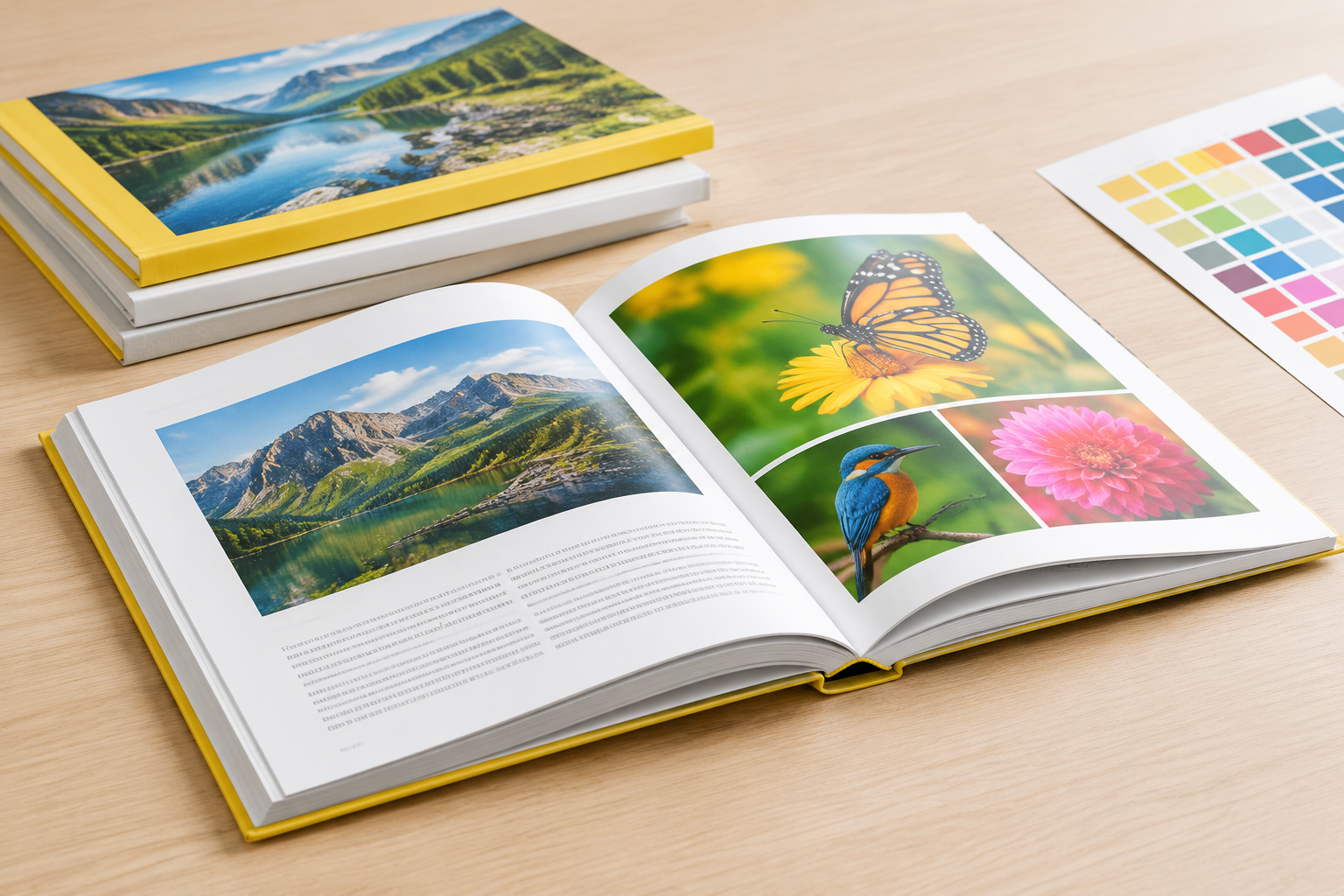
A separate color section is practical when the content can stay together: photo plates, maps, a chapter of color diagrams, or a short visual reference section. The section may sit at the front, middle, or back of the book, provided the page map and binding plan account for its exact position.
Using the same paper throughout usually makes gathering, folding, and binding easier. It is not mandatory. A coated sheet may reproduce photographs with sharper detail, while an uncoated sheet can better match a text-heavy book and remain easier to write on. The trade-off is physical: a different stock changes opacity, surface feel, and paper caliper. Ask the printer whether the color section will be gathered as a signature, tipped in, or inserted as a separate section.
Do not assume a grouped section automatically creates a lower quote. It can reduce the amount of color printing, but extra handling, paper changes, proofing, and assembly may offset that advantage.
Why scattered color pages can change the production route

Color pages can appear at many positions in the finished book, but they cannot simply be dropped anywhere without checking imposition. Imposition is the arrangement of pages on a press sheet so that printing, folding, cutting, and binding produce the correct reading order.
On an offset press, one sheet can carry several pages. If only one page on that form needs color, the printer may need to print the entire form in color, move that page to another form, or use a different digital or hybrid route. Each choice affects setup, paper handling, registration, and gathering. Digital production can offer more page-level control, but it does not remove the need to check stock, page order, binding, and finishing.
This is the core of book signature planning. Give the printer a page-by-page map showing black, grayscale, full color, blank, and different-paper pages. A statement such as a few color pages is not enough to produce a comparable quote.
Plan page order, paper compatibility, and binding

Start with the page block, not the artwork. Record the finished size, total page count, color page locations, paper stock, paper caliper, and binding before exporting final files.
Should color inserts use the same paper as the text pages? No. The same paper is the simplest route, but a different stock can be justified for photographs, maps, or pages that must be writable. Paper caliper means the physical thickness of the sheet. GSM describes weight, but two papers with similar GSM can have different bulk and thickness, so both details belong in the quotation.
Paper affects more than appearance. Coated paper generally gives images a smoother surface and stronger visual definition. Uncoated paper gives a softer surface and may be preferable for notes or training exercises, but images can appear less crisp. A different paper also changes opacity, page-block thickness, cover or spine calculations, and the way sections gather.
Binding must be reviewed with the mixed construction. Perfect binding, sewn binding, case binding, saddle stitch, and Wire-O each handle page blocks differently. A color section that is technically printable can still create an awkward opening, uneven bulk, or assembly problem if the binding plan is left until the end.
Confirm gathering, paper caliper, and insert placement

Gathering means collecting printed sections in the correct page order before binding. For a mixed-color book, the printer should confirm whether the color pages are part of a normal signature, a separately gathered section, or a physical insert assembled into the page block.
These are planning models, not automatic production instructions. The exact route depends on finished size, page count, paper, press format, and binding. Ask the supplier to show the assumed page sequence in the quotation and to identify any loose, folded, or separately handled section.
Prepare and approve mixed-color book files in five steps

Supply a master page map and clearly separated production files. The printer should be able to see which pages are black ink, grayscale, full color, blank, or printed on another stock without guessing from filenames.
- Map every page. List the final page number, color mode, paper choice, section boundary, and any blank page. Mark the first and last page of each color section.
- Prepare consistent PDFs. Supply the black interior, color section, and cover as separate files when requested. Keep trim size, bleed, page dimensions, and page numbering consistent. Lemon Printing’s commercial artwork preparation guide and print-ready book interior guidance cover the broader prepress checks.
- Check the separations. Black text should be checked for K-only output, while color pages should use the agreed color space and image settings. Use Adobe Acrobat Output Preview to inspect separations, overprint behavior, and areas that unexpectedly contain CMY data.
- Approve the page sequence. A digital proof can confirm content and order. Request a physical proof when paper feel, color appearance, or a different insert stock matters. A PDF alone cannot show whether a separately handled section will open and gather correctly.
- Sign off the production specification. Record the approved file versions, color page ranges, paper, binding, gathering method, proof type, packing, and shipping scope. Do not let a revised PDF change page order without updating the map.
Lemon Printing book options and quote checklist
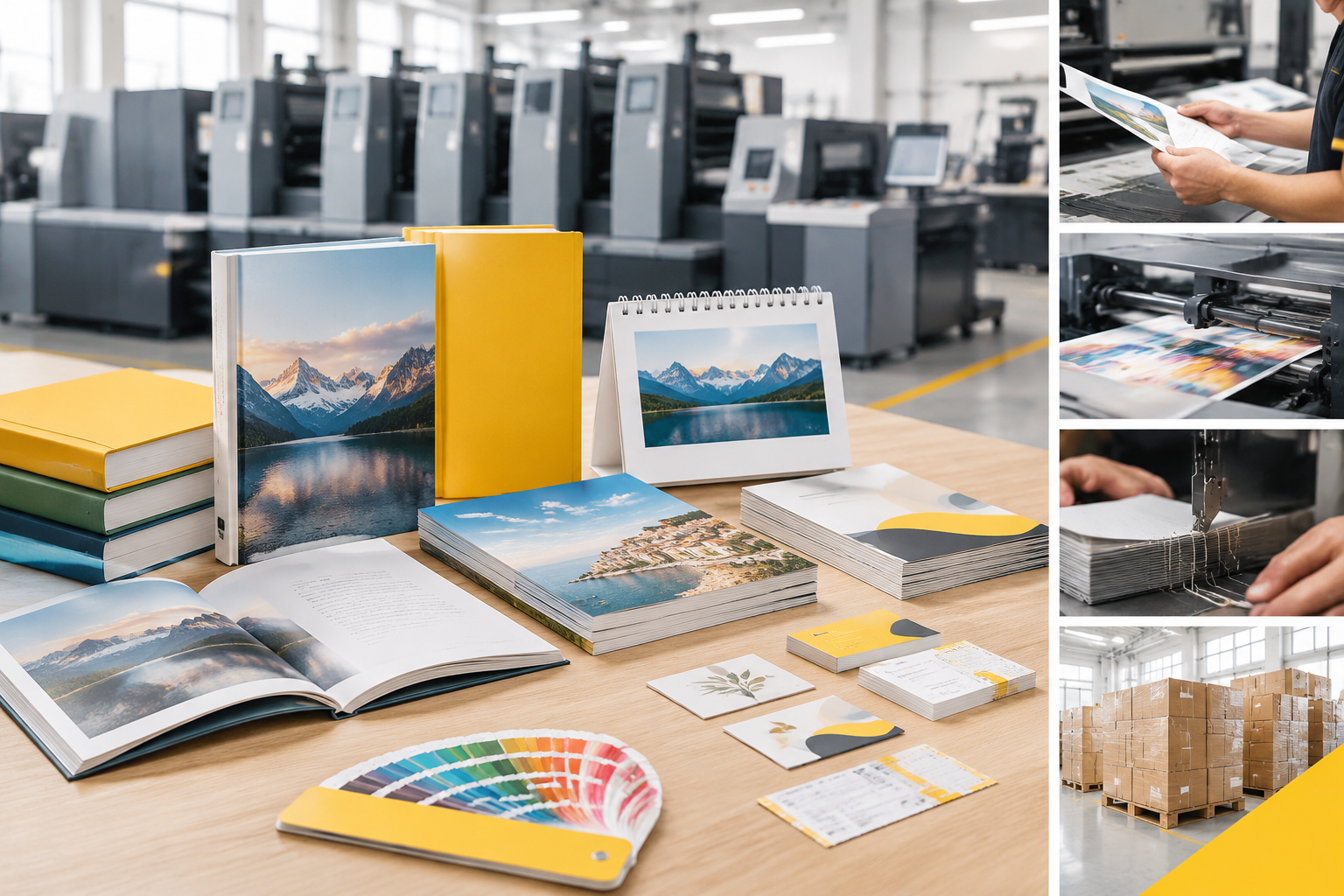
Lemon Printing can review a mixed-color book as a custom book, manual, booklet, paperback, hardcover, sewn, saddle-stitched, or Wire-O project, depending on the page block and intended use. The production route is confirmed after the page map, paper, quantity, and binding details are reviewed.
Lemon Printing operates a self-owned facility in the Guangzhou-Shenzhen manufacturing corridor, established in 2015, with more than 130 skilled workers and 8+ offset and digital presses. Prepress, printing, binding, finishing, inspection, packing, and export preparation are handled in-house. The workflow includes prepress review, on-press monitoring, post-press inspection, and packing verification.
Training departments and education buyers can also compare the requirements against the available manual printing options, especially when the book needs writable paper, frequent handling, or a binding that opens more readily.
Send these details with the quote request:
- Finished size, quantity, total page count, and any blank pages.
- Exact color page ranges, grouped sections, or scattered color locations.
- Paper name, GSM, caliper, coating, whiteness, and whether color pages use another stock.
- Cover material, binding method, lamination, and any finishing.
- Whether the color section is gathered, tipped in, bound in place, or supplied loose.
- Digital or physical proof requirements, delivery destination, and target date.
Final MOQ, production time, pricing, and shipping depend on product specifications, quantity, finishing, and destination.
Specify every color page location and required proof
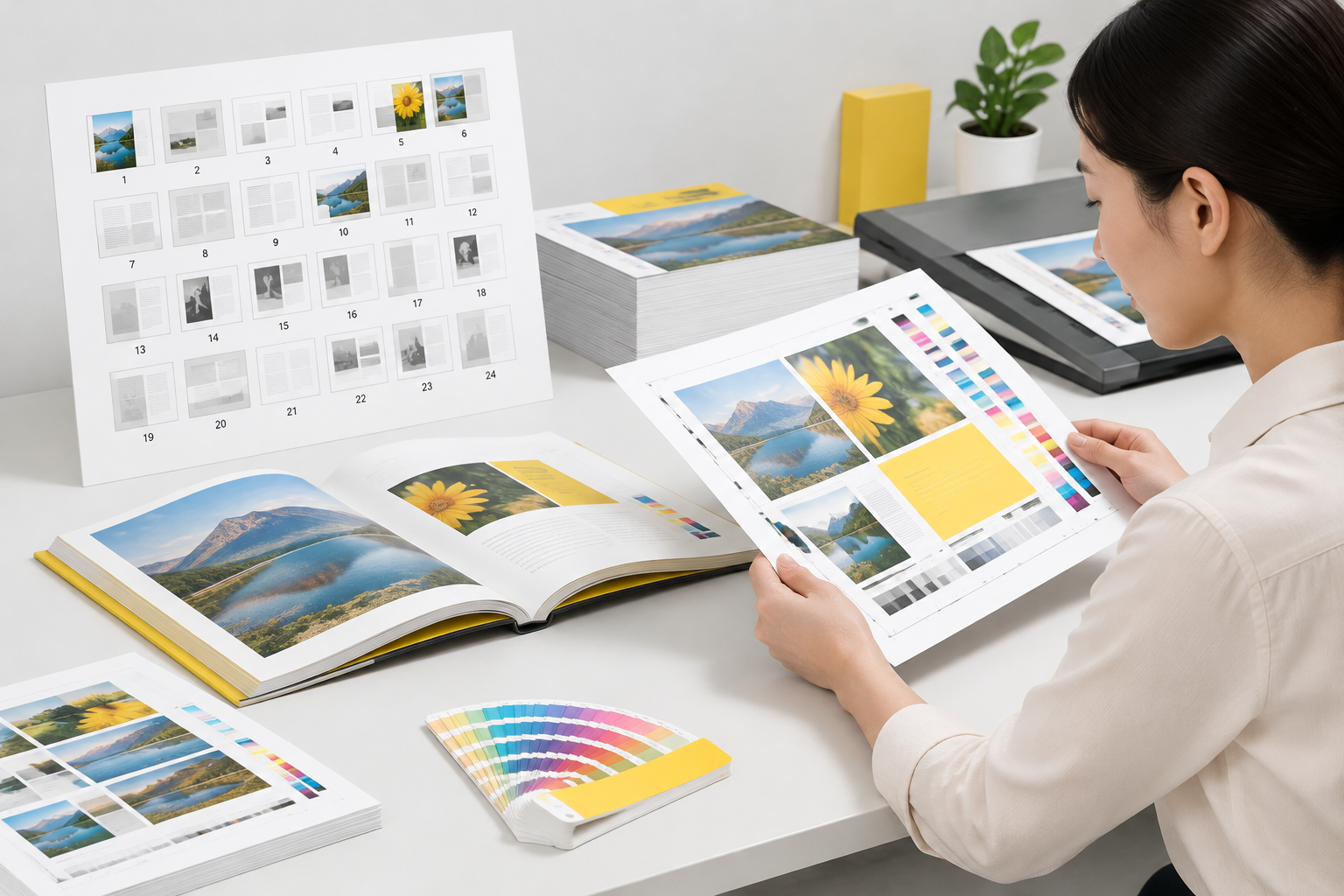
Do not write interior: black and white with a few color pages and expect comparable quotes. Give the supplier a numbered page map, then ask the quote to state how those pages will be imposed, printed, gathered, and bound.
When the design permits, request separate scenarios for an all-grayscale interior, a black text interior with a grouped color section, and selected color pages in their final positions. Each scenario should state the same finished size, quantity, page count, paper basis, binding, packing, and delivery scope.
For proofing, ask for a preflight separation check, a page-order or imposition review, and a color proof that represents the intended paper. If the insert uses different stock or is handled separately, request a folded, gathered, or bound dummy as appropriate. Lemon Printing’s printing proof approval checklist is useful for recording corrections and approval status.
The practical question is not simply whether the pages can be printed. It is whether the approved pages can be printed, assembled, opened, and shipped as one consistent book.
FAQ: black-and-white interiors and color inserts

These five questions settle the assumptions that most often create confusion in mixed-color book quotes. The answers should be reflected in the page map and production specification.
Get a Clear Quote for Your Printing Project

Mixed-color book printing is a specification problem before it is an artwork problem. Group color pages when the content allows it; when pages are scattered, require a printer-confirmed imposition and assembly plan. Lock the page map, paper caliper, binding, proof type, destination, and target date before approving production.
FAQ
Is black and white book printing always cheaper than full-color printing?
No. It can be less expensive when most pages are K-only and the color content is grouped, but separate color forms, different paper, gathering, assembly, and additional proofing can offset that advantage. Compare full-color and mixed-color quotes using the same finished specifications rather than assuming that a lower color-page count guarantees a lower total cost.
Can color pages appear anywhere in a black-and-white book?
They can appear in many positions in the finished book, but the printer must confirm the imposition, press route, gathering method, and binding compatibility. Scattered pages may be printed as part of a larger color form, produced through a digital or hybrid route, or reorganized into a grouped section. The exact page map determines the workable option.
Should color inserts use the same paper as the text pages?
Not always. The same paper usually simplifies gathering and gives the book a consistent surface, while a different stock may suit photographs, maps, or writable exercises. A paper change affects caliper, opacity, page-block thickness, surface appearance, and assembly, so the printer should approve it before quoting the final construction.
How should I supply files for black-ink pages and color sections?
Supply a master page map plus clearly labeled production PDFs. Identify the black interior, color sections, cover, blank pages, and any different-paper pages; keep trim size, bleed, page dimensions, and page numbering consistent. Ask the printer whether it wants one complete interior PDF, separate section PDFs, or both, and check that black pages are K-only rather than carrying unintended CMY data.
Which proofs confirm grayscale quality, insert order, and binding compatibility?
Ask for a preflight separation check, a page-order or imposition review, and a color proof on representative paper. When the project includes a different stock or a separately handled section, a folded, gathered, or bound dummy is the useful physical check for order, bulk, opening, and assembly. A screen proof can confirm content, but it cannot fully verify the behavior of the finished page block.
Get a Clear Quote for Your Printing Project
Send Lemon Printing your product type, quantity, size, materials, binding or finishing requirements, delivery destination, and target date. For a mixed-color book, attach the page map and identify every color section. Our team will review the specifications and normally respond within one business day with practical production options, pricing, and a project timeline.