Table of Contents
- Key Takeaways: Choose a Finish for Handling and Appearance
- What Are Book Cover Finishes?
- Book Cover Finishes Compared
- Which Finish Fits Each Book Format?
- Comparison Table: Finish, Best Use, Benefits, and Risks
- Artwork and Proofing Checks for Finished Covers
- What to Specify in a Book Printing Quote
- FAQ About Book Cover Finishes
- Request Custom Book Printing With the Right Finish
Book cover finishes should solve two different problems: protecting the printed surface and creating the right visual or tactile impression. Matte reduces glare, gloss emphasizes image contrast, and soft-touch adds a velvety feel. Foil, spot UV, embossing, and debossing create selective effects—not substitutes for full-cover protection. For a bulk book order, choose the protective surface first, then add decoration only where it earns its place.
Key Takeaways: Choose a Finish for Handling and Appearance

- Start with handling. A frequently used manual needs a tested protective surface more than a decorative effect.
- Choose matte for restrained reflection, gloss for stronger apparent image contrast, and soft-touch when feel is part of the buying experience.
- Dark, solid covers expose scuffs and fingerprints. Neither matte nor soft-touch automatically means scratch-resistant.
- Use foil, spot UV, embossing, or debossing to establish a focal point—not to protect the entire book.
- Approve the finish on the intended material. A PDF cannot demonstrate adhesion, texture, glare, or hinge performance.
What Are Book Cover Finishes?

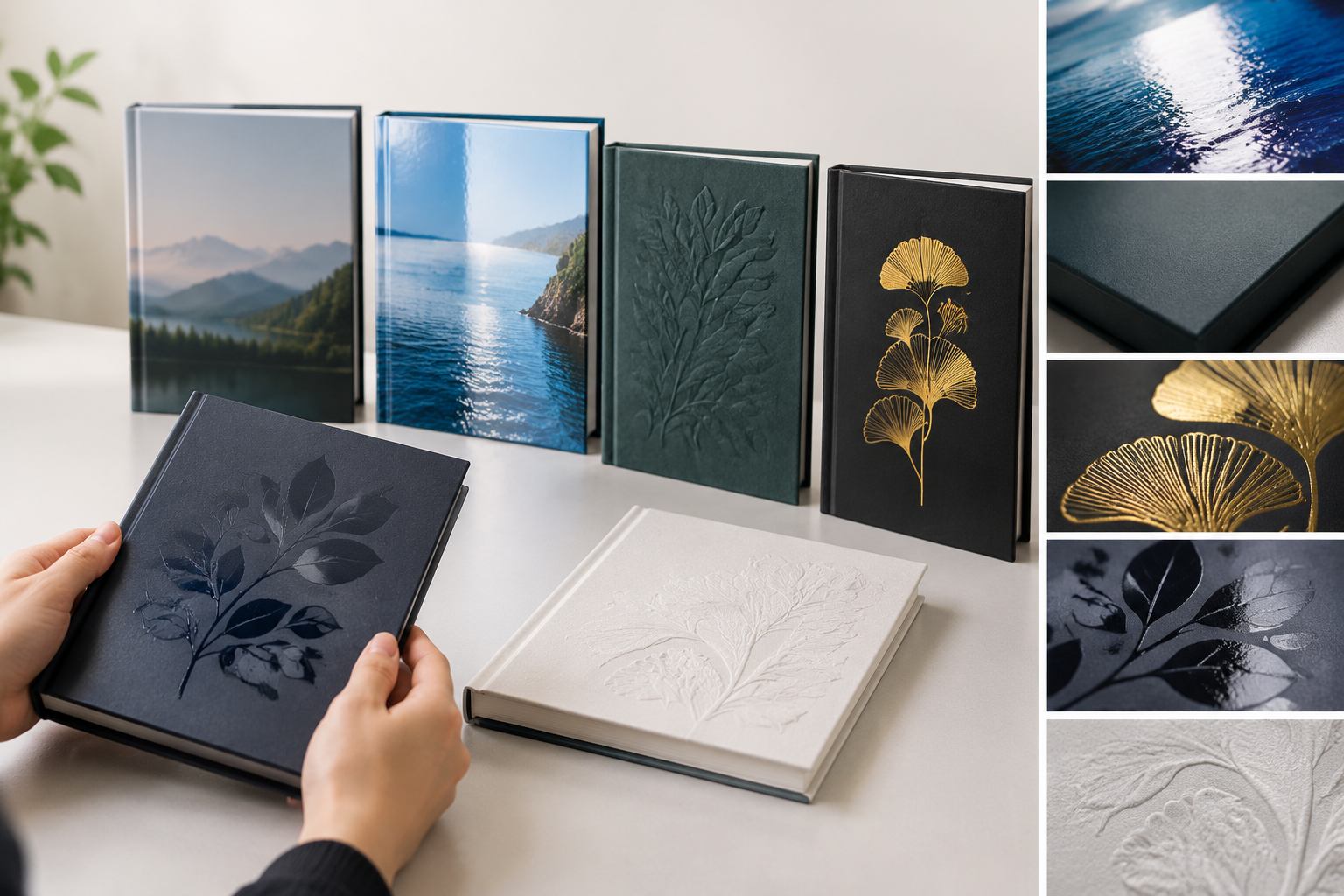
Book cover finishes are treatments applied to a cover material to change its protection, reflection, texture, or decorative appearance. Common options include matte, gloss, and soft-touch lamination, foil stamping, spot UV, embossing, and debossing.
Lamination bonds a thin film to the printed sheet. A coating applies a liquid layer that dries or cures; it is not necessarily equivalent to a laminated film. Specify the process, not just an appearance such as “matte.” Lemon Printing’s custom book printing options combine cover treatments with paperback, hardcover, and other binding constructions.
Protective finishes and decorative finishes
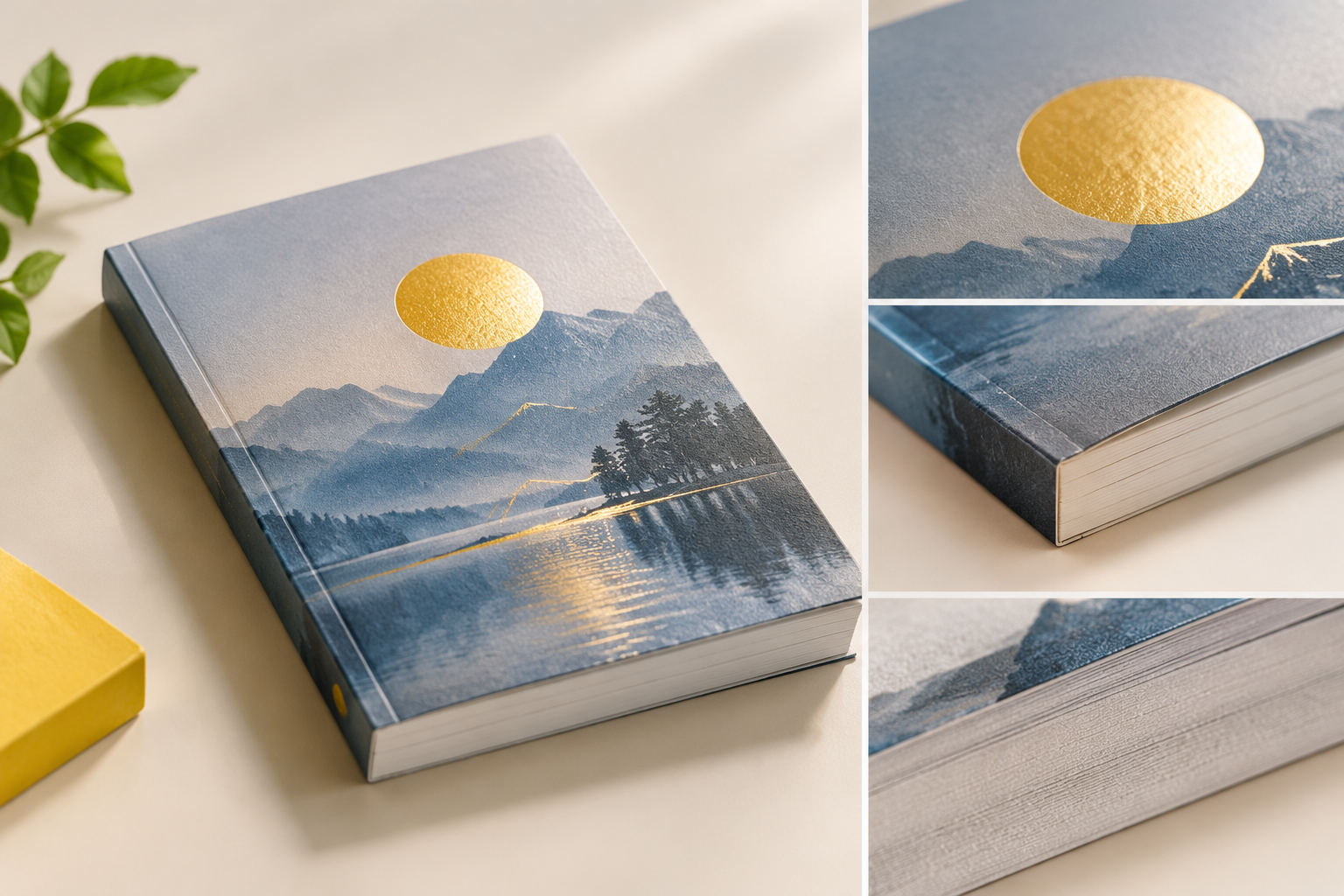
Protective finishes cover the working surface; decorative finishes emphasize selected elements. A matte-laminated paperback with a foil title uses both approaches.
The distinction matters when specifying durability. Foil on a title does little for abrasion across the back cover. Spot UV protects only the area it covers. Lamination can improve resistance to rubbing and incidental moisture, but exposed edges, folds, and binding remain vulnerable. A laminated cover does not make a book waterproof.
How coating changes color, feel, and scuff resistance
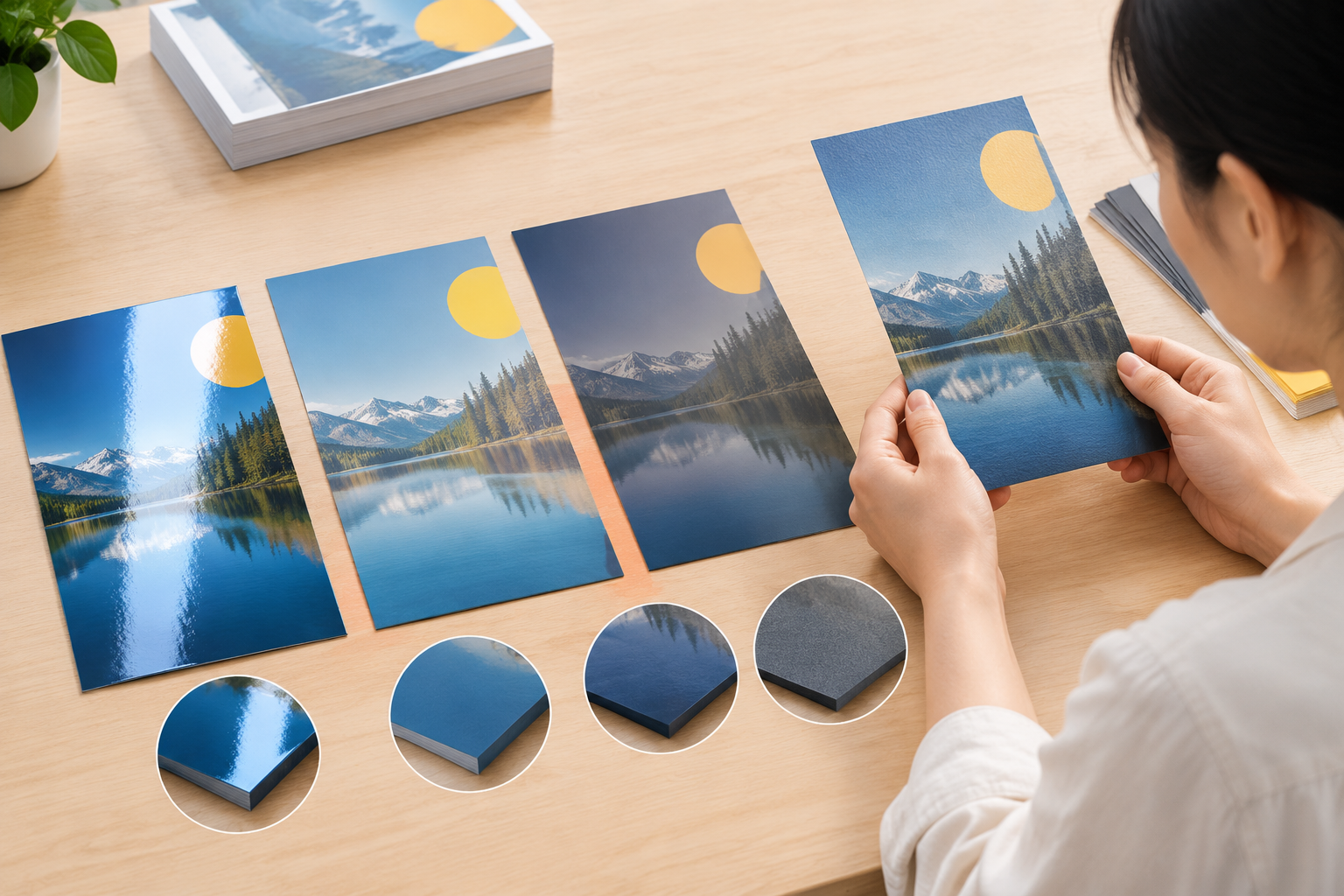
A finish changes how light reaches and reflects from the printed image. Gloss often makes dark areas appear deeper and images more contrasty; matte scatters reflection and can soften their apparent intensity.
Scratch resistance depends on the particular film or coating—not its name alone. An anti-scuff matte film is a different specification from standard matte. Soft-touch products also differ in fingerprint visibility, rub resistance, and compatibility with later decoration. Compare finished samples under diffuse light and angled light; one reveals color, while the other exposes surface defects.
Book Cover Finishes Compared
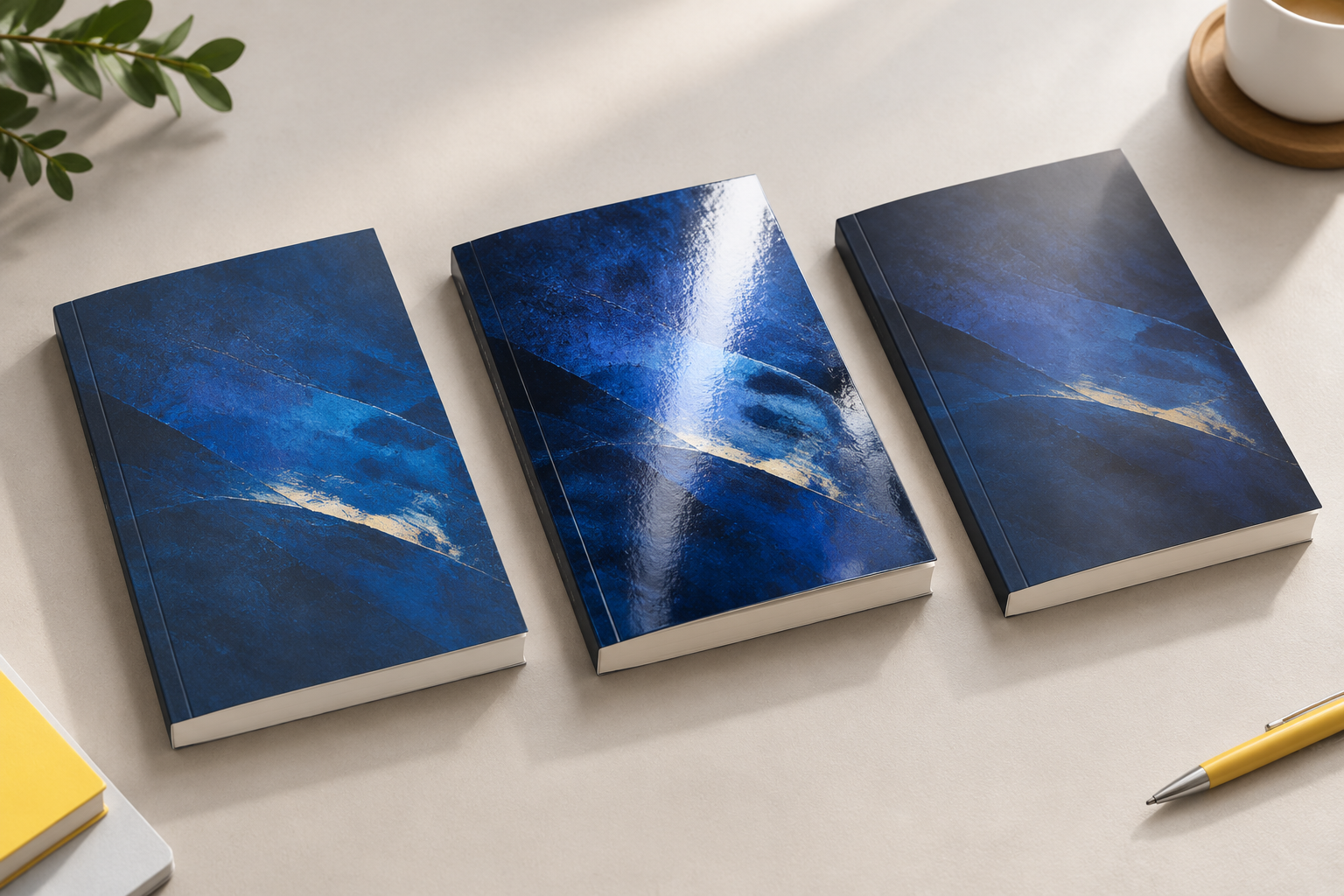
Compare finishes on four separate criteria: handling, visual intent, surface feel, and production complexity. There is no single “premium” option that wins every category.
For an image-led retail cover, reflection may be acceptable if photographs gain impact. For a restrained text-led cover, low glare may matter more. Every additional decorative process introduces another compatibility and alignment checkpoint, so a simpler specification can be the stronger production choice.
Matte, gloss, and soft-touch lamination

Matte is the practical starting point for low-glare presentation; gloss suits image impact; soft-touch suits tactile differentiation. Confirm handling performance separately.
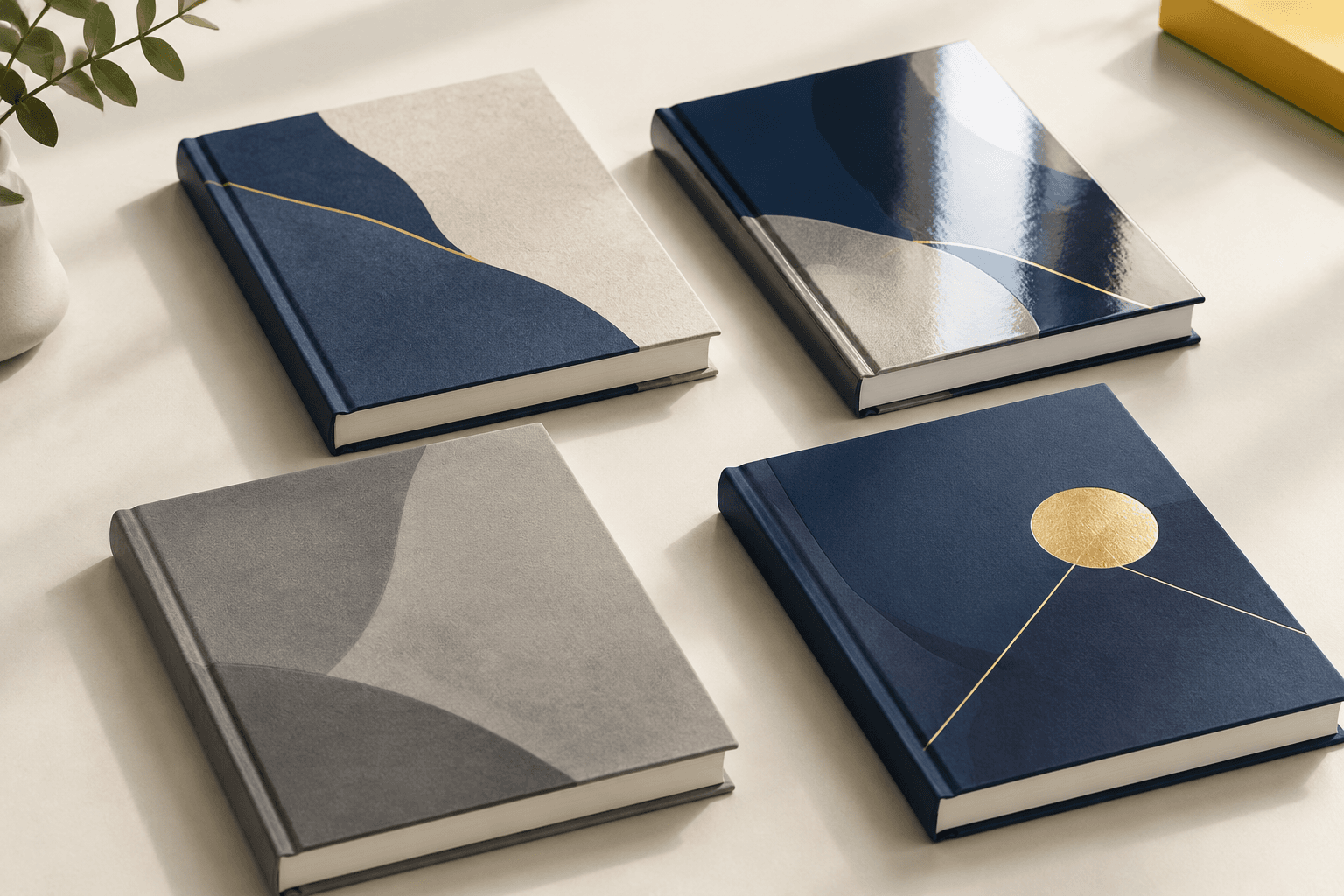
A matte lamination book cover offers a smooth, restrained appearance for novels, reports, and brand books. Standard matte can show shiny rub marks, particularly on dark backgrounds. If that matters, request an anti-scuff alternative and compare it against the standard film.
Gloss lamination creates a reflective surface that can strengthen the appearance of photography and saturated illustration. It is often a sensible candidate for frequently handled covers, but glare, fingerprints, and fine scratches may remain visible. Judge it under the lighting where readers will use the book.
Soft-touch lamination provides a velvety, low-glare feel for gift books and premium editions. The tactile effect is its main reason for selection—not an assumed durability advantage. Ask whether the proposed film supports foil or UV adhesion, and check whether handling leaves persistent marks before approving it.
Foil stamping, spot UV, embossing, and debossing
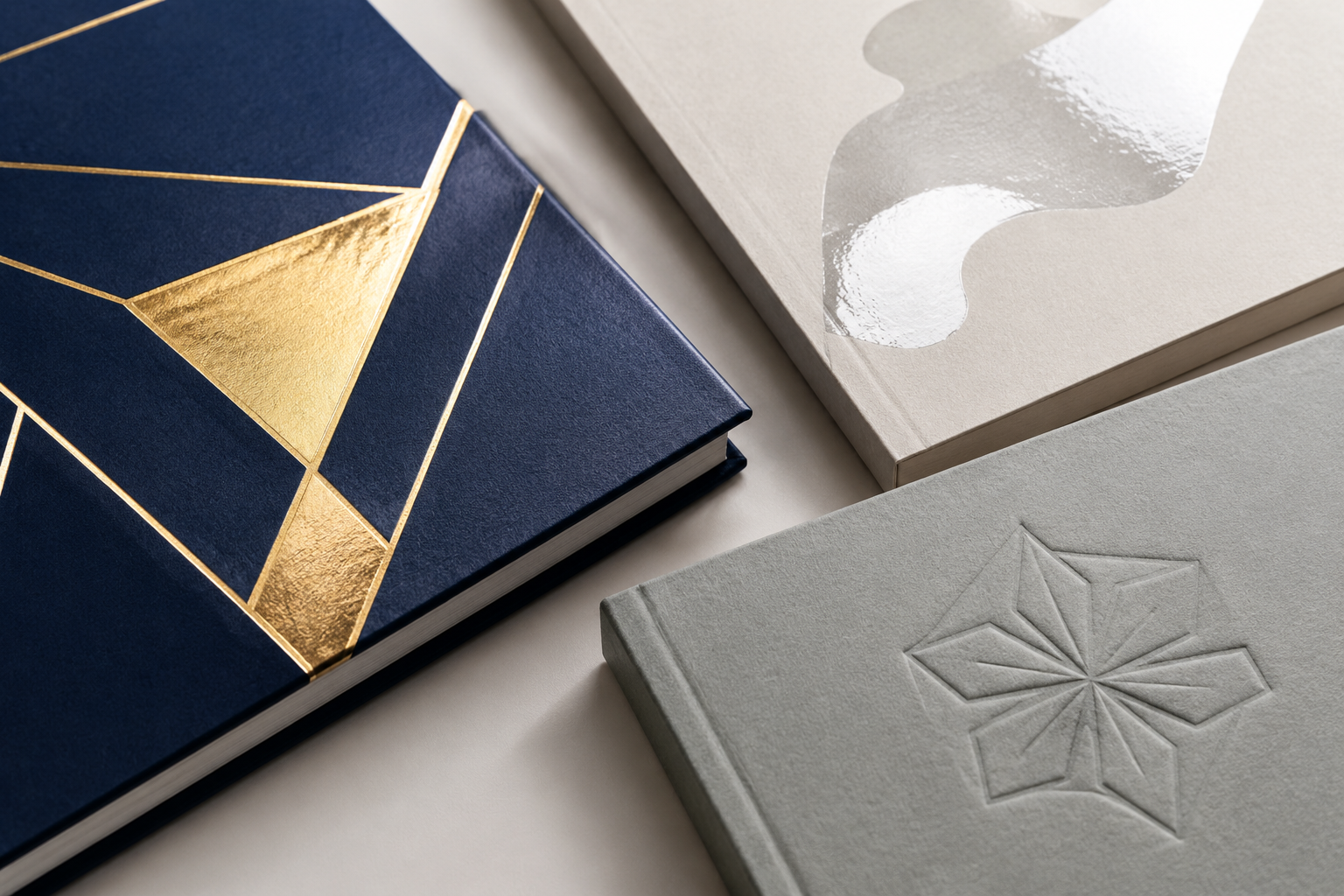
Choose foil for reflective emphasis, spot UV for selective sheen, and embossing or debossing for physical relief. These effects are different tools, even when used on the same title.
- Foil stamping: Conventional hot foil uses a heated die and pressure to transfer a decorative layer. Metallic foil produces reflection that ordinary CMYK printing cannot reproduce. Fine details, broad solids, textured materials, and fold locations need review.
- Spot UV: A selectively applied UV-cured coating creates contrast, often glossy artwork against matte lamination. Raised UV is a separate specification; ordinary spot UV should not be assumed to have substantial height.
- Embossing: Raises a design using tooling. An embossed book cover can carry a blind effect without ink or foil, or combine relief with decoration that requires closer alignment.
- Debossing: Presses a design into the surface. Depth and edge definition depend on the covering material, supporting construction, and tooling.
Do not prescribe a universal process order. The printer should confirm the sequence against film adhesion, foil release, curing, and cover assembly requirements.
Which Finish Fits Each Book Format?

Match the finish to the assembled book, not just a flat cover sample. Paperback creases, hardcover joints, jacket folds, and punched binding edges put different stresses on the surface.
Ask where the reader touches, bends, or rubs the book most. That answer usually narrows the finish choice faster than a mood board.
Trade paperbacks, manuals, and workbooks

For manuals and workbooks, prioritize tested abrasion resistance, clean folding, and reliable adhesion. Gloss or a specified anti-scuff matte film are sensible candidates; neither can be ranked without the actual material and use conditions.
Trade paperbacks may favor matte for low glare or gloss for illustrated covers. With custom paperback book printing, review lamination around the spine and opening creases, particularly where dark ink crosses a fold.
Need a name field, handwritten note, or owner signature? Laminated surfaces often resist ordinary pens. Reserve an appropriate writable area or test the intended marker on the actual sample. Keep metallic and highly reflective effects away from barcodes, and verify scanning on the finished cover.
Hardcover books, lookbooks, and premium editions

Hardcovers offer several finishing surfaces: the printed case wrap, a cloth or specialty covering, and an optional dust jacket. Specify which component receives each treatment.
A laminated printed case with a foil title is not equivalent to foil stamped onto cloth. Texture changes detail reproduction, and the supporting construction affects relief. For custom hardcover book printing, use the production template to position decoration clear of joints, turn-ins, and vulnerable edges.
Lookbooks may benefit from gloss photography or matte surfaces with selective UV. Premium editions can justify soft-touch, foil, or blind relief—but stacking effects without a clear visual hierarchy adds complexity, not necessarily value. If a jacket carries the decoration, assess the uncovered case separately.
Comparison Table: Finish, Best Use, Benefits, and Risks
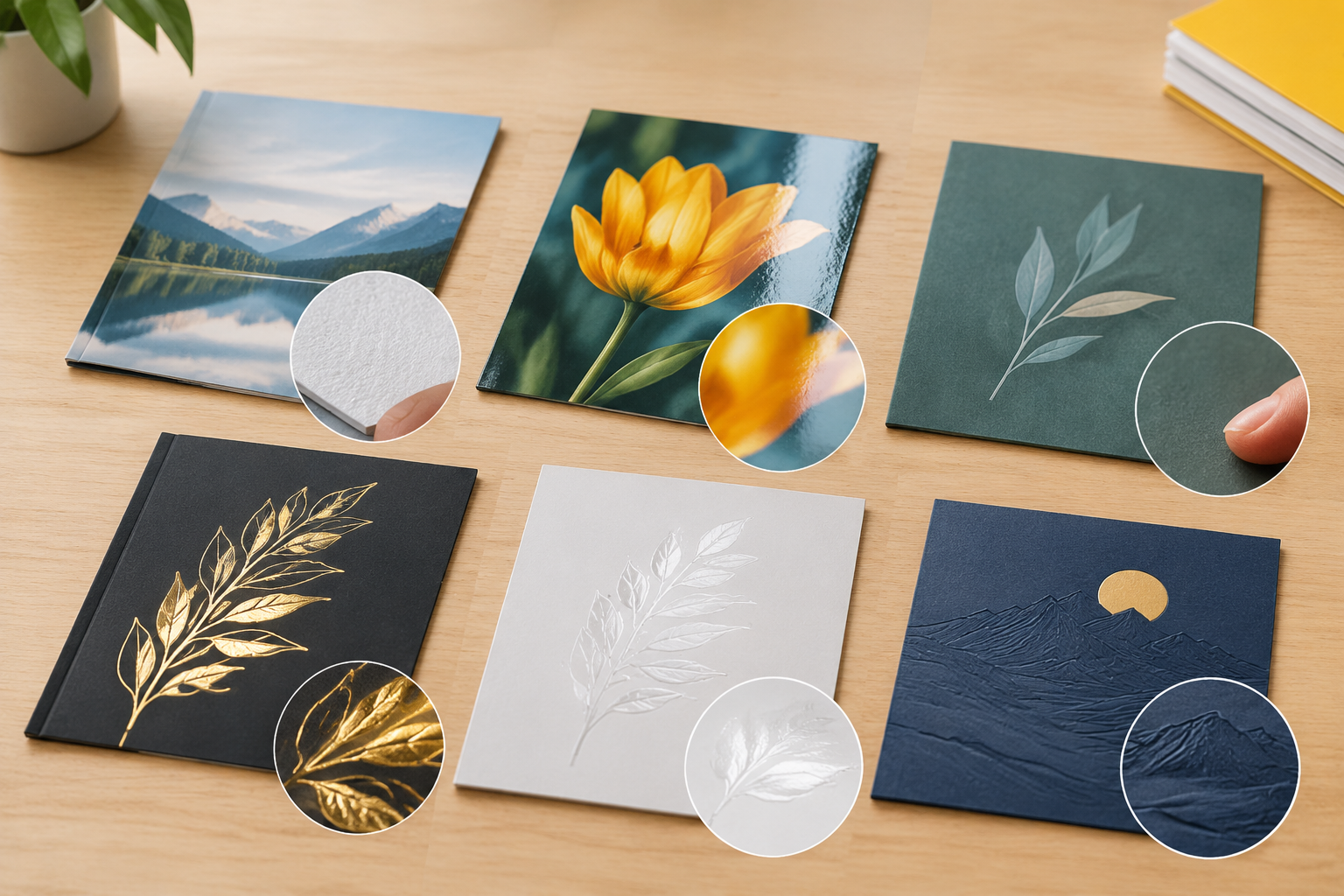
This decision matrix separates appearance from production risk. It is a selection aid, not a durability ranking; performance must be confirmed for the proposed material combination.
| Finish | Best use | Main benefit | Risk or checkpoint |
|---|---|---|---|
| Matte lamination | Text-led paperbacks and reports | Low glare, smooth feel | Dark solids may show rub marks; distinguish standard from anti-scuff film |
| Gloss lamination | Illustrated covers and handled reference books | Image contrast and surface protection | Glare, fingerprints, visible fine scratches |
| Soft-touch lamination | Gift books and premium editions | Velvety tactile effect | Marking and decorative adhesion depend on film |
| Foil stamping | Titles, logos, limited-edition accents | Reflective or opaque decorative detail | Tooling, fill-in, incomplete transfer, alignment |
| Spot UV | Selective image or title highlights | Local sheen contrast | Adhesion, curing, registration; no whole-cover protection |
| Embossing | Raised titles or emblems | Tactile relief | Material-dependent definition and possible reverse-side impression |
| Debossing | Recessed marks on suitable coverings | Understated tactile detail | Depth and clarity depend on covering and support |
Artwork and Proofing Checks for Finished Covers
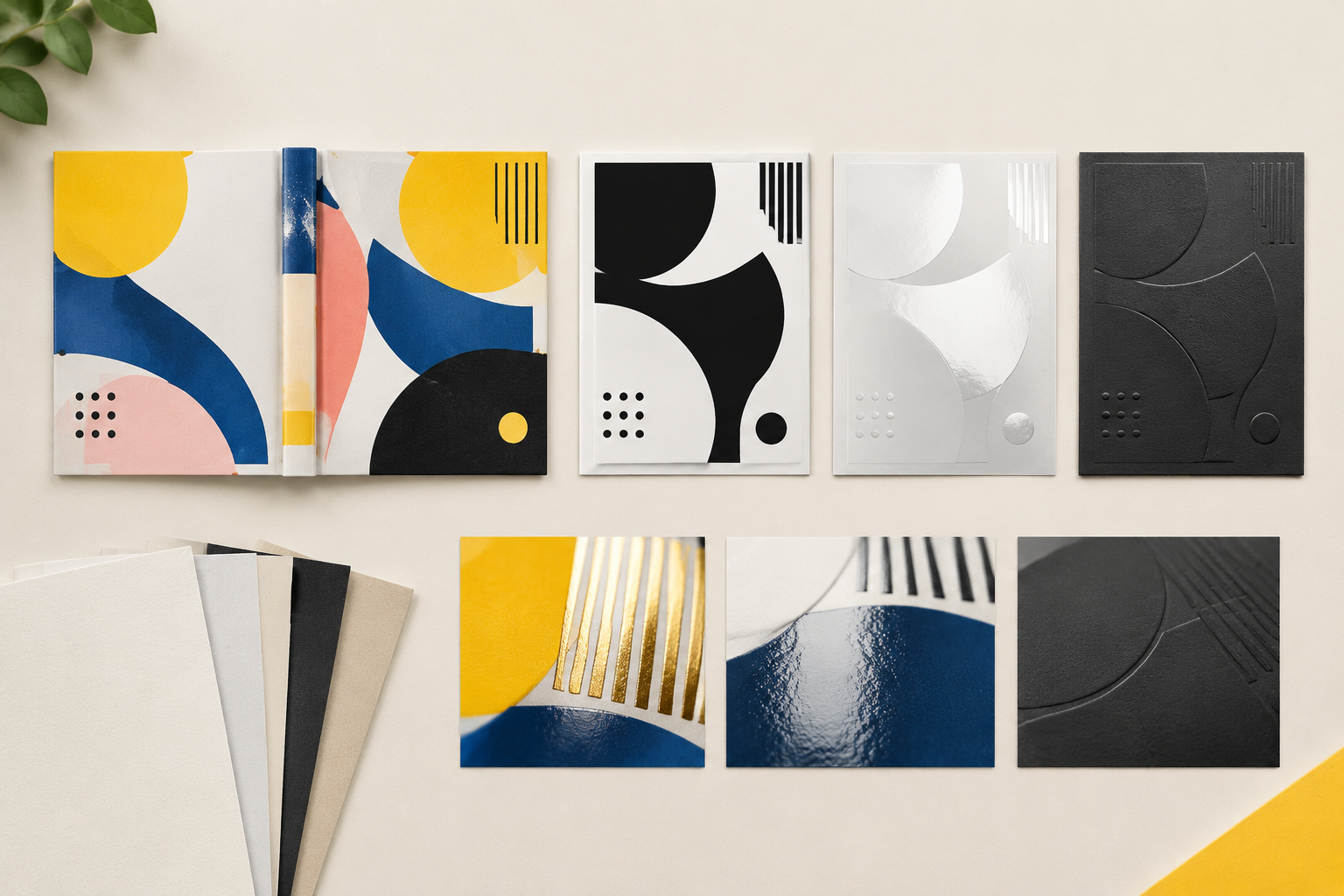
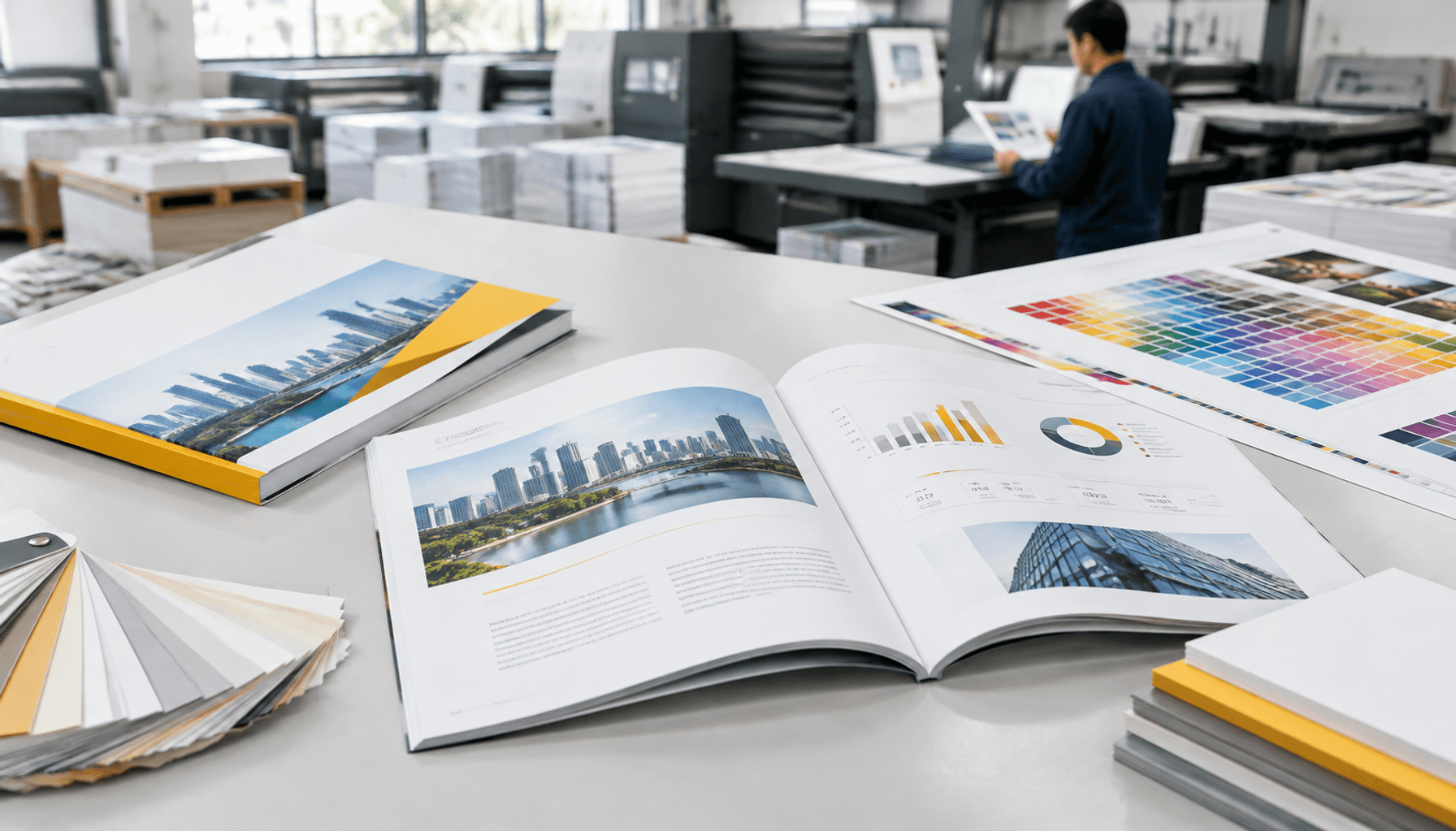
A finishing quote should include production-sized artwork, separate effect masks, the intended substrate, and a defined physical approval method. A composite preview alone is not a manufacturing file.
- Lock the cover template. Confirm page count, paper caliper, binding, spine, folds, joints, bleed, and safe areas before positioning effects.
- Separate each process. Supply aligned vector masks or named spot-color separations for foil, UV, embossing, and debossing as requested by prepress. Include a composite preview.
- Have details reviewed. Ask the printer to confirm minimum strokes, gaps, reverse type, registration allowance, and clearance from folds for this process and material. Avoid hairline borders that make normal variation conspicuous.
- Approve appearance physically. Use a finished sample for texture and reflection. A color proof and a material swatch answer different questions; neither alone verifies the complete cover.
- Check the assembled result. Inspect foil edges, UV alignment, cracking, film lifting, hinge movement, surface rub, and barcode readability. Agree on test conditions and defect acceptance before bulk production.
Record which proof approves content, color, construction, and finish. The printing proof approval checklist helps keep those sign-offs distinct. Retain an approved reference for repeat orders.
What to Specify in a Book Printing Quote

Request comparable alternatives against one unchanged book specification. Otherwise a cheaper finish may conceal a different cover stock, proof allowance, or packing method.
- Book format, finished size, page count, quantities, interior paper, and binding.
- Cover stock and GSM, or hardcover board and covering material; identify any dust jacket.
- Exact protective finish, coverage side, and whether an anti-scuff grade is required.
- Decorative process, foil reference, effect dimensions and locations, separate artwork masks, and composite preview.
- Physical proof requirements, handling tests, acceptance criteria, and packing protection.
- Delivery destination, postal code, target in-hands date, and required freight scope.
Separate tooling, setup, proofing, recurring production, and freight in the quotation. Added foil colors, separate effect passes, and material compatibility checks affect both cost and scheduling. Ask whether repeat orders can reuse tooling and how it will be retained.
Lemon Printing handles prepress, printing, binding, finishing, inspection, packing, and export preparation in-house. Final MOQ, production time, pricing, and shipping depend on product specifications, quantity, finishing, and destination.
FAQ About Book Cover Finishes
Is matte or gloss lamination better for a book cover?
Matte is better for low-glare presentation; gloss is better when reflective image contrast is the priority. Durability depends on the actual film. Compare finished samples, especially for dark covers.
When should a publisher use soft-touch, foil, or spot UV?
Use soft-touch when feel supports the edition’s positioning, foil for reflective titles or marks, and spot UV for selective sheen. Confirm compatibility before combining them.
Which finishes are most durable for manuals and workbooks?
Gloss and specified anti-scuff matte laminations are useful candidates. Select through agreed rub, fold, and adhesion checks on the intended construction. Neither soft-touch nor decoration automatically improves book cover durability.
Can foil stamping and embossing be combined?
Yes, on suitable constructions. They require coordinated tooling and alignment. Ask the printer to review the material, design detail, and proof method before approval.
Can a digital proof show the final cover finish?
No. It can show placement and content, but not reliable metallic reflection, texture, adhesion, or relief. Use physical finish samples and, where needed, a project-specific finished proof.
Request Custom Book Printing With the Right Finish

Choose protection around real handling, then choose decoration around the design. The strongest specification names the material, process, effect area, and approval method—not just “premium finish.” A tested sample is a better purchasing reference than a finish name alone.
FAQ
Is matte or gloss lamination better for a book cover?
Matte is better for low-glare presentation; gloss is better when reflective image contrast is the priority. Durability depends on the actual film. Compare finished samples, especially for dark covers.
When should a publisher use soft-touch, foil, or spot UV?
Use soft-touch when feel supports the edition’s positioning, foil for reflective titles or marks, and spot UV for selective sheen. Confirm compatibility before combining them.
Which finishes are most durable for manuals and workbooks?
Gloss and specified anti-scuff matte laminations are useful candidates. Select through agreed rub, fold, and adhesion checks on the intended construction. Neither soft-touch nor decoration automatically improves book cover durability.
Can foil stamping and embossing be combined?
Yes, on suitable constructions. They require coordinated tooling and alignment. Ask the printer to review the material, design detail, and proof method before approval.
Can a digital proof show the final cover finish?
No. It can show placement and content, but not reliable metallic reflection, texture, adhesion, or relief. Use physical finish samples and, where needed, a project-specific finished proof.
Get a Clear Quote for Your Printing Project
Send Lemon Printing your book type, intended use, desired appearance, quantity, finished size, page count, paper, cover stock, binding, and finishing requirements. Include decorative effect areas or artwork layers, proof expectations, delivery destination, and target date. Our team will review the specifications, offer a free prepress file check, and normally respond to complete requests within one business day with practical options, pricing, and a project timeline.