Table of Contents
- What Custom Die-Cut Board Book Printing Means
- Die-Cut Options for Board Books
- Shaped Page Edges, Windows, and Partial Cutouts
- Simple Shapes Versus Complex Multi-Part Designs
- Dieline and Artwork Requirements
- Bleed, Safe Zones, Fold or Turn Points, and Cut Lines
- Tooling, Registration, and Finishing Considerations
- Physical Proofing for Shaped Board Books
- Packaging and Shipping Risks for Die-Cut Products
- Die-Cut Board Book Quote Checklist
- Frequently Asked Questions
- Submit Your Die-Cut Board Book Concept
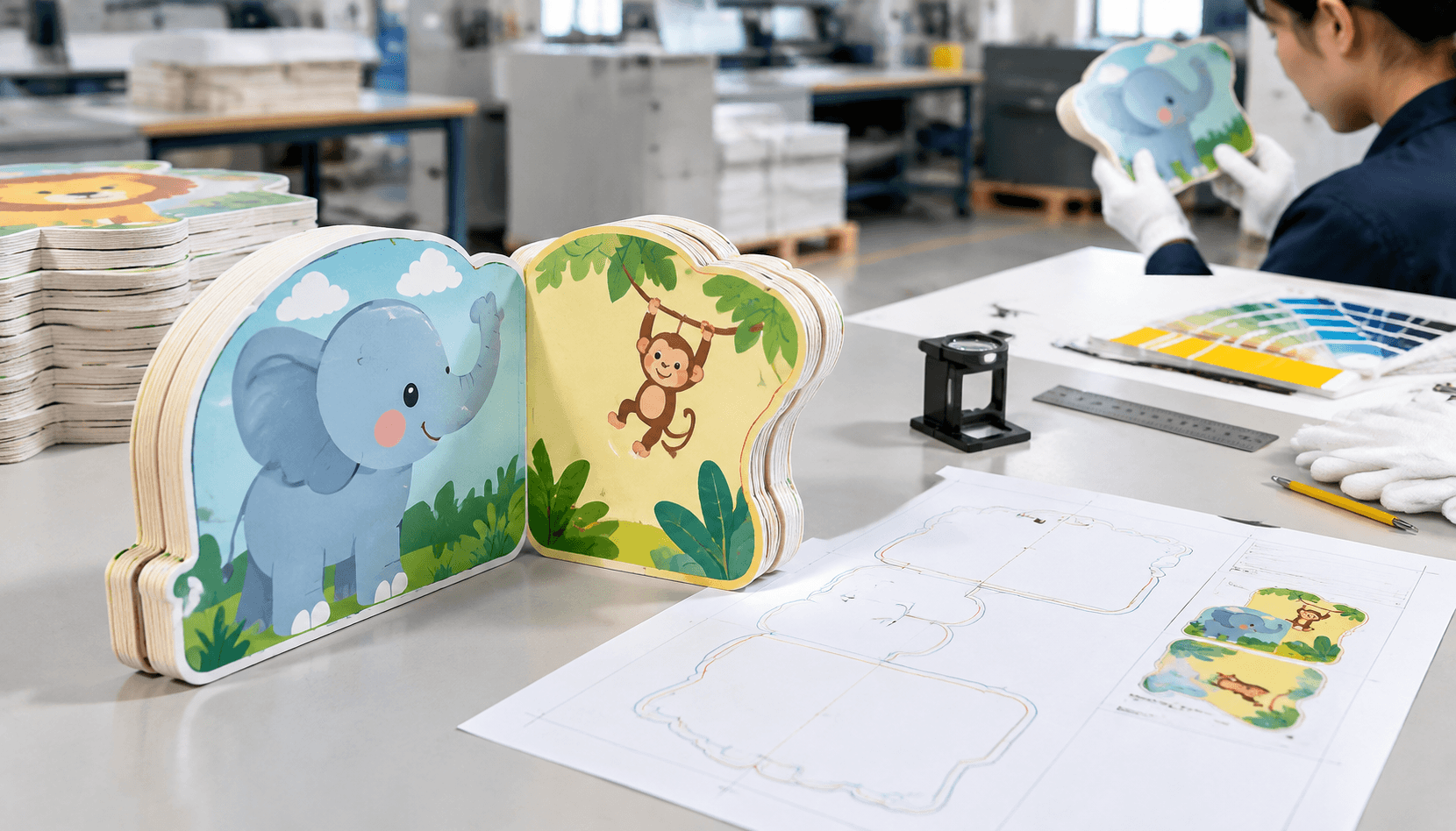
Custom die-cut board book printing requires more than supplying a shaped cover file. The page construction, cut path, tooling, registration, proofing, and packaging all affect the finished result and the quote. This guide explains the main options and gives buyers a practical checklist for requesting comparable production proposals.
What Custom Die-Cut Board Book Printing Means
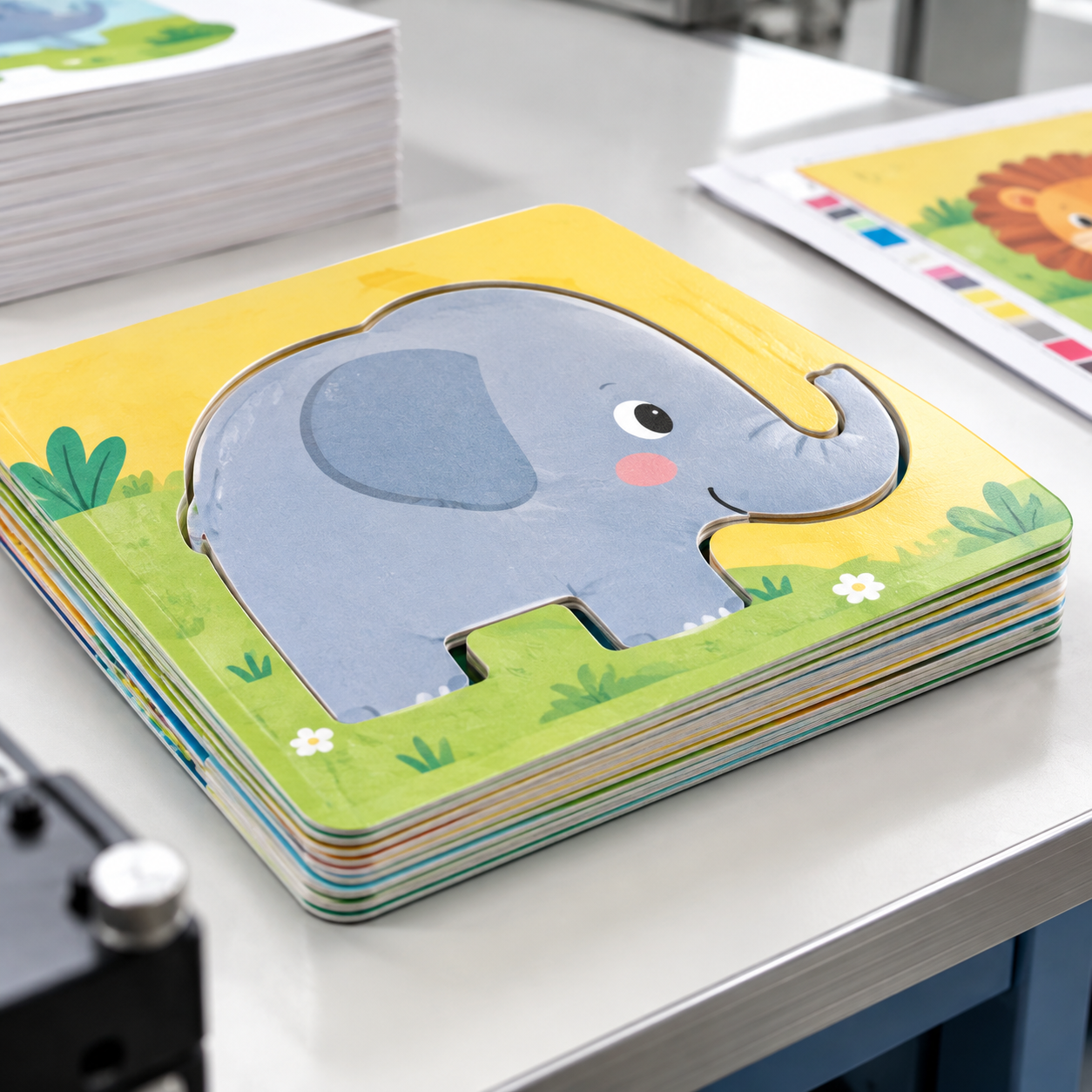
Custom die-cut board book printing uses a shaped cutting form, called a die, to cut one or more board book pages into a non-rectangular outline or to create openings within the page. The cut may define the whole book, individual page profiles, windows, tabs, or interactive openings.
A board book is assembled from thick paperboard pages rather than ordinary text-paper sheets. That construction gives young readers a more durable page, but it also changes how cutting, folding, turning, corner rounding, and packing must be planned. A shape that works on a thin card may be difficult to turn when several thick boards are stacked together.
For buyers, the key distinction is between a printed board book with a simple silhouette and a more complex interactive structure. The latter may require several cutting levels, separate components, reinforced areas, or manual assembly. Lemon Printing operates a self-owned facility in the Guangzhou–Shenzhen manufacturing corridor, with more than 130 skilled workers and 8+ offset and digital presses. Prepress, printing, binding, finishing, inspection, packing, and export preparation are handled in-house; the quotation should still confirm the specific die-cut and assembly method for your design.
For background on board thickness, page count, materials, and production specifications, review this child board book printing specification guide.
Die-Cut Options for Board Books
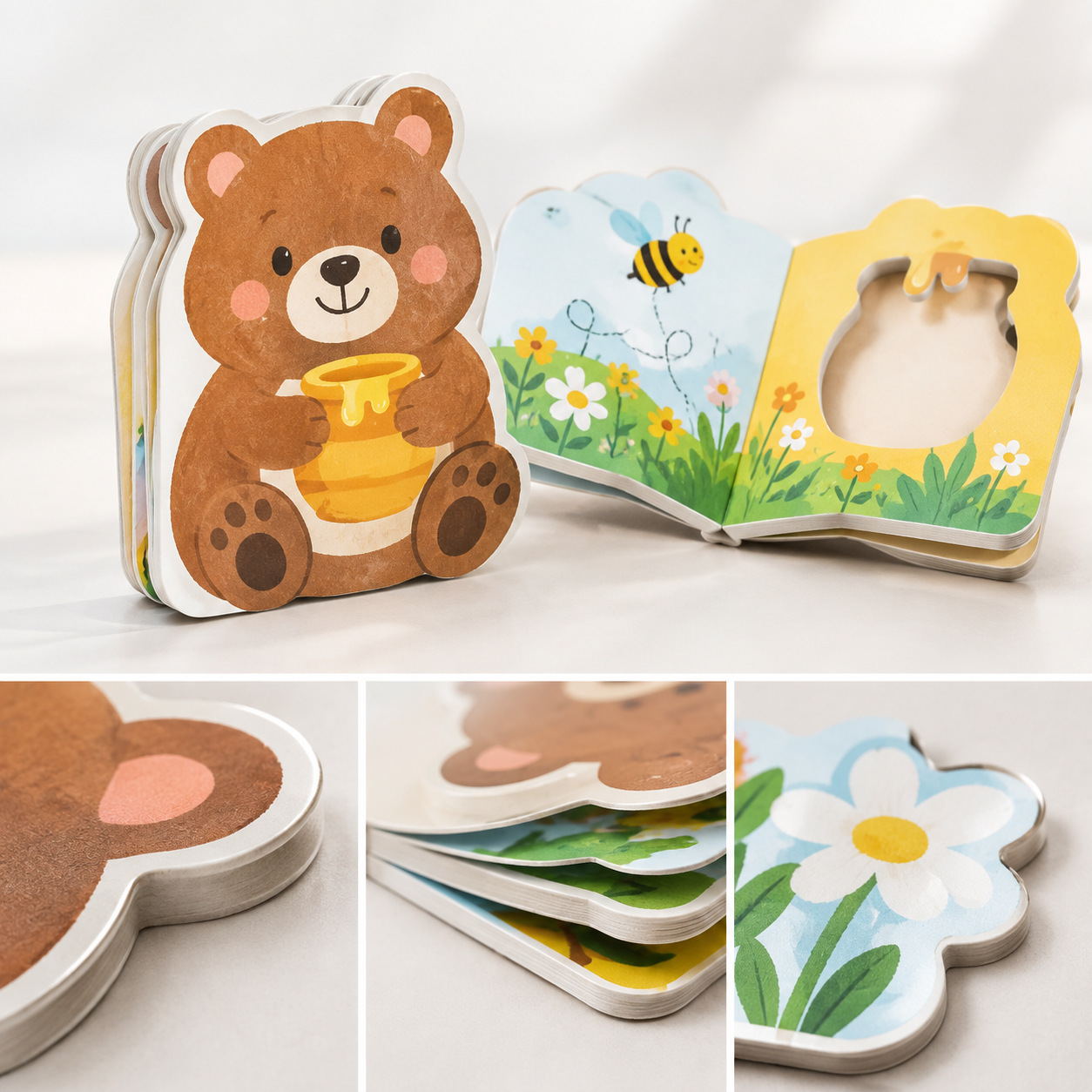
The best die-cut option depends on the reading action you want to create and how much extra manufacturing complexity the design can support. A simple shaped edge normally has fewer failure points than a page with internal openings, loose pieces, and multiple assembly steps.
| Option | How it works | Advantages | Risks or trade-offs |
|---|---|---|---|
| Shaped outer edge | The page perimeter follows a custom silhouette. | Clear visual identity and relatively straightforward handling. | Narrow points and small projections can tear, crush, or affect packing. |
| Window or internal opening | A section is removed from the board to reveal artwork or a lower page. | Supports peek-through and discovery features. | Leaves a weaker frame; inside corners and small openings need review. |
| Tab or finger pull | A projecting section helps a child turn or interact with a page. | Can improve handling and create a tactile feature. | Tabs need adequate size, rounded treatment, and careful stacking in cartons. |
| Multi-part interactive design | Several cuts, folds, layers, or attached elements work together. | Creates more complex play or learning mechanics. | Higher tooling, assembly, inspection, and damage risk than a basic shape. |
Ask the printer to identify which parts are cut through, which remain attached, and whether any components require manual insertion or gluing. Those details affect both the quote and the quality-control plan.
Shaped Page Edges, Windows, and Partial Cutouts
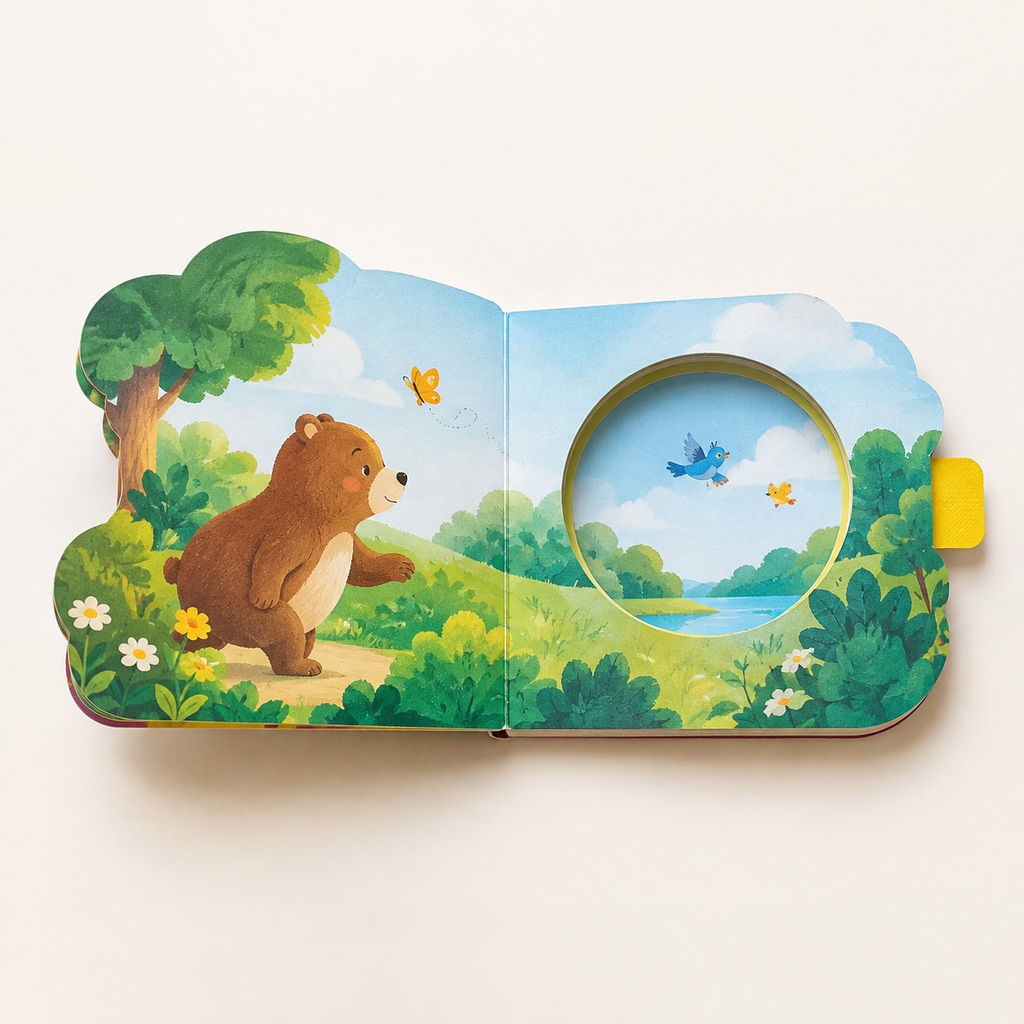
Shaped page edges change the outline of the board, while windows and partial cutouts remove only selected areas. These choices should be judged against the finished board thickness, not only against the flat artwork.
- Shaped edges: Keep the narrowest points broad enough for the board to remain stable during handling and packing.
- Windows: Check the remaining border around the opening. A thin border may flex or show compression after die cutting.
- Partial cutouts: Specify whether the cut is through the board, scored, or left attached as a hinged flap.
- Rounded corners: Rounded treatments can reduce sharp points, but the radius and cutter design must be confirmed against the artwork.
For example, an animal-shaped book may use a simple outer silhouette, while an animal book with ears that open as flaps needs separate fold or turn points. The second design requires more than a perimeter cut.
Simple Shapes Versus Complex Multi-Part Designs
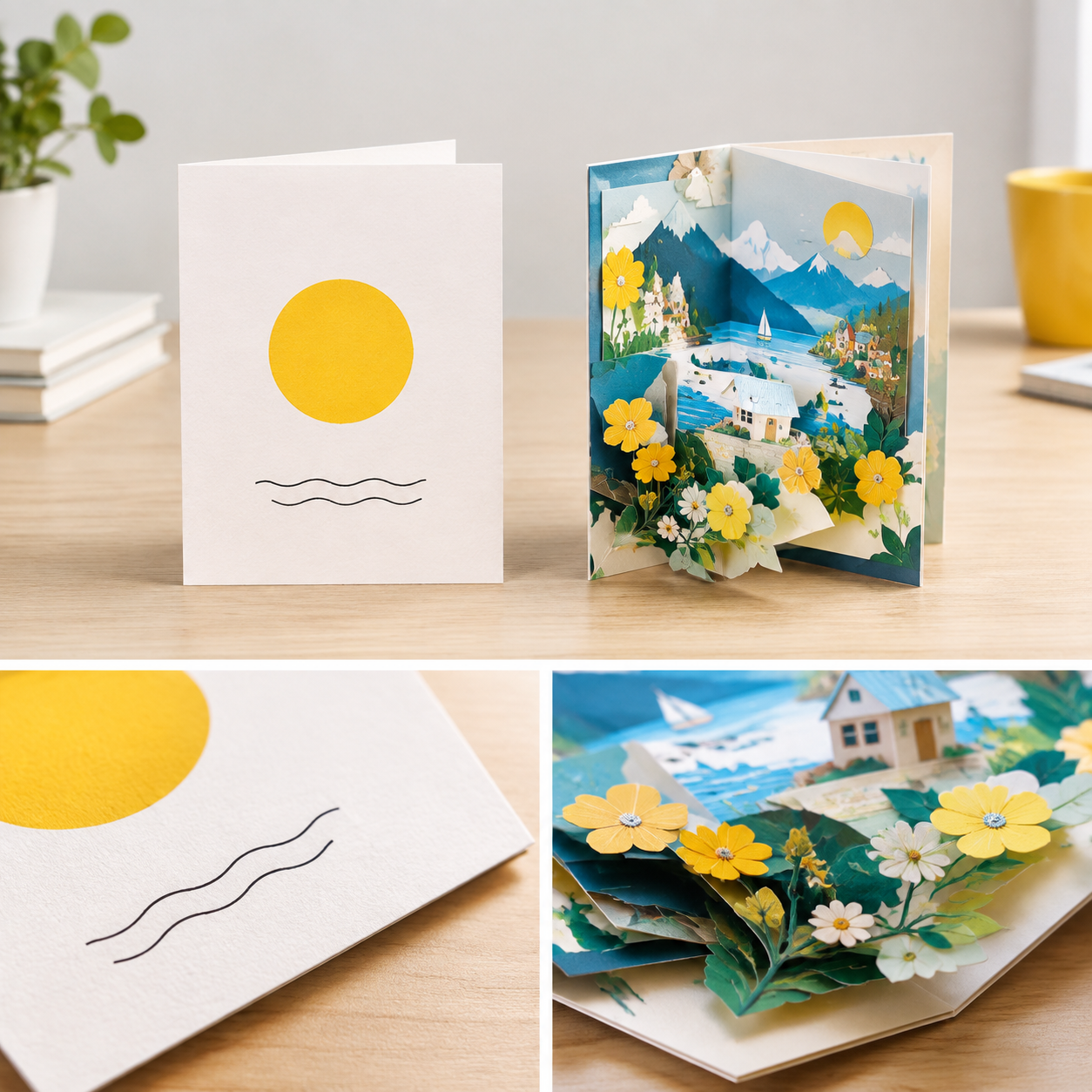
Simple custom shape board books usually use one dominant cut profile and repeat it across the book. Complex designs may combine several dies, partial cuts, folds, inserts, or glued elements. The more parts a book has, the more important it becomes to define the assembly sequence and inspection points before production.
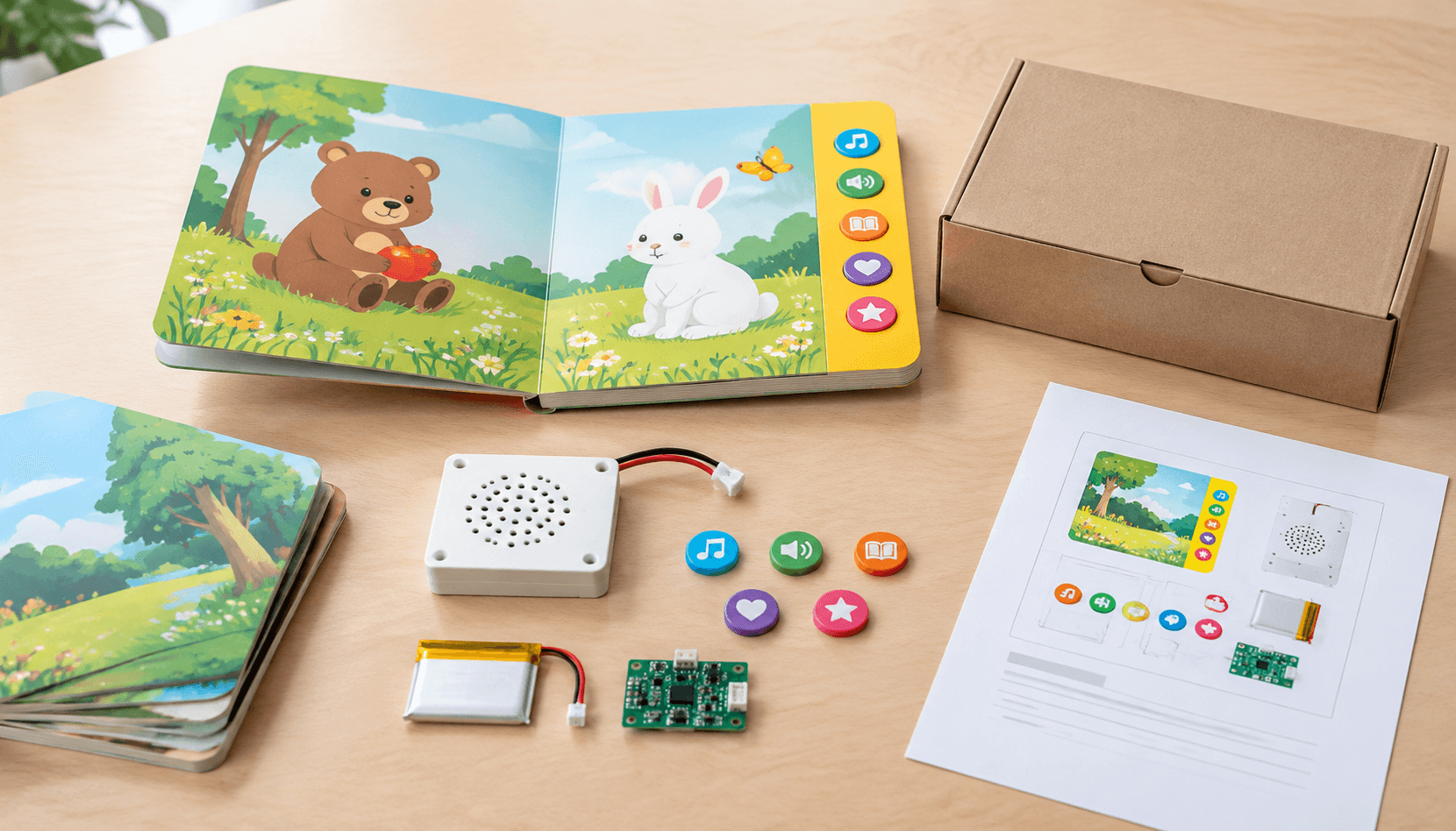
For a simple shape, provide the finished outline, page count, board specification, corner requirements, and artwork. For an interactive board book, also provide a numbered construction drawing showing the closed position, open position, attachment points, and intended movement. A digital PDF alone may not communicate how a flap should turn or how far a tab should project.
Interactive board book printing can be attractive for learning products, but added movement does not automatically improve usability. Small moving parts may be difficult for young children to operate and can create higher packing pressure. Request a physical prototype when the reader interaction is central to the product.
Dieline and Artwork Requirements
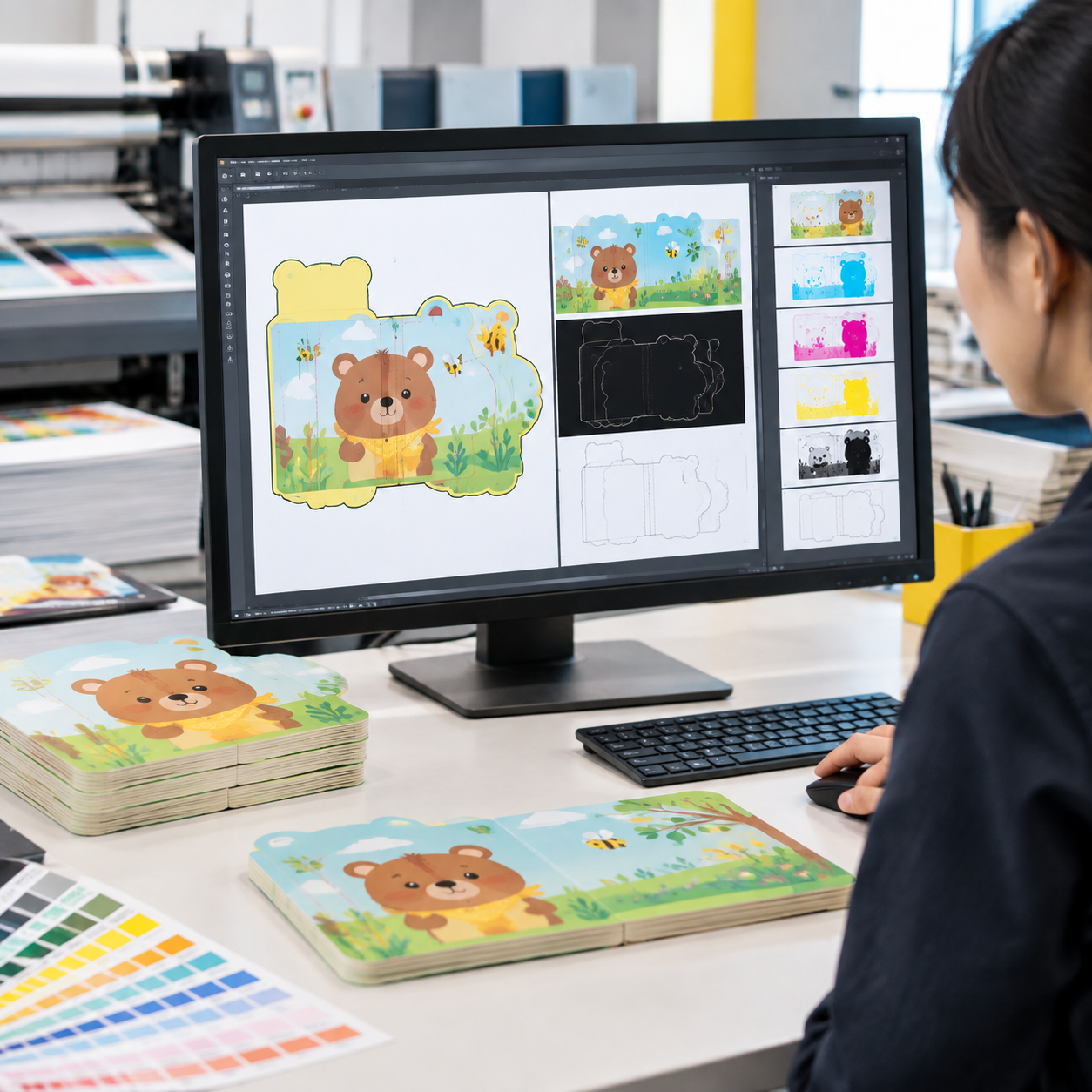
A dieline is a technical vector drawing that tells the factory where to cut, crease, fold, or leave an element attached. It should be treated as a production layer, not as ordinary visible artwork. Ask the printer to confirm the required file format, spot colors or line conventions, and whether the factory will create or revise the dieline.
A reliable submission normally includes separate layers for the following:
- Finished artwork for each board page or component.
- Cut lines and any crease, score, or fold lines.
- Bleed extending beyond the final cut edge.
- Safe zones for text, faces, logos, and small details.
- Page or component numbers that match the construction diagram.
- Notes for adhesive areas, loose pieces, and areas that must remain unprinted.
Do not place critical text directly on a cut path. Die cutting has a production tolerance, so small shifts can make a border look uneven or clip a detail. Send editable source files when possible, but do not alter the approved dieline after the printer has checked it without requesting a new review.
Bleed, Safe Zones, Fold or Turn Points, and Cut Lines
Bleed is extra artwork beyond the final trim or cut edge. A safe zone is the area kept away from the cut, fold, or crease so important content remains readable and visually balanced. The printer should provide the final bleed and safe-zone instructions because requirements vary with the board construction and die shape.
Many commercial workflows begin with a bleed allowance such as 3 mm, but that figure is not a universal requirement for every shaped board book. Confirm it before preparing final files. For flaps or turning elements, mark the hinge or turn point separately from the through-cut. Artwork should be extended across the hinge where appropriate, while text should be positioned to remain readable when the element is closed.
Use a simple preflight check:
- Confirm the finished size and orientation of every page.
- Verify that the cut line is a closed vector path.
- Check that artwork extends past the cut where full bleed is required.
- Move small text and important faces inside the approved safe zone.
- Compare the artwork file with the numbered construction diagram.
Tooling, Registration, and Finishing Considerations
Die tooling is the physical cutting form made for the requested shape. Tooling cost and production effort are influenced by the number of cut paths, the complexity of the profile, internal openings, required creases, and whether several components need different tools. Confirm whether tooling is quoted as a one-time setup item and whether the tool can be retained for a repeat order.
Registration means keeping printed artwork, die cuts, folds, and other finishing features in the intended relationship. Some variation is normal in converting operations, so a design with a narrow outline or a border close to the edge will show movement more readily than a design with an open background. Avoid hairline borders around complex shapes unless the printer confirms that the design is suitable.
Finishing may include coating, lamination, rounded corners, adhesive assembly, or other treatments. Each can change friction, flexibility, surface appearance, and handling. A coating that looks good on a flat sheet may behave differently near a small cutout. Ask for a sample or physical proof that includes the proposed finishing, not only an uncoated digital mockup.
Lemon Printing’s in-house workflow covers prepress, printing, binding, finishing, quality inspection, packing, and export preparation. Request the production process and quality checkpoints for the specific die-cut construction rather than assuming every shaped design follows the same route.
Physical Proofing for Shaped Board Books
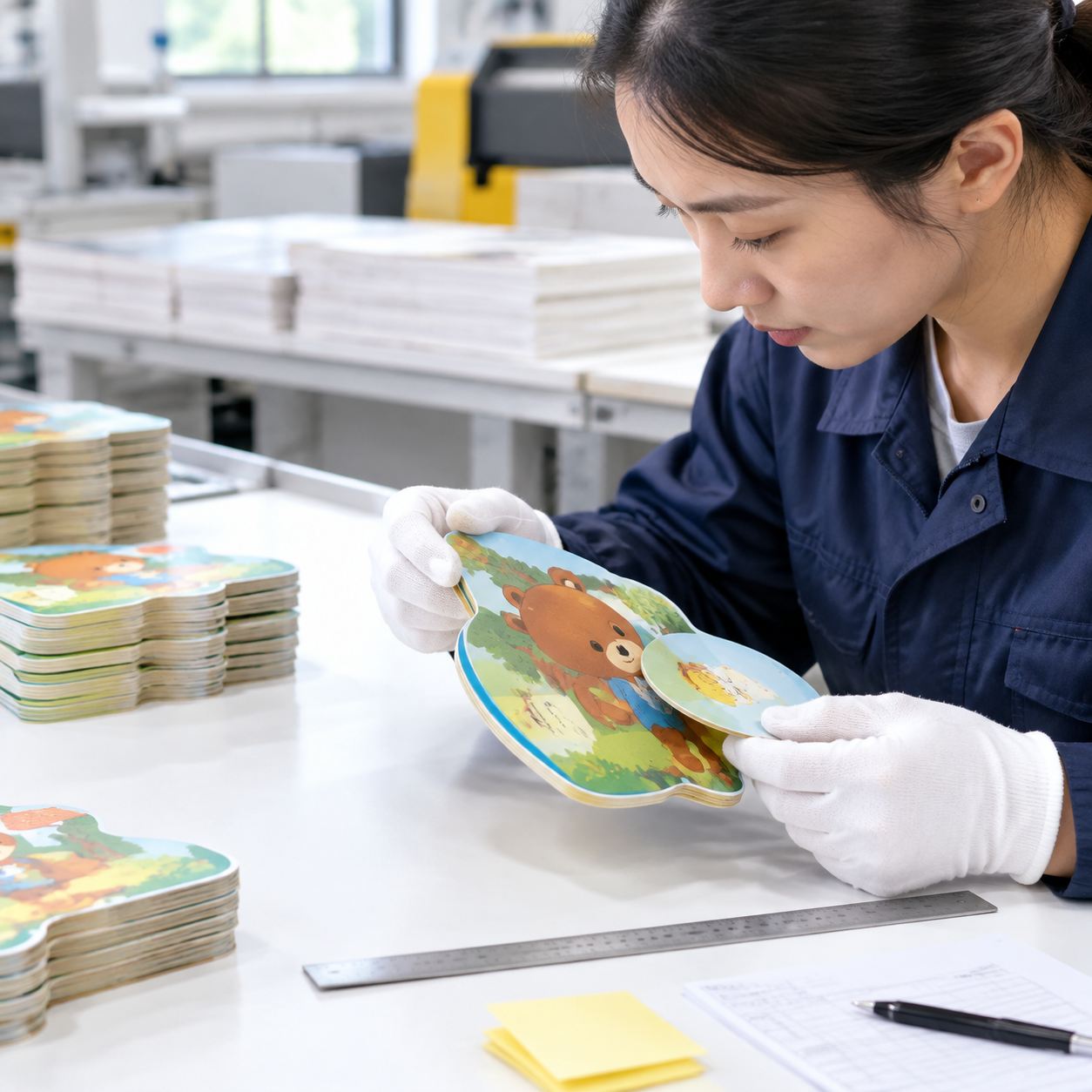
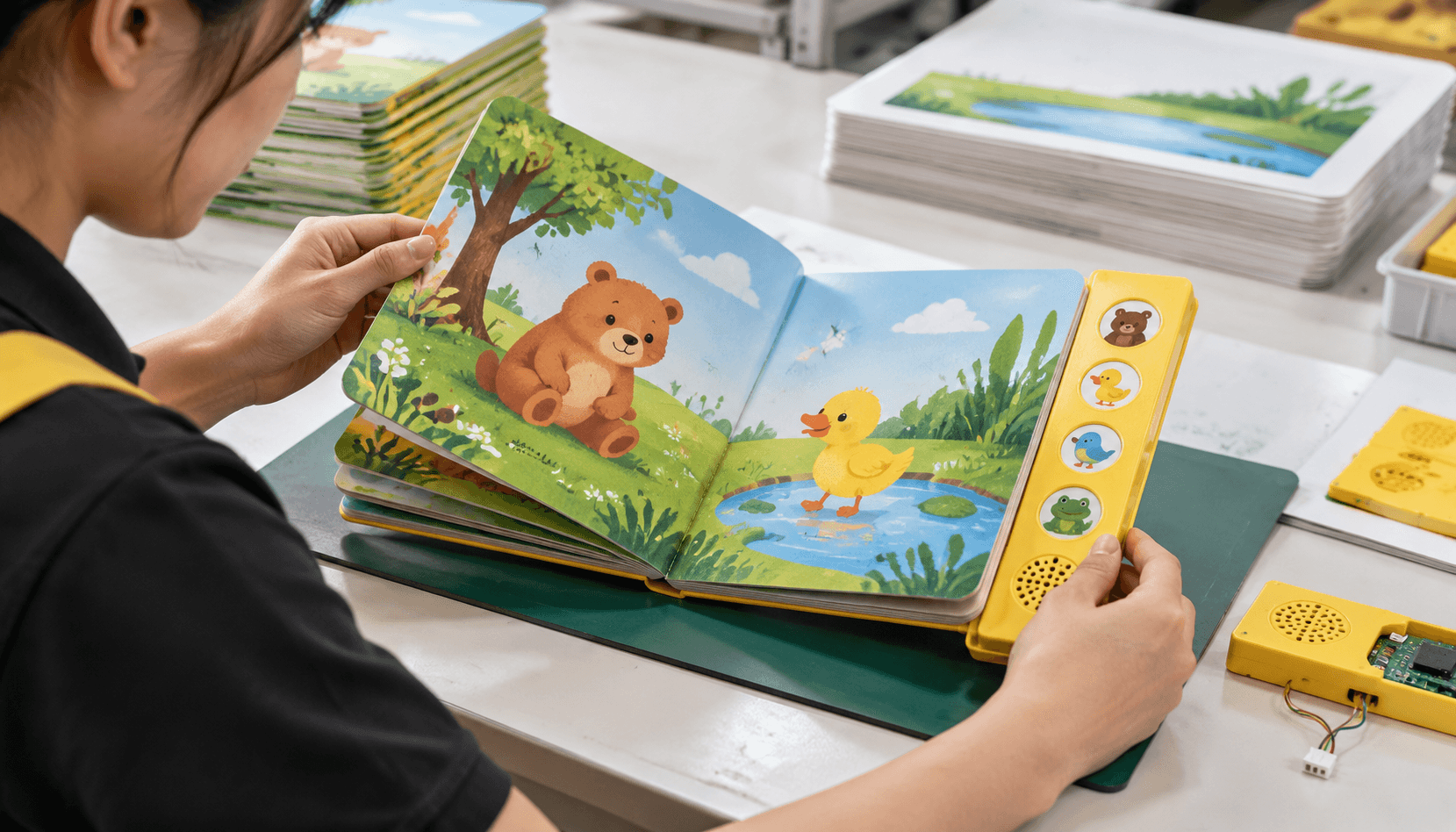
A physical proof is the most useful checkpoint for a shaped board book because it shows the actual outline, thickness, page-turn behavior, and component fit. A digital proof can confirm content and approximate color, but it cannot reliably show how a die-cut edge feels or how stacked boards close.
Inspect the proof in the same sequence a child or end user will use it:
- Check the closed silhouette, page alignment, and cover-to-page relationship.
- Open every spread and test whether tabs, flaps, and windows move as intended.
- Look for sharp points, weak narrow sections, crushed edges, or adhesive squeeze-out.
- Review text near cuts, fold points, and internal openings.
- Stack several pages and confirm that the book closes without excessive pressure.
- Photograph and record all required changes in one consolidated approval document.
Ask whether the proof uses production-intent board, printing, die cutting, and finishing. A hand-made mockup can answer structural questions, but it may not represent the final surface or color. Final MOQ, production time, pricing, and shipping depend on the product specifications, quantity, finishing, and destination.
Packaging and Shipping Risks for Die-Cut Products
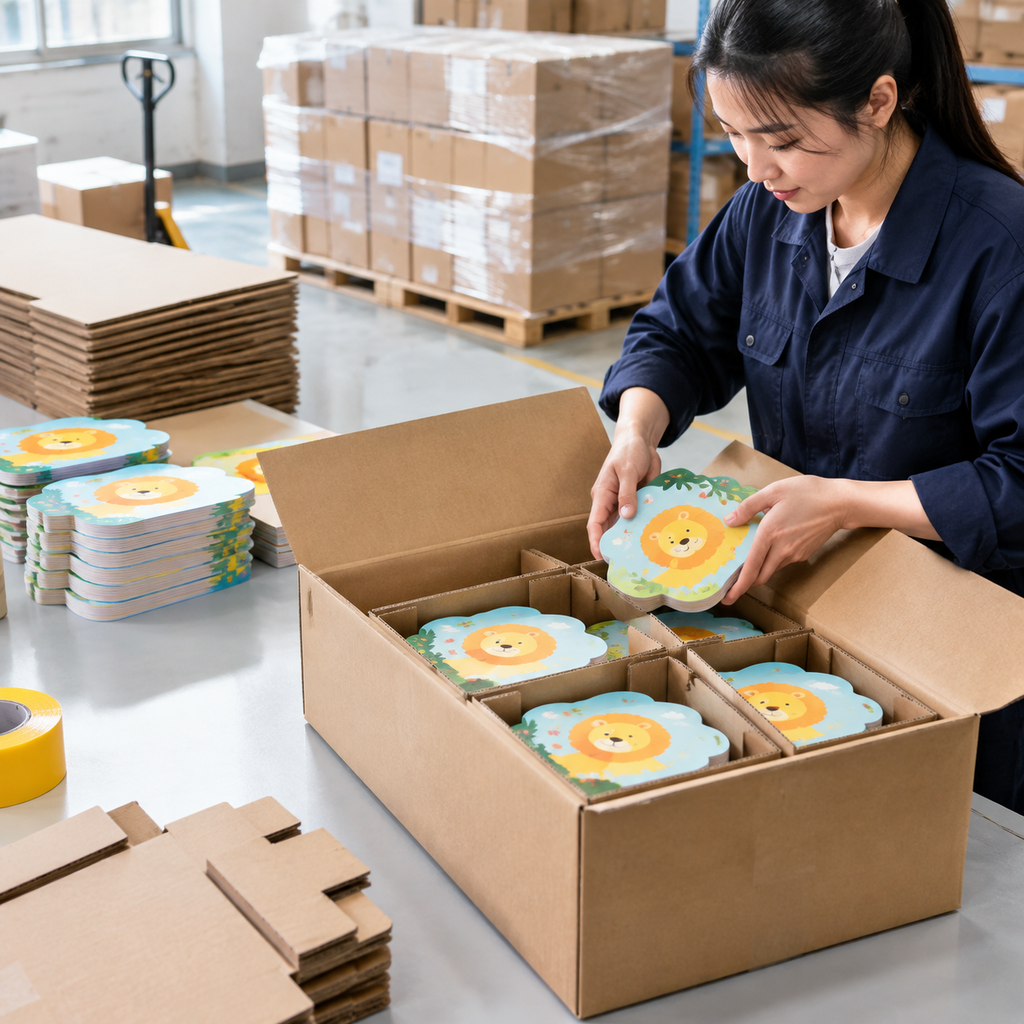
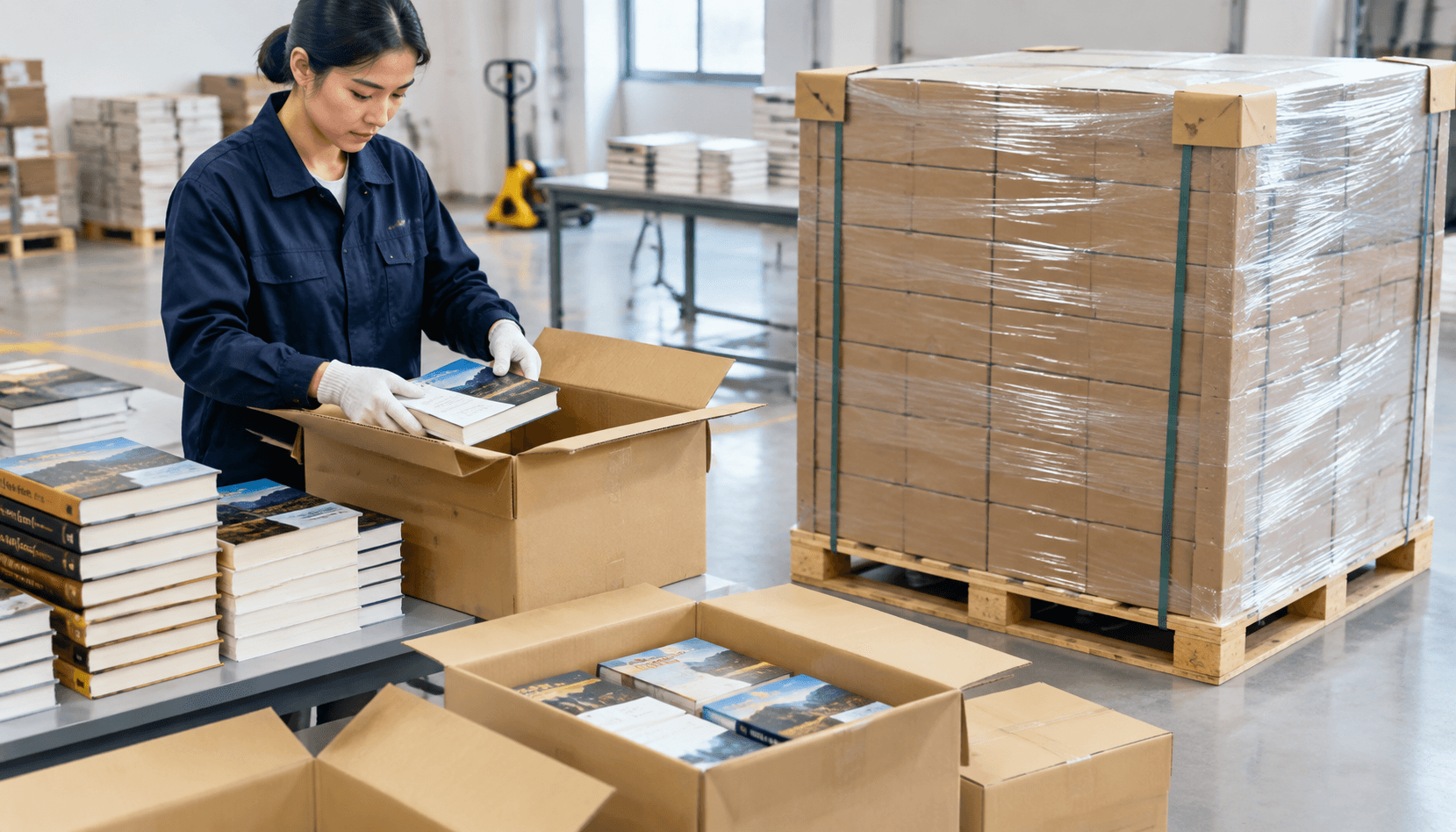
Die-cut board books need packaging that protects projecting edges, windows, tabs, and corners from compression. A carton designed for a rectangular book may leave unsupported space around a custom shape, allowing products to shift during handling.
Discuss these points before approving the quote:
- How many books are packed per inner carton and master carton?
- Are delicate projections separated or supported with protective material?
- Will the books be packed flat, upright, or in another orientation?
- Are carton dimensions and gross weight provided for freight planning?
- Is the final packed product protected from moisture and edge crushing?
For international orders, ask for packing photos or a packing specification before shipment. Carton efficiency matters because irregular shapes can increase unused volume even when the individual book is compact. Shipping method, destination, carton configuration, and total quantity all affect the landed cost.
Use this guide to shipping bulk printed products from China when planning freight information and export packaging.
Die-Cut Board Book Quote Checklist
An accurate quote for die-cut children’s board books requires both commercial quantities and technical construction details. Send the following information together so suppliers are pricing the same product.
| Quote item | What to specify | Why it matters |
|---|---|---|
| Quantity | Order quantity, number of versions, and whether a repeat order is expected | Allocates setup, tooling, production, and packing costs. |
| Finished format | Overall dimensions, orientation, and the shape of each page or component | Determines sheet planning, die size, and carton fit. |
| Page construction | Page count, board thickness or target caliper, cover construction, and binding method | Affects stiffness, page turning, stacking, and assembly. |
| Die-cut scope | Outer shape, windows, partial cuts, creases, hinges, tabs, and loose pieces | Defines tooling and the production sequence. |
| Artwork | Print colors, file format, bleed, safe zones, and dieline status | Allows prepress to assess registration and file readiness. |
| Finishing | Coating, lamination, corner treatment, gluing, and other surface or assembly requirements | Changes appearance, handling, durability, and labor. |
| Proof | Digital proof, structural mockup, or production-intent physical proof | Sets the approval checkpoint before bulk manufacturing. |
| Delivery | Destination, preferred shipping method, target date, and packaging requirements | Supports export preparation and freight planning. |
Attach a reference PDF, a flat dieline, a page-by-page artwork file, and a simple construction diagram. If the shape is not final, label the request as a feasibility review rather than asking for a fixed production quote. For a broader explanation of setup, quantity, materials, proofing, packing, and freight factors, see this printing cost breakdown.
Frequently Asked Questions
The answers below address common production questions, but the final recommendation should be based on the submitted dieline, board specification, quantity, and destination.
- Can every board book page have a different shape?
- Yes, a different shape can be planned for each page or spread, but every additional profile increases prepress review, tooling, registration, inspection, and packing considerations. Provide a page-by-page dieline and construction sequence.
- What is the difference between a die cut and a score?
- A die cut separates material, while a score creates a controlled crease or weakening line without fully separating the board. A flap may need both a through-cut and a score at its hinge.
- Is a digital proof enough for shaped board books?
- A digital proof is useful for content, layout, and approximate color, but it cannot confirm board stiffness, edge quality, page turning, or component fit. A physical proof is recommended for complex shapes and interactive features.
- Can die-cut board books include windows or flaps?
- They can, subject to a feasibility review of the remaining board strength, hinge position, cut size, assembly method, and intended use. The quote should identify whether the feature is cut through, scored, attached, or assembled separately.
- Does a custom shape always cost more than a rectangular board book?
- Not necessarily by the same amount in every case, but custom tooling, extra setup, material waste, manual assembly, proofing, and special packing can add cost. The effect depends on shape complexity, quantity, finishing, and production method.
- What should I send for a first quotation?
- Send the quantity, finished size, page count, board specification, binding or assembly method, die-cut drawing, artwork status, finishing, proof requirement, destination, and target date. A reference sketch is useful when the dieline is not yet complete.
Submit Your Die-Cut Board Book Concept
A shaped board book is easiest to evaluate when the physical construction is described as clearly as the artwork. Share the intended reading interaction, a sketch or dieline, and the specifications that cannot change. Lemon Printing can then review the production route, proofing needs, packing considerations, and quotation basis.
Include the product type, quantity, finished size, page count, board or paper specification, binding or assembly method, die-cut features, finishing, delivery destination, and target date. If the design includes flaps, windows, tabs, or loose parts, include an open-and-closed construction diagram.
FAQ
Can every board book page have a different shape?
Yes, but each additional page profile increases prepress review, tooling, registration, inspection, and packing considerations. Provide a page-by-page dieline and construction sequence for evaluation.
What is the difference between a die cut and a score?
A die cut separates the board, while a score creates a controlled crease without fully separating it. A flap may need both a through-cut and a score at its hinge.
Is a digital proof enough for shaped board books?
A digital proof can confirm content and layout, but it cannot show board stiffness, edge quality, page turning, or component fit. A physical proof is recommended for complex or interactive designs.
Can die-cut board books include windows or flaps?
They can, subject to review of the remaining board strength, hinge position, cut size, assembly method, and intended use. The quote should identify whether the feature is cut through, scored, attached, or assembled separately.
Does a custom shape always cost more than a rectangular board book?
Custom tooling, extra setup, material waste, manual assembly, proofing, and special packing can add cost, but the effect depends on shape complexity, quantity, finishing, and production method.
What should I send for a first quotation?
Send the quantity, finished size, page count, board specification, binding or assembly method, die-cut drawing, artwork status, finishing, proof requirement, destination, and target date. A reference sketch is useful when the dieline is not yet complete.
Request a Die-Cut Board Book Quote
Send your product type, quantity, finished size, page count, board or paper specification, binding or assembly method, die-cut features, finishing, delivery destination, and target date. Include artwork or a sketch of the shape, plus an open-and-closed diagram for windows, flaps, tabs, or other interactive parts. Final MOQ, production time, pricing, and shipping depend on the complete specifications, quantity, finishing, and destination.