Table of Contents
- What Is Child Board Book Printing?
- Core Board Book Specifications to Decide First
- Finished Size, Orientation, Page Count, and Spread Planning
- Board Construction and Surface Requirements
- Materials and Finishes for Children's Board Books
- Coated Paper, Lamination, and Wipeable Surfaces
- Rounded Corners, Edge Treatment, and Practical Handling
- Printing and Color Considerations
- Offset Versus Digital Production for Board Book Quantities
- Proofing and Quality-Control Checkpoints
- Packaging and Shipping Requirements for US Orders
- Information to Include in a Board Book Quote Request
- Frequently Asked Questions
A practical specification guide for US buyers sourcing custom children’s board books, covering construction, materials, printing, proofing, quality control, packing, and quote preparation.
What Is Child Board Book Printing?
Child board book printing produces books with thick, rigid leaves rather than flexible paper pages. Printed sheets are mounted or laminated to board, creating pages that are easier for babies and toddlers to turn and more resistant to bending during repeated handling.
A board book is not simply a hardcover book with heavy interior paper. Its cover and interior leaves usually form one integrated block of board-based pages. The exact construction varies by printer, so a quote should identify the printed face material, board thickness, finished leaf thickness, lamination, binding method, and corner shape.
This construction is commonly used for early-learning titles, counting books, alphabet books, short stories, branded educational materials, and interactive concepts. Buyers comparing custom book printing options should separate board books from casebound picture books because their production methods, page-count rules, weights, and costs differ.
Lemon Printing handles prepress, printing, binding, finishing, inspection, packing, and export preparation in-house at its self-owned facility in China. For a children’s product, however, buyers must still state their market-specific testing, labeling, material, and documentation requirements before production.
Core Board Book Specifications to Decide First
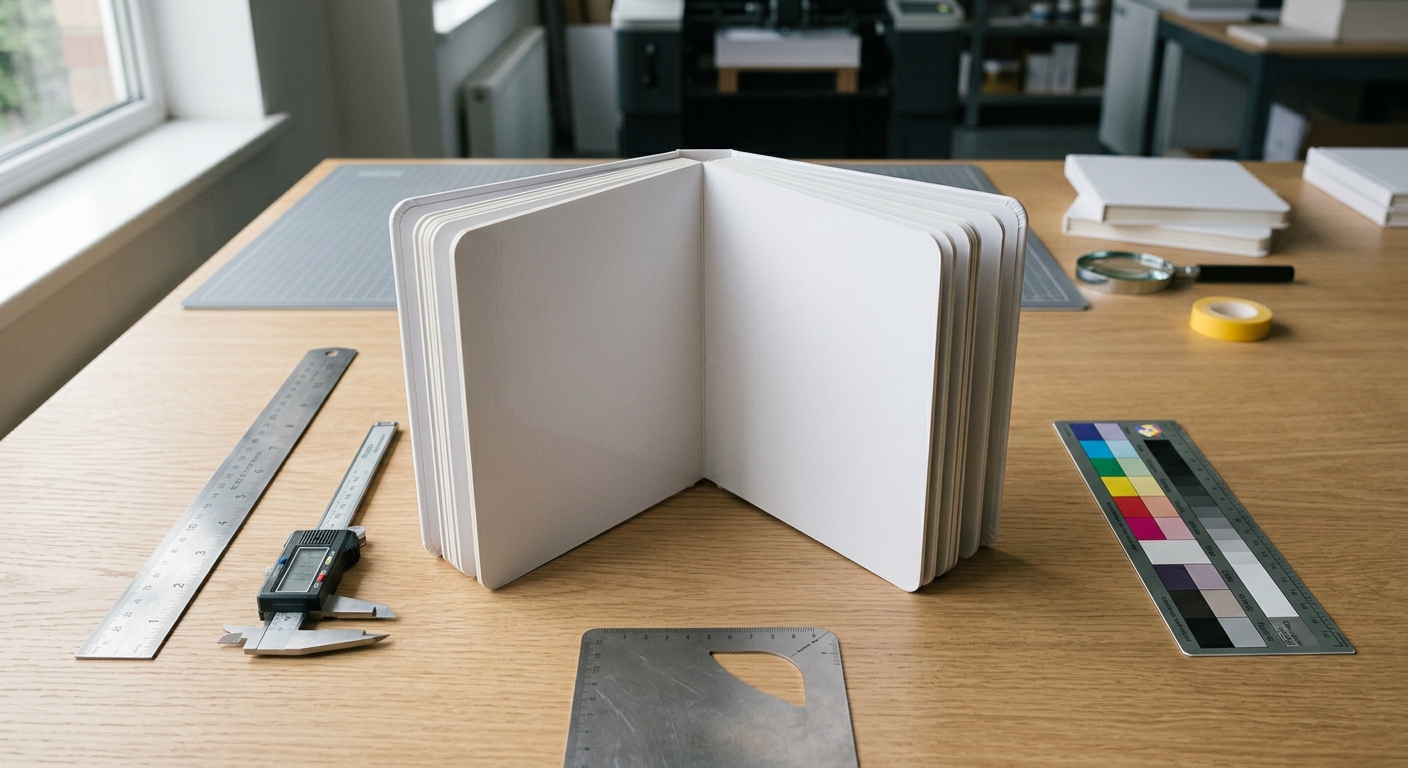
A usable quotation starts with the book’s physical construction, not artwork alone. Size, page count, board thickness, surface finish, corner treatment, quantity, and packing method affect material use, manufacturing steps, carton weight, and freight.
| Specification | What the buyer should state | Why it matters |
|---|---|---|
| Finished size | Width × height in inches and millimeters | Controls sheet layout, board yield, weight, and artwork dimensions |
| Orientation | Portrait, landscape, or square | Affects grain direction, opening behavior, and carton dimensions |
| Page count | Number of printed pages or spreads, with cover treatment clarified | Board-book counting conventions differ between projects |
| Board construction | Target board or finished leaf thickness | Influences stiffness, spine bulk, durability, and weight |
| Surface finish | Gloss or matte lamination, coating, or another specified finish | Changes appearance, cleanability, scuff resistance, and cost |
| Corners | Square or rounded, including requested radius if controlled | Determines cutting and die requirements |
| Quantity | Total copies and any split destinations | Guides production method, packing, and freight planning |
| Compliance needs | Sales market, age grade, test protocol, labels, and reports required | Material and testing requirements must be agreed before manufacture |
Ask the printer to restate these specifications on the quotation and proof documentation. A phrase such as “standard board book” is too open to interpretation for purchasing approval.
Finished Size, Orientation, Page Count, and Spread Planning
Confirm the closed finished size first, then build the artwork using the printer’s template. US buyers may work in inches, but supplying the approved metric equivalent reduces ambiguity during manufacturing.
Page-count terminology needs particular care. A page is one printed side; a leaf has two sides; and a spread is the left and right pages viewed together. Some board book specifications describe five interior spreads as 10 pages, while others discuss leaves or include the cover faces in the total. State the sequence explicitly, for example: “10 interior pages plus four cover faces,” and ask the printer to confirm its construction diagram.
Plan each spread with the gutter and edge trim in mind. Keep faces, small type, page numbers, and other critical details away from the fold, mounted edges, and trim line. Background images should extend through the specified bleed. Before releasing files, follow a structured commercial print artwork preparation process for image resolution, color mode, fonts, dielines, and PDF export.
Board Construction and Surface Requirements
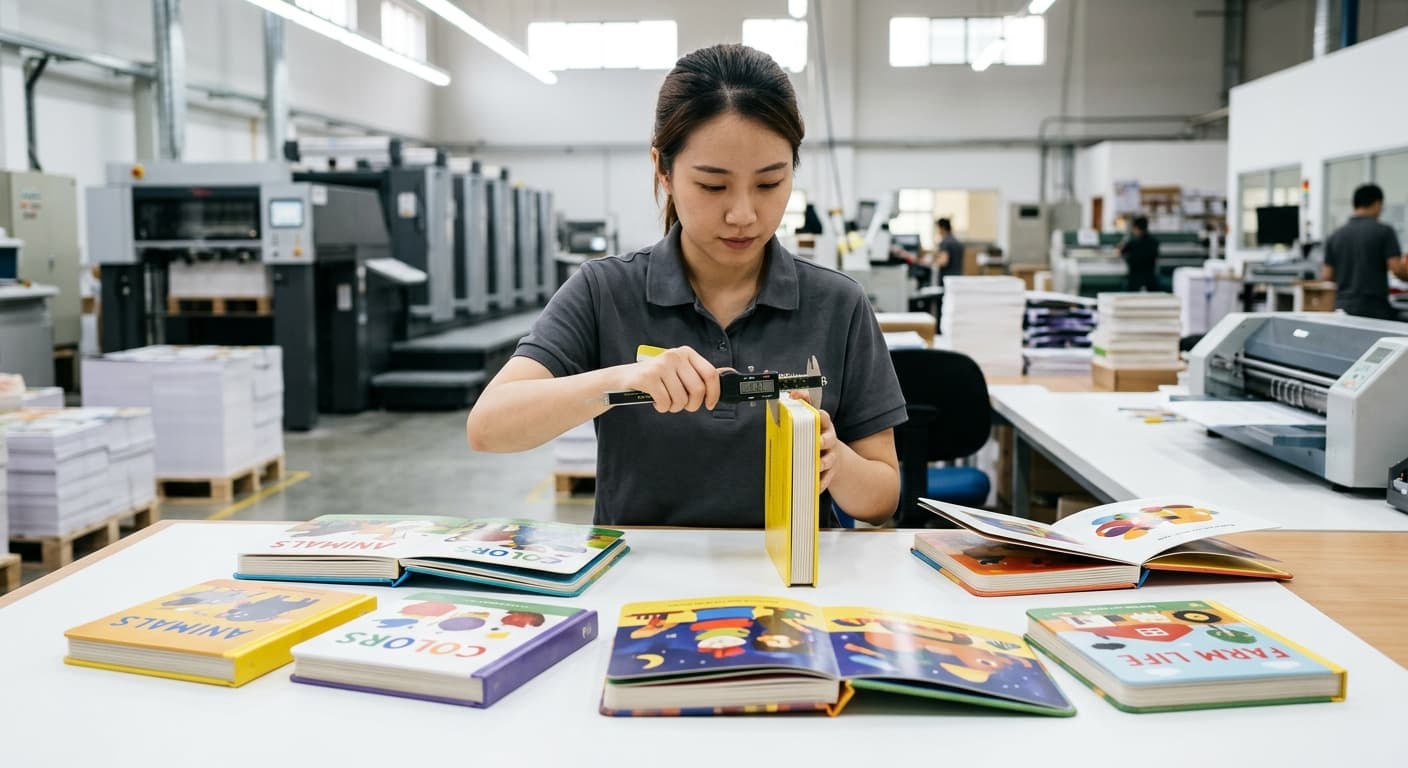
Board thickness should be specified as a measurable construction rather than a subjective term such as “chunky.” A typical project may use printed paper wrapped or mounted over paperboard, but the material combination and resulting leaf thickness must be sampled and approved for the individual title.
Thicker leaves feel more substantial and can be easier for small hands to separate. They also increase spine width, unit weight, board consumption, carton weight, and shipping volume. Very small books may become awkward if a high page count is combined with unusually thick leaves.
Request a construction sample or dummy made to the proposed size, page count, and approximate thickness. A blank dummy will not prove color or lamination quality, but it can reveal handling issues, spine bulk, opening resistance, corner proportions, and packing weight before the printed proof is made.
Materials and Finishes for Children's Board Books
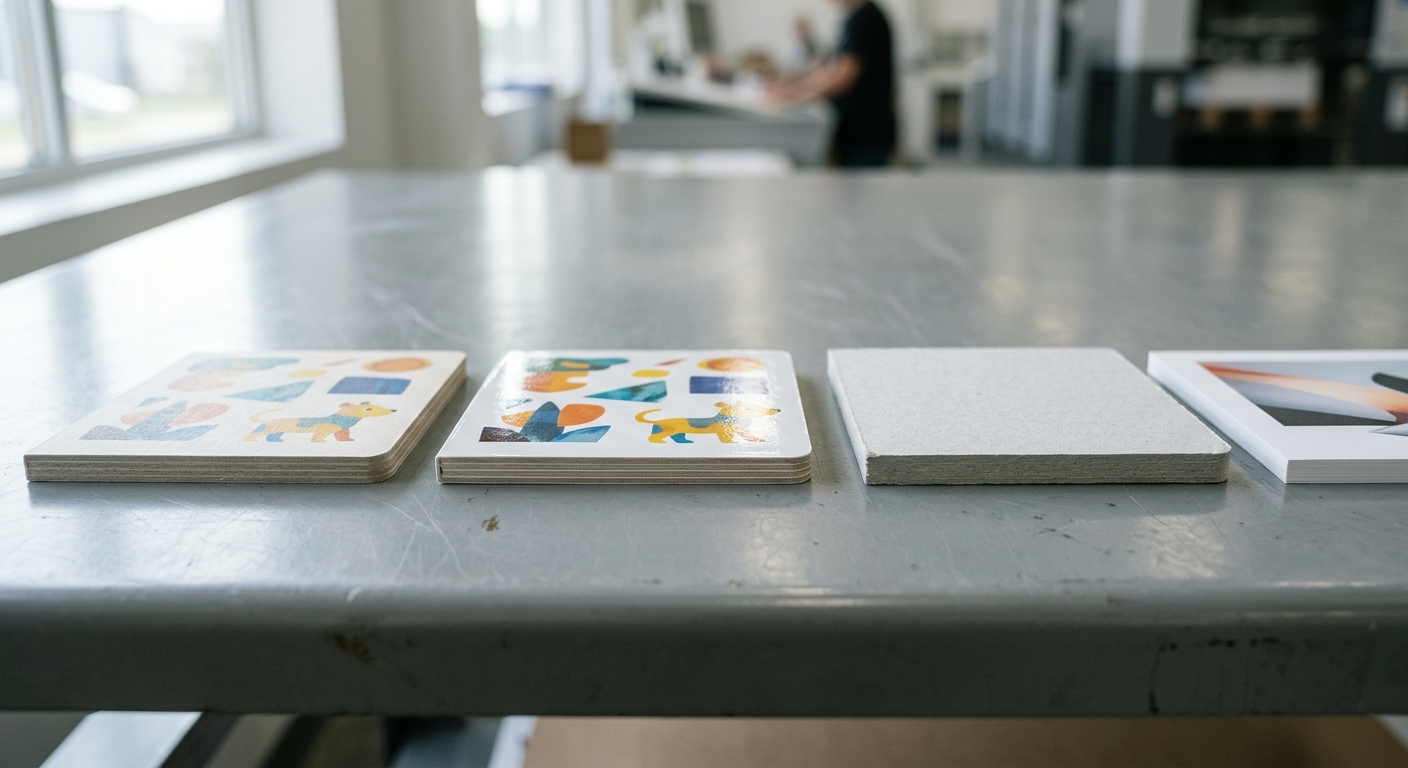
Material selection should balance visual quality, handling, cleanability, construction reliability, compliance documentation, and shipping weight. The most expensive finish is not automatically the most suitable finish for a baby board book or toddler board book.
| Option | Practical benefit | Trade-off or checkpoint |
|---|---|---|
| Gloss lamination | Strong color contrast and a surface that is generally easier to wipe | Produces reflections under direct light and shows some fingerprints |
| Matte lamination | Lower glare and a softer visual appearance | Dark colors may show rubbing, fingerprints, or scuffing more readily |
| Machine-applied coating | Can provide surface protection without a separate film layer | Protection and cleanability depend on the exact coating and application |
| Spot finish | Adds contrast to selected graphics | Requires accurate registration and may not suit every age grade or design |
| Special shapes or cutouts | Supports tactile or interactive concepts | Adds tooling, alignment, inspection, and compliance considerations |
Any claim such as washable, nontoxic, food-safe, or child-safe must be supported by an agreed requirement and appropriate evidence. Do not rely on a general material description when your importer, retailer, or testing program requires a specific standard.
Coated Paper, Lamination, and Wipeable Surfaces
Coated paper is commonly selected because its smoother surface supports clean reproduction of illustrations and solid colors. Lamination adds a thin film over the printed sheet, but “wipeable” should not be interpreted as waterproof or suitable for soaking.
Gloss lamination can make bright illustrations appear more saturated. Matte lamination controls glare and may suit quieter artwork, although heavy dark coverage should be tested for scuff visibility. Film adhesion also deserves attention at folds, corners, and cut edges. Ask whether the approved proof uses the same paper and lamination combination planned for production.
The broader choice between surfaces is explained in Lemon Printing’s coated and uncoated printing paper guide. For a board book, the decision must also account for mounting, folding, adhesive performance, and the required test documentation.
Rounded Corners, Edge Treatment, and Practical Handling
Rounded corners remove sharp square points and are common in children’s board book printing, but the radius and finished edge quality still need approval. A larger radius changes the visible artwork area more than a small radius, so the printer’s dieline should be used during design.
Inspect rounded corners for consistent shape, clean cuts, secure lamination, and board layers that do not separate. Also inspect the transition between the spine and corner. Small text, borders, and faces should remain outside the printer’s safe area because cutting and mounting have normal process variation.
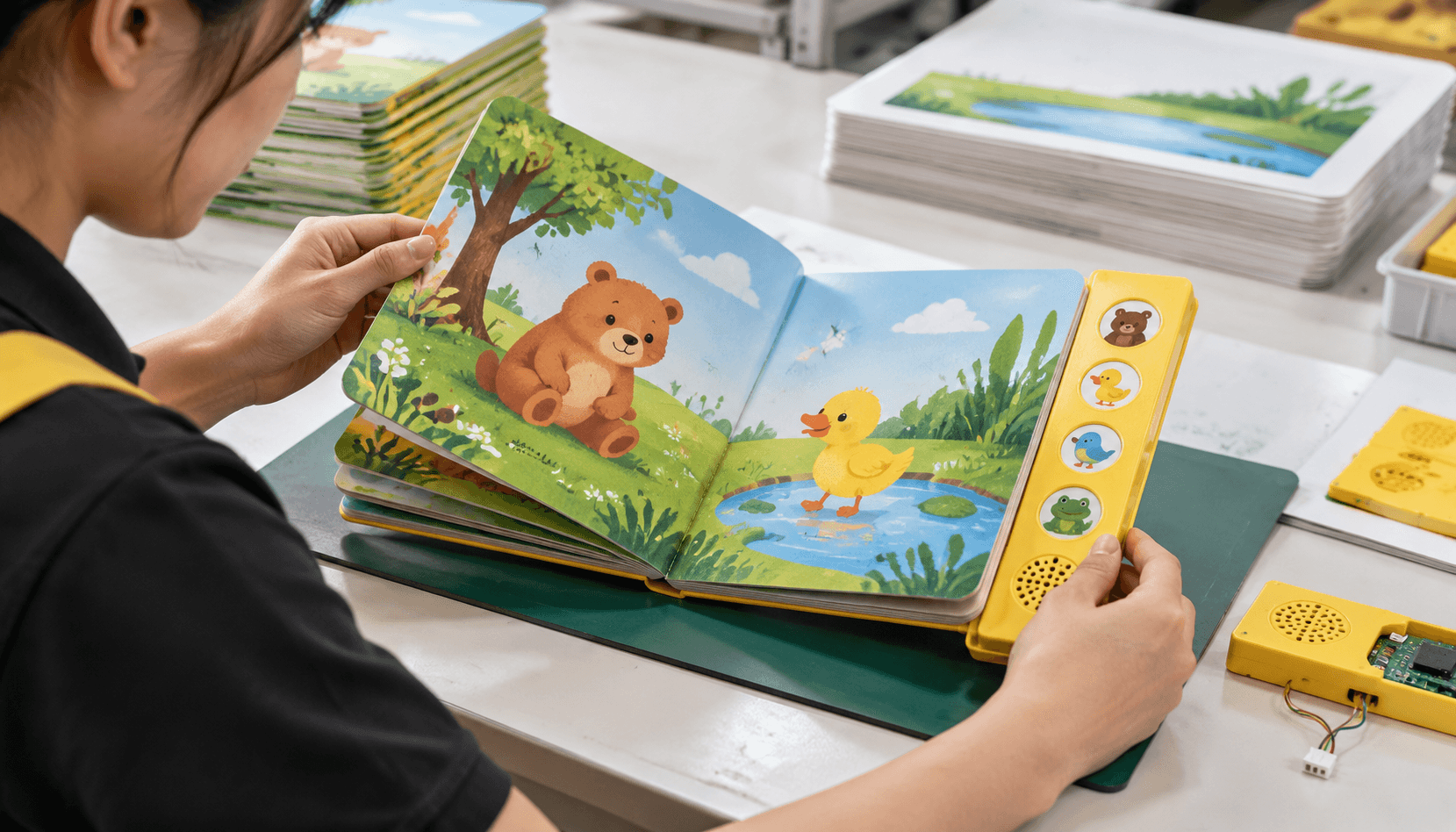
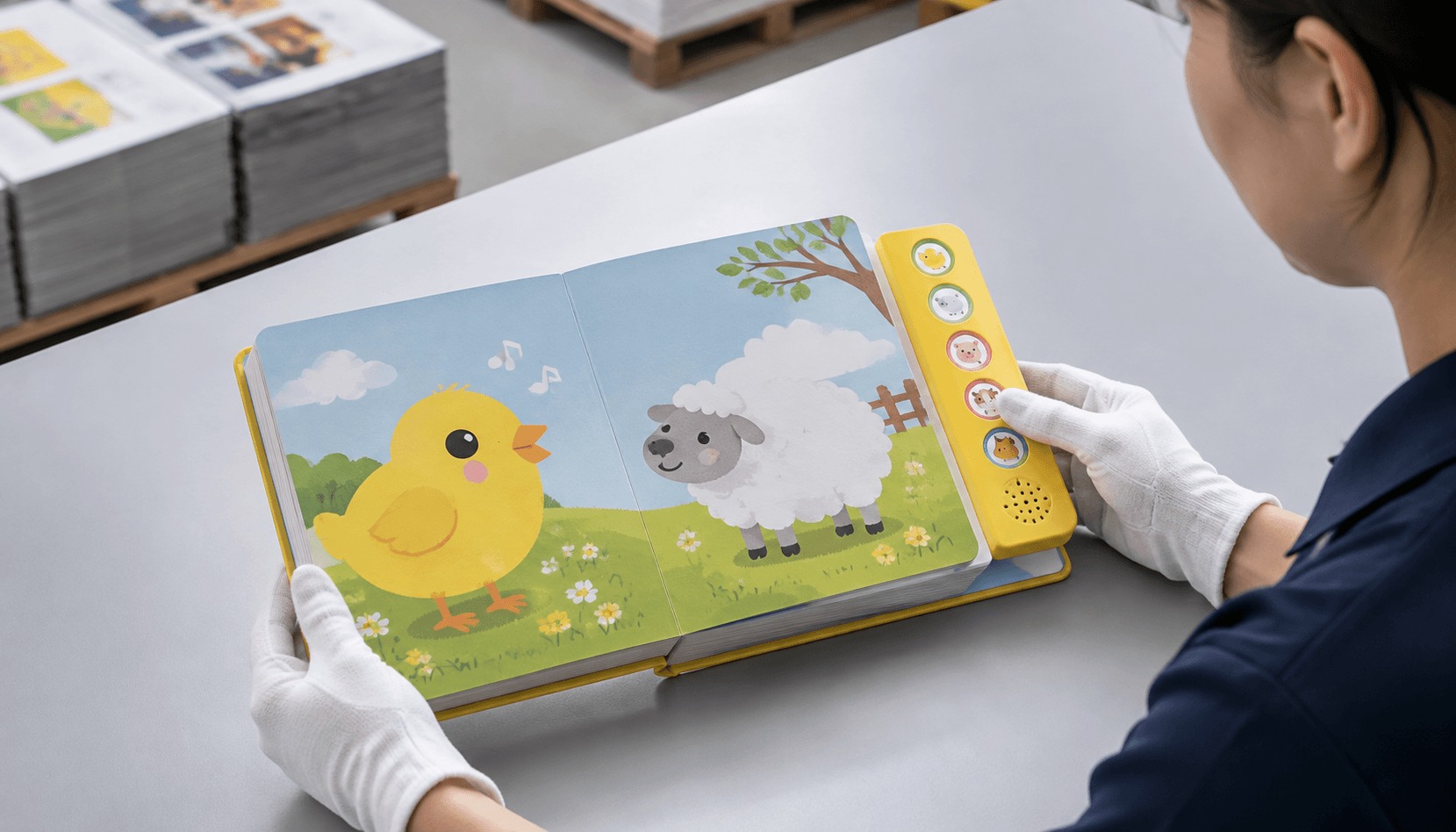
If the book includes tabs, shaped edges, windows, flaps, magnets, sound modules, or other play features, it is no longer a routine rectangular board book. Provide drawings and intended age grading at the quotation stage so tooling, assembly, testing, and packing can be evaluated separately.
Printing and Color Considerations
Color should be managed against an approved production reference, not an uncalibrated office screen. Most full-color board books are prepared in CMYK, meaning cyan, magenta, yellow, and black process inks are combined to reproduce the artwork.
Bright RGB screen colors may fall outside the printable CMYK range. Fluorescent hues, intense blues, and highly saturated greens often require adjustment or a separately specified spot ink. A spot color is a premixed ink used when a project needs a controlled brand color or a color that process printing cannot reproduce closely.
Illustrations with large dark solids need extra review. Differences in paper, ink density, lamination, and lighting can affect the result, while excessive total ink coverage can create production problems. Supply source files or properly exported PDFs, identify critical colors, and tell the printer which approved sample or color reference governs production.
Offset Versus Digital Production for Board Book Quantities
Offset printing is generally evaluated for repeatable bulk production, while digital printing can be useful for short runs and certain proofing needs. The correct method depends on quantity, format, color expectations, board-book converting requirements, and the complete cost rather than quantity alone.
| Factor | Offset printing | Digital printing |
|---|---|---|
| Setup | Requires plates and press setup | No offset plates required |
| Quantity fit | Often more efficient as volume increases | Often considered for shorter quantities |
| Color control | Supports controlled process and specified spot inks | Device-dependent process color; spot colors may be simulated |
| Unit consistency | Designed for stable bulk runs after press approval | Can be consistent, but may not exactly match an offset rerun |
| Board-book finishing | Compatible with planned bulk converting workflows | Printing may be fast, but mounting and binding remain separate steps |
Digital printing does not remove the need for lamination, board mounting, die cutting, binding, inspection, or packing. Review the full production route using an offset versus digital printing comparison rather than comparing press output alone.
Proofing and Quality-Control Checkpoints
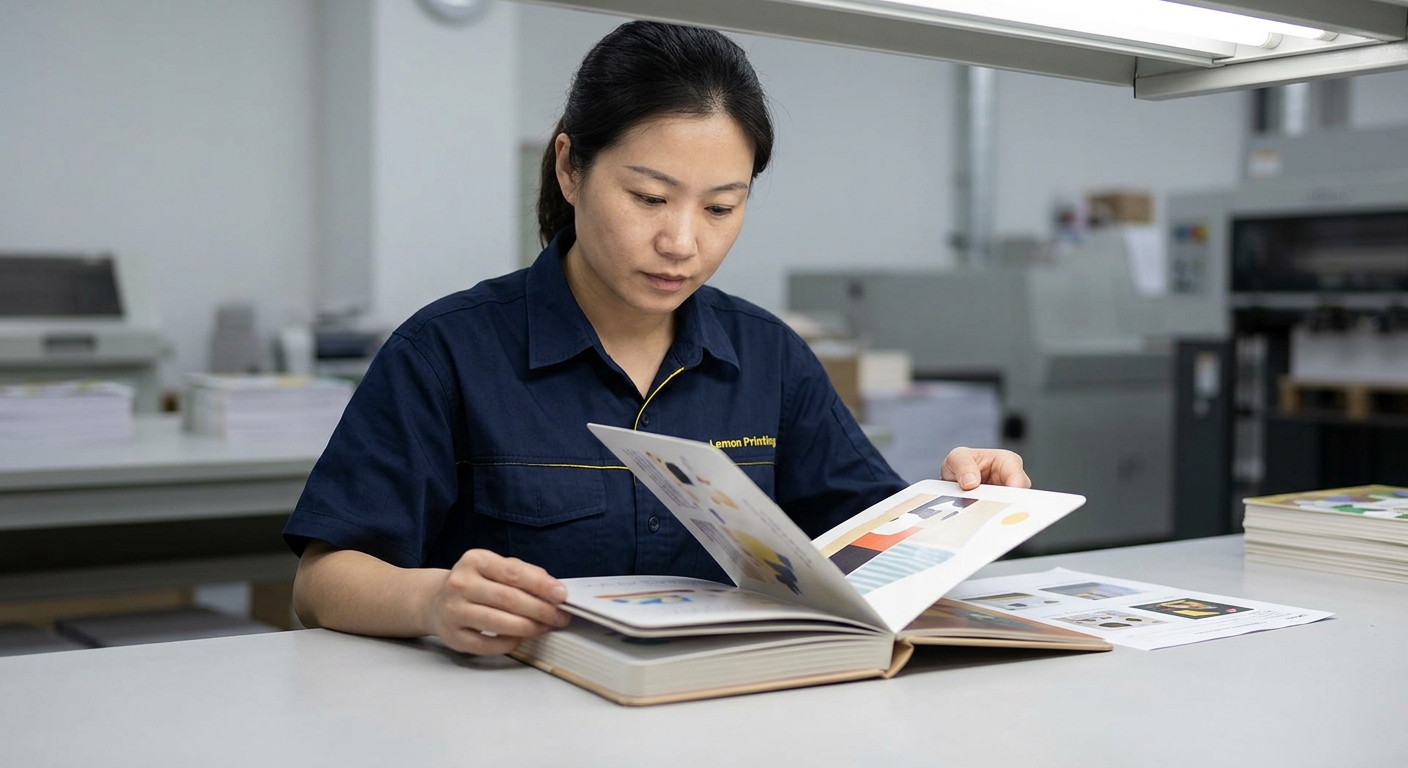
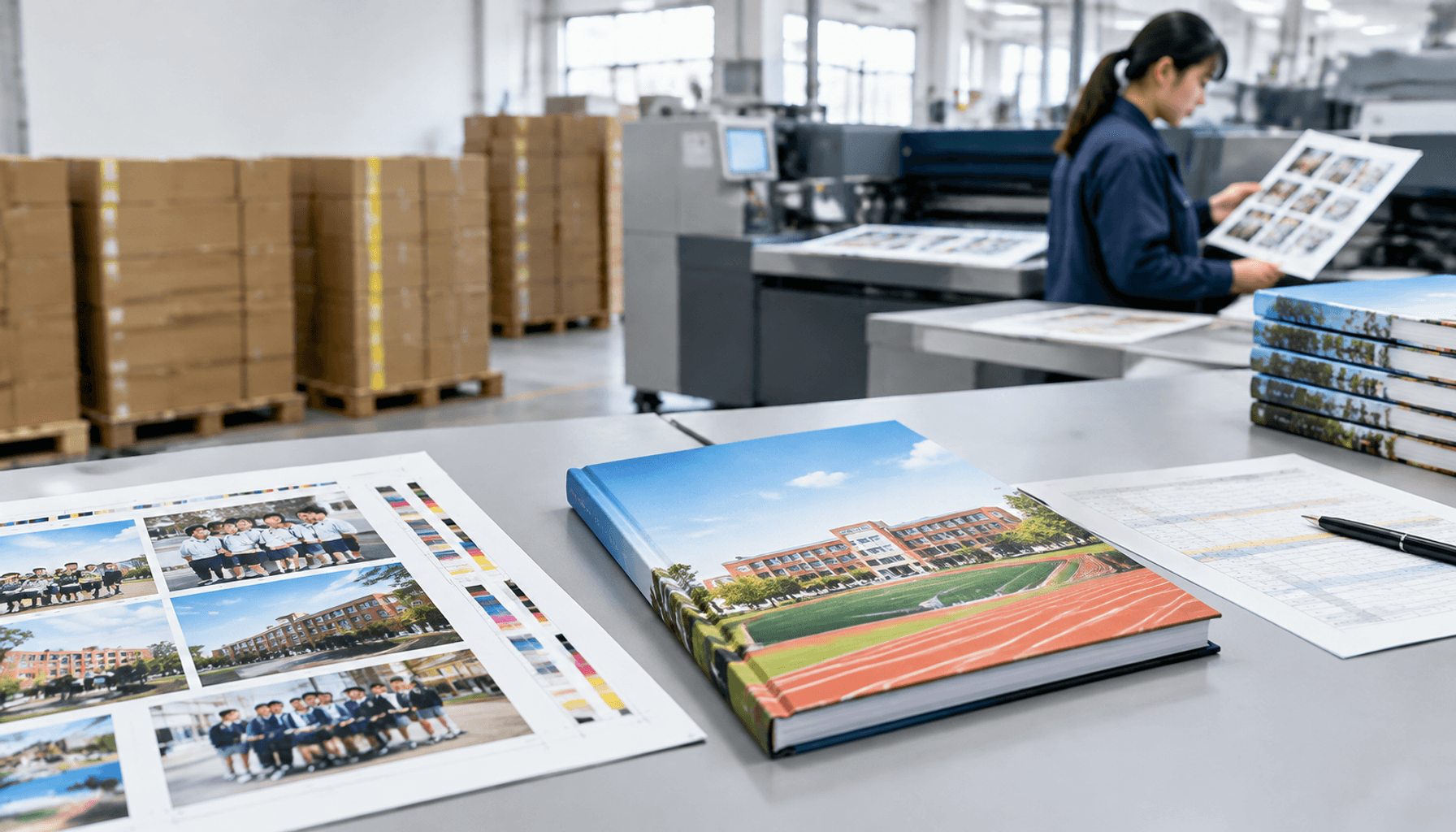
A board book proof should confirm both printed content and physical construction. A PDF proof can verify text, sequence, trim, and general image placement, but it cannot demonstrate final board thickness, corner cutting, lamination feel, binding strength, or exact production color.
- Preflight the files. Check dimensions, bleed, safe areas, fonts, image resolution, color spaces, overprint settings, dielines, and page order.
- Approve content separately. Record text and layout corrections before investing in a physical sample.
- Review a printed sample. Compare color, surface finish, page sequence, dimensions, corners, spine, opening behavior, and visible adhesive.
- Define the approval reference. Mark the approved proof version and record any accepted deviations or remaining corrections.
- Inspect production. Check printing, mounting alignment, finished size, page order, corner shape, lamination adhesion, binding, cleanliness, carton quantity, and barcode or label accuracy.
Use a documented printing proof approval checklist so comments are consolidated and version-controlled. Buyers should also agree on inspection method, sampling level, measurable tolerances, defect classifications, and responsibility for third-party inspection or laboratory testing before the order starts.
Packaging and Shipping Requirements for US Orders
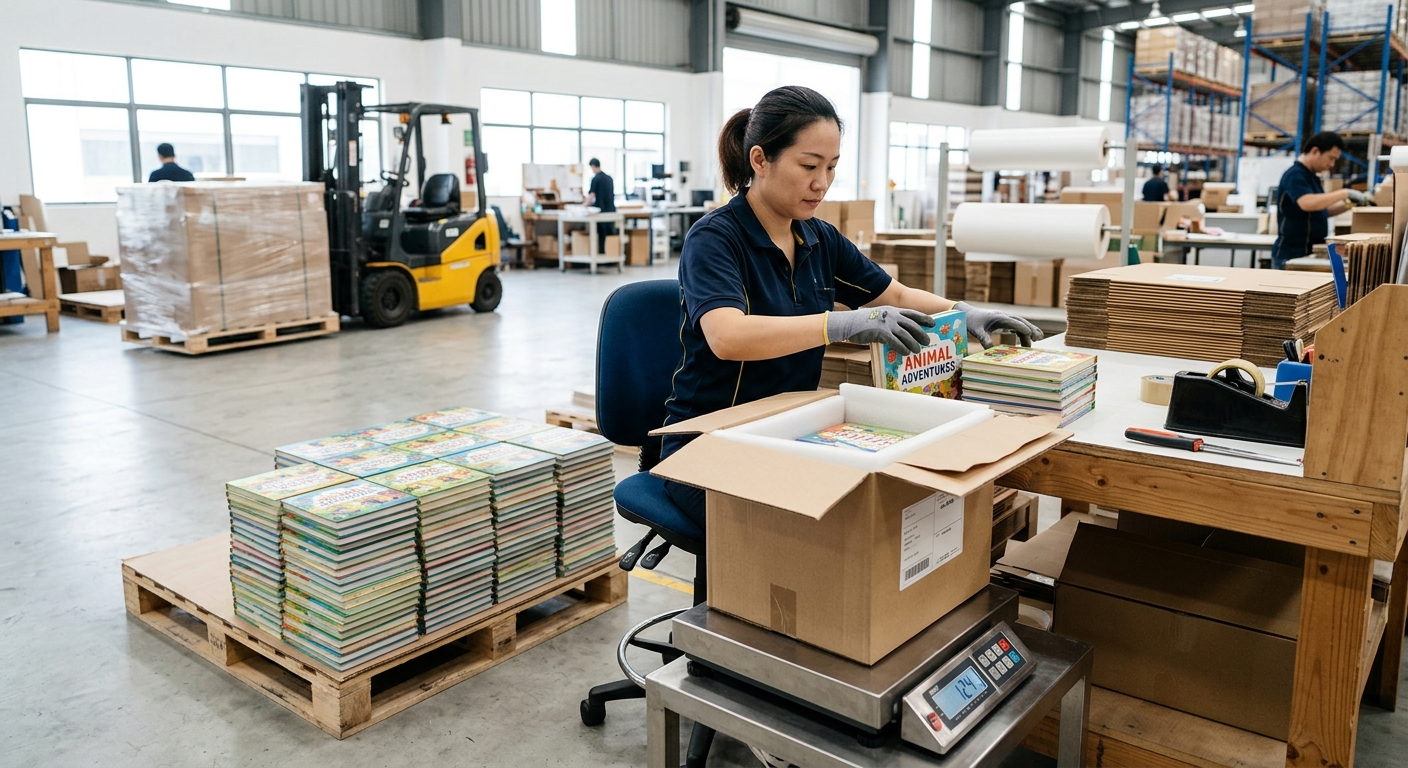
Export packaging should protect heavy board books while keeping each carton practical to handle. Because each leaf contains board, a small title can weigh substantially more than a comparable paperback.
Specify whether books are packed loose, individually wrapped, bundled, or placed in retail sets. Confirm units per carton, carton dimensions, gross and net weight, carton markings, pallet requirements, moisture protection, barcode placement, and any retailer routing instructions. Individual wrapping can protect surfaces but adds material, labor, weight, and waste.
Before choosing air, ocean, courier, or a combined service, request a packing estimate based on the approved construction. The number of cartons, cubic volume, gross weight, destination ZIP code, delivery terms, and accessorial requirements all affect logistics. Lemon Printing’s export planning guide for bulk printed products explains the freight information buyers should confirm.
Final MOQ, production time, pricing, and shipping depend on the product specifications, quantity, finishing, packing method, and destination. Treat early freight figures as planning estimates until the book construction and packing plan are confirmed.
Information to Include in a Board Book Quote Request
A complete request allows the printer to quote the intended construction instead of filling gaps with assumptions. Use the same specification sheet when comparing suppliers so differences in price reflect real production differences.
- Product type and intended age range
- Closed finished width and height, in inches and millimeters
- Portrait, landscape, square, or custom shape
- Interior page or spread count, with cover counting clearly defined
- Full-color, limited-color, or spot-color requirements
- Preferred printed paper and board or finished leaf thickness
- Gloss lamination, matte lamination, coating, or other surface finish
- Square or rounded corners, including radius if specified
- Any flaps, windows, tabs, textures, foil, embossing, sound, or movable parts
- Order quantity and whether it is one title or several titles
- Proof type and required inspection or testing arrangements
- Individual packing, bundles, cartons, pallets, labels, and retail requirements
- Delivery city, state, ZIP code, destination type, and requested shipping terms
- Target arrival date and any fixed launch or event date
- Artwork status and expected file-release date
Attach a PDF mockup or page map even if final artwork is not ready. It helps the production team identify page-count conflicts, special construction, and artwork areas that need a dieline.
Frequently Asked Questions
These answers address common purchasing questions about custom board book printing. Exact recommendations must be based on the title’s dimensions, construction, quantity, intended age grade, destination, and compliance requirements.
FAQ
How are pages counted in a children's board book?
One page is one printed side, one leaf has two sides, and one spread consists of facing left and right pages. Printers may describe cover faces and interior pages differently, so provide a numbered page map and ask the printer to confirm the total printed faces and physical leaves.
What board thickness should I choose for a baby board book?
There is no single thickness suitable for every title. The decision depends on finished size, page count, desired stiffness, handling, spine bulk, unit weight, and cost. Request a physical construction dummy and record both the board specification and expected finished leaf thickness.
Are laminated board books waterproof?
No. Lamination can improve surface protection and make light wiping easier, but it does not make the entire book waterproof. Liquid may still enter through cut edges, corners, folds, or damaged film. Any water-resistance claim should be defined and tested rather than assumed.
Should a toddler board book have rounded corners?
Rounded corners are common because they remove sharp square points and can improve handling. Buyers should still approve the radius, dieline, cut quality, lamination adhesion, and safe artwork area. Rounded corners do not replace applicable product assessment or testing.
Can digital printing be used for board book samples?
Digital output may be used for certain prototypes or short-run samples, but it may not exactly match offset production color or the final production materials. Confirm whether the sample is for content review, color guidance, construction approval, or all three.
What US compliance information should I give the printer?
State the intended age grade, sales market, importer or retailer requirements, applicable test protocol, material restrictions, tracking-label content, laboratory arrangements, and documents required with the shipment. Requirements can change when a book includes play features such as magnets, sound modules, or detachable parts. The US importer should confirm the applicable legal and testing obligations for the specific product.
What determines the MOQ and production time for custom board book printing?
MOQ and timing depend on dimensions, page count, board construction, print method, finishing, tooling, quantity, proofing, testing, packing, and factory scheduling. Shipping time also depends on the destination and freight method. Final MOQ, production time, pricing, and shipping must therefore be confirmed against the complete specification.
Request a Child Board Book Printing Quote
Send Lemon Printing your product type, quantity, finished size, page or spread count, paper, board thickness, binding construction, lamination or other finishing, corner treatment, packing requirements, delivery destination, and target date. Include artwork or a page map where available. The production team will review the specification before confirming the applicable MOQ, production plan, pricing, and shipping options.