Table of Contents
- Key takeaways: Annual report printing decisions to make early
- How do report length, content, and distribution shape the format?
- Page count, finished size, and reader handling
- Which binding should you choose for a printed annual report?
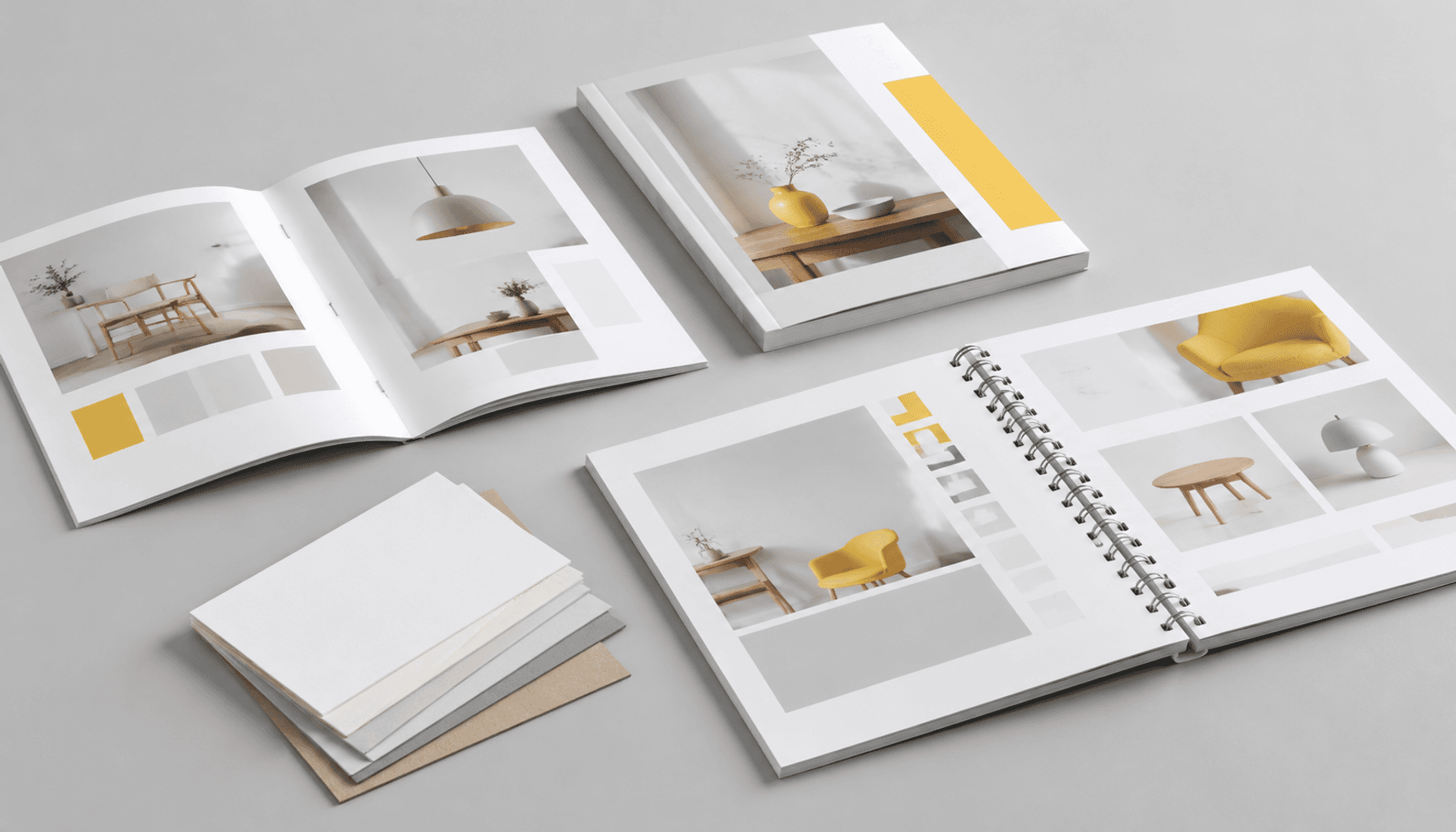
- Compare perfect binding, sewn hardcover, and other constructions
- How should you select paper for text, charts, and photography?
- Annual report printing options comparison table
- What should buyers check during color proofing and inspection?
- Reviewing charts, fine text, images, trim, and binding
- Annual report printing quote checklist
- Frequently asked questions about annual report printing
- Request an annual report printing quote
Key takeaways: Annual report printing decisions to make early
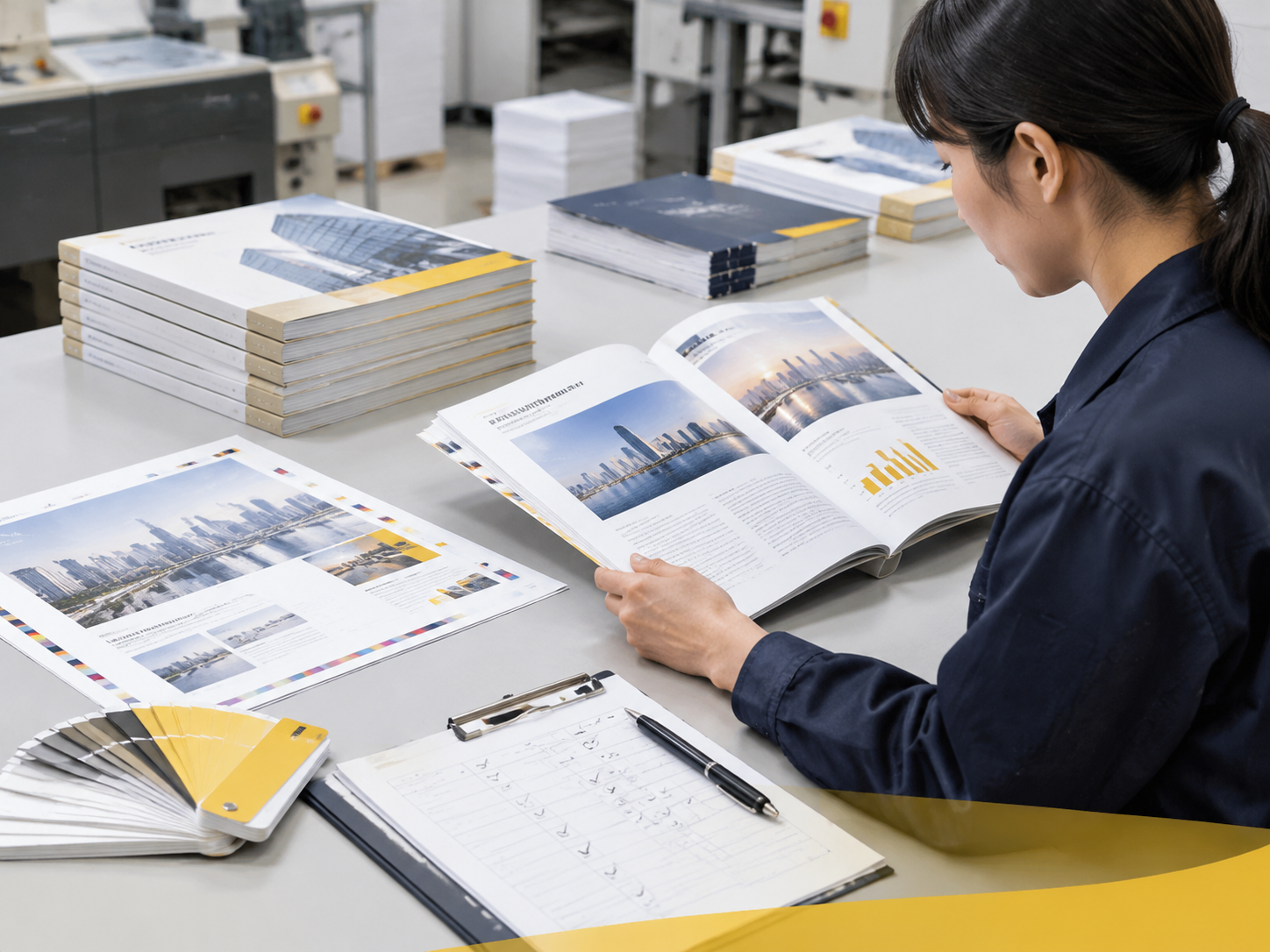
Annual report printing should be specified as a manufactured book, not treated as the final step after design. Lock the finished size, page count, paper, binding, color method, proof level, and distribution plan before asking for comparable prices.
- Format affects handling. A short report may suit saddle stitching, while a medium-length report often needs perfect binding or another spine construction.
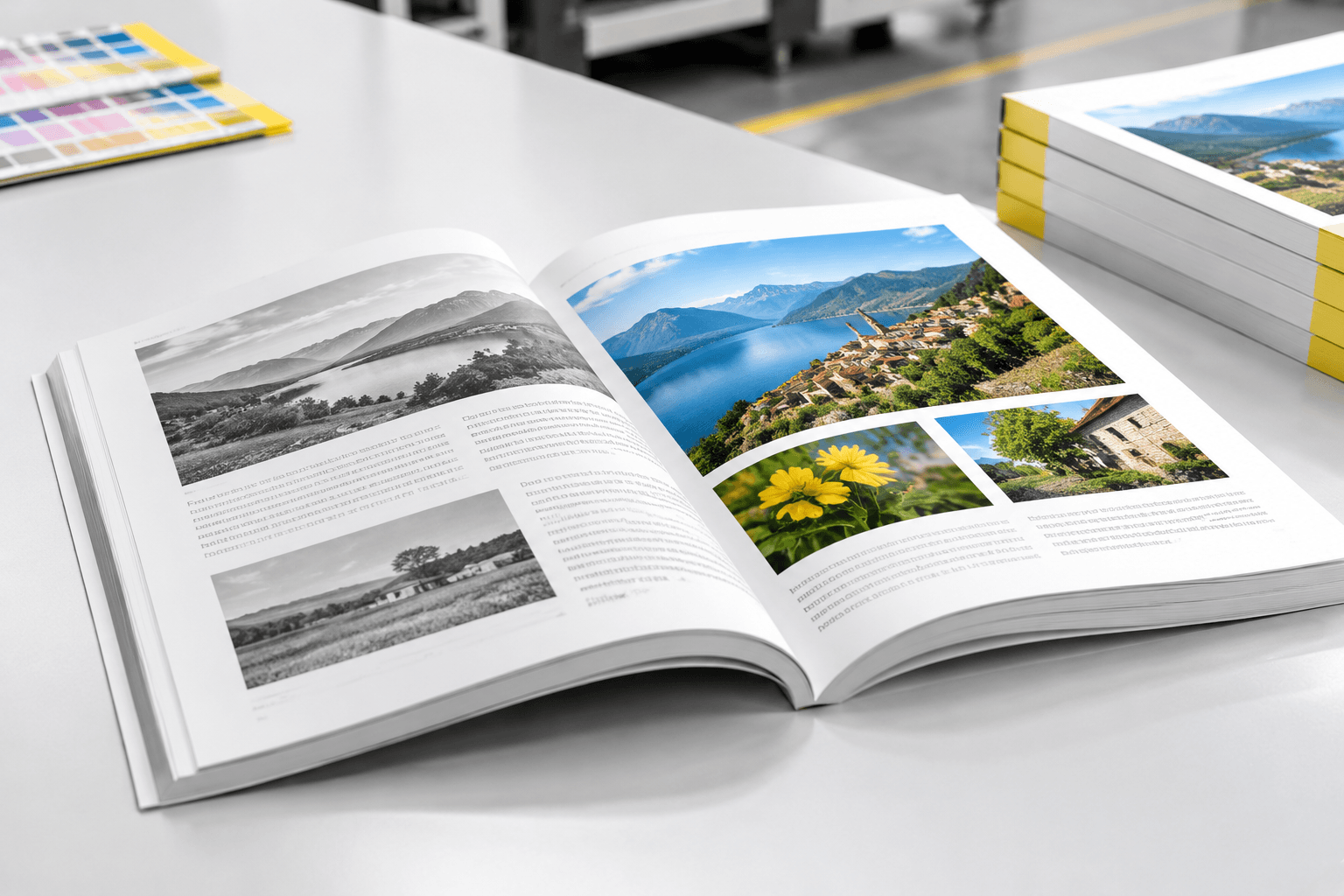
- Paper affects both appearance and structure. Matte coated stock helps charts and photographs reproduce clearly with less glare. Uncoated stock is easier to write on but absorbs more ink and can show softer color.
- Color needs a defined approval method. A screen review confirms layout, but a physical proof on a comparable stock is more useful for judging color, contrast, and finishing.
- The quote must describe the whole job. Quantity, split shipments, packaging, destination, and target date can change the production and shipping plan as much as page count does.
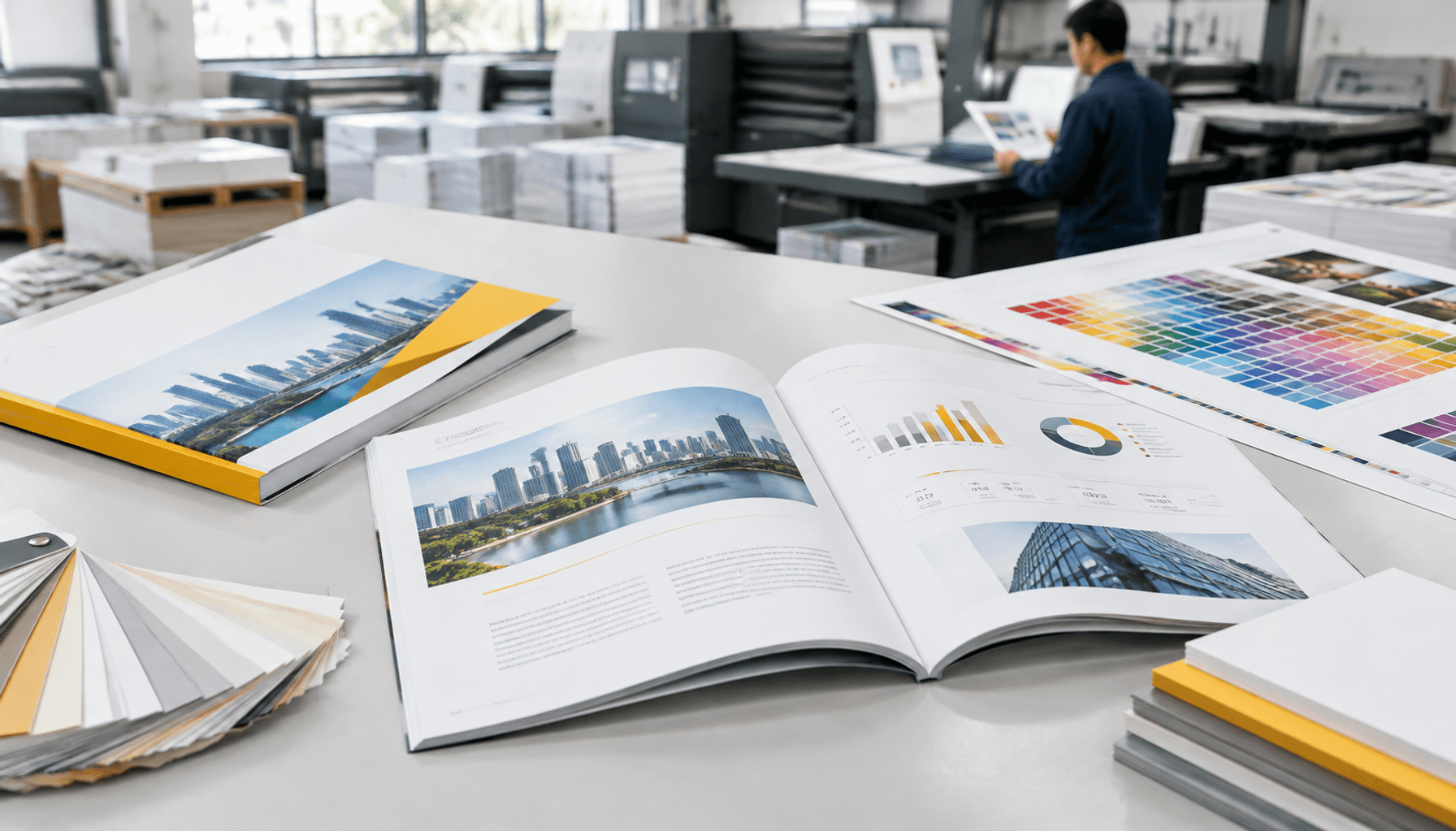
Lemon Printing operates a self-owned facility in the Guangzhou-Shenzhen manufacturing corridor, with more than 130 workers and 8+ offset and digital presses. Prepress, printing, binding, finishing, inspection, packing, and export preparation are handled in-house. Buyers comparing custom book printing suppliers should ask whether the same team can control these stages as one project.
How do report length, content, and distribution shape the format?
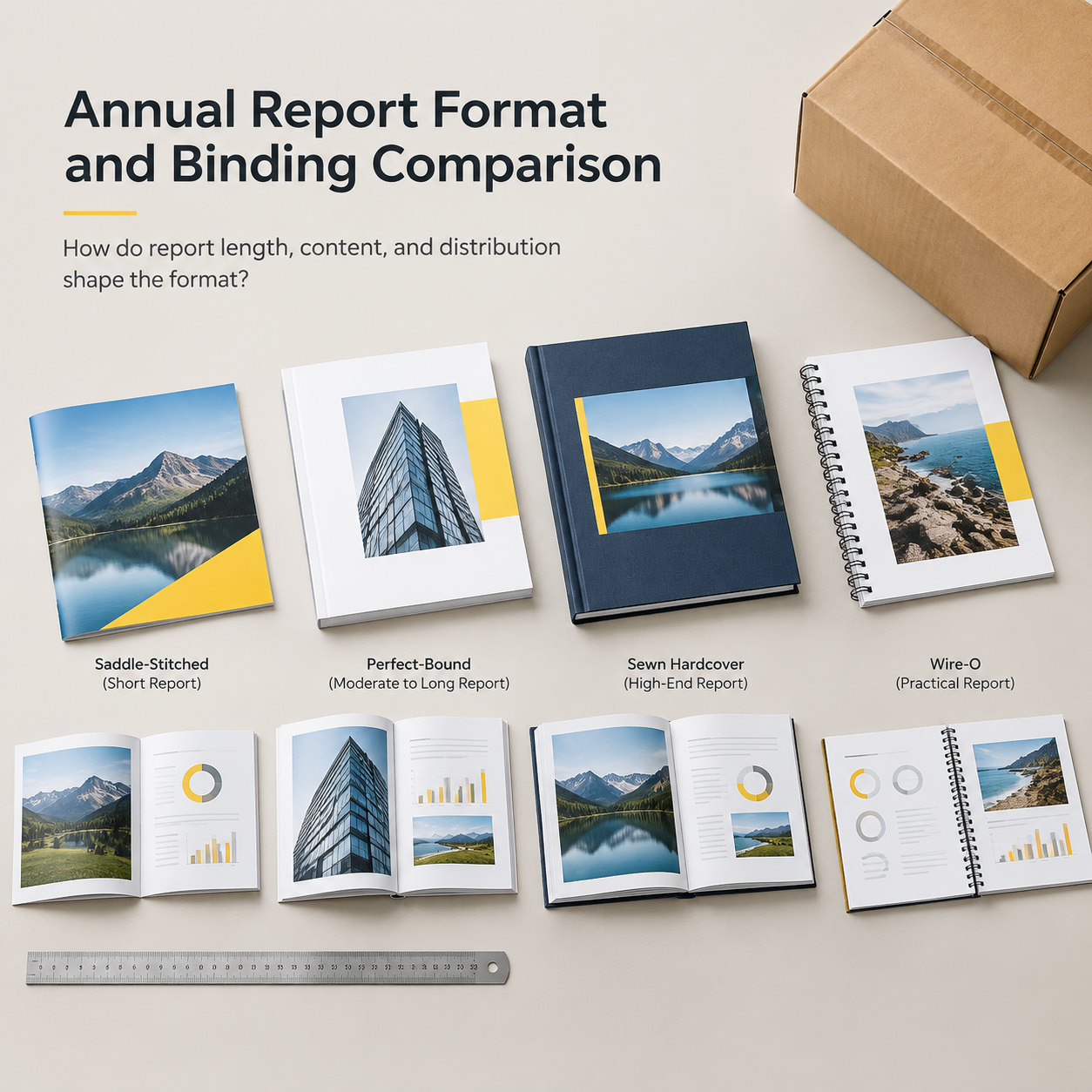
Report length, content mix, and distribution method should determine the format together. A report intended for a board meeting, a mailed stakeholder package, and a conference handout may use the same artwork but require different paper weight, binding, packing, and finished size.
Start with the job the report must perform. If readers will keep it for reference, a spine and durable cover become more valuable. If copies will be handed out briefly, a lighter construction may reduce shipping weight and handling cost. If the document contains many photographs, full-page charts, or foldout material, allow the printer to review the physical structure before artwork is finalized.
For corporate report printing, the main format decisions are:
- Portrait or landscape: Portrait is familiar for text-heavy reports. Landscape can give wide charts more room but may be less convenient to shelve or mail.
- Finished size: A4 and US Letter are easy for offices and distribution teams to handle. A custom size can support a distinctive presentation, but it may affect paper yield, packaging, and shipping.
- Short or extended run: A small quantity may be produced digitally, while larger or repeat quantities may justify offset production. The printer should recommend the method after reviewing quantity, color coverage, and repeat-order needs.
- Single version or multiple versions: Language editions, regional financial notes, or investor and employee versions should be quoted as separate quantities when their page counts or covers differ.
Page count, finished size, and reader handling
Page count should be confirmed from the final interior PDF, while finished size should be measured after trimming. These two specifications influence paper yield, spine width, binding suitability, carton weight, and how easily a reader can hold the report.
- Count the interior pages correctly. State whether the count includes blank pages, inserts, gatefolds, or covers. Some binding methods require page counts in specific multiples, so confirm this before imposing the file.
- Plan bleed and safe areas. Backgrounds and images that reach the edge need bleed beyond the trim line. Keep charts, page numbers, and legal or contact text away from the trim area according to the printer’s file specification.
- Check image scale at final size. A raster image that looks sharp on a large monitor can lose detail when enlarged or reduced. Charts should remain legible at the finished size, and line weights should not disappear during output.
- Consider the reader’s hands. Oversized landscape reports can be effective for data presentation but awkward in a meeting. A thick report with a narrow gutter may also be uncomfortable to read if the binding is not selected for opening behavior.
Do not use a generic page threshold as the only decision rule. Paper caliper, coating, cover construction, and the printer’s binding equipment all affect the practical range of a format.
Which binding should you choose for a printed annual report?
Perfect binding is suitable for many printed annual reports that need a professional cover and visible spine. Choose sewn hardcover or casebound construction when the report is intended for premium presentation, repeated handling, or long-term reference. Short reports may suit saddle stitching, while Wire-O is useful when flat opening matters more than a traditional book appearance.
Binding is a structural decision, not just a finishing preference. It affects how the report opens, how much the spine can hold, how it is packed, and whether the cover remains aligned after handling. Tell the printer the expected page count and paper before requesting a binding recommendation because the same page count can produce different thicknesses on different stocks.
Compare perfect binding, sewn hardcover, and other constructions
Each construction solves a different handling problem. The following distinctions help buyers narrow the annual report binding options before asking for samples.
- Perfect binding: Individual pages or sections are gathered and glued into a cover. It gives a clean spine and a relatively efficient paperback format. It may not open fully flat, and very thin or very thick books need a suitability check.
- Sewn hardcover: Folded sections are sewn and secured into a hard case. It provides a durable, substantial product for important reference copies, but it adds weight, materials, handling steps, and shipping volume.
- Saddle stitching: Folded sheets are nested and secured with staples. It is practical for shorter reports and has no spine. Page counts normally need to follow the printer’s signature requirements, and the construction is less suitable for a thick report.
- Wire-O: Pages are punched and bound with a wire loop. The report can open flat and turn easily, which helps with work sessions and presentations. The exposed wire changes the visual character of the report and needs protection during packing.
For a report that will be displayed on a shelf, a spine and case or paperback cover may matter more than flat opening. For a report used beside a laptop during a meeting, easy opening may be the higher priority. Request a physical sample when the choice is close.
How should you select paper for text, charts, and photography?
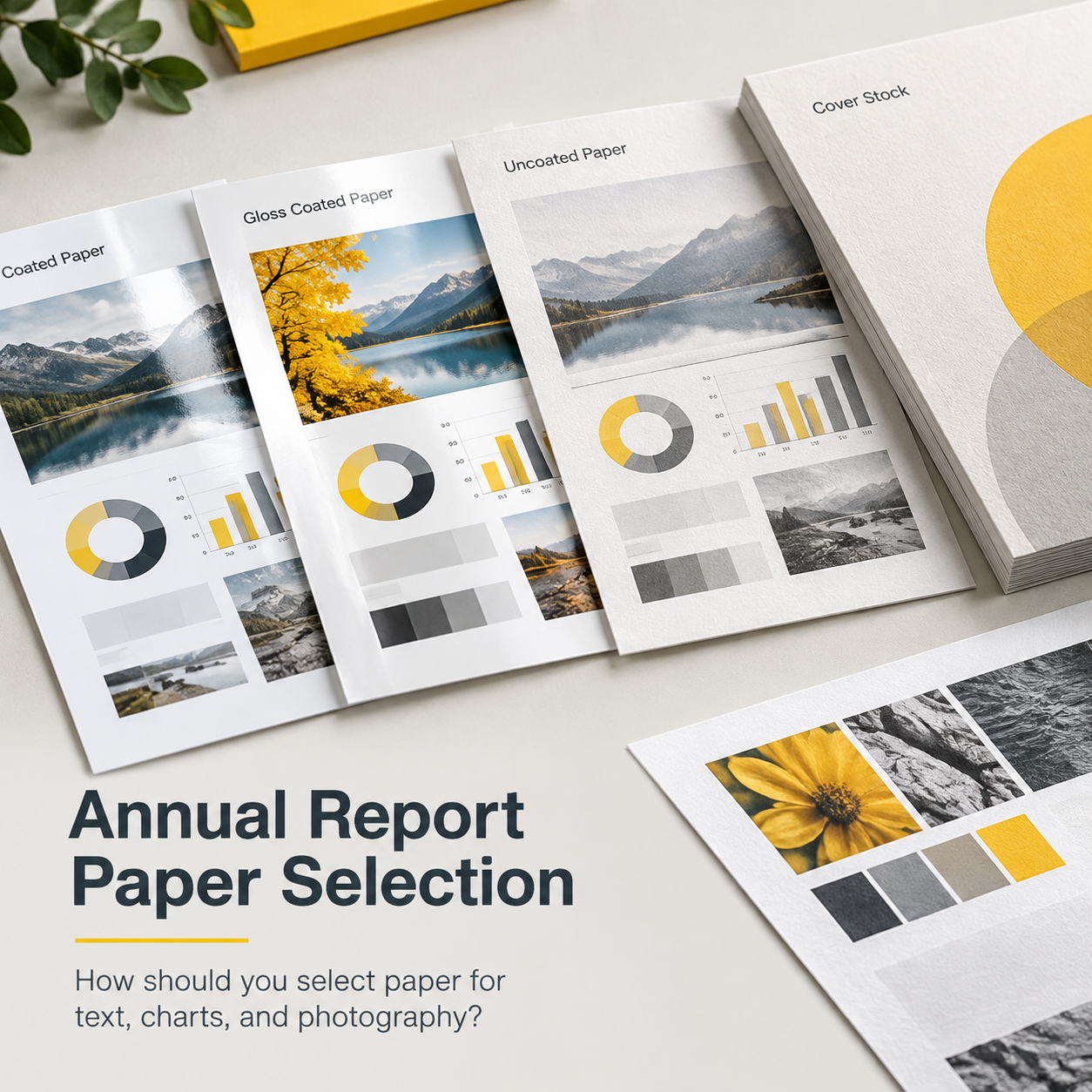
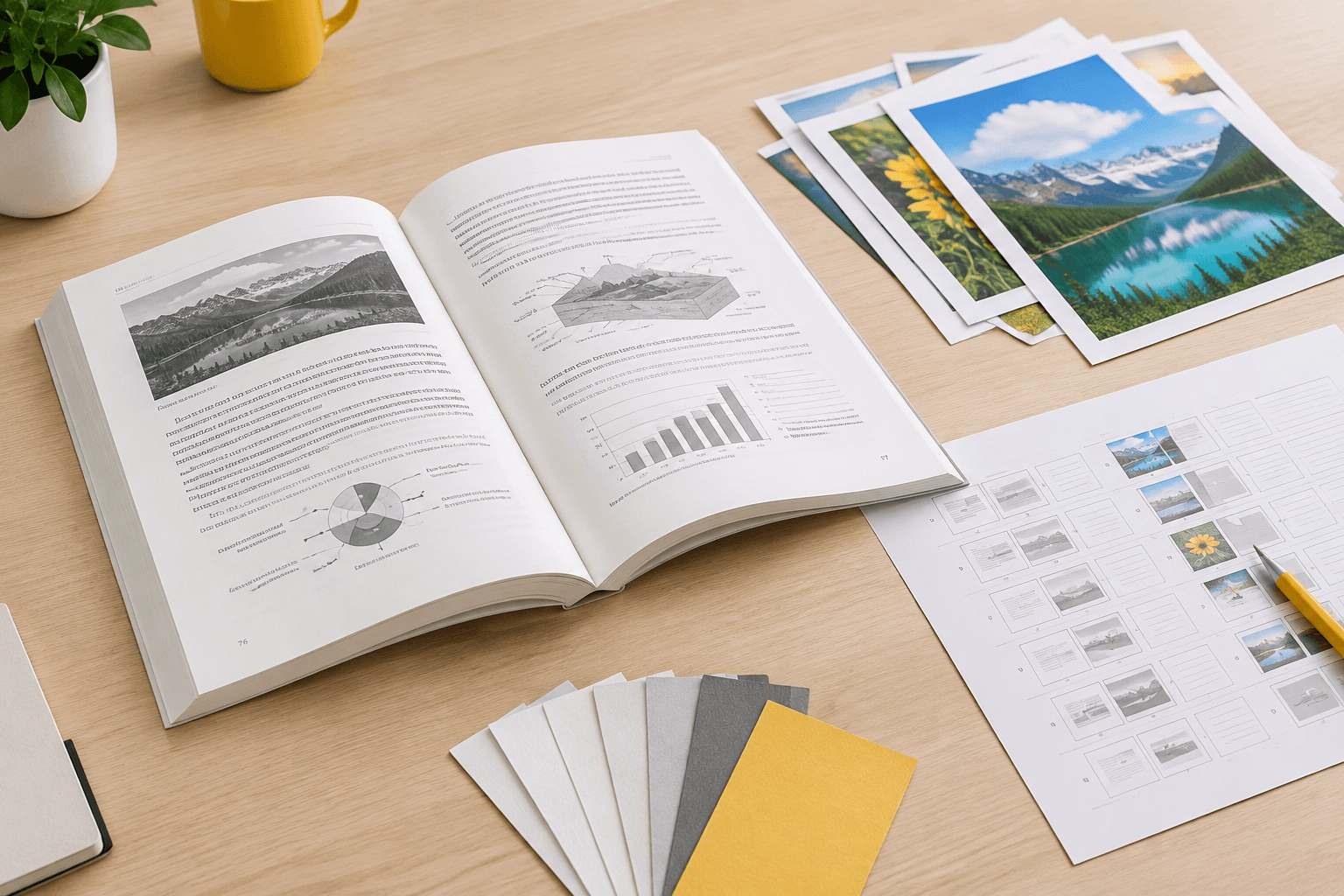
For a mixed-content report, matte coated paper is often a balanced starting point because it supports detailed charts and photographs without the strong glare of gloss. Choose uncoated paper when writing feel, texture, or easier pencil marking matters more than maximum image saturation. The right annual report paper selection depends on content, viewing light, binding, and distribution weight rather than GSM alone.
GSM means grams per square meter and describes paper weight. Caliper is the physical thickness of the sheet. Two papers with a similar GSM can have different calipers, opacity, and bulk. Those differences affect show-through, page count, spine width, and carton weight.
| Paper direction | Useful for | Trade-offs to check |
|---|---|---|
| Matte coated text | Charts, photography, maps, and mixed editorial pages | Less glare than gloss, but fingerprints, scuffing, and cover compatibility still need review |
| Gloss coated text | High-impact photography and strong color contrast | More reflection under meeting-room lighting and less comfortable for extended reading or writing |
| Uncoated text | Long reading, note-taking, and a tactile or institutional feel | More ink absorption, softer image detail, and a greater need to check show-through |
| Heavier cover stock | Protecting the report and creating a distinct cover surface | May require scoring, suitable lamination, and a binding check to prevent cracking or poor opening |
Common starting points may include 90-120 GSM uncoated text, 105-157 GSM coated text, and 200-300 GSM cover stock, but these are planning ranges rather than universal specifications. Ask for paper samples or a dummy made with the proposed stock. If your procurement policy requires recycled content, FSC documentation, or another paper attribute, state it in the quote request and ask what documentation will accompany the order.
Color profiles also matter. Uncoated stock usually produces a softer, less saturated appearance than coated stock, so a proof should use a comparable paper surface when color judgment is important. The International Color Consortium provides background on color profiles and color-management practice.
Annual report printing options comparison table
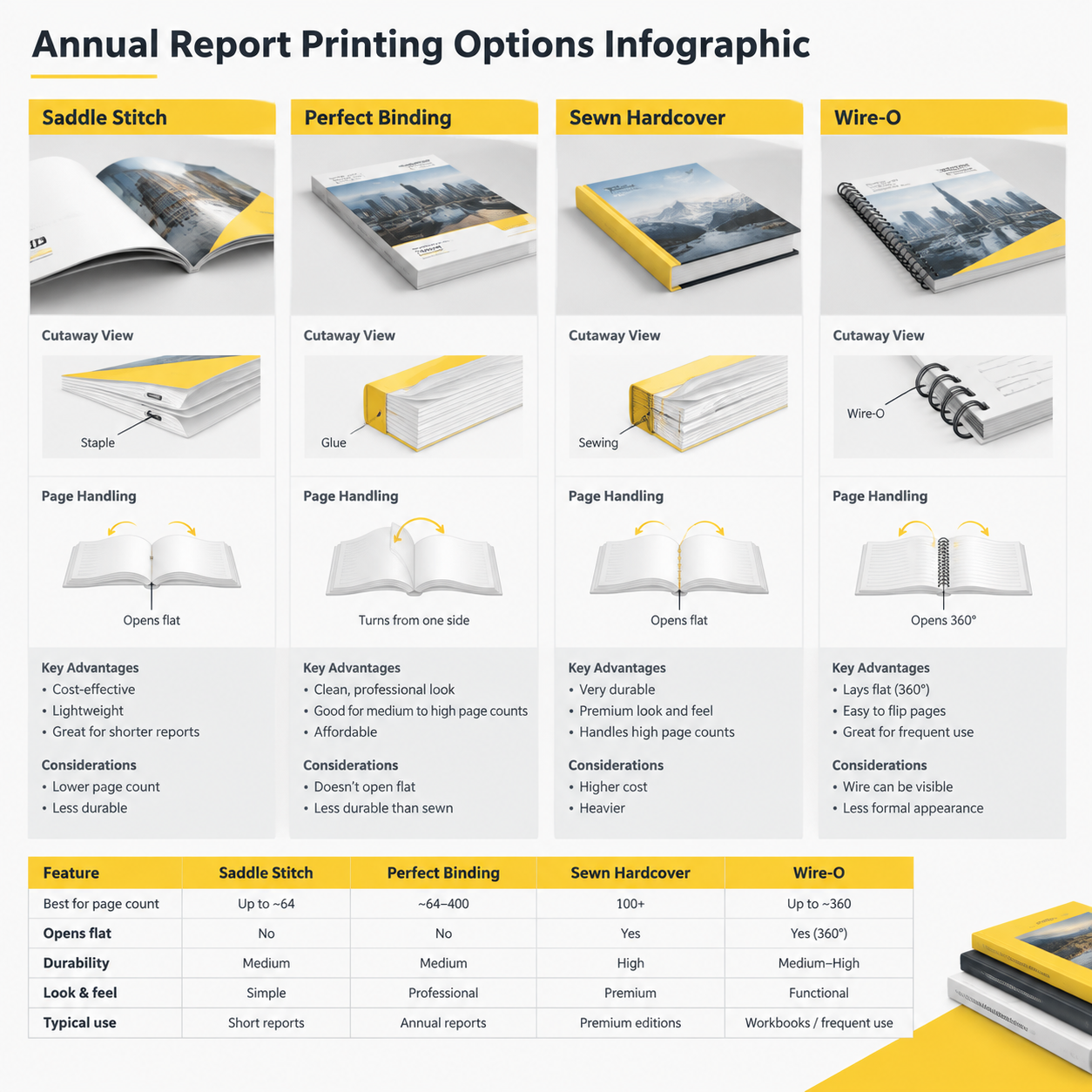
There is no single best construction for every annual report. Use the comparison below to connect the report’s expected use with the relevant production trade-offs.
| Construction | Best fit | Main strengths | Limitations and quote checks |
|---|---|---|---|
| Saddle stitch | Short reports, event handouts, and brief stakeholder summaries | Lightweight, easy to distribute, and does not require a spine | Limited thickness; confirm page-count multiples, center spread behavior, and staple placement |
| Perfect bound | Medium-length reports with a professional paperback appearance | Clean spine, flexible cover choices, and efficient handling for many corporate reports | Does not normally lie fully flat; confirm page count, paper caliper, adhesive construction, and spine width |
| Sewn hardcover or casebound | Premium presentation copies and reports intended for repeated reference | Durable cover, substantial feel, and a strong long-term presentation | Heavier and more involved to produce; confirm endpapers, case material, opening behavior, packing, and shipping volume |
| Wire-O | Working reports, meeting documents, and reference material that must open flat | Easy page turning and flat opening | Visible wire changes the appearance; confirm punch margin, cover alignment, loop protection, and carton packing |
When a report combines a formal external presentation with frequent working use, ask the printer to quote two constructions on the same paper and quantity. A sample comparison often reveals more than a specification sheet alone.
What should buyers check during color proofing and inspection?
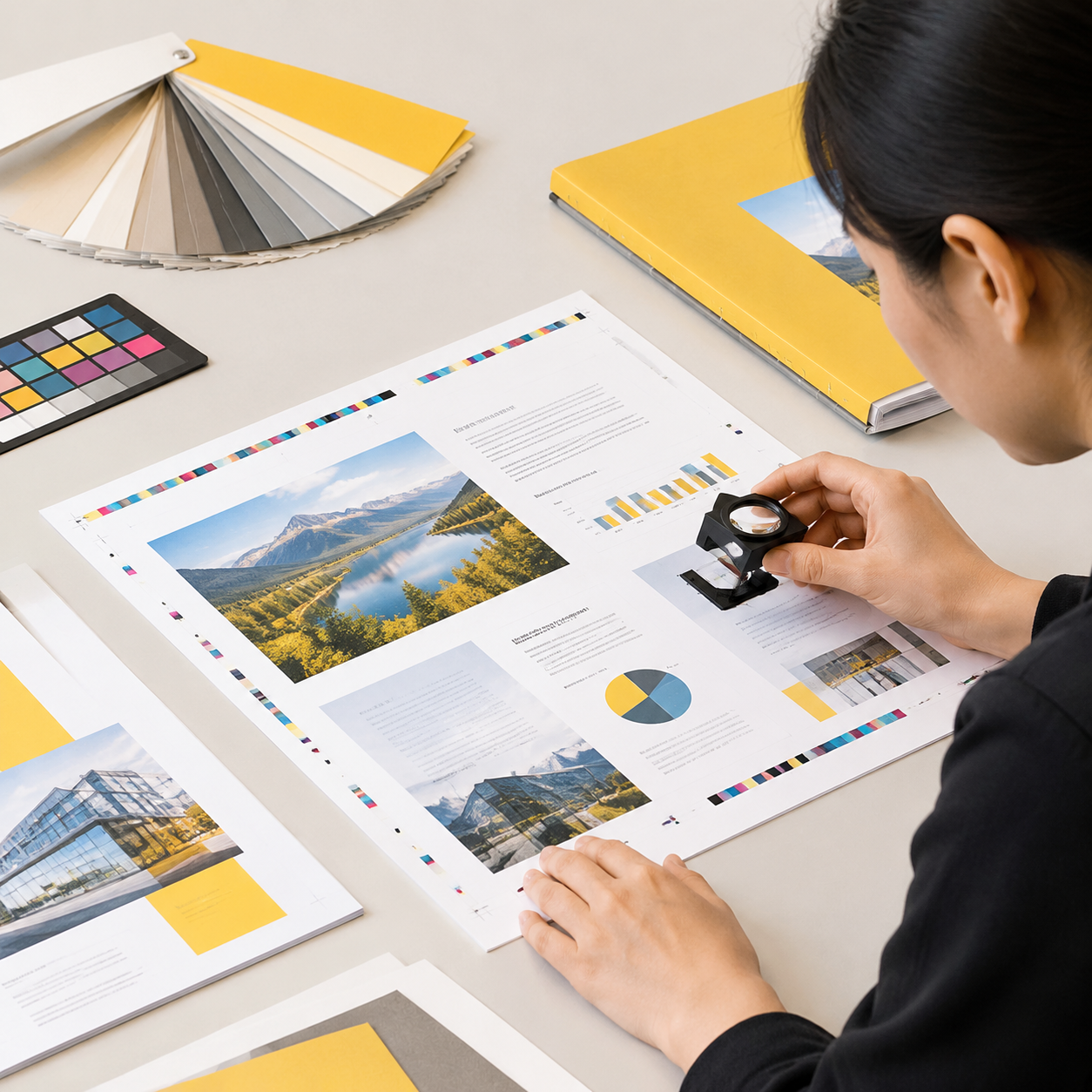
During annual report proofing, review the actual content, color relationships, fine detail, trim, and physical construction. Do not approve a proof only because the pages look correct on a monitor. The proof type and the acceptance criteria should be stated before bulk production begins.
A digital proof is useful for checking pagination, text, image placement, bleed, and finishing positions. It is not a perfect simulation of how ink will look on a particular paper. A physical proof or press proof is more useful when brand colors, dark photographs, paper surface, lamination, foil, or a premium cover are important. Ask the printer which proof method is being supplied and whether it uses the proposed stock or a close substitute.
For brand-critical work, state whether colors will be produced in CMYK, with spot inks, or through a CMYK simulation of a brand reference. A printed annual report can contain corporate color blocks, charts, grayscale financial tables, and photographs on the same spread. Each element needs a different visual check.
Lemon Printing describes a four-stage quality-control workflow covering prepress, on-press monitoring, post-press inspection, and packing verification. Buyers can review the company’s four-stage quality control information and ask which checkpoints and sampling method will apply to their report. If an AQL 2.5 sampling plan is required, include that requirement in the purchase specification rather than assuming it is included automatically.
Reviewing charts, fine text, images, trim, and binding
Use a named reviewer and a written sign-off checklist. The following sequence catches production problems that are easy to miss when several departments review separate PDF pages.
- Content and pagination: Confirm page order, headings, table values supplied by the client, captions, page numbers, blank pages, inserts, and language versions. Printing approval does not replace the client’s responsibility for final report content.
- Charts and fine text: Read labels at finished size. Check that thin rules, light gray fills, footnotes, legends, and small type remain visible after output. Look for accidental overprinting or transparency changes.
- Photographs and color: Compare skin tones, product colors, deep shadows, neutral grays, and large color fields against the approved reference. Inspect dark areas for blocked detail and check whether uncoated stock makes the image look softer than expected.
- Trim and bleed: Confirm that edge-to-edge artwork extends beyond the trim and that important text, logos, charts, and signatures have enough clearance. Review the cover front, back, and spine as one wrapped piece.
- Binding and finishing: Open the physical proof several times. Check gutter readability, cover scoring, lamination bubbles, foil or spot UV registration, glue appearance, sewn sections, staple position, or Wire-O punch alignment as applicable.
- Packing: Inspect corners, surface protection, carton strength, carton labels, and the agreed quantity per carton. A good printed copy can still arrive damaged if packing is not matched to the destination and shipping method.
Record the approver, proof version, corrections, and approval date. After approval, changes to artwork, page count, paper, or binding should trigger a revised review and may change the quote or schedule.
Annual report printing quote checklist
The specifications needed for an annual report printing quote are the product format, quantity, finished size, page count, paper, color method, binding, finishing, proof requirement, packing, delivery destination, and target date. Send these details in one request so suppliers are pricing the same job.
- Product and use: State that the item is an annual report and explain whether it is for mailing, meetings, investor packages, employee distribution, events, or long-term reference.
- Quantity: Give the total quantity, required versions, and any split by language, region, or delivery address. State whether extra copies are needed for internal reserves.
- Format: Provide portrait or landscape orientation, finished size, interior page count, cover page count, and whether there are inserts, gatefolds, or pockets.
- Paper: Specify text and cover stock, preferred GSM or caliper if known, coated or uncoated surface, and any recycled-content or certification documentation requirements.
- Printing and proof: State color on each side, spot-color requirements, brand references, expected image quality, digital or physical proof preference, and who will approve the proof.
- Binding and finishing: Name the preferred construction or ask for a comparison of perfect binding, sewn hardcover, saddle stitch, and Wire-O. Add lamination, foil, spot UV, embossing, scoring, or other finishing requirements.
- Packing and delivery: Give the complete destination, receiving restrictions, carton or pallet expectations, split-shipment plan, and target in-hand date. The shipping method and trade terms should be clear in the final quotation.
Quantity, finishing, and destination can change both the final quote and the schedule. Final MOQ, production time, pricing, and shipping depend on product specifications, quantity, finishing, and destination. Lemon Printing’s commercial printing process can help buyers organize the stages from file review through packing before they request a formal quote.
Frequently asked questions about annual report printing
These answers address the production questions buyers most often need to resolve before approving a report specification.
Request an annual report printing quote
A reliable annual report is the result of coordinated design, paper, binding, color, proofing, and packing decisions. Provide the complete specification early enough for the printer to test the construction and identify changes before bulk production.
Use the checklist above when requesting a quote, and ask suppliers to state assumptions clearly. That makes the comparison useful and gives your internal approvers a specific production plan to review.
FAQ
What specifications are needed for an annual report printing quote?
Provide the quantity, finished size, interior and cover page count, paper for each component, color method, binding, finishing, proof requirement, packaging, delivery destination, and target date. Also state whether the order has multiple versions or split shipments.
Which binding is suitable for a printed annual report?
Perfect binding suits many medium-length reports that need a professional paperback and spine. Sewn hardcover is better for premium or frequently handled reference copies. Saddle stitch works for shorter reports, while Wire-O is useful when flat opening is a priority. The final choice depends on page count, paper caliper, use, and handling expectations.
How do I choose paper for report text, charts, and photographs?
Matte coated paper is often a balanced choice for mixed charts and photography because it supports detail with less glare than gloss. Uncoated paper offers a more tactile, writable surface but usually produces softer color and more ink absorption. Compare opacity, caliper, show-through, viewing light, and binding requirements rather than choosing by GSM alone.
What should I review when approving an annual report proof?
Check pagination, data supplied in tables, chart labels, fine text, photographs, neutral grays, brand colors, bleed, trim clearance, cover and spine alignment, finishing registration, binding behavior, and packing. Use a physical proof when paper surface, color, finishing, or opening behavior is important, and record the approved proof version.
How do quantity, finishing, and destination affect the final annual report quote and schedule?
Quantity can affect the recommended printing method and setup allocation. Finishing adds materials and post-press operations, while destination affects packing, carton planning, freight, and shipping time. Final MOQ, production time, pricing, and shipping depend on product specifications, quantity, finishing, and destination.
Get a Clear Quote for Your Printing Project
Send Lemon Printing your product type, quantity, size, materials, binding or finishing requirements, delivery destination and target date. Our team will review the specifications and normally respond within one business day with practical production options, pricing and a project timeline.
Final MOQ, production time, pricing and shipping depend on product specifications, quantity, finishing and destination.