Table of Contents
- Why Toddler Books Are Manufactured Differently
- Board Book Format Options for Young Children
- Square, Portrait, and Landscape Formats
- Page Count, Spread Design, and Manageable Dimensions
- Material Choices: Board, Paper, Coating, and Lamination
- How Surface Finish Affects Color, Handling, and Appearance
- Rounded Corners and Binding Considerations
- A Practical Comparison of Toddler Board Book Options
- Proofing, Inspection, and Product-Requirement Review
- Packaging for Retail, Subscription, and Distributor Orders
- Frequently Asked Questions
- Discuss Your Toddler Board Book Project
Toddler board books need more than thick pages. This buyer-focused guide explains format, board construction, coatings, rounded corners, binding, proofing, inspection, and packaging choices that affect durability and production.
Why Toddler Books Are Manufactured Differently
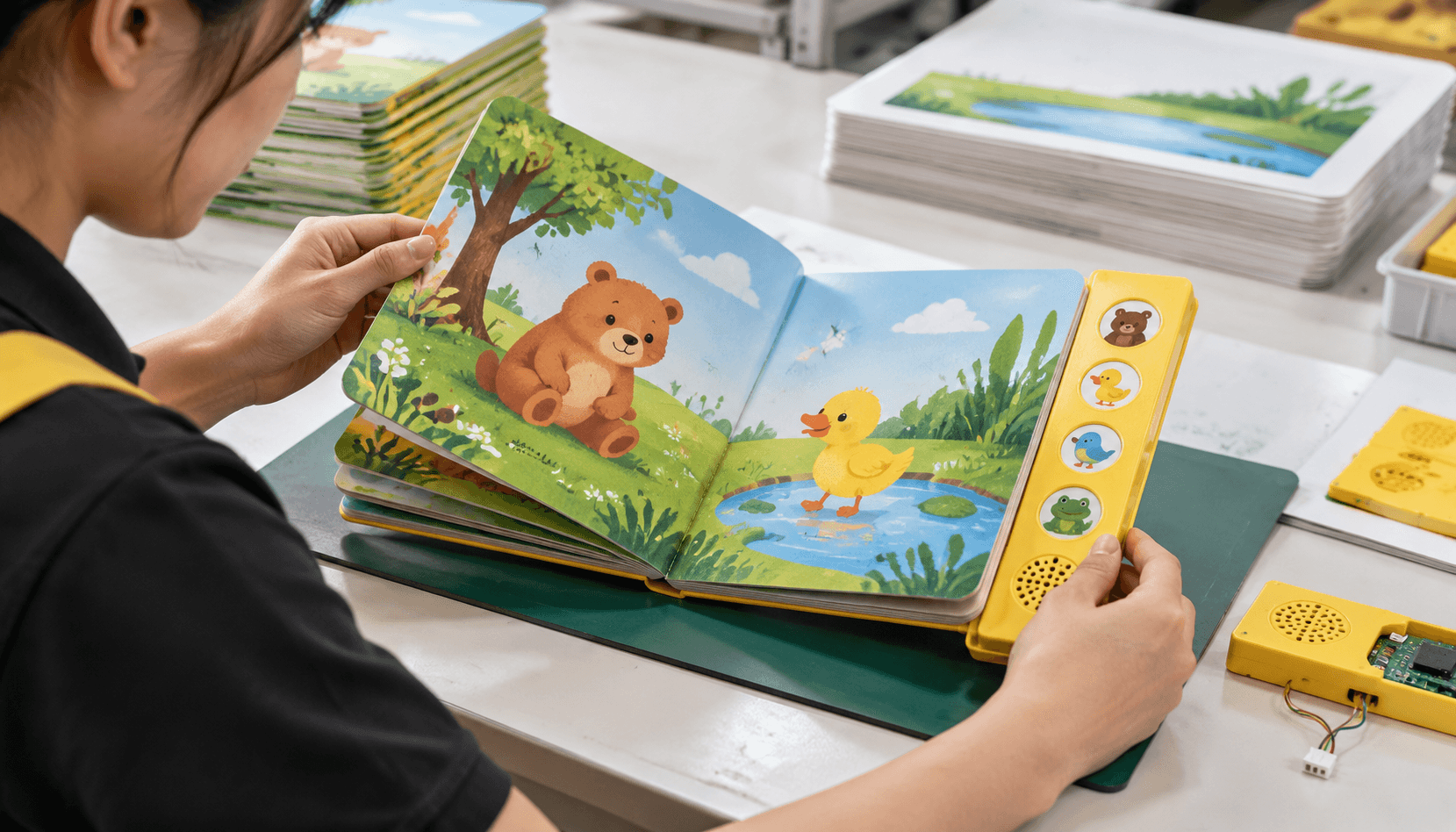
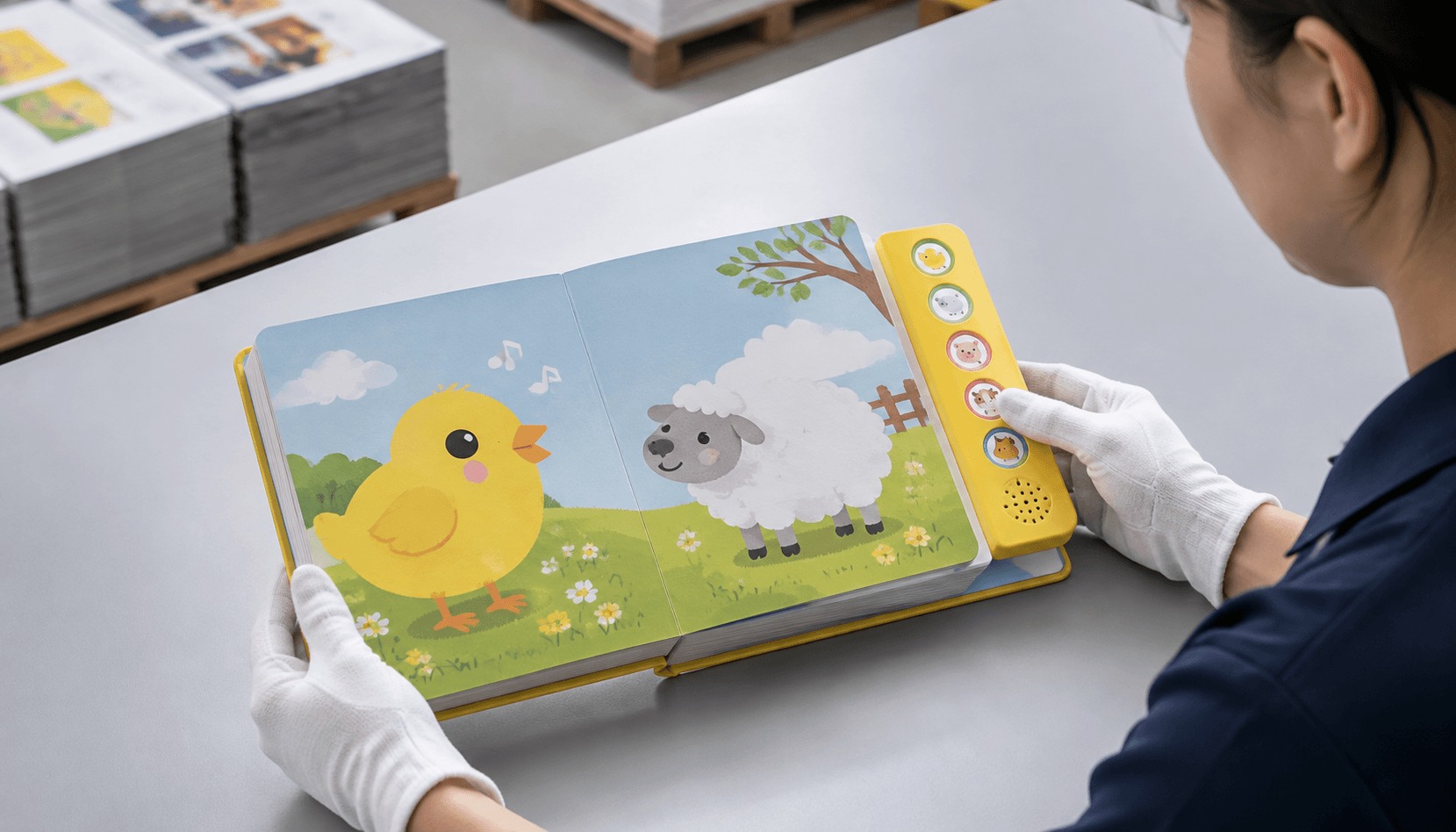
Board book printing for toddlers uses rigid leaves, reinforced construction, rounded edges, and durable surface finishing because the books are handled differently from ordinary paperbacks. Young children may bend pages, drag books across tables, handle them with damp hands, or open the same spread repeatedly.
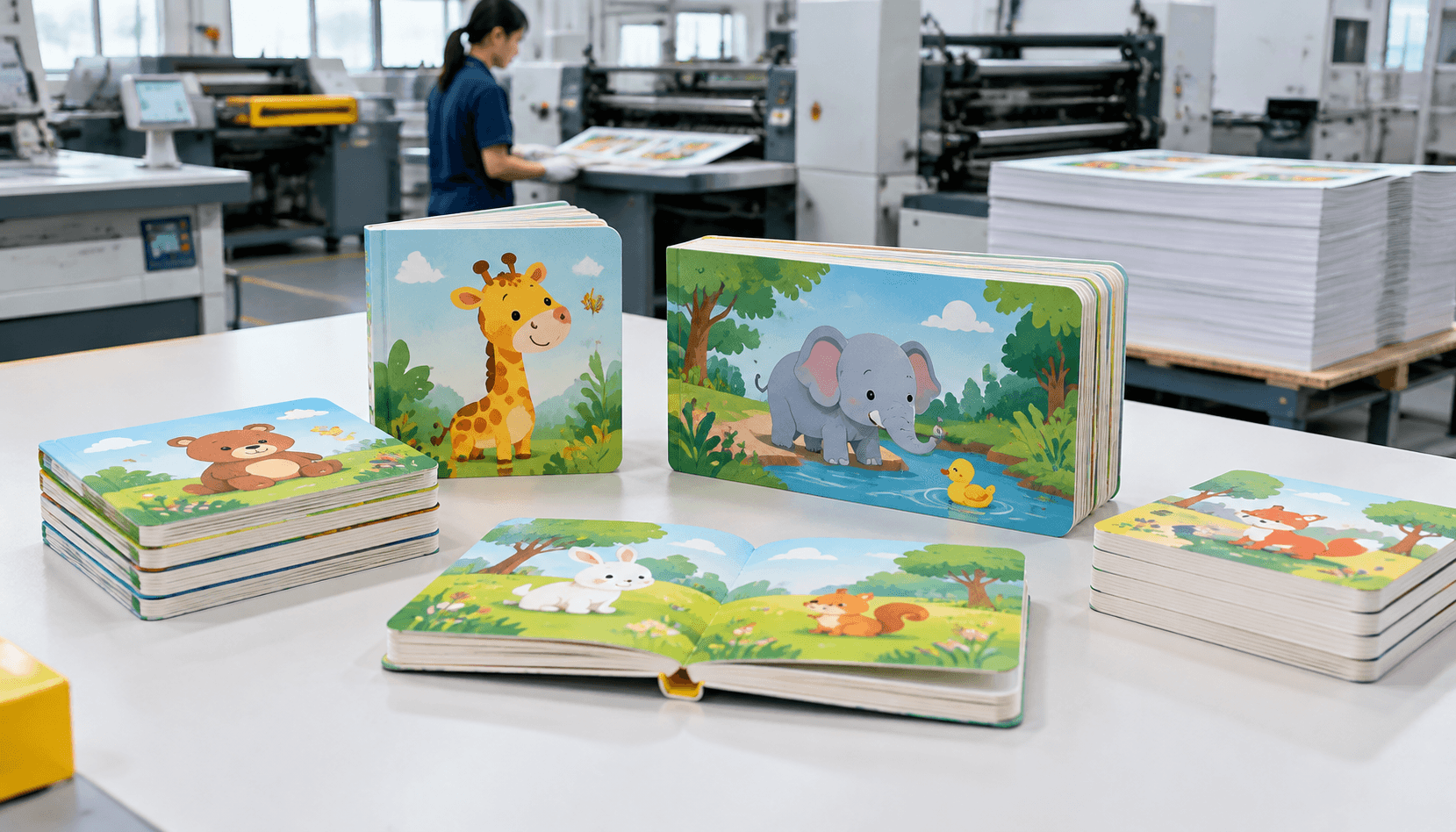
A board book is made with thick paperboard leaves rather than flexible text paper. Depending on the manufacturing method, printed sheets may be mounted to board and assembled into leaves, or the printing substrate itself may provide the required thickness. The page pairs are joined into a block, trimmed or die-cut, corner-rounded, and bound into the final book.
Durability depends on the complete construction, not board thickness alone. Board caliper, paper grain, adhesive coverage, hinge design, lamination, drying time, trimming, and packing all influence the result. Buyers preparing a specification can use this child board book printing specification guide to identify the details a manufacturer needs before quoting.
Board Book Format Options for Young Children
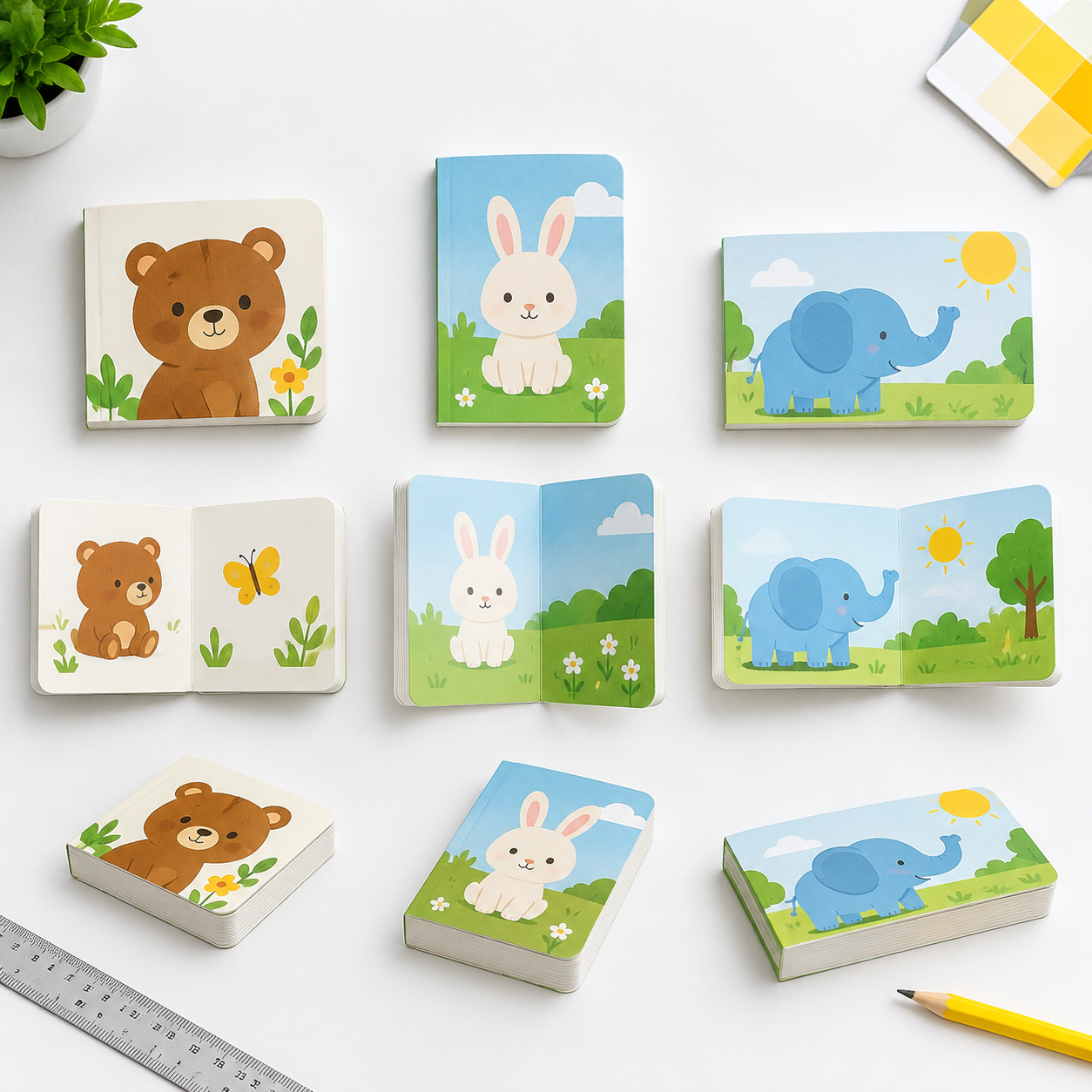
The best format is compact enough for small hands but large enough for readable type, recognizable images, and stable binding. Finished size also affects press layout, board usage, carton weight, and shipping volume, so an unusual shape should be reviewed before artwork is finalized.
A printer can evaluate standard and custom formats as part of a broader custom book printing project. Ask for a dieline or page template based on the confirmed finished size, corner radius, bleed, and hinge allowance.
Square, Portrait, and Landscape Formats
Square formats are versatile, portrait books suit vertically composed subjects, and landscape books provide wider storytelling spreads. The right choice follows the artwork and reading use rather than a fixed toddler-book standard.
| Format | Practical advantage | Production point to check |
|---|---|---|
| Square | Balanced space for a single object, character, or short text block | Confirm whether the selected size uses board and press sheets efficiently |
| Portrait | Works well for people, animals, counting stacks, and shelf display | A narrow book may be less stable when opened flat |
| Landscape | Supports scenes, vehicles, panoramas, and side-by-side sequences | Extra width can increase leverage on hinges and affect carton dimensions |
Custom shapes can support a specific concept, but they require die-cutting, careful corner treatment, and a packing review. Small projections, narrow necks, or sharp internal cuts may weaken the board or create difficult finishing points.
Page Count, Spread Design, and Manageable Dimensions
Confirm page count with a numbered page map because board book factories may describe leaves, printed faces, panels, pages, and spreads differently. A spread is the two facing pages visible when the book is open; a leaf is one thick physical piece with a printed face on each side.
Send a low-resolution imposed mockup showing the front cover, every interior page, and back cover. This prevents disagreements about whether covers are included in the stated count. Keep important text, faces, and learning prompts away from trim lines, rounded corners, and the center hinge. Use the manufacturer’s template rather than assuming that a bleed or safety margin from another book will apply.
More leaves produce a thicker and heavier book. Before adding pages, check the intended age range, book weight, opening behavior, spine construction, retail shelf space, and shipping carton weight.
Material Choices: Board, Paper, Coating, and Lamination
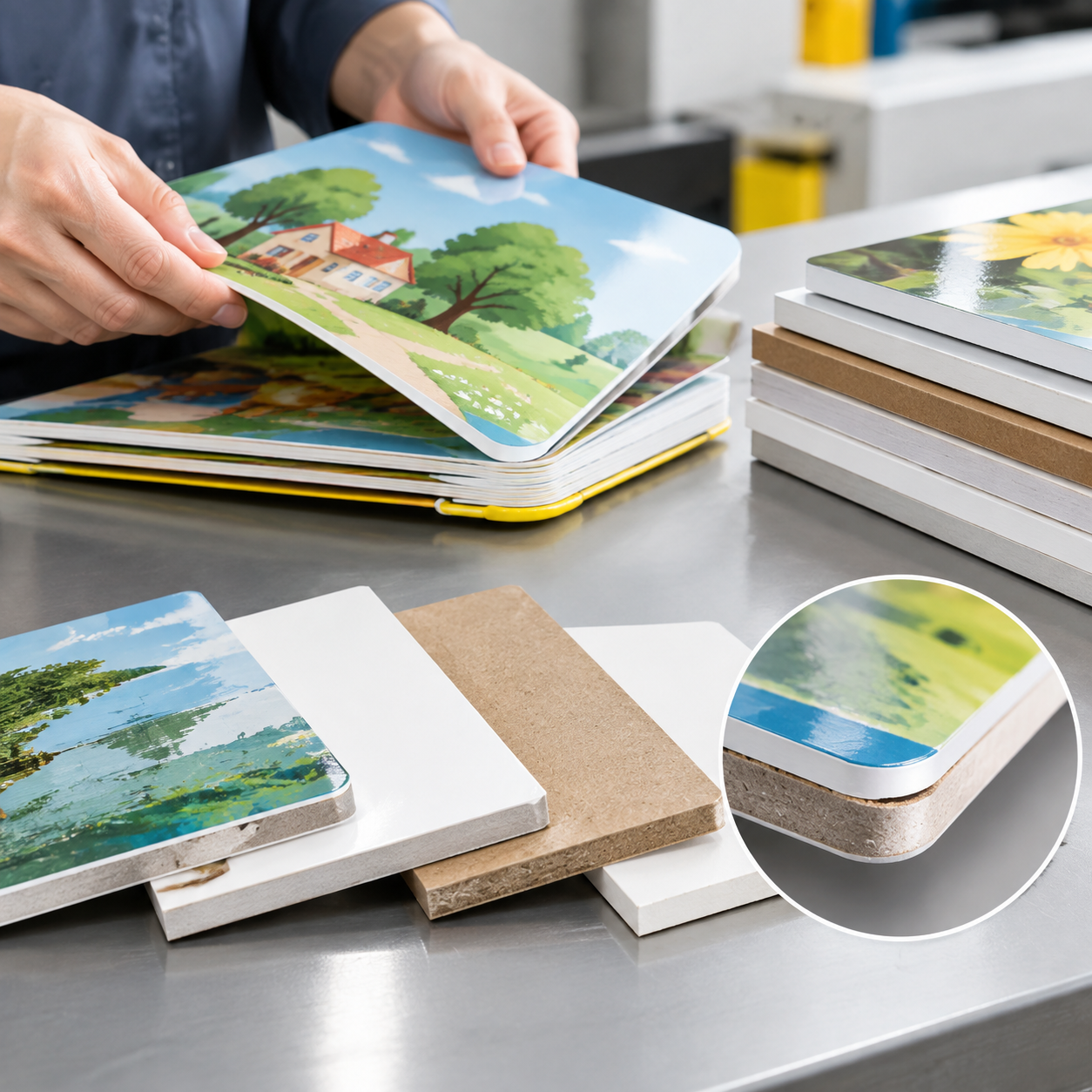
Specify the finished leaf construction, not simply “thick cardboard.” A useful material specification identifies the board type, printed paper or printable surface, finished leaf caliper, surface finish, adhesive system, and any testing requirements for the destination market.
Board caliper means board thickness, usually stated in millimeters or microns. It is different from grammage, which is material weight in grams per square meter. Two boards with the same grammage can have different thickness, stiffness, density, and edge appearance.
Common constructions include printed coated paper mounted to paperboard and direct printing on a suitable thick paperboard. Mounted construction can provide a smooth print surface, but adhesive application and curing must be controlled to reduce bubbling, warping, and edge separation. Direct-print construction removes a mounting layer but requires a board surface compatible with the selected printing process and color expectations.
Do not approve a material using a generic name alone. Request a sample showing the proposed finished thickness, edge structure, stiffness, white point, surface finish, and opening behavior. If recycled content, restricted substances, migration limits, or market-specific children’s product requirements apply, state the required standard and documentation during quotation. Compliance should be confirmed for the actual materials and finished product rather than assumed from a supplier description.
How Surface Finish Affects Color, Handling, and Appearance
Lamination generally provides more resistance to moisture, rubbing, and repeated wiping than a light press coating, but no ordinary board book finish should be described as waterproof. Exposed board edges, hinges, and damaged film can still absorb moisture.
| Finish | Appearance and handling | Trade-off |
|---|---|---|
| Gloss film lamination | Higher apparent contrast and a smooth, wipeable surface | Shows reflections and can reveal fingerprints under direct light |
| Matte film lamination | Reduced glare and a softer visual appearance | Standard matte film may show rubbing, scratches, or dark scuff marks |
| Anti-scuff matte film | Matte appearance with improved resistance to visible surface marking | Usually costs more and still requires sample approval |
| Aqueous coating or varnish | Thin protective press-applied layer with less film-like feel | Typically offers less barrier and abrasion protection than lamination |
Review solid dark colors, large ink areas, skin tones, and fine gradients on the chosen finish. Lamination changes perceived contrast and gloss, while board whiteness can influence color. Any spot finish should be tested around folds, hinges, and trimmed edges before production.
Rounded Corners and Binding Considerations
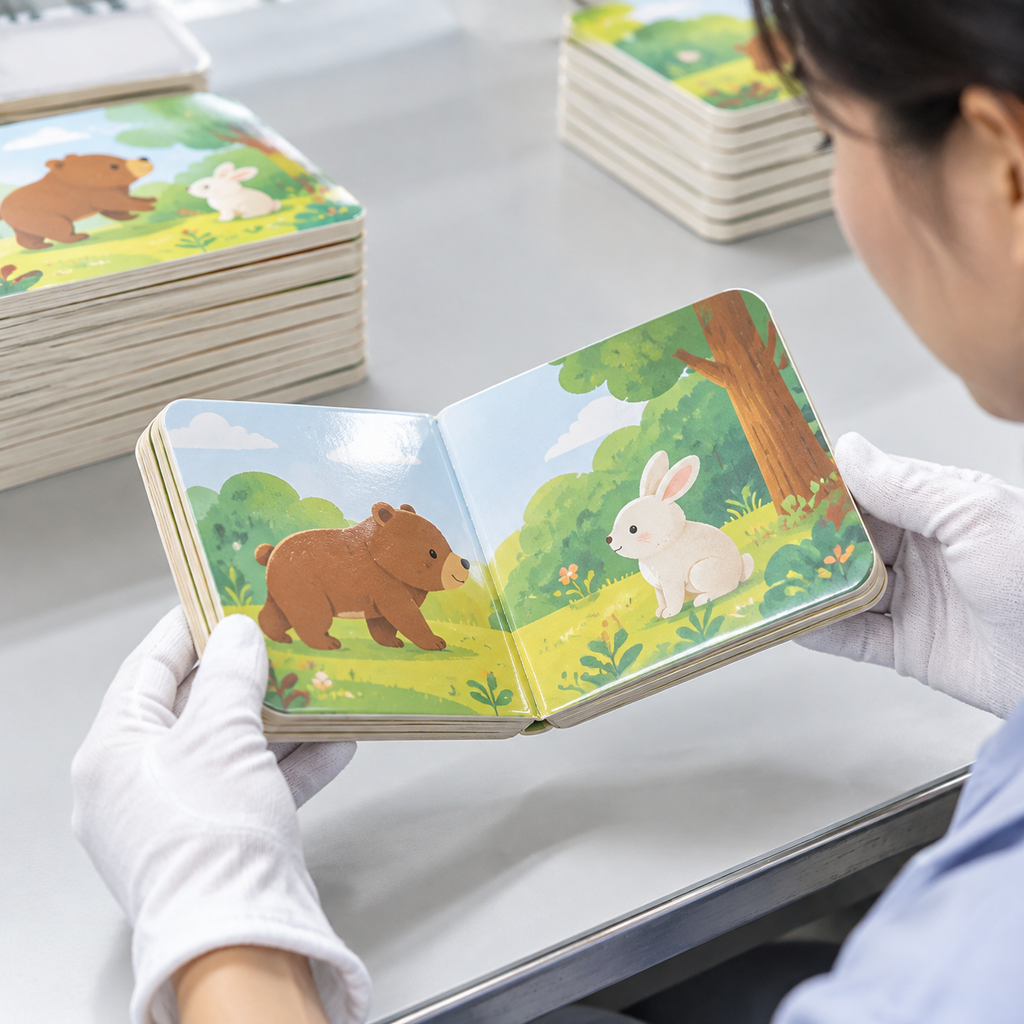
Rounded corners reduce sharp points, but radius alone does not determine durability or suitability. The corner shape must work with the finished size, board thickness, lamination, artwork safety area, cutting method, and applicable product requirements.
Request the proposed corner radius in millimeters and approve it on a physical sample or accurate mockup. A larger radius removes more artwork near the corner, while a very small radius can leave a point that appears sharper than expected. Inspect corners for exposed board fibers, lifting film, crushing, inconsistent curves, and rough cutting.
The binding must also allow repeated opening without premature separation. Important controls include adhesive coverage, hinge spacing, page alignment, board grain direction, curing, and the relationship between block thickness and spine construction. Board books can open relatively flat, but forcing a design across the center may still hide details or distort text. For a broader explanation of construction choices, review these book binding options and selection factors.
A Practical Comparison of Toddler Board Book Options
There is no single material combination that suits every custom toddler book. The useful comparison is between handling requirements, visual goals, production complexity, unit weight, and the buyer’s target cost structure.
| Project requirement | Option to evaluate | What to verify |
|---|---|---|
| Frequent classroom or library handling | Stiffer leaves with durable film lamination | Hinge cycling, scuffing, edge condition, and cleaning instructions |
| Bright retail picture book | Coated print surface with gloss or matte lamination | Color proof under the selected finish and consistency across spreads |
| Low-glare reading surface | Matte or anti-scuff matte lamination | Dark-color scuff performance and acceptable surface texture |
| Lightweight subscription shipment | Compact format and moderate leaf thickness | Finished book weight, carton quantity, corner protection, and mailing pack |
| Custom silhouette | Die-cut board book construction | Weak projections, die tolerance, smooth edges, nesting, and packing efficiency |
A complete product specification should state the finished size, orientation, number of printed faces and physical leaves, board construction, finished leaf thickness, color process, lamination or coating, corner radius, binding structure, proof type, packing method, and destination-market requirements. Also provide quantity tiers so the factory can assess press setup and material usage consistently.
These options are starting points, not fixed product grades. The approved physical sample and written specification should control production because terms such as “standard board,” “heavy duty,” and “child safe” are not precise manufacturing specifications.
Proofing, Inspection, and Product-Requirement Review
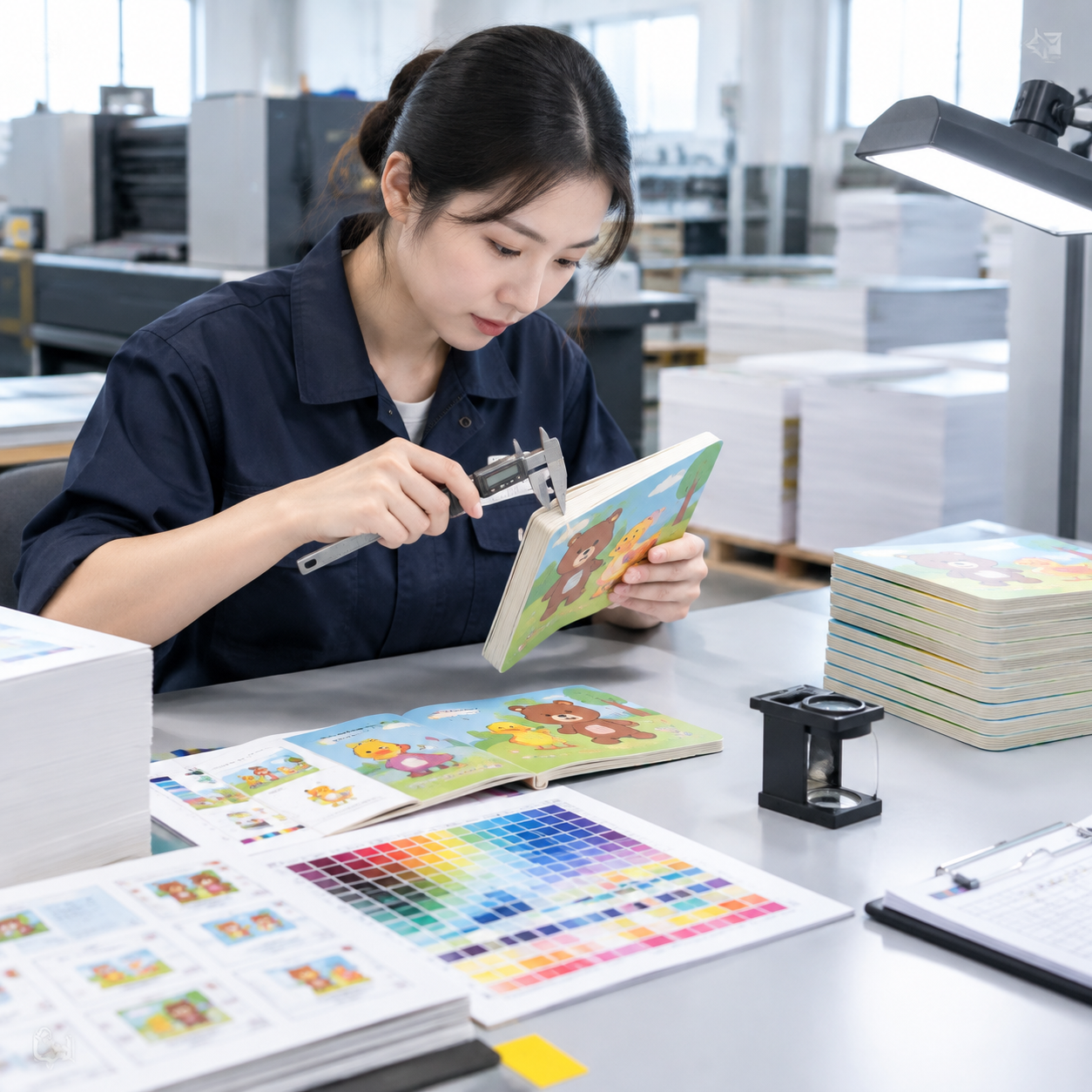
Proofing should verify both printed content and physical construction before bulk production. A digital color proof can identify layout and content errors, but a constructed sample is more useful for assessing thickness, page order, corner shape, lamination, hinge behavior, and finished dimensions.
- Review the requirement sheet. Confirm size, page map, materials, finishing, quantity, packing, destination, and applicable testing instructions.
- Check prepress files. Verify bleed, image resolution, color mode, fonts, overprint settings, dielines, and the safe position of critical content.
- Approve content and color. Record corrections in one controlled list and identify whether color is evaluated from a calibrated proof, press proof, or physical sample.
- Approve construction. Check page sequence, opening behavior, leaf thickness, cover alignment, corner radius, edge finish, and adhesive condition.
- Define bulk inspection criteria. Agree on acceptable tolerances and defect classifications for trimming, color variation, scratches, delamination, page alignment, and packing.
Use a documented printing proof approval checklist so comments are traceable. At Lemon Printing’s in-house printing factory, prepress, printing, binding, finishing, quality inspection, packing, and export preparation are managed within one production workflow. The self-owned facility in the Guangzhou-Shenzhen manufacturing corridor has more than 130 skilled workers and 8+ offset and digital presses.
Packaging for Retail, Subscription, and Distributor Orders
Packaging should be designed around the sales channel and shipping method, not added after production. Board books are compact but dense, and excessive carton weight can damage bottom copies, strain carton seams, and make warehouse handling difficult.
Retail orders may require individual wrapping, labels, barcodes, price stickers, sets, or display-ready cartons. Subscription orders may need a fixed mailing configuration, protective inserts, or kitting with other products. Distributor shipments usually prioritize consistent carton quantities, readable carton marks, pallet planning, and efficient receiving.
Ask the manufacturer to confirm units per inner pack, units per export carton, carton dimensions, gross and net weight, edge protection, moisture protection, pallet requirements, and shipping marks. Any plastic-bag labeling or market-specific warning must be specified by the buyer. The carton plan should also be checked against the approved book dimensions because a late format change can alter freight volume. This bulk printed product shipping guide explains the information needed for export planning.
FAQ
What information does a baby board book manufacturer need for a quote?
Provide the finished size, orientation, quantity, number of printed faces and physical leaves, board construction or target thickness, printing colors, coating or lamination, corner radius, binding, proof requirements, individual and carton packing, delivery destination, and target date. Include artwork or a page map when available.
What board thickness is best for toddler board books?
There is no universal best thickness. The appropriate caliper depends on book dimensions, number of leaves, intended age, handling level, binding structure, weight target, and cost. Compare physical samples made with the proposed construction rather than choosing from grammage alone.
Is gloss or matte lamination more durable?
Both can protect printed surfaces, but their visible wear differs. Gloss film is generally easy to wipe and provides strong color contrast, while standard matte film can show scuffs more readily. Anti-scuff matte film may improve mark resistance. Test the actual film, ink coverage, and board construction before approving production.
Are laminated toddler board books waterproof?
No ordinary laminated board book should be treated as waterproof. Lamination can improve surface resistance to damp handling and wiping, but moisture can enter through exposed edges, hinges, cuts, or damaged film. Cleaning guidance should match the tested construction.
How should page count be stated for a board book?
State the number of physical leaves, printed faces, and spreads, and clarify whether the front and back covers are included. Supply a numbered page map from front cover through back cover. This removes ambiguity between publishing page counts and factory production counts.
What are the MOQ, production time, price, and shipping cost?
Final MOQ, production time, pricing, and shipping depend on product specifications, quantity, finishing, and destination. Custom dies, special materials, physical proofs, testing, individual packing, and delivery method can also affect the quotation and schedule.
How should buyers address safety and compliance requirements?
Identify the destination market, intended age grading, applicable regulations, restricted-substance requirements, testing protocol, labeling, and required reports before quotation. Do not assume that a generic material description proves finished-product compliance. The buyer, manufacturer, testing laboratory, and compliance adviser should agree on responsibilities and samples to be tested.
Discuss Your Toddler Board Book Project
Request a production review from Lemon Printing with your product type, quantity, finished size, page count or leaf map, paper and board preferences, binding, coating or lamination, corner requirements, packing method, delivery destination, and target date. The team can review the specification, identify missing production details, and prepare a project-specific quotation.