Table of Contents
- Start with how the reader will write, mark, and reuse the workbook
- Match paper surface and ink behavior to pencils, pens, and markers
- Define writing space, margins, page turns, and handling frequency
- Compare workbook formats in a production specification table
- When spiral or Wire-O binding supports flat-opening use
- When saddle stitch or paperback binding is more appropriate
- Choose workbook size, pagination, paper, and cover protection
- Test the finished experience through proofing
- Check writing space, page sequence, binding clearance, and reproduction
- Plan production inspection, kitting, and export packing
- Match the project to Lemon Printing's custom workbook printing capability
- Quote-ready workbook checklist
- FAQ: Workbook printing
Plan workbook printing around writing space, paper and binding. Compare opening behavior and review a bound sample before approving production.
Start with how the reader will write, mark, and reuse the workbook
Effective workbook printing starts with the user’s physical task, not the binding catalog. A workbook used for classroom exercises, field inspections, or multi-day training may need to remain open without being held, provide a stable writing surface, and withstand repeated page turns.
Define the expected use before requesting prices. Will readers write on every page or only complete occasional forms? Will the workbook sit on a desk, fold back on itself in one hand, or travel in a bag? Does it contain removable worksheets, answer keys, dividers, or reference pages?
Flat-opening means that facing pages remain accessible with little hand pressure. It does not mean every binding opens to a perfectly level two-page spread. Coil and Wire-O constructions generally provide the most reliable flat-opening behavior, while saddle-stitched books open well only within suitable page counts and paper combinations. The detailed workbook binding options guide explains these construction differences.
Match paper surface and ink behavior to pencils, pens, and markers
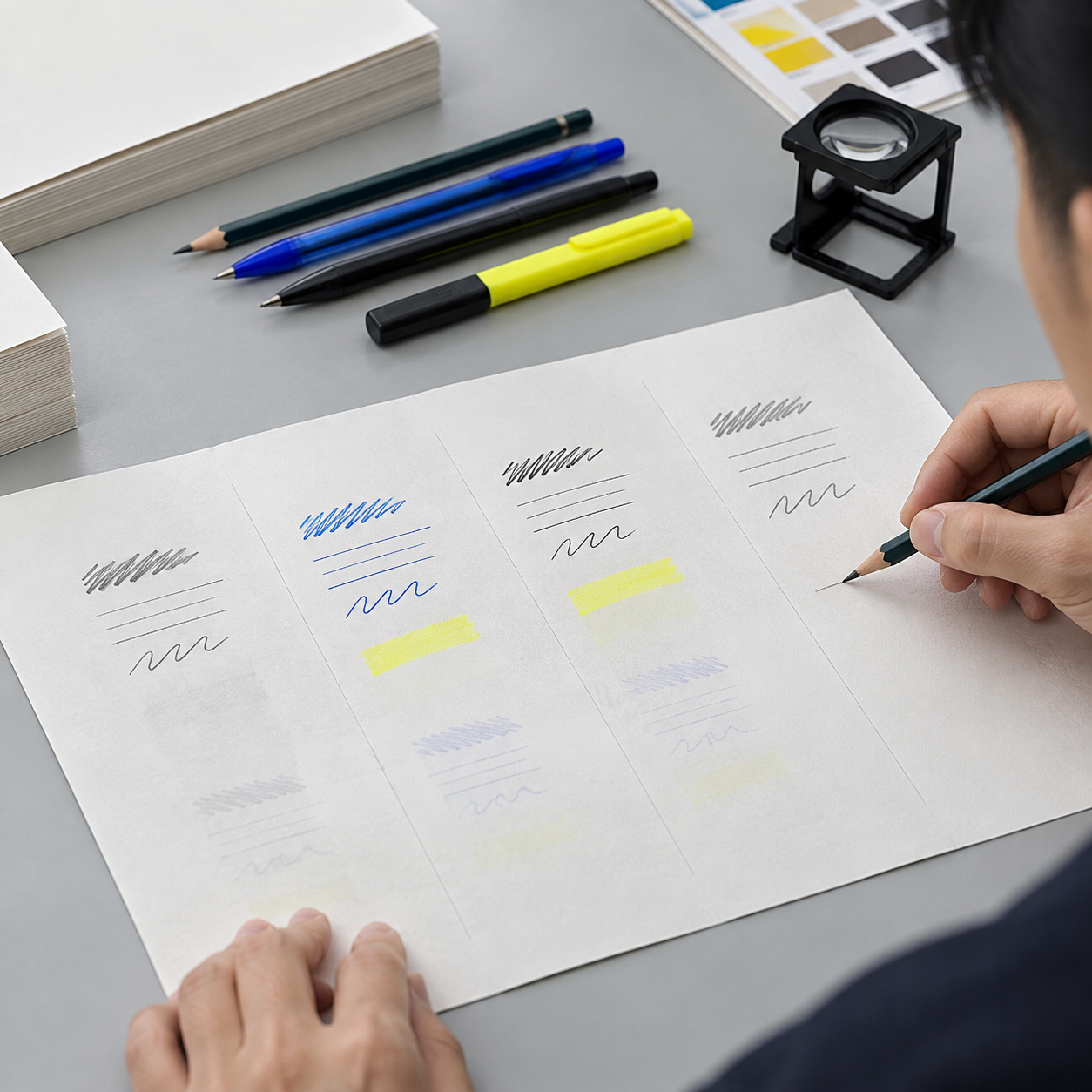
Uncoated paper is usually the practical starting point for pages that readers will write on. Its open surface accepts graphite and many common pens more readily than smooth coated stock, although paper shade, sizing, opacity, and surface texture still affect the result.
Ask the printer to test the actual or representative writing tools when performance matters. Pencil needs enough surface tooth to leave a clear mark. Ballpoint pens need a firm surface that does not feel excessively rough. Gel pens and fountain pens require checks for feathering, show-through, and drying time. Alcohol-based markers can bleed through many ordinary text papers, so a heavier sheet alone may not solve the problem.
For mixed content, a workbook can use uncoated writing pages with a coated or laminated cover. Review the trade-offs in the coated versus uncoated paper guide. Paper weight should be confirmed together with opacity, bulk, grain direction, binding capacity, and finished shipping weight rather than selected from weight alone.
Define writing space, margins, page turns, and handling frequency
Usable writing space is the page area left after trimming, binding clearance, headers, instructions, and any required safe margin are considered. A visually spacious layout can become awkward if answer lines sit too close to punched holes or disappear into a glued spine.
Set margins for the selected binding, not for a generic page template. Spiral and Wire-O books need clearance between the holes and live content. Paperback workbooks need a larger inside margin because the reader cannot fold the spine completely flat without stressing it. Also consider left-handed users, who may rest a hand over the binding while writing on right-hand pages.
For frequently handled training workbook printing, use clear page numbers, section labels, and page-turn cues. Keep exercises with their instructions where possible, and avoid placing a response field across a two-page spread.
Compare workbook formats in a production specification table
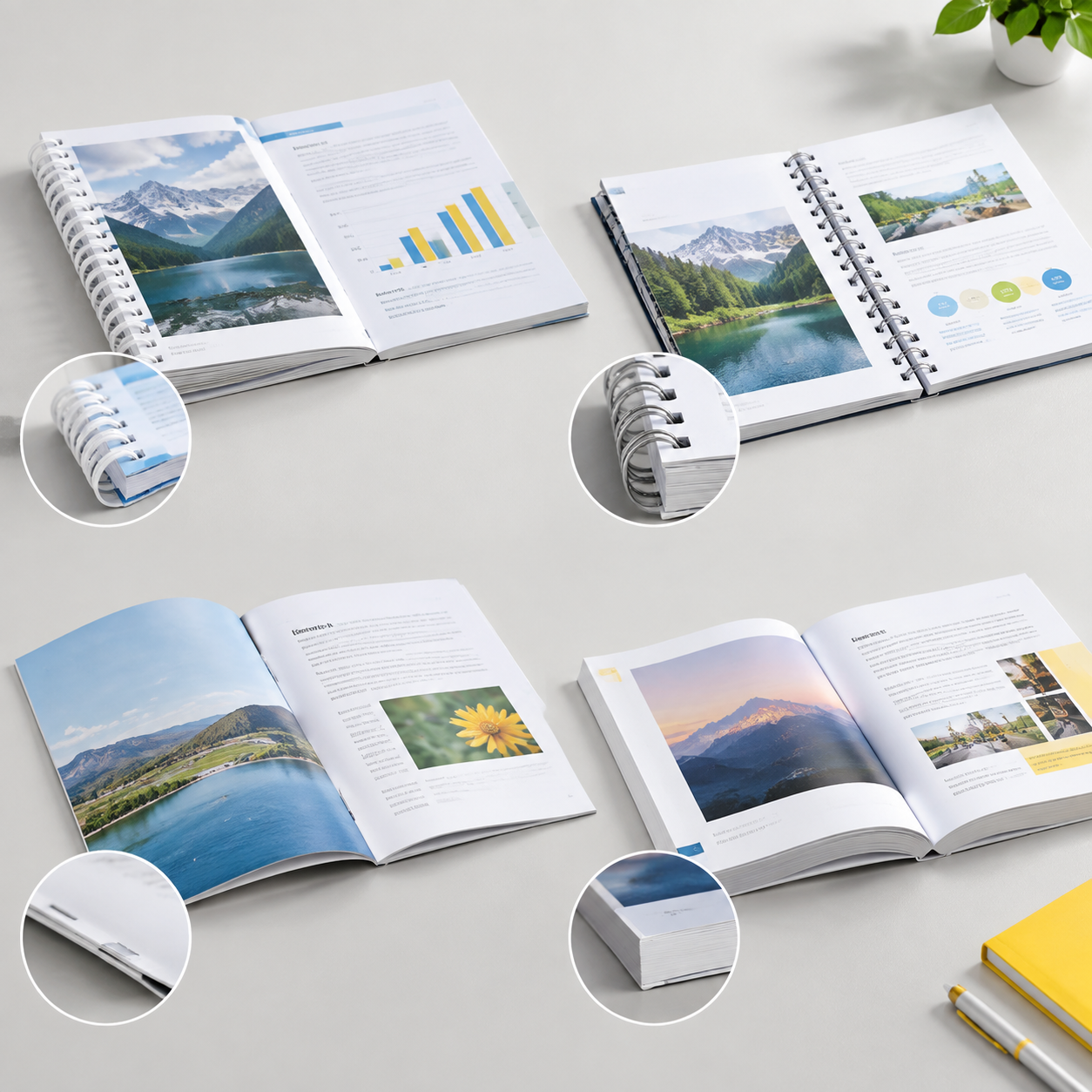
No single binding is correct for every workbook. The practical choice depends on page count, opening behavior, handling, cover expectations, packing, and budget.
| Format | Opening and writing behavior | Good fit | Points to specify |
|---|---|---|---|
| Plastic spiral or coil | Opens flat and can usually fold back 360 degrees | Classroom exercises, field manuals, frequently reused training books | Coil diameter, color, hole pattern, crimping, cover stock, and binding edge |
| Wire-O | Opens flat with aligned facing pages and can fold back | Professional training materials, planners, presentation-oriented workbooks | Wire size, color, pitch, hanger if needed, page bulk, and cover construction |
| Saddle stitch | Opens reasonably well at a modest extent but does not fold back cleanly | Short, economical exercise books and event handouts | Final page count in multiples of four, creep, center spread, and cover weight |
| Perfect binding | Neat square spine, but requires hand pressure and wider inside margins | Reference-led workbooks with substantial page counts | Paper grain, spine width, adhesive suitability, cover scoring, and gutter allowance |
| Sewn paperback | More flexible and durable than a basic glued construction, but not fully flat | Long-life manuals combining reading and occasional writing | Signature plan, sewing method, adhesive, spine, and cover hinge behavior |
Treat this as a selection guide rather than a universal production limit. The printer should confirm feasibility after reviewing the final page count, paper caliper, cover, inserts, and desired opening behavior.
When spiral or Wire-O binding supports flat-opening use
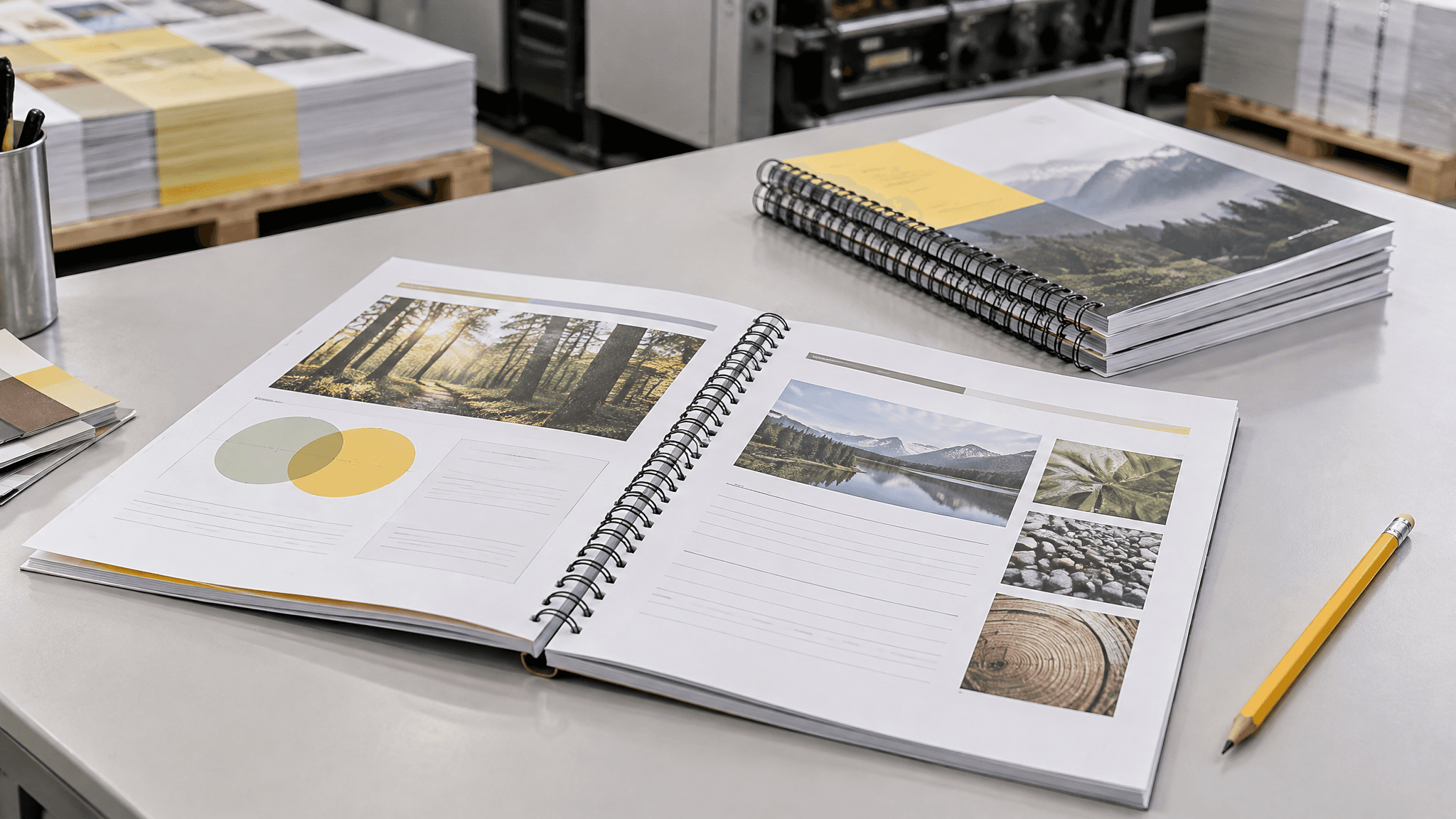
Spiral bound workbook printing is usually suitable when readers must write while the book stays open or fold pages completely behind the book. A continuous plastic coil passes through punched holes and is crimped at both ends to reduce the risk of it unwinding.
Wire-O workbook printing uses paired wire loops closed through rectangular or square holes. It provides an orderly spine and good page alignment, but crushed wire can prevent pages from turning correctly. Packing should therefore protect the binding edge from concentrated pressure.
For either format, specify the binding edge, opening direction, hole clearance, wire or coil color, and any oversized cover or tab dividers. Page bulk determines the binding diameter. Ask the printer to calculate that diameter from the selected production paper rather than estimating it from page count alone.
When saddle stitch or paperback binding is more appropriate
Saddle stitch can be more economical and compact for a short workbook that is used once or only a few times. Folded sheets are nested and stapled through the fold, so the total page count is normally planned in multiples of four. Thick paper or excessive pagination can cause the inner pages to push outward, a condition called creep.
Perfect binding is useful when the buyer needs a square spine, shelf presence, or a higher page count. It is less appropriate for exercises extending into the gutter because the pages resist lying flat. A generous inside margin and a flexible, properly scored cover improve access but do not turn it into a lay flat workbook binding.
Choose workbook size, pagination, paper, and cover protection
Workbook printing specifications should identify dimensions and page construction unambiguously. State the finished width before height, the binding edge, and whether the page count includes blank pages. In printing, one page means one printed or blank side, while one leaf has two sides.
| Specification | Decision to record | Production reason |
|---|---|---|
| Finished size | Width x height after trimming | Controls imposition, usability, packing, and freight volume |
| Page count | Total interior sides, including intentional blanks | Determines paper consumption, bulk, and binding capacity |
| Interior paper | Paper type, weight, shade, and writing requirement | Affects ink, opacity, writing feel, thickness, and weight |
| Printing | Color or black ink, one or both sides, and color-critical pages | Defines press setup and proofing needs |
| Cover | Stock, printing, lamination or coating, and corner treatment | Protects the workbook and affects binding behavior |
| Binding | Method, edge, color, diameter where applicable, and opening requirement | Controls access to the page and finished durability |
Common workbook sizes can simplify use and packing, but custom dimensions may better fit diagrams, forms, or an existing kit. Matte or gloss lamination can protect a printed cover from scuffing and moisture encountered during ordinary handling. For a coil or Wire-O book, confirm whether the cover is flush with the pages, extends beyond them, or uses a wraparound construction.
Test the finished experience through proofing

A physical proof is the most useful way to evaluate writing comfort, page turns, binding position, paper show-through, and finished size. A digital PDF proof remains important for checking content and sequence, but it cannot reproduce paper feel or binding behavior.
The proof method should match the decision being made. A digitally printed bound sample can demonstrate construction and handling, although its color may not exactly match a later offset production run. For color-sensitive artwork, discuss a separate contract color proof or press-related color control. Use a documented approval process such as this printing proof approval checklist.
Check writing space, page sequence, binding clearance, and reproduction
Review the proof as a user would, not only as a designer. Sit at a desk, turn through each section, write in representative fields, fold pages back if required, and carry the sample in the intended kit or bag.
- Confirm finished size, orientation, page count, and page sequence.
- Check that text, answer lines, and diagrams remain clear of trim and punched holes.
- Write with the expected pencil, ballpoint, gel pen, or marker.
- Inspect show-through, bleed-through, ink density, fine rules, and small type.
- Test whether pages turn freely without catching or pulling from the binding.
- Confirm cover stiffness, lamination, tabs, inserts, pockets, and other components.
- Record every correction by page number and issue a final approved file.
If the binding material, paper, or page count changes after proof approval, reassess hole clearance and binding diameter before production.
Plan production inspection, kitting, and export packing

Production inspection should cover the functional features that make a workbook usable, not just visible print defects. Relevant checkpoints include page sequence, trim, color consistency, hole position, missing or doubled sheets, coil crimping, Wire-O closure, cover alignment, and the operation of tabs or inserts.
Define kitting requirements before the quote if each workbook must be packed with pens, cards, certificates, instructor materials, or other components. Identify the order of items, bag or box type, labels, barcode data, carton assortment, and carton marks. Late kitting instructions can change labor, packaging, and carton dimensions.
For export orders, protect punched bindings from crushing and limit movement inside cartons. Carton strength and palletization should reflect product weight and the selected transport method. The export planning guide for bulk printed products covers packing data and shipping decisions in more detail.
Match the project to Lemon Printing's custom workbook printing capability
According to Lemon Printing, workbook projects are produced through its self-owned facility in China’s Guangzhou-Shenzhen manufacturing corridor. The company has more than 130 skilled workers and over eight offset and digital presses. Prepress, printing, binding, finishing, inspection, packing, and export preparation are handled in-house.
This production scope can support education workbook printing, training workbook printing, manuals, course materials, and other custom book formats for international organizations. Buyers can review the company’s custom book printing capability and printing factory information when assessing manufacturing fit.
The appropriate press, binding setup, and proof route depend on the artwork, quantity, materials, finishing, and quality requirements. Final MOQ, production time, pricing, and shipping also depend on product specifications, quantity, finishing, and destination.
Quote-ready workbook checklist
A complete request allows the printer to evaluate construction, materials, production, packing, and freight on the same basis. Include the following workbook printing specifications:
- Product use and required opening behavior
- Quantity and any version, language, or title breakdown
- Finished width, height, orientation, and binding edge
- Total interior page count, including blank pages
- Interior and cover paper preferences
- Interior and cover print colors
- Spiral, Wire-O, saddle stitch, perfect binding, or another construction
- Cover lamination, coating, tabs, perforation, pockets, or inserts
- Expected writing tools and any opacity requirement
- Proof type and color-critical elements
- Individual packing, kitting, labels, carton marks, and pallet requirements
- Delivery destination, target arrival date, and requested shipping terms
Attach the print-ready artwork if available. If artwork is still being developed, provide a representative file and identify which specifications remain open so assumptions can be stated in the quotation.
FAQ
Which binding is best for a workbook that must stay open?
Plastic spiral and Wire-O binding are usually the strongest candidates because both allow pages to lie open with little pressure and can generally fold back. The final choice depends on page bulk, handling, appearance, packing, and budget. A bound physical proof should confirm the required behavior.
What paper is best for writing in a workbook?
Uncoated paper is commonly selected because it accepts pencil and many pens well. However, surface texture, opacity, bulk, shade, and internal sizing all affect writing performance. Test the expected writing tools, especially gel pens, fountain pens, highlighters, or markers.
Can perfect-bound workbooks lie flat?
Standard perfect-bound workbooks do not lie completely flat. Adhesive binding creates resistance near the spine, so layouts need a larger inside margin. More flexible constructions may improve opening, but coil or Wire-O binding is usually more appropriate when hands-free flat opening is essential.
How much margin should be left for spiral or Wire-O holes?
The required clearance depends on the hole pattern, binding diameter, page size, and production equipment. Do not rely on a universal margin. Ask the printer for a binding template, then keep text, answer lines, and essential graphics outside the confirmed punch area and safe margin.
Should a custom workbook proof be physically bound?
Yes, when opening behavior, writing comfort, tabs, page turns, or binding clearance matter. A PDF proof can confirm content and pagination, but only a physical bound sample can demonstrate paper feel and basic handling. Confirm separately how sample color relates to the intended production process.
What information is needed to quote custom workbook printing?
Provide product type, quantity, finished size, page count, interior and cover paper, print colors, binding, finishing, packing, delivery destination, and target date. Also describe the expected writing tools, flat-opening requirement, versions, inserts, and proof needs. Final MOQ, production time, pricing, and shipping depend on specifications, quantity, finishing, and destination.
Request a workbook printing quote
Send Lemon Printing your product type, quantity, finished size, page count, preferred workbook paper, binding or finishing requirements, delivery destination, and target date. Include the expected writing tools and whether the workbook must stay open or fold back during use. The production team can review the construction and identify any specifications that need confirmation before quoting.