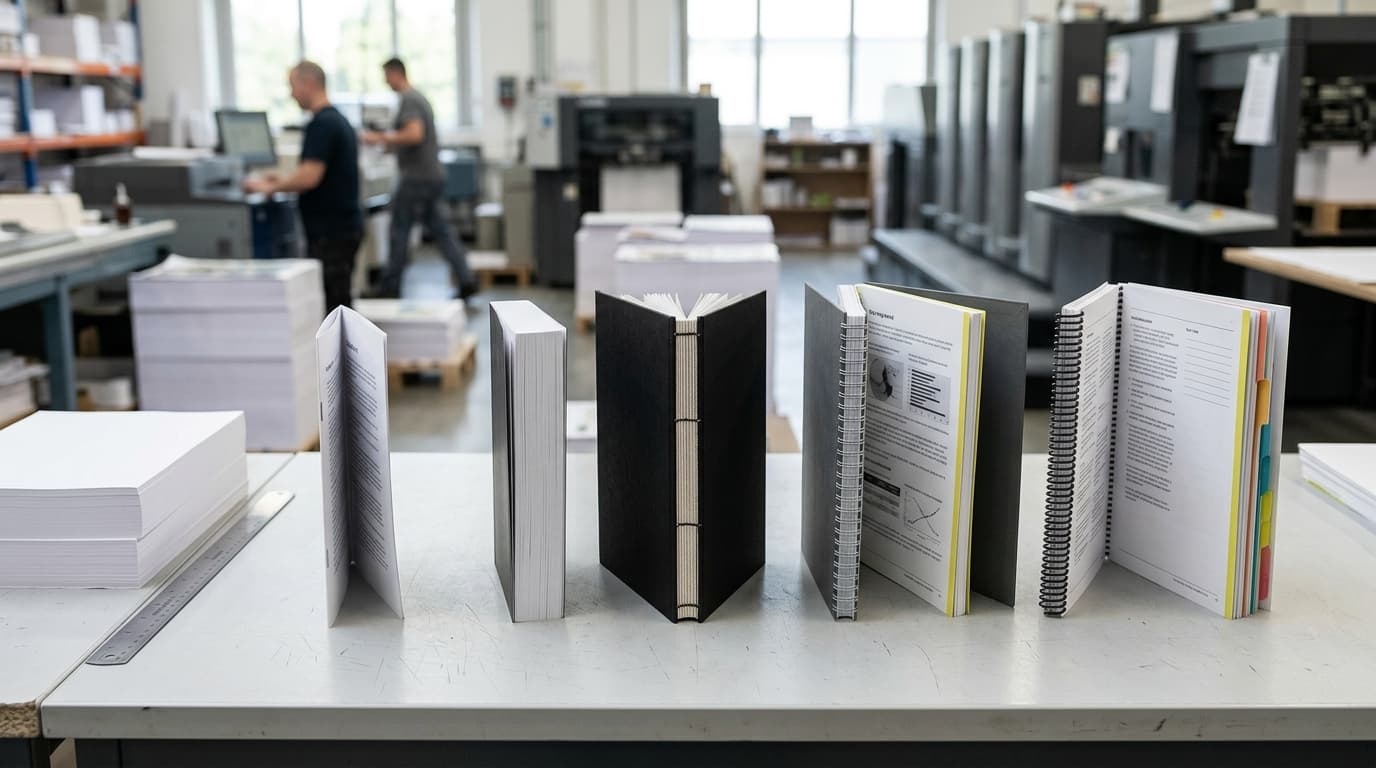
Table of Contents
- How Should You Choose a Workbook Binding?
- Start with writing, reading, storage, and distribution requirements
- Confirm page count, trim size, and open-flat needs
- Workbook Binding Options Compared
- Saddle stitch for shorter booklets and activity materials
- Paperback, sewn, Wire-O, and spiral formats
- Hardcover and board book construction for specialized applications
- How Do Paper and Page Count Affect Binding Choice?
- Consider paper bulk, ink coverage, margins, and page turning
- How to Prepare Artwork for the Selected Binding
- Plan creep, gutter space, cover files, and finishing areas
- How to Proof and Inspect a Bound Workbook
- Check page order, opening behavior, cover fit, and binding strength
- What Details Should Be Included in a Binding Quote?
- FAQ: Workbook and Manual Binding
- Which binding is best for a workbook that must lie flat?
- Does page count determine which binding methods are available?
The right workbook binding depends on how readers will write, store, transport, and repeatedly use the finished manual. This guide compares saddle stitch, paperback, sewn, Wire-O, spiral, and hardcover construction, then explains how paper, page count, artwork, proofing, and quotation requirements affect the final choice.
How Should You Choose a Workbook Binding?
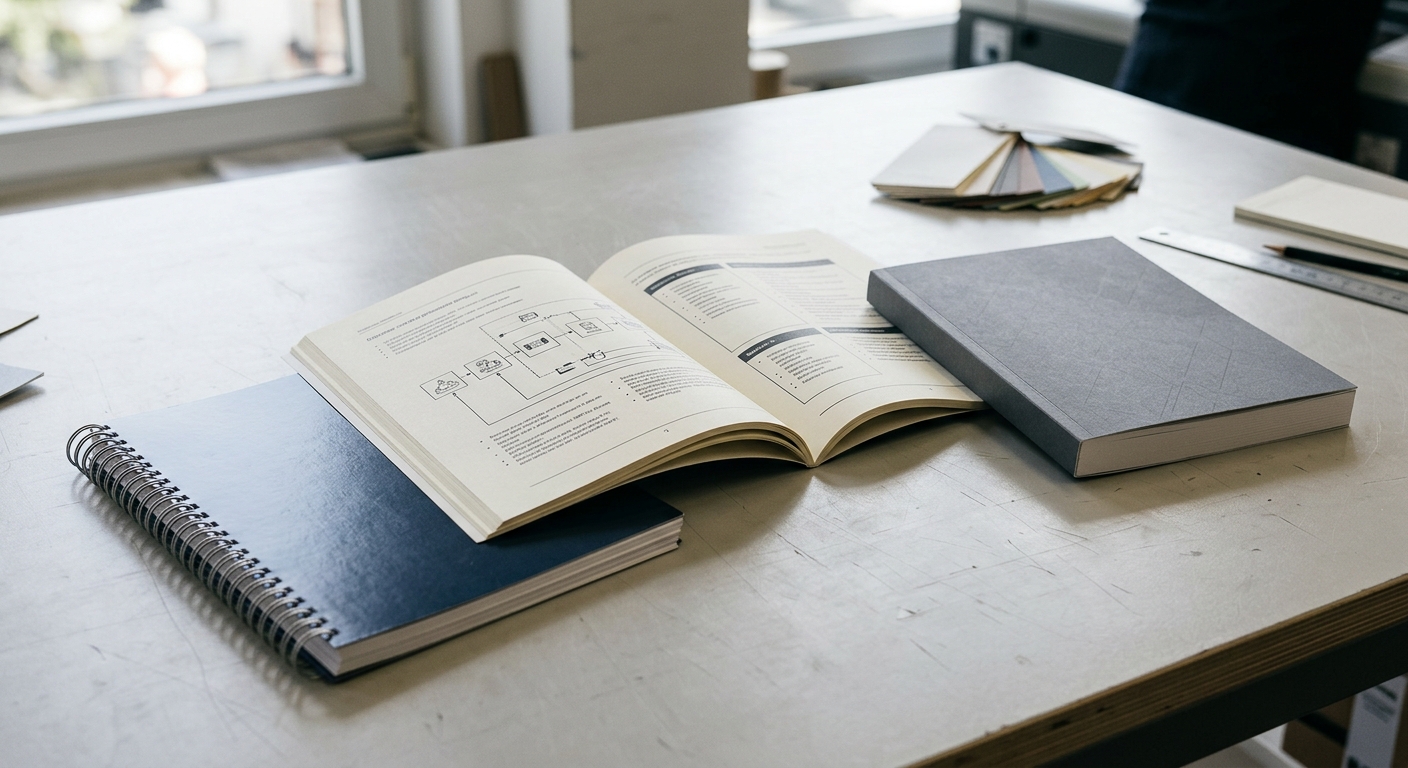
Short answer: Choose the binding according to how the manual will be read, written in, stored, transported, and reused. Wire-O and spiral formats are usually the first options to review when pages must lie flat, while saddle stitch suits shorter booklets and paperback or sewn construction suits longer, shelf-ready manuals.
Binding affects more than appearance. It changes the usable writing area, the amount of space needed near the spine, the manual’s thickness and weight, the cover structure, and the way copies are packed and shipped. The best choice is therefore a production decision, not only a design preference.
For a broader overview of binding, paper, proofing, and logistics, review Lemon Printing’s complete guide to bulk book printing in China.
Start with writing, reading, storage, and distribution requirements
Start by describing the reader’s physical interaction with the workbook. A participant completing exercises at a desk has different needs from a field technician carrying a manual, a classroom using shared copies, or an organization mailing guides to multiple locations.
- Writing: Workbooks with answer spaces, checklists, or signatures benefit from a binding that stays open and paper that accepts the intended pen.
- Reading: Reference manuals may prioritize a clean spine, page durability, and comfortable page turning over fully flat opening.
- Storage: Paperback and hardcover books stack efficiently on shelves. Wire and coil bindings add a different spine profile and can affect packing dimensions.
- Distribution: Consider finished weight, carton protection, handling, and whether copies will be inserted into kits or mailed individually.
Also identify whether the product is disposable, used for one course, or expected to survive repeated training sessions. A more durable construction can be justified when pages are frequently turned, but additional components may increase bulk and require more careful packaging.
Confirm page count, trim size, and open-flat needs
Page count and finished size narrow the available choices, but they should be reviewed together with the required opening behavior. Define the interior page count separately from the cover, inserts, foldouts, and pocket components, then state whether the count is preliminary or final.
Open-flat means the pages remain accessible without the reader holding the book down. It is valuable for forms, exercises, recipes, technical procedures, and training activities. Wire-O and spiral bindings generally provide this behavior. Saddle stitch can open well when the booklet is short, while adhesive paperback construction normally leaves more tension at the spine.
Trim size also changes the finished result. A large landscape workbook may need a different drilling, cover, or packing plan than a compact portrait manual. Provide the orientation, finished dimensions, and whether pages should rotate behind the binding before requesting a final recommendation.
Workbook Binding Options Compared
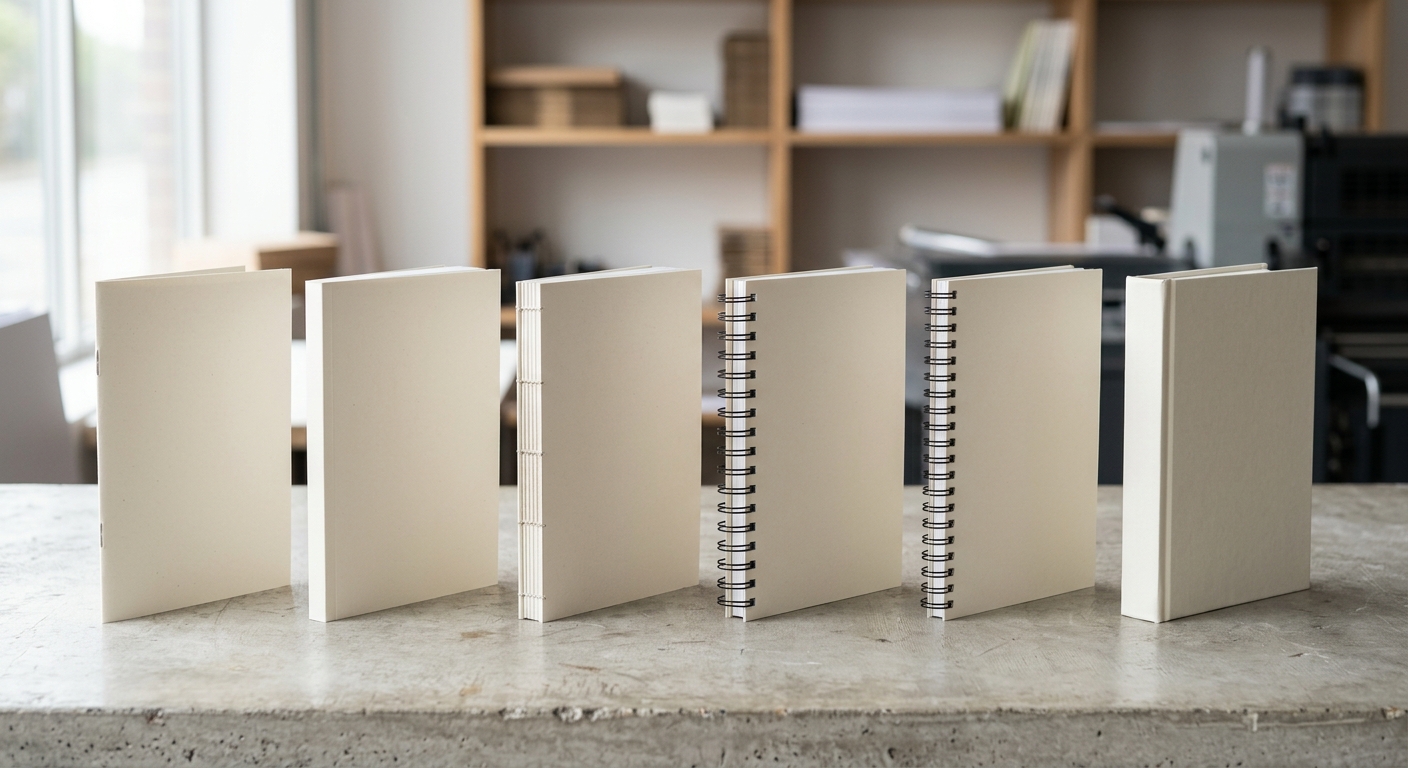
The main workbook binding options solve different production problems. The table below is a starting comparison; the final recommendation depends on page count, paper bulk, trim size, cover requirements, quantity, and destination.
| Binding | Common use | Opening behavior | Main strengths | Important trade-offs |
|---|---|---|---|---|
| Saddle stitch | Short activity booklets and handouts | Opens across the center fold | Low bulk and simple construction | Page count must suit folded-sheet imposition; thicker books can become difficult to fold and trim |
| Paperback or perfect binding | Longer manuals and shelf-ready workbooks | Pages turn normally; not usually fully flat | Clean printed spine and familiar book format | Spine margin and adhesive flexibility must be planned |
| Sewn binding | Durable manuals and premium books | Usually opens better than standard adhesive binding | Thread-sewn sections support repeated use | More construction steps and a different cover or spine plan may be required |
| Wire-O | Training manuals, forms, and reference guides | Designed to open flat | Stable pages and professional training format | Requires punched holes and a clear drilling margin; wire can affect packing |
| Spiral or coil | Workbooks, planners, and field-use guides | Opens flat and can often rotate behind | Convenient for writing and repeated handling | Coil diameter, hole pattern, and exposed edge need to match use and packaging |
| Hardcover or board construction | Specialized durable or presentation materials | Depends on the construction | Rigid protection and formal appearance | Heavier, bulkier, and usually less convenient for writing flat |
Saddle stitch for shorter booklets and activity materials
A saddle stitched booklet is made from folded printed sheets gathered in sequence and secured through the fold with staples. It is a practical choice for short training handouts, workbooks with limited exercises, event materials, and activity sheets that do not need a rigid spine.
The key structural rule is that saddle-stitched page counts normally work in multiples of four because each folded sheet creates four pages. The actual usable range depends on paper thickness, finished size, and the printer’s equipment. As page count increases, the booklet can become more difficult to fold accurately, and the outer pages may shift outward during trimming.
Saddle stitch is useful when low bulk and easy distribution matter more than a permanent spine. Ask for a binding-specific imposition check if the design has full-bleed images, page-edge graphics, or narrow margins near the center fold.
Paperback, sewn, Wire-O, and spiral formats
For longer or repeatedly used manuals, compare the behavior of adhesive paperback, sewn, Wire-O, and spiral construction rather than treating them as interchangeable manual binding types.
- Paperback workbook printing: Often uses adhesive binding, sometimes called perfect binding, where the page block is glued into a flexible cover. It provides a familiar book shape and printed spine, but readers usually need to hold the pages open near the center.
- Sewn book printing: Interior pages are grouped into folded sections and joined with thread before the cover is attached. Sewing can improve durability and opening behavior, but it adds construction steps and needs a suitable page count and section plan.
- Wire-O training manual: Twin-loop wire passes through punched holes along the bound edge. It is a strong candidate for instructor guides, forms, and manuals that must remain open during use. The drilling margin must be kept clear of text, images, tabs, and signatures.
- Spiral bound workbook: A continuous coil passes through punched holes. The workbook can usually lie flat and may rotate behind itself, which is useful for writing. Specify whether plastic or metal coil is required, along with coil color, diameter, and packaging constraints.
When the manual will be placed on a bookshelf beside other publications, paperback or sewn construction may be more suitable. When the reader needs both hands for an exercise or procedure, Wire-O or spiral is usually easier to use.
Hardcover and board book construction for specialized applications
Hardcover and board book construction are specialized choices when physical protection, long service life, or presentation value is more important than compact writing convenience. Hardcover uses rigid boards covered with printed or wrapped material. Board book construction uses thick board pages and is more common for highly durable visual products than for conventional adult training manuals.
These formats can add substantial weight and thickness, so they should be evaluated against shipping cartons, storage shelves, kit dimensions, and the reader’s need to write across a spread. A rigid cover may protect the workbook, but it does not automatically make the interior open flat. Request a physical sample or construction mock-up when the cover needs to support frequent field use.
How Do Paper and Page Count Affect Binding Choice?
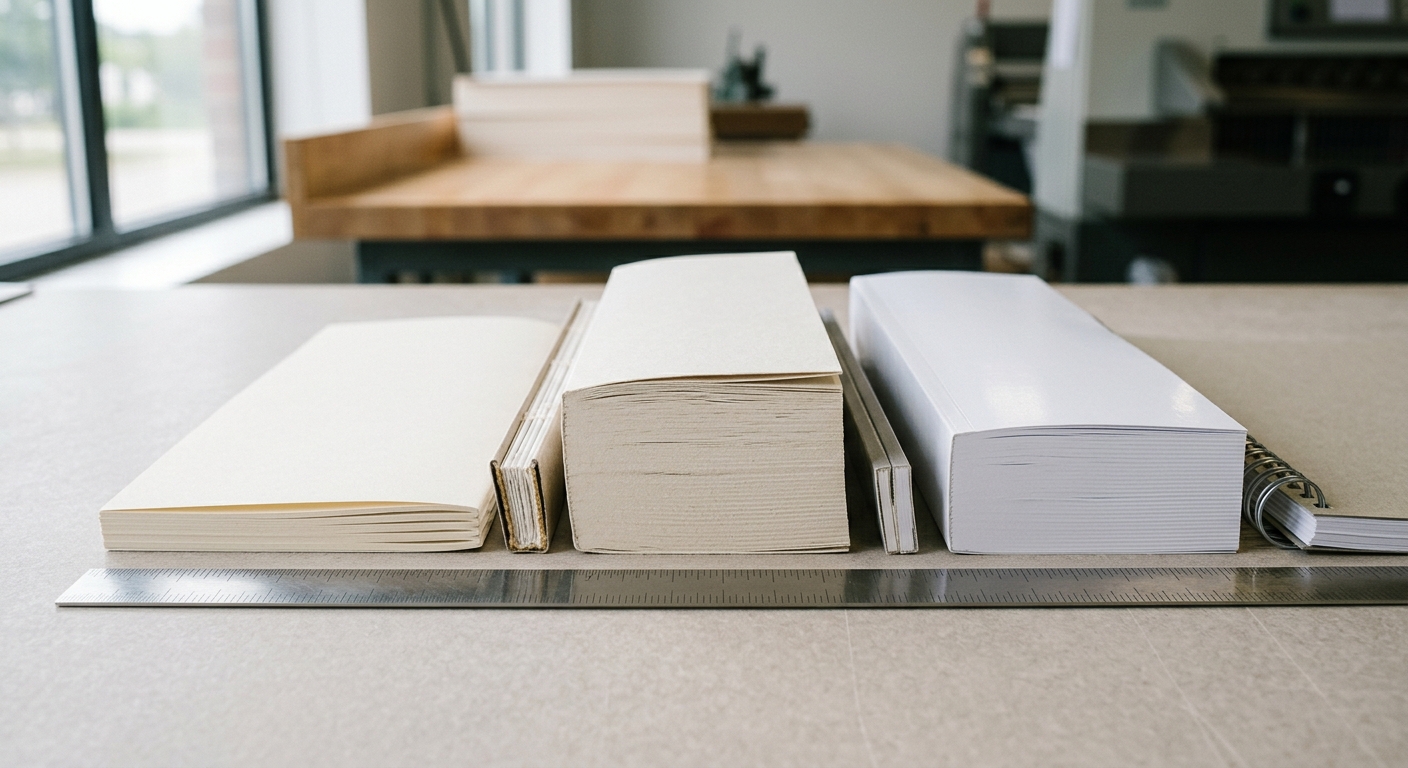
Page count alone does not determine the best binding. The same number of pages can produce a very different finished thickness when the paper weight, coating, sheet size, ink coverage, and folding method change.
Binding suppliers need the final page count and paper specification to estimate the spine, cover fit, hole or staple position, and carton dimensions. For adhesive binding, the page block must create enough spine area for the selected construction. For saddle stitch, the folded-sheet count and paper bulk affect folding and creep. For Wire-O and spiral, the stack thickness determines the required wire or coil size.
State whether the count refers to printed interior pages only. Covers, inserts, gatefolds, pockets, and divider sheets can change the assembly plan even when they are not included in the interior page count.
Consider paper bulk, ink coverage, margins, and page turning
Paper should be selected together with the workbook’s use. Uncoated paper is often more comfortable for handwriting because its surface accepts many common pens. Coated paper can reproduce images and solid colors with a smoother finish, but some pens may dry more slowly or feel less consistent on the surface.
- Bulk: Heavier or thicker sheets increase the page block, which can affect spine width, coil diameter, hole alignment, and shipping weight.
- Ink coverage: Dense solid areas can increase drying and set-off considerations, especially when pages are stacked or folded. Confirm the production method and drying expectations with the printer.
- Show-through: This is the visibility of printing from the reverse side. It matters when exercises use large writing spaces or when both sides of a thin sheet carry dark content.
- Margins: A generous inner margin helps readers see and write near the bound edge. Wire, coil, staples, and adhesive each require a different safe area.
- Page turning: Thick stock, laminated pages, tabs, and divider materials can make turning harder even when the binding itself is suitable.
Use Lemon Printing’s coated versus uncoated paper guide to compare surface behavior, then ask for a paper recommendation based on the writing instrument and finished binding.
How to Prepare Artwork for the Selected Binding
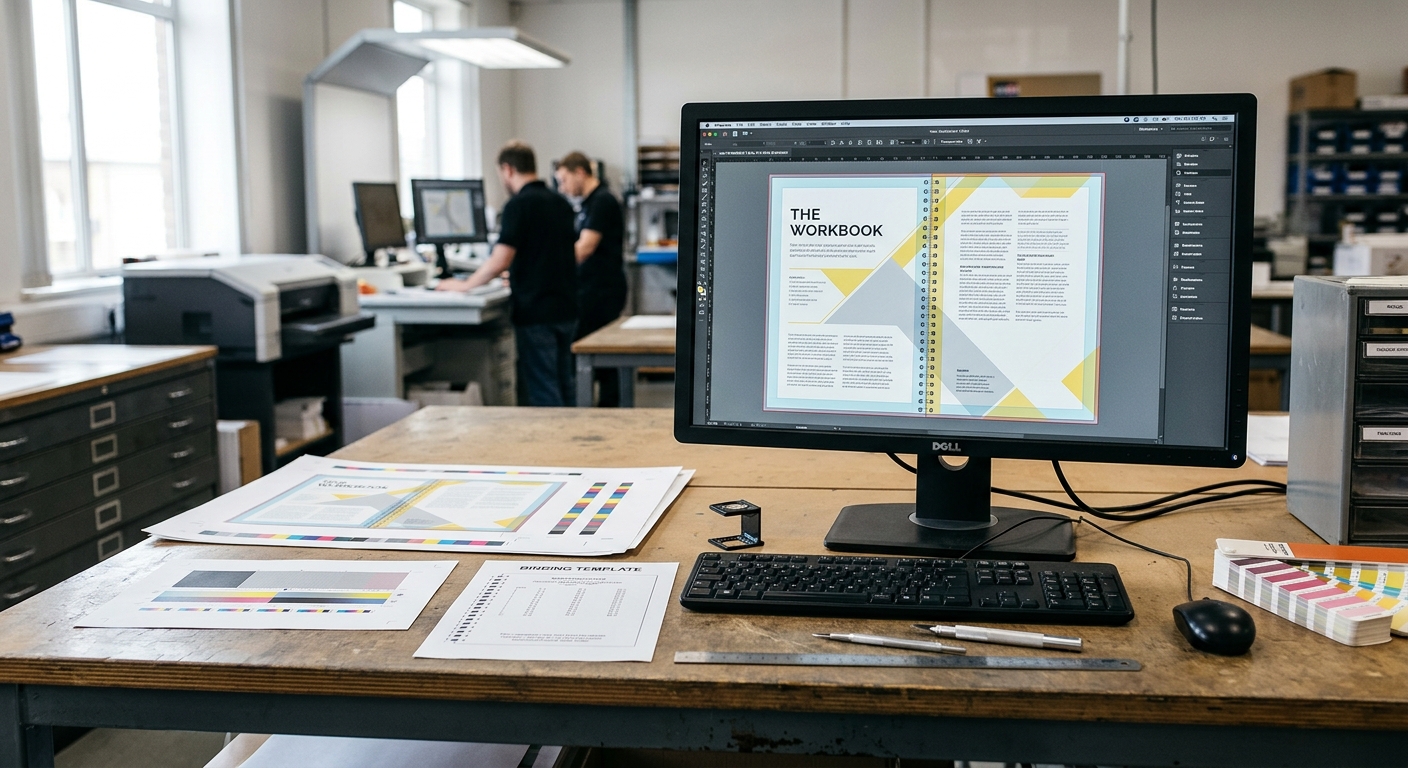
Prepare the artwork after the binding direction is known, or request a binding-specific template before final design. A generic print PDF may have correct trim and bleed but still place important content too close to a spine, staple line, or drilling area.
The file should identify the finished trim size, bleed, safe area, page order, color mode, image resolution, fonts, cover structure, and any special finishing. Interior pages should be supplied in the printer’s requested format, with blank pages intentionally included rather than inferred from pagination.
For detailed file preparation, see Lemon Printing’s guide to preparing artwork for commercial printing. The final template should still come from the selected printer because cover hinges, drilling margins, and spine calculations vary by construction.
Plan creep, gutter space, cover files, and finishing areas
Creep is the gradual outward shift of nested pages in a folded booklet. It is most relevant to saddle stitch, where inner sheets can extend farther toward the trimmed edge than outer sheets. The printer normally adjusts imposition, but the design still needs enough edge tolerance for important content.
Gutter space is the inner margin beside the binding. Perfect, sewn, Wire-O, and spiral formats need different gutter allowances. Wire and coil formats also require a clear drilling zone; do not place small text, faces, fine rules, or form fields where holes may remove or weaken them.
Cover files vary by format. A paperback or hardcover may need a full spread with front cover, spine, back cover, hinge, and bleed. A saddle-stitched, Wire-O, or spiral workbook may use a different cover arrangement and may not have a conventional printed spine. Confirm whether the cover is printed on the same stock as the interior or supplied as a separate heavier sheet.
Finishing areas also need planning. Lamination, varnish, foil, rounded corners, tabs, pockets, and perforations can affect clearances and assembly. List them before artwork is finalized rather than adding them after proof approval.
How to Proof and Inspect a Bound Workbook

Proof the complete bound object, not only the loose printed pages. A flat PDF can confirm content and color placement, but it cannot fully show whether the cover fits, the pages turn comfortably, or the binding edge interferes with writing.
Use a proof or construction sample to evaluate the actual trim, paper, cover, binding, and finishing combination. If the final paper or binding is changed after approval, request a new review because thickness and opening behavior may also change.
Lemon Printing manages prepress, printing, binding, finishing, quality inspection, packing, and export preparation in-house at its factory-backed facility. Buyers should still define the inspection points and acceptance criteria in the quotation and proof process.
Check page order, opening behavior, cover fit, and binding strength
A useful inspection checklist combines visual, functional, and structural checks:
- Page order: Confirm pagination, section dividers, blank pages, inserts, and any answer-key sequence.
- Print position: Check trim, bleed, registration, image alignment, and whether text is too close to the binding edge.
- Opening behavior: Open the workbook at the center and several other pages. Test whether it stays open where the reader needs to write or refer to a procedure.
- Cover fit: Confirm cover dimensions, corners, hinge or spine position, drilling alignment, and that the cover does not restrict page turning.
- Binding integrity: Inspect staples, adhesive, thread, wire, or coil for alignment and secure attachment. Turn pages repeatedly enough to reveal obvious snagging, looseness, or interference.
- Use simulation: Write on sample pages with the intended pen, fold or rotate pages if relevant, and place the bound copy in the proposed kit, shelf, or shipping carton.
Record defects with photographs and page references. This makes it easier for the printer and buyer to distinguish a file issue, a construction issue, or a handling issue before production quantities are completed.
What Details Should Be Included in a Binding Quote?
A binding quote should describe the complete finished product, not only the number of pages. Send the following information so the printer can compare suitable constructions accurately:
- Product type and intended use, such as a participant workbook, instructor manual, field guide, or activity booklet
- Quantity, destination country and city, packaging requirements, and whether copies ship individually or in cartons
- Finished trim size, orientation, page count, and whether the count includes covers, inserts, dividers, or foldouts
- Interior and cover paper, including coated or uncoated surface, approximate GSM, and writing requirements
- Printing specification, such as process color, black and white, spot color, or variable data
- Preferred binding and acceptable alternatives, including saddle stitch, paperback, sewn, Wire-O, or spiral
- Finishing details such as lamination, tabs, pockets, perforation, rounded corners, or special cover treatment
- Artwork status, proof requirement, target approval date, and target arrival date
Final MOQ, production time, pricing, and shipping depend on the product specifications, quantity, finishing, and destination. If you are comparing offset and digital production, Lemon Printing’s offset versus digital printing comparison can help frame the discussion, but the binding and total project requirements should be quoted together.
FAQ: Workbook and Manual Binding
The best workbook binding depends on use, construction, and production specifications. The following answers address two common sourcing questions.
Which binding is best for a workbook that must lie flat?
Wire-O and spiral bindings are usually the first options for a workbook that must lie flat while the reader writes or follows instructions. Saddle stitch can work for a short booklet, but it is less suitable as page count and paper bulk increase. A sewn book may open better than standard adhesive binding, but it is not automatically fully flat.
Choose between Wire-O and spiral by considering hole or coil appearance, cover style, durability, coil or wire material, page rotation, packing, and the required writing margin. Confirm the complete construction with a physical proof when open-flat behavior is critical.
Does page count determine which binding methods are available?
Page count limits some methods, but it does not determine the choice by itself. Saddle stitch normally requires a page count that works in multiples of four. Paperback, sewn, Wire-O, and spiral formats can accommodate different page blocks, but the practical range depends on paper thickness, trim size, equipment, cover construction, and the printer’s process.
Provide the final or estimated page count together with paper and finished size. If the manuscript is still changing, ask the printer how a page increase or decrease may affect the binding, spine width, coil or wire size, cover file, and quote.
FAQ
Which binding is best for a workbook that must lie flat?
Wire-O and spiral bindings are usually the first options for a workbook that must lie flat while the reader writes or follows instructions. Saddle stitch can work for a short booklet, while sewn binding may open well without being fully flat. Compare drilling or coil requirements, writing margins, cover style, durability, packing, and page rotation before selecting the final format.
Does page count determine which binding methods are available?
Page count limits some methods but does not determine the choice by itself. Saddle stitch normally requires a page count in multiples of four. Paperback, sewn, Wire-O, and spiral formats depend on paper thickness, trim size, equipment, cover construction, and the printer’s process. Provide the estimated or final page count with the paper and finished size for an accurate review.
Request a Binding-Focused Printing Quote
Tell Lemon Printing what you are producing and how readers will use it. Include the product type, quantity, finished size, interior page count, paper, preferred binding or acceptable alternatives, finishing, delivery destination, and target date. The team can review the construction and confirm the final MOQ, production time, pricing, and shipping based on your specifications.