Table of Contents
- Board book vs hardcover: Which construction fits your title?
- Define rigid board pages and casebound paper pages
- Understand why some board books also have hard covers
- Comparison table: Page capacity, handling, weight, and production requirements
- How the construction changes pagination and illustration layout
- When to abridge the manuscript or retain a paper-page edition
- How gutters and opening behavior affect artwork
- Five steps to select the format and evaluate production samples
- Quote checklist for comparing both constructions
- Lemon Printing options for board book and hardcover editions
- FAQ: Choosing board books or hardcover picture books
Board book vs hardcover: Which construction fits your title?
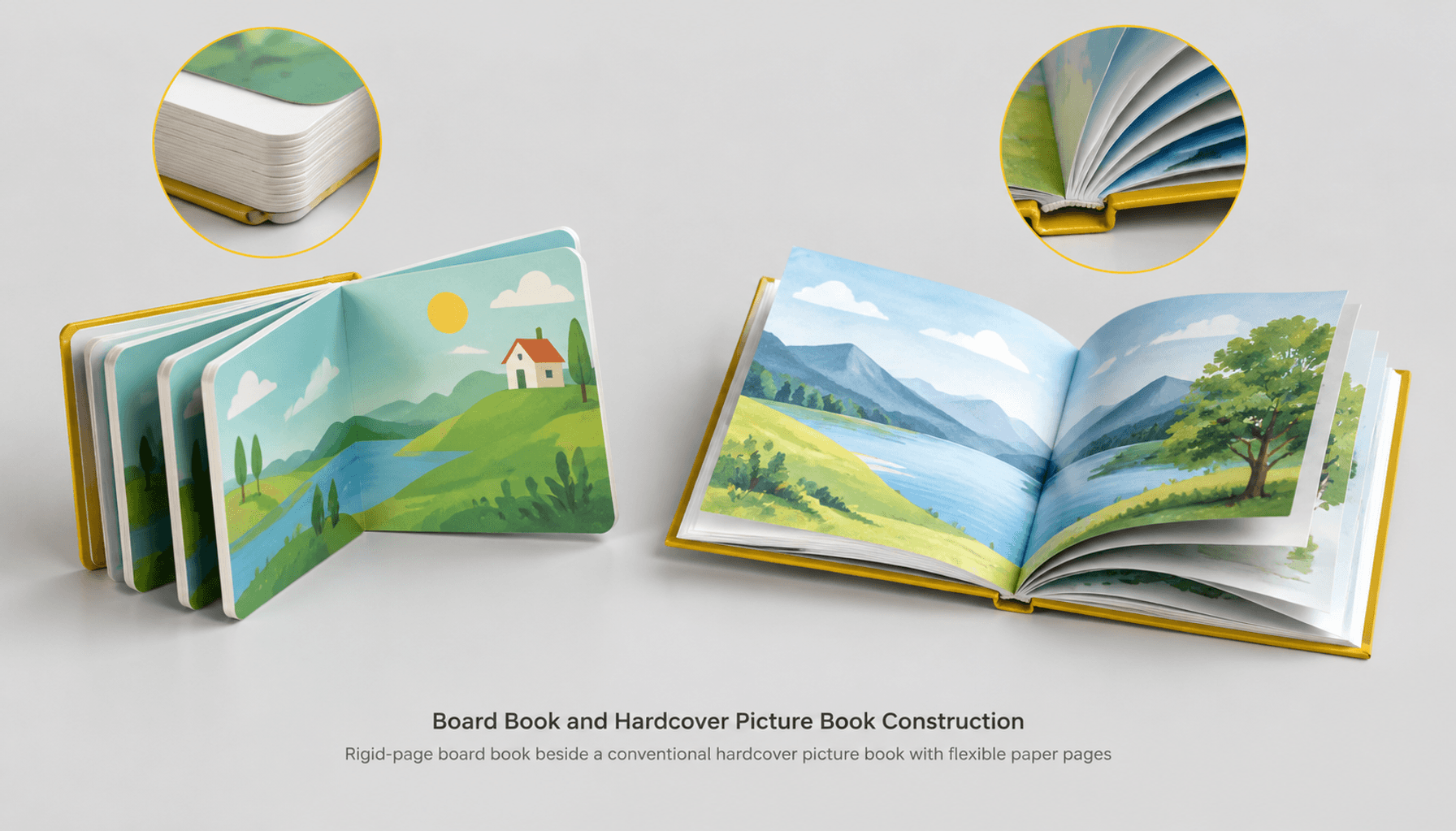
The board book vs hardcover decision starts with the pages, not the cover. A board book has rigid page leaves; the conventional hardcover picture book considered here has flexible paper pages inside a rigid case. These labels describe different parts of a book, so they are not mutually exclusive.
Choose rigid pages when a short reading sequence and easy page handling are central to the edition. Choose paper pages when the complete story, additional illustrations or supporting content needs more space. Neither construction is automatically better for every children’s title.
Make this decision before final layout. Changing construction later can mean repaginating the manuscript, rebuilding spreads and preparing a different cover file.
Define rigid board pages and casebound paper pages
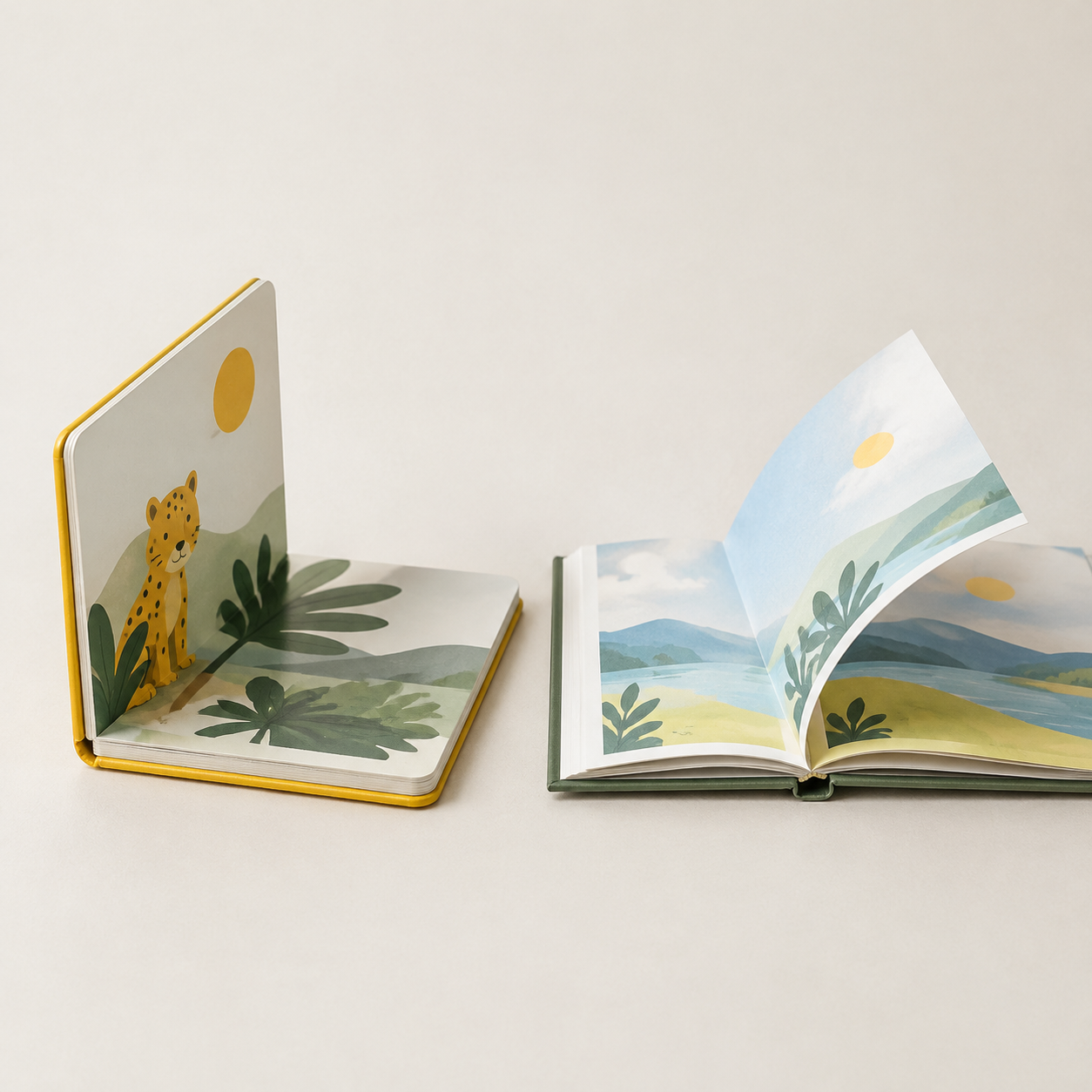
Rigid board pages are stiff leaves made from bonded paperboard layers, sometimes with printed sheets mounted onto them. Casebound paper pages form a flexible text block attached to a separately made rigid cover, usually through endpapers.
- Leaf, page and spread
- A leaf has two sides; each side is a page. A spread is two facing pages viewed together. Blank pages still occupy physical space.
- Case and endpapers
- The case is the rigid cover assembly. Endpapers connect the paper-page text block to the case and may also carry artwork.
- Caliper and gsm
- Caliper means thickness, commonly measured in millimeters or microns. Gsm means grams per square meter: material mass per area, not thickness.
For casebound children’s books, ask whether the paper sections are sewn or adhesively bound. For board books, ask how the rigid leaves are formed and joined. A cover description does not answer either question.
Understand why some board books also have hard covers
Yes, a board book can also have a hard cover. Its defining feature is rigid interior pages, while the cover may use a separate rigid case or another construction suited to the page block.
A supplier’s phrase such as “hardcover board book” therefore needs an assembly drawing or physical sample. Confirm whether the cover projects beyond the pages, how the spine opens and which cover surfaces can be printed.
Review Lemon Printing’s bookbinding and finishing capabilities against the required page construction, rather than treating “hard cover” as a complete specification.
Comparison table: Page capacity, handling, weight, and production requirements
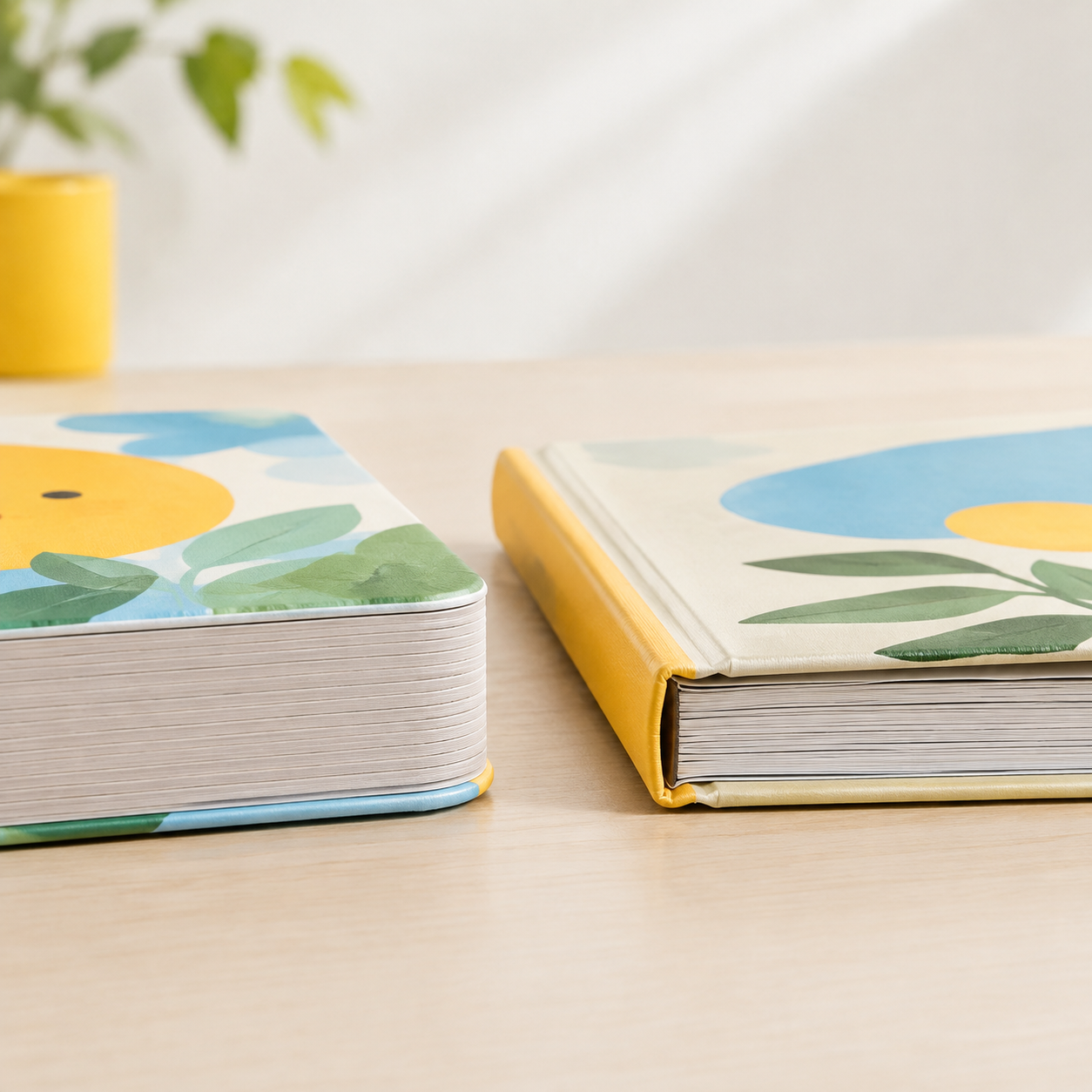
Rigid-page books generally become thick faster as pages are added. Paper-page hardcovers usually accommodate longer picture-book narratives more efficiently, but the binding method and paper still affect opening, bulk and cost.
| Factor | Rigid-page board book | Paper-page hardcover | Buyer checkpoint |
|---|---|---|---|
| Page capacity | Increasing leaf thickness limits practical page capacity. | Thinner leaves allow more content within a manageable text block. | Request a feasible page plan; neither format has one universal maximum. |
| Page handling | Stiff leaves are easier to separate and resist creasing. | Flexible pages support longer reading sequences but can crease or tear. | Test page turning with the intended reading setup. |
| Thickness and weight | Usually thicker and heavier at the same trim size and page count. | Paper contributes less bulk, although the case adds weight. | Compare finished copies and packed carton weights. |
| Opening behavior | Depends on leaf bonding and spine assembly. | Depends on sewing or adhesive binding, paper and case construction. | Do not assume either version automatically lies flat. |
| Wear risks | Edge damage, surface scuffing or separation of bonded layers. | Page tears, hinge damage or text-block attachment problems. | Agree handling checks and visible defect limits. |
| Page planning | Count reader-visible faces and cover surfaces explicitly. | Plan interior pages, folded sections and endpapers separately. | Approve a numbered page map before pricing. |
| Production requirements | Layer bonding, cutting, corner treatment and spine assembly. | Text-block binding, case making and attachment to the case. | Identify which proof verifies each operation. |
| Cost drivers | Leaf materials, bonding, finish, shape and assembly. | Text paper, binding, endpapers, cover materials and finishing. | Fewer board pages do not necessarily mean a cheaper book. |
Rounded corners and durable finishes may be useful design choices, but they do not establish child-product compliance. Confirm applicable requirements for the intended age group and sales market.
How the construction changes pagination and illustration layout
Changing from paper pages to board pages does not impose a fixed conversion ratio. Keeping the same page count generally creates a thicker rigid-page block, so the publisher must decide whether to retain every page, abridge the story or change the format.
Write the picture book page count as a numbered map showing story pages, title and copyright pages, blanks, endpapers and cover faces. Suppliers may count board-book cover surfaces differently; “20 pages” alone is not a reliable specification.
Paper-page books are often planned around folded printing sections. Adding a few pages can require a different section layout rather than simply inserting individual leaves. Board-page assembly follows its own bonding plan.
Ask the printer to reconcile the page map with an assembly diagram. Confirm which first and last surfaces are available for artwork before placing essential content there.
When to abridge the manuscript or retain a paper-page edition
Abridge only when the shorter edition still delivers a coherent reading experience. Retain paper pages if removing scenes would damage the narrative or force crowded text onto every spread.
For example, a hypothetical 32-page story might become a 20-page board edition by removing a secondary episode and rewriting transitions. That is an editorial adaptation, not simply a binding change.
- Keep essential story turns and page-turn reveals.
- Review reading pace, text size and illustration breathing room.
- Check rights and approvals for an abridged edition.
Do not shrink the type merely to preserve every sentence. Two editions can share a title and illustration library without sharing identical pagination.
How gutters and opening behavior affect artwork
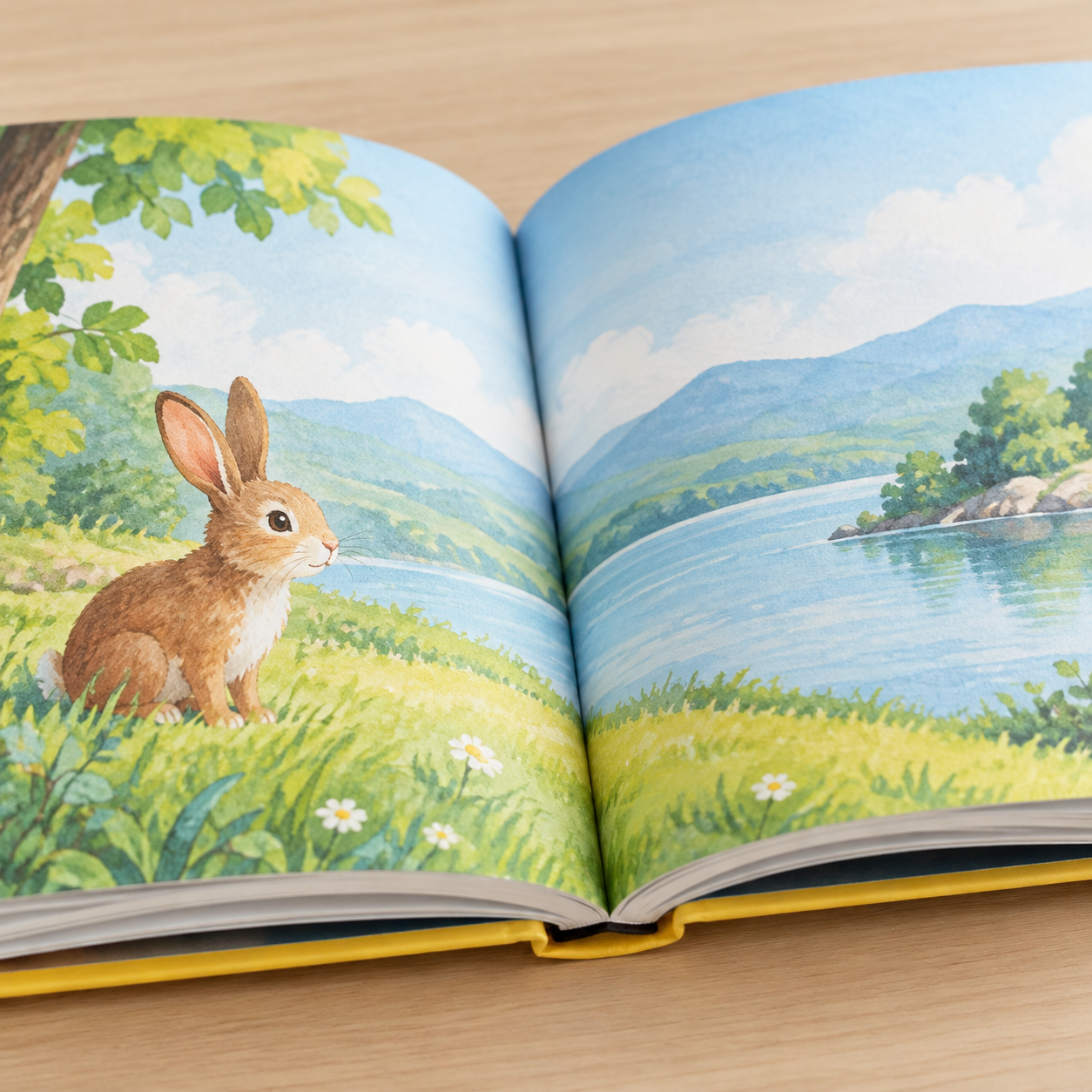
The same source illustrations can often serve both editions, but the same finished layout may not. Trim size, visible opening, corner shape and cover construction must be checked independently.
The gutter is the inside area where facing pages meet. Critical artwork placed there can become difficult to see as pages curve or meet at the joint. A sewn hardcover may open comfortably without exposing every millimeter near the gutter; a board book’s opening depends on its specific assembly.
- Keep faces, speech bubbles and essential words clear of the printer-confirmed gutter zone.
- Allow background artwork to cross a spread, then inspect its alignment in an assembled sample.
- Check rounded-corner safe areas and bleed—the artwork extending beyond the final cut.
- Build separate cover files from each approved cover template.
A useful test is one difficult spread containing a central character and text near the inside edge. Review it at the sample’s natural opening, not while forcing the book flat.
Five steps to select the format and evaluate production samples
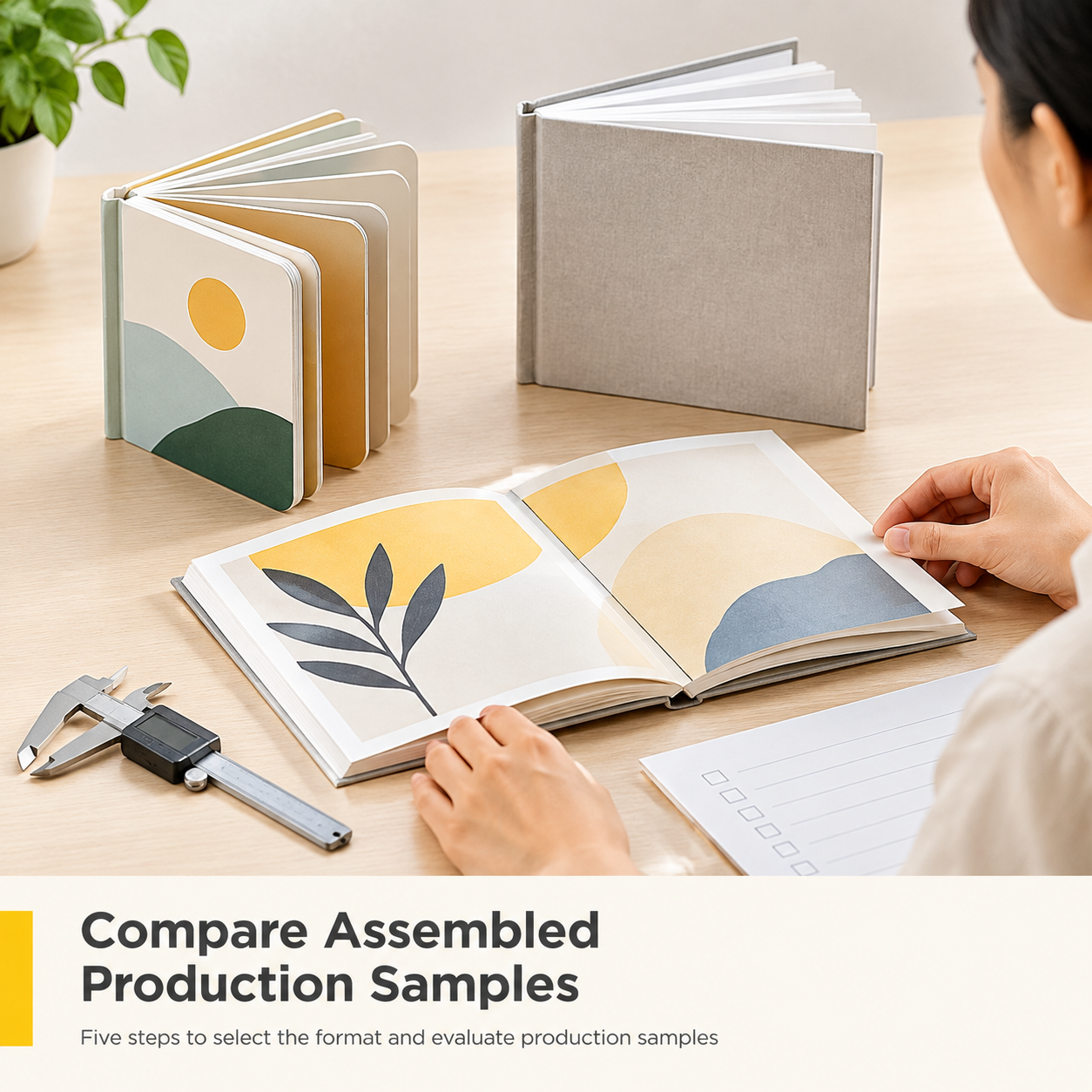
Select the format by testing the publishing brief against assembled samples. A digital layout proof cannot establish page-turning feel, opening behavior or the strength of bonded board layers.
Hypothetical comparison brief—not a standard specification or customer result
- Shared targets: 180 × 180 mm finished page size, full-color illustrations and 2,000 copies per edition, delivered to a specified US ZIP code.
- Paper-page option: 32 interior pages including title and copyright, separately listed endpapers, proposed 157 gsm coated text paper and a sewn casebound construction.
- Board-page option: abridged 20 interior page faces, cover faces separately identified, proposed 1.0 mm finished leaf caliper and rounded page corners.
The printer must confirm material availability, assembly feasibility, cover counting and corner radius before either brief becomes an order specification.
Define the reading requirement. Decide who turns the pages, how much story must remain and whether the book is read independently or with an adult. Separate editorial needs from preferences about appearance.
Prepare two explicit page plans. Mark every available surface and approve the abridged manuscript, if applicable. Ask the factory to review both plans for bulk, binding feasibility and artwork placement.
Request the right sample stages. A blank assembled dummy checks dimensions, thickness and handling. A printed proof checks content and artwork. Request board book production samples and hardcover samples using the intended materials and relevant production methods where available. Ask what differs from bulk production and what each sample can verify.
Agree measurable acceptance criteria. Record trim and squareness tolerances in millimeters, leaf caliper, corner radius, cover alignment and acceptable surface defects. Agree a page-turning check and inspect for layer separation, spine damage or loose attachments. Use Lemon Printing’s printing quality-control checkpoints to organize this approval record. These checks do not replace applicable safety testing.
Compare the finished and packed products. Weigh both samples, check carton protection and compare quotes on the same delivery basis. Retain a signed reference sample and written specification for inspection. Approve artwork, materials and construction separately so an attractive color proof is not mistaken for binding approval.
If neither sample works well, revisit size, page count or leaf thickness before approving production. Changing the construction is easier before the final files and purchase order are locked.
Quote checklist for comparing both constructions
Comparable quotes need a shared commercial brief and separate technical specifications for each construction. Quantity, finished size, page counting, materials, assembly, finishing, proofing and delivery scope must all be explicit.
Use the following children’s book printing specifications checklist:
- Product and quantity: identify the rigid-page board edition and paper-page casebound edition; list quantity for each version.
- Dimensions: finished page width and height, orientation, and any required maximum overall thickness.
- Pagination: numbered interior pages, blanks, endpapers and cover faces, with counting conventions confirmed.
- Materials: board-page construction and finished caliper; paper type and gsm; cover board and covering material.
- Assembly: rigid-leaf joining method or paper-section binding, spine construction and proposed corner treatment.
- Printing and finishing: color requirements, lamination or coating, cover effects and artwork-template requirements.
- Approval: dummy, printed proof and assembled sample requirements, including costs and what each stage verifies.
- Quality: dimensional tolerances, agreed defect criteria, reference sample and any market-specific testing documents required.
- Packing and delivery: individual protection, carton requirements, destination address or port, shipping responsibility and target receipt date.
Agree where each approval fits in the printing and proof-approval process. Ask quotations to identify exclusions and assumptions rather than comparing unit prices alone. A factory price without freight, import charges or equivalent packing is not a landed-cost comparison.
Lemon Printing options for board book and hardcover editions
Lemon Printing can review board-book and hardcover picture book printing briefs as separate editions of the same title. The useful starting point is the publishing requirement and page map, not an assumption that both editions should use identical files.
Lemon Printing states that it was established in 2015 and operates a self-owned facility in China’s Guangzhou–Shenzhen manufacturing corridor, with more than 130 skilled workers and 8+ offset and digital presses. Prepress, printing, binding, finishing, quality inspection, packing and export preparation are handled in-house.
| Edition option | Publishing requirement | Details to confirm |
|---|---|---|
| Rigid-page board book | A shorter reading sequence with stiff, easily separated pages. | Leaf caliper, available page faces, corner shape, surface finish and spine assembly. |
| Paper-page casebound picture book | A complete narrative or more illustrations within a manageable text block. | Text paper, section plan, sewing or adhesive binding, endpapers and case dimensions. |
| Two-edition publishing project | Different reading experiences built from shared story and illustration assets. | Separate pagination, artwork adaptations, cover templates, sample approvals and quantities. |
The custom book printing options provide a starting point for discussing binding and cover requirements. Confirm the exact materials, sample scope and acceptance criteria during project review; a general product description is not the final manufacturing specification.
FAQ: Choosing board books or hardcover picture books
Most format-selection questions come back to page construction, available content space and sample approval. Resolve these points before final artwork so the edition’s reading experience and manufacturing specification agree.
FAQ
What is the difference between a board book and a hardcover picture book?
A board book has rigid interior leaves made from bonded paperboard materials. A conventional hardcover picture book has flexible paper pages bound into a rigid case. Board book describes the pages; hardcover describes the cover, so specify both parts rather than treating the terms as mutually exclusive.
Can a board book also have a hard cover?
Yes. A rigid-page book can also use a hard cover, including a separate case where the construction supports it. Ask for an assembly drawing or physical sample to confirm cover projection, spine behavior and printable surfaces. A hard cover alone does not tell you what the interior pages are made from.
How does changing from paper pages to board pages affect picture book page count?
There is no fixed conversion ratio. Rigid leaves add more thickness than ordinary paper leaves, so retaining the same count may create an impractical book. Review the proposed caliper and assembly, then decide whether to shorten the story. Confirm interior faces, blanks, endpapers and covers in a numbered page map.
Can the same artwork be used for board book and hardcover editions?
Original illustrations can often be reused, but finished layouts may need different crops, text positions and spread arrangements. Check each edition’s trim, gutter visibility, bleed and corner safe areas. Prepare separate cover files from approved templates, and inspect a difficult spread in assembled samples before approving the complete layout.
What specifications are needed to compare quotes for both constructions?
Provide quantities, finished page dimensions, explicit page counts, materials, board caliper or paper gsm, cover construction, binding, finishing, proof requirements and acceptance criteria. Include packing, delivery destination and target receipt date. Request separate prices for each edition and identify shipping inclusions, sample costs and any assumptions so the comparison is meaningful.
Get a Clear Quote for Your Printing Project
Choose the page construction that supports the story and intended handling, then approve the assembled edition—not just its appearance.
Send Lemon Printing your product type, quantity for each edition, trim size, page count, materials, cover and page construction, binding or finishing requirements, delivery destination and target date. Our team will review the specifications and respond with practical production options, pricing and a project timeline.
Final MOQ (minimum order quantity), production time, pricing and shipping depend on product specifications, quantity, finishing and destination.