Table of Contents
- Board book lamination: When should you choose matte or gloss?
- What lamination means and how it differs from varnish
- How film, adhesive, and substrate affect the finished surface
- Comparison table: Glare, color appearance, handling marks, and inspection needs
- How page and cover finishes affect everyday handling
- Evaluate scuffing, fingerprints, and edge lifting
- Check folds, hinges, and repeated opening
- Five steps to compare finish samples before approval
- How to agree on finish references and acceptance criteria
- Quote checklist for laminated board book pages and covers
- Lemon Printing board book finishing and sample options
- FAQ: Matte and gloss board book lamination
Board book lamination: When should you choose matte or gloss?
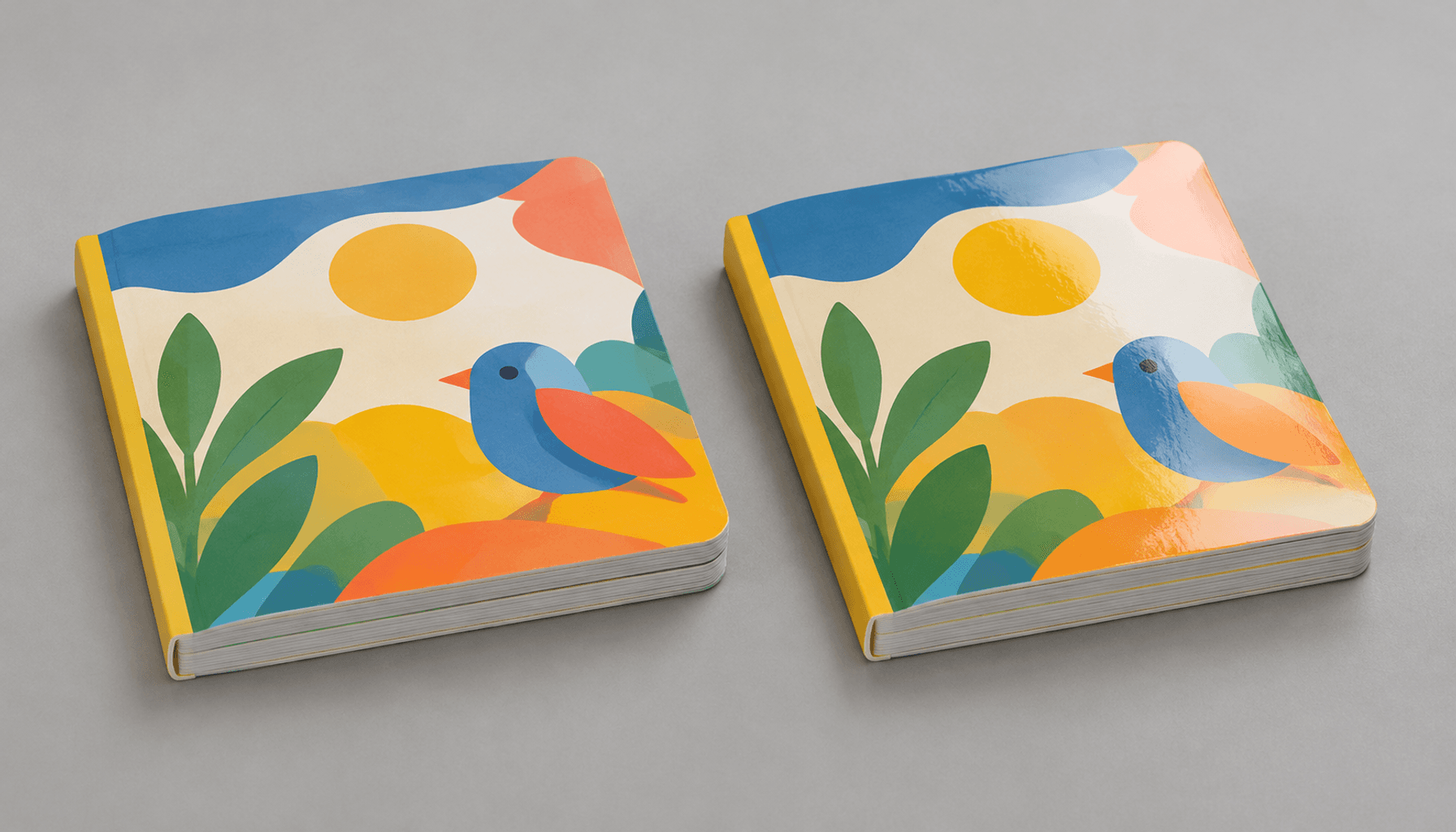
Board book lamination changes how light, color, and handling marks appear on a finished book. Choose matte when lower glare is a priority; choose gloss when stronger reflected highlights and a more vivid appearance suit the artwork. Neither finish name establishes better durability.
If a spread pairs fine text with a dark illustration, compare reading comfort and visible rub marks together. A surface with less glare can still mark during handling, while a shiny surface can make scratches obvious at certain angles. Approve the finish on mounted pages and an assembled cover, because loose sheets do not show hinge behavior or exposed edges.
For custom board book printing, specify pages and covers separately from the start.
What lamination means and how it differs from varnish
Definition: Lamination is a clear plastic film bonded to the printed surface with a compatible adhesive system. The film remains a distinct layer; varnish is a liquid coating applied to the print and dried or cured.
Both can change sheen and provide surface protection, but they differ in thickness, feel, wear, and folding behavior. A matte varnish and a matte film should have separate specifications.
The adhesive may be supplied on the film and activated during lamination, or applied through another compatible bonding system. Ask which system the quotation assumes.
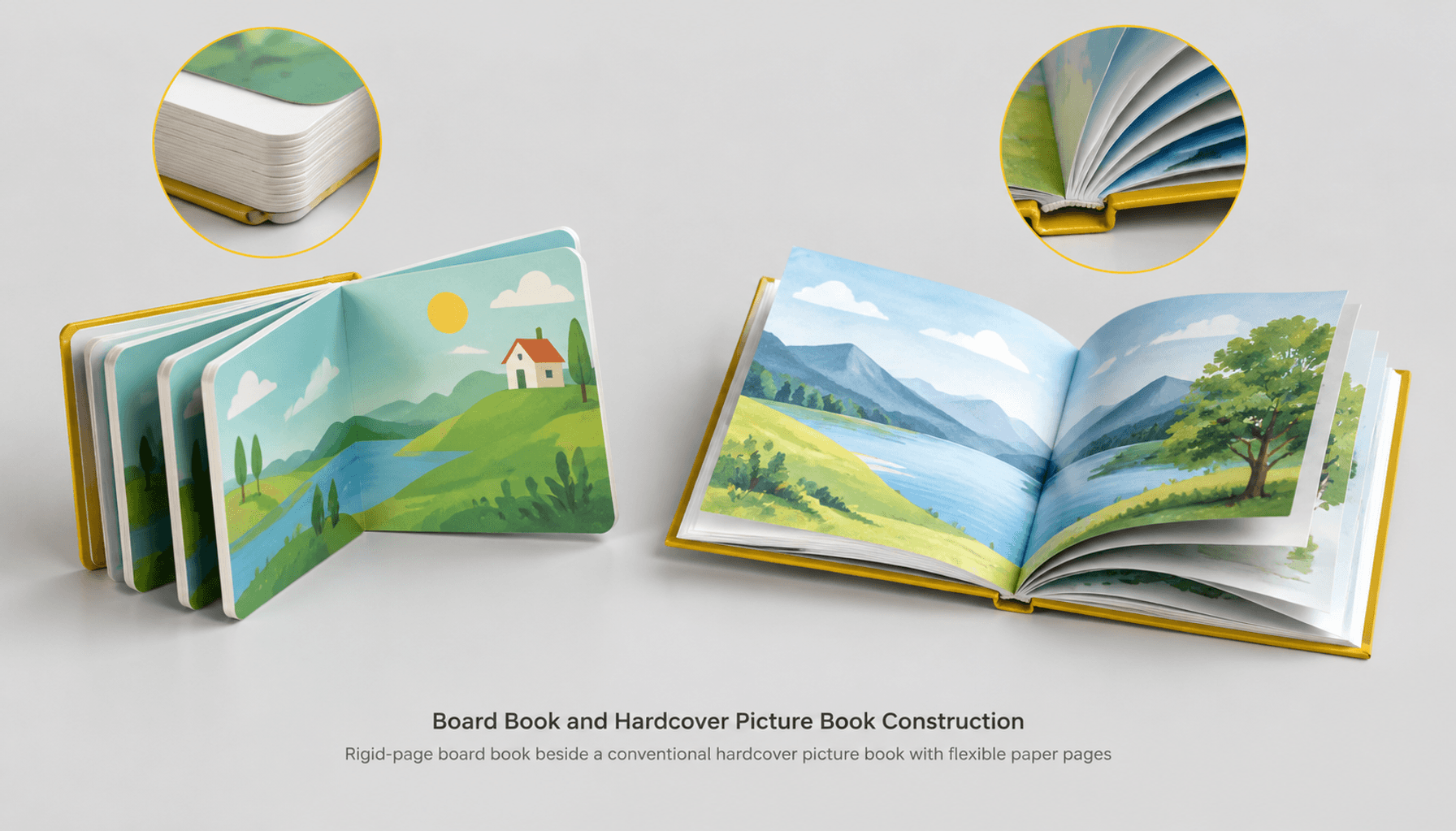
For board books, identify which printed faces receive film and which remain available for bonding into the page structure. Lamination is separate from mounting: bonding printed paper to board or joining sheets into thick leaves.
How film, adhesive, and substrate affect the finished surface
Reliable lamination adhesion comes from compatible materials and a controlled process. Two samples labeled matte can perform differently if the film, adhesive, ink, paper coating, or operating conditions differ. The substrate is the material underneath the film, usually the printed paper that becomes part of the board book page.
- Film: Request its type, finish designation, and stated thickness in micrometers (µm). Conventional matte film and film designed for scuff resistance are different specifications. Confirm whether the stated thickness includes adhesive.
- Adhesive: Confirm compatibility with the film and printed stock, including the time needed to set or cure before assembly and evaluation.
- Printed substrate: Record paper grade and weight in grams per square meter (gsm), ink coverage, and the proposed board or layered-page construction.
- Process: Ink condition, excess anti-setoff spray powder, contamination, and unsuitable bonding settings can contribute to weak adhesion or bubbles. Relevant controls depend on the laminating system.
Silvering is a fine, whitish appearance associated with tiny air gaps at the bonded interface. Check dark printed areas, where it can be easier to see.
Distinguish adhesion between film and paper from bonding between paper and board. A lifting corner may involve either interface.
When reviewing printing and finishing capabilities, ask which material combination and manufacturing route the quoted sample will represent. Matte or gloss also provides no evidence of suitability for a child’s age group or destination-market requirements.
Comparison table: Glare, color appearance, handling marks, and inspection needs
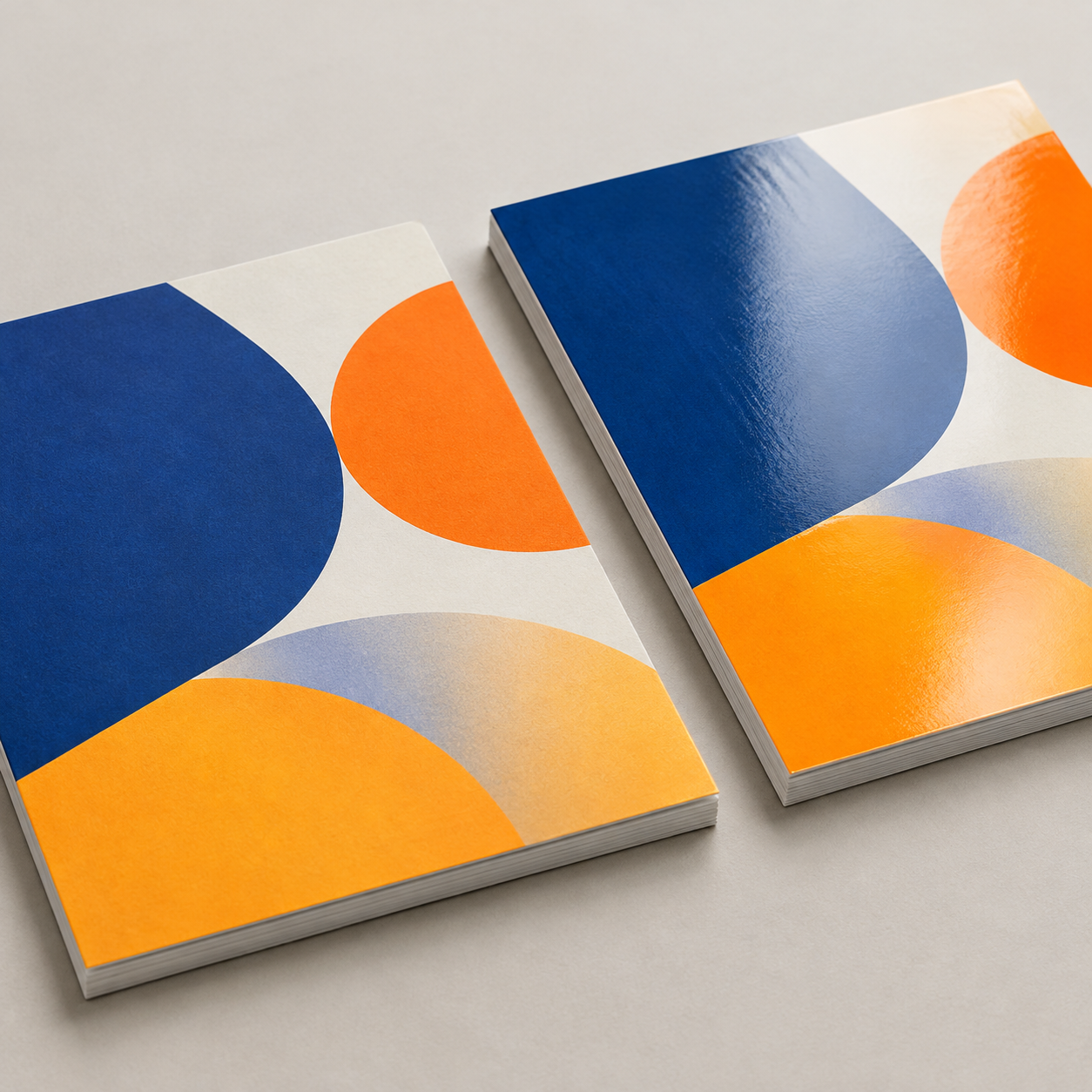
Matte vs gloss lamination is chiefly a choice about reflection and printed color appearance. Compare board book finishes using the same artwork on the proposed stock; the actual film and finished construction determine performance.
| Check | Matte lamination | Gloss lamination | What to inspect |
|---|---|---|---|
| Glare | Diffuses reflections; generally less distracting under overhead light. | Produces stronger, directional highlights. | View text upright and tilt the spread under the same light. |
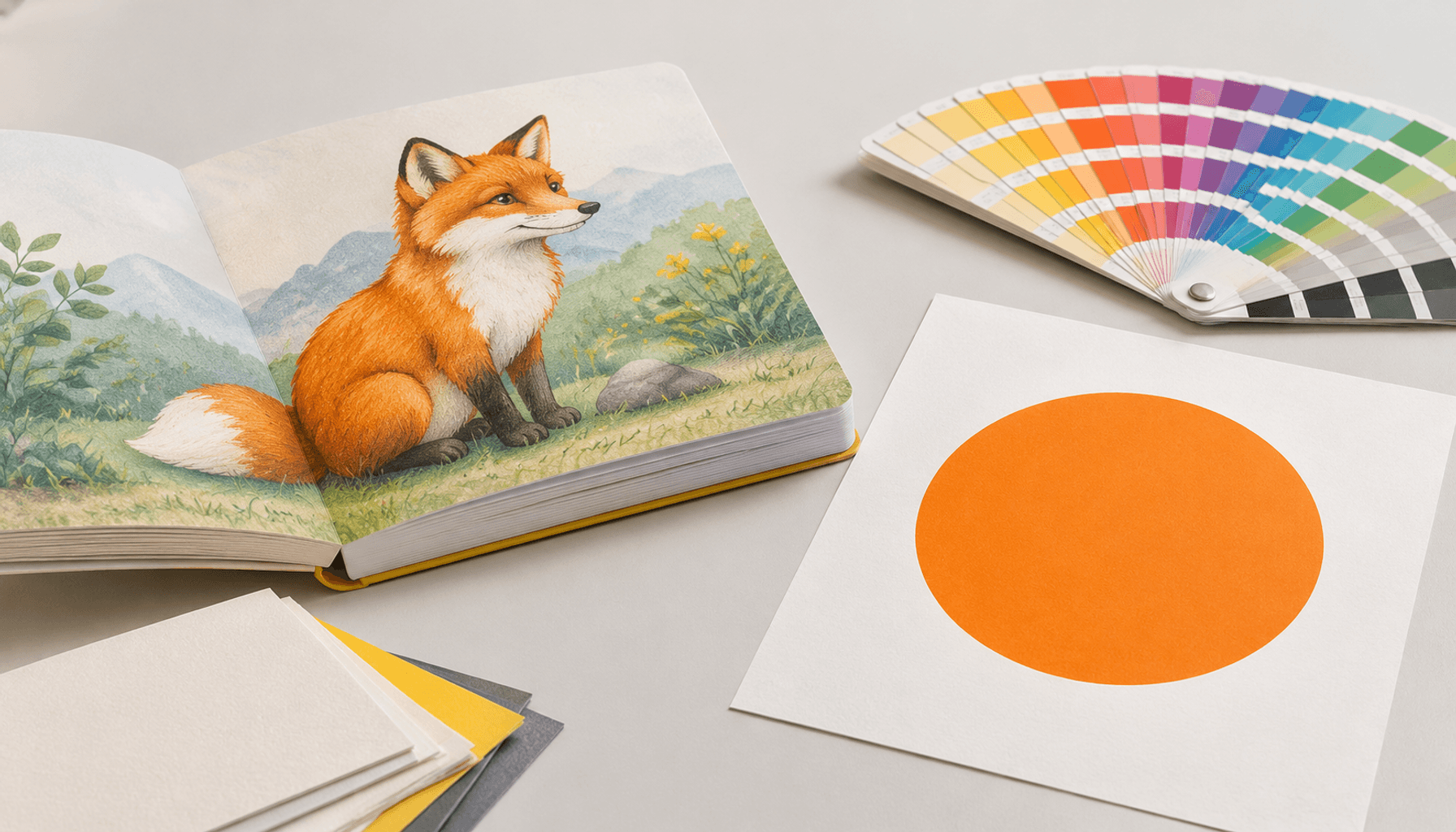
| Printed color appearance | May make deep tones appear softer or less saturated. | Often makes dark tones and saturated images look richer. | Compare identical artwork, especially neutrals and dark solids. |
| Fingerprints | Visibility varies with film texture and artwork. | Oily marks can be conspicuous on dark areas. | Handle both with clean, dry hands; inspect at matching angles. |
| Scuff resistance | Some conventional matte films show polished rub spots. | Fine scratches can catch reflected light. | Use an agreed handling or rub test on the proposed film. |
| Lamination adhesion | Depends on materials and process. | Depends on materials and process. | Inspect bubbles, corners, trimmed edges, and folded areas. |
| Opening behavior | Requires an assembled-book check. | Requires an assembled-book check. | Check hinges and folds after agreed opening cycles. |
These tendencies help shortlist a finish. Establish pass or fail limits separately. A screen image or photograph cannot reliably establish sheen, tactile feel, or scuff resistance.
How page and cover finishes affect everyday handling
Board book pages and covers can use different finishes when the construction and production route support them. For example, matte interior pages may reduce distracting reflections while a gloss cover gives the artwork a more reflective presentation.
Specify each surface explicitly: “matte laminated page faces; gloss laminated cover exterior.” Ask how film on any bonding area will affect assembly, and confirm the total page and cover thickness used for hinge design.
A thicker film does not automatically produce a more durable book; it can change stiffness and folding response. Evaluate thickness changes on an assembled sample.
Lamination does not make a board book waterproof. Film can help protect the faces from incidental moisture, but trimmed edges, joints, and exposed board remain vulnerable. Do not assume immersion resistance, repeated wet-cleaning suitability, or resistance to chewing from the finish name.
Evaluate scuffing, fingerprints, and edge lifting
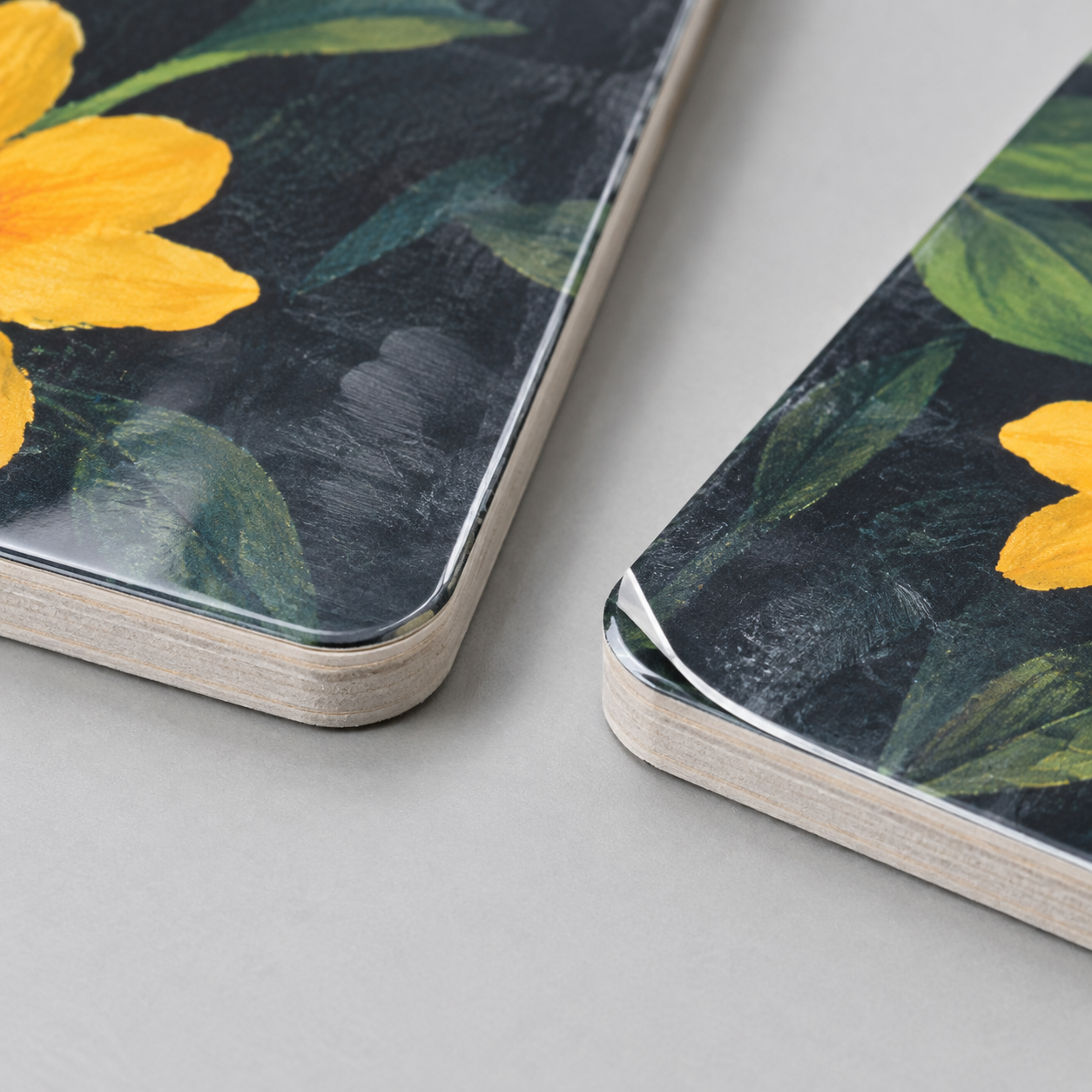
Evaluate scuffing, peeling, and edge lifting on the proposed materials after representative handling. Matte surfaces may show shiny rubbed areas; gloss surfaces may reveal fine scratches or fingerprints when tilted.
Inspect a dark solid, a pale area, and a detailed illustration before and after the same agreed rub or stacking procedure. Keep the contact material, load, number of passes, and viewing conditions consistent. Uncontrolled rubbing with a fingernail gives poor comparison data.
At trimmed edges and rounded corners, look for loose film, bubbles, or a visible gap. Identify which layer is separating before deciding whether the cause is lamination, mounting, or cutting. Record locations and photographs against the physical sample.
Agree any destructive adhesion test with the supplier. An improvised tape pull can be misleading because tape tack, pull angle, and paper strength affect failure. Treat loose, lifting film as a defect requiring review and corrective action.
Review packing too: rubbing between books in a carton can leave different marks from normal hand use.
Check folds, hinges, and repeated opening
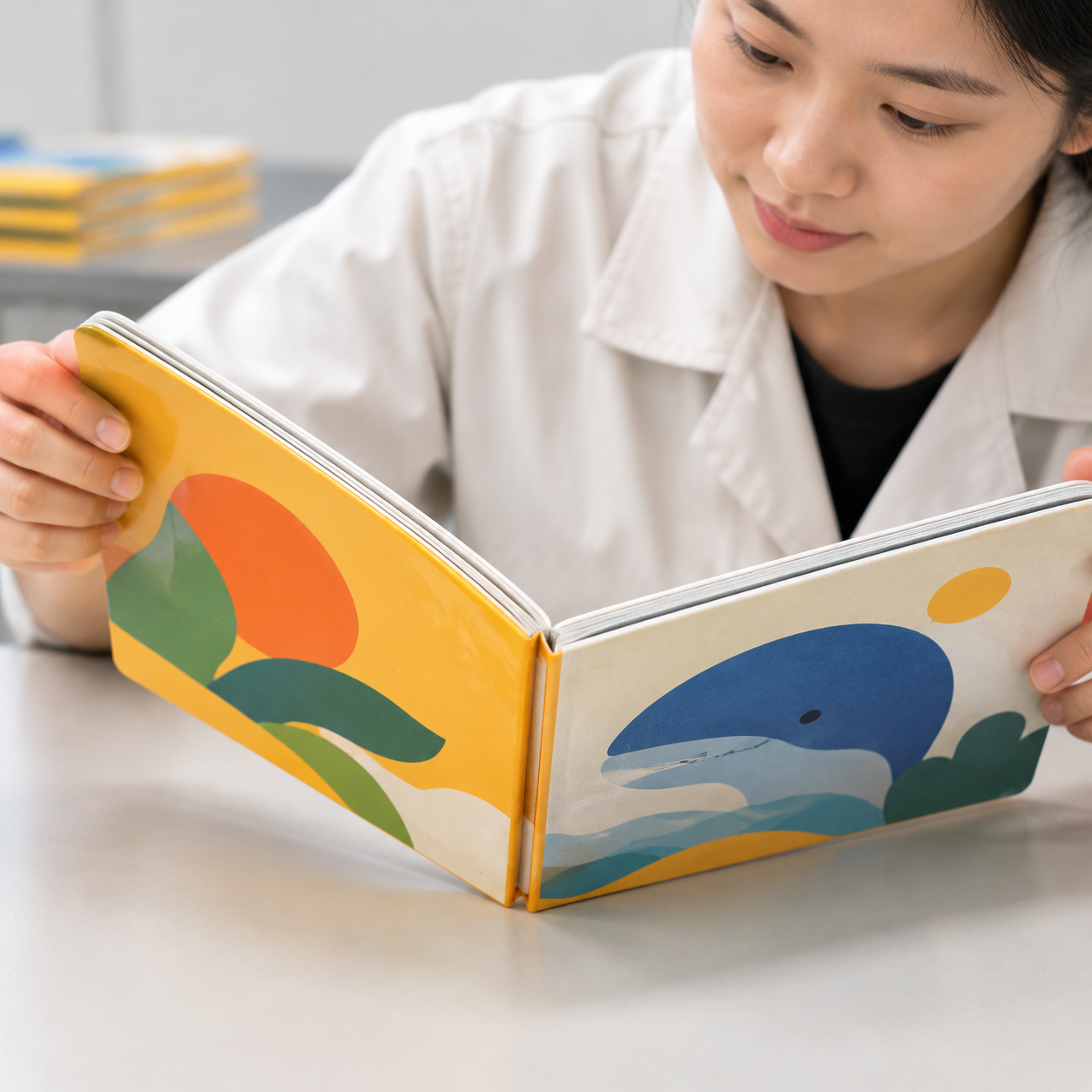
Approve folds and cover hinges on an assembled board book made with the intended materials and geometry. Flat laminated sheets cannot show how a thick leaf, cover joint, or folded spread behaves during opening.
Open the sample through its intended range and inspect the same areas before and after an agreed number of cycles. Look for a pale stress line, cracked print, film bridging a crease, lifting near the hinge, or separation between mounted layers. These symptoms can have different causes; identify the failed layer.
Ask the supplier to review paper grain direction—the main alignment of its fibers—plus crease or hinge geometry, film flexibility, board thickness, and adhesive setting conditions where relevant. Agree an opening count and range appropriate to the construction.
Test a finished sample with the agreed corner shape and trimming method. Finishing damage may appear only after cutting, so final approval needs a sample that has passed through those operations.
Five steps to compare finish samples before approval
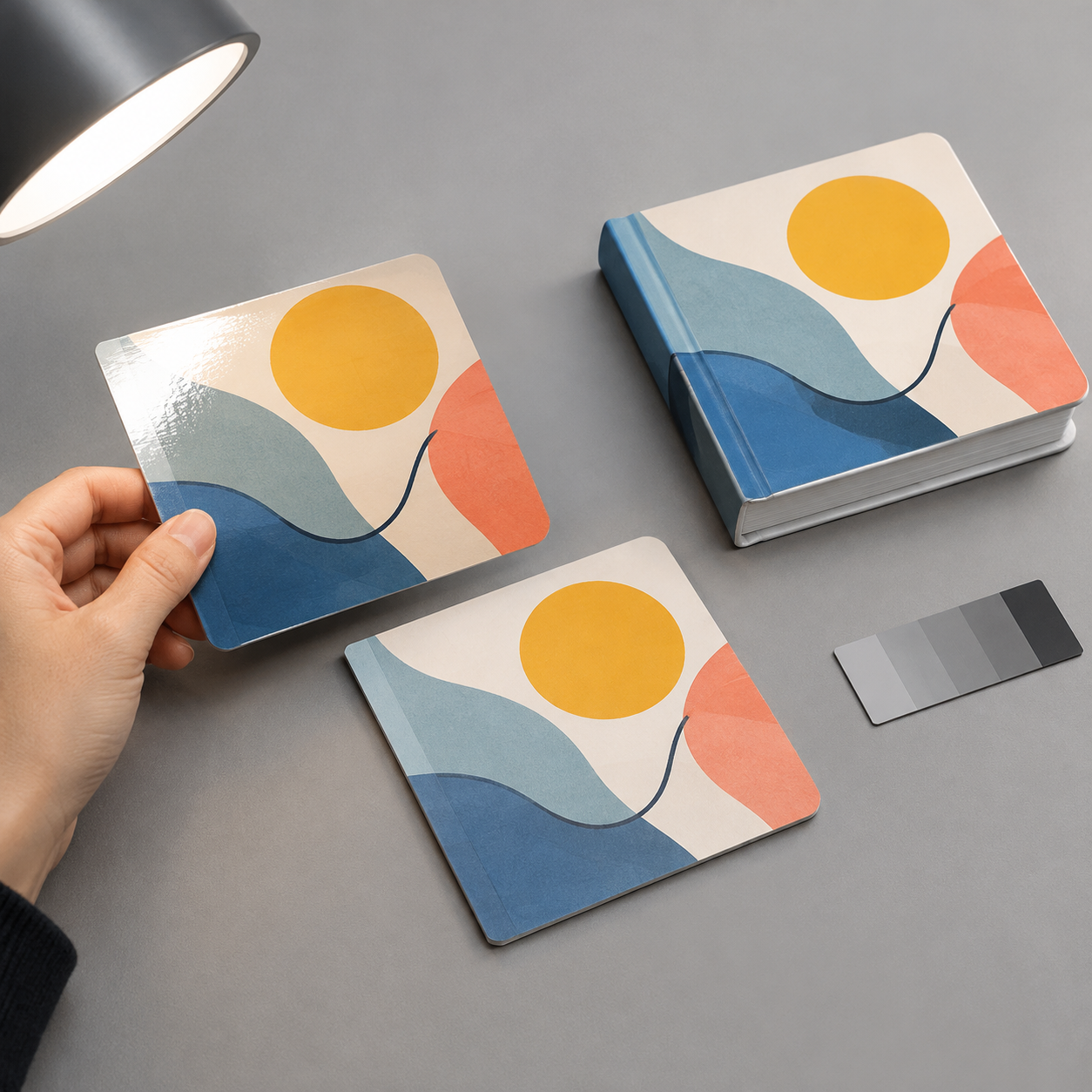
Compare board book finish samples with matching artwork and consistent viewing conditions. Use flat samples to shortlist appearance, then an assembled sample to judge the complete construction.
- Define the comparison. Request matte and gloss on the same printed paper, using artwork with small type, neutrals, saturated images, and dark solids. Record any material or printing-method differences between samples.
- Control the view. Use a stable, diffuse light source for color comparison. Hold distance, angle, and background constant; then tilt both samples together to compare glare. Use a separate, consistent angled-light check for surface marks.
- Check feel and wear. Handle each sample with clean, dry hands, compare page turning, and carry out the agreed rub procedure. Record fingerprints, polished spots, or scratches at the same viewing angle. Retain an untouched control for comparison.
- Review an assembled book. Inspect mounted pages, cut edges, corners, folds, and cover hinges. Repeat the agreed opening test after the materials have reached the supplier’s specified condition for evaluation.
- Approve and retain references. Sign and date the chosen sample, record its film and construction details, and keep matching buyer and factory references. List differences between the sample and planned bulk production.
A blank dummy can establish thickness and opening behavior, but it does not demonstrate how ink coverage affects lamination. A digitally printed mock-up may also differ from offset production. Ask which decisions each proof supports.
Approve final color on a representative print with the intended finish applied. Screen comparisons cannot reproduce the optical effect of the film.
Use the printing proof approval checklist to record artwork, finish, and construction approvals separately.
How to agree on finish references and acceptance criteria
Set finish acceptance criteria around a signed physical reference, a documented inspection method, and defined defects. Words such as “smooth,” “premium,” or “durable” leave too much room for interpretation.
Finish approval record: Record page and cover finishes, film identifiers and thicknesses, paper and board specifications, sample revision, agreed setting time, and approved deviations.
Agree inspection distance and lighting—for example, normal viewing at 40 cm under fixed diffuse light, with a separate angled-light check for surface damage. That distance is a project choice, not a universal printing standard. Define whether marks are judged by number, size, location, or a signed sample illustrating the largest acceptable mark.
List bubbles, visible lifting, edge separation, hinge cracking, and surface scuffs separately. For permitted variation, agree measurable limits or approved examples before production. Identify defects requiring correction or rejection, the sampling plan, and who decides how affected books are handled.
Build these requirements into your quality control for printed books. If a film or paper changes after approval, request a revised reference and assess appearance, bonding, and opening behavior.
For repeat orders, supply the retained reference and reconfirm material identity. “Same matte finish as last year” leaves possible formulation changes undocumented.
Quote checklist for laminated board book pages and covers
A useful quote identifies the finished book and the evidence needed to approve its surface. Separate mandatory requirements from finish preferences that the supplier can compare.
- Product and use: Board book format, intended handling, target age group where relevant, quantity, and repeat-order requirements.
- Dimensions and construction: Finished width and height, page count with cover counting explained, board or leaf thickness, binding construction, and corner shape.
- Printed materials: Page and cover paper grades and gsm, board specifications, and artwork showing representative heavy ink coverage.
- Finish by surface: Matte or gloss for interior faces and cover exterior; film specification if known; scuff resistance defined by a test or reference.
- Assembly checks: Exposed-edge expectations, hinge geometry, proposed adhesion and opening tests, and inspection conditions.
- Samples: Existing swatches, matching printed comparisons, assembled dummy, or proof representative of production; confirm differences, charges, and timing.
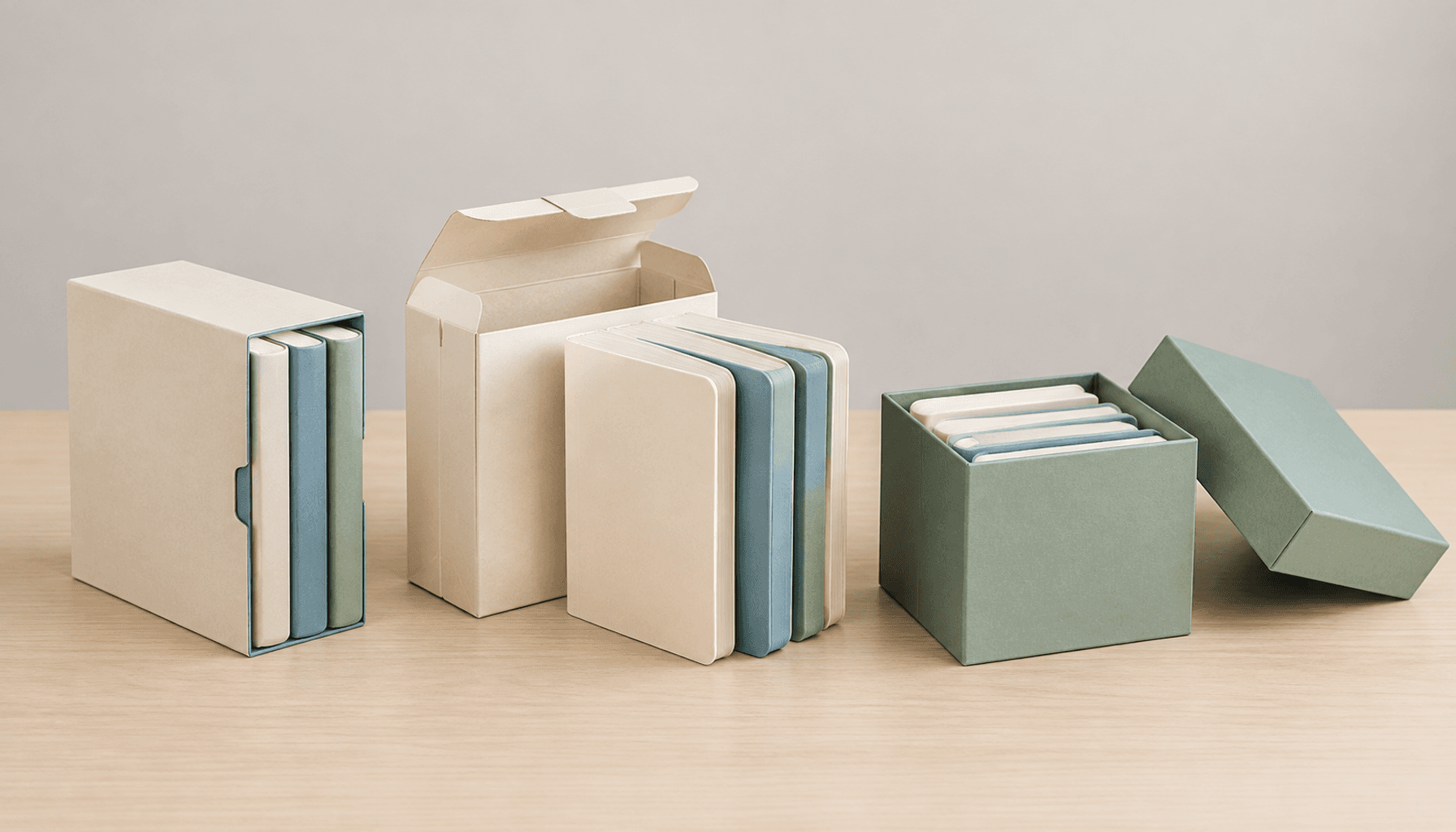
- Packing and delivery: Packaging to control rubbing between books, delivery destination, shipping requirements, and target receipt date.
- Documentation: Required material or product test reports for the specified market and use, plus the signed approval reference.
Ask for the minimum order quantity (MOQ) for the specified finish and construction. Quotations should state assumptions and exclusions so substitutions or different sample methods remain visible.
Lemon Printing board book finishing and sample options
Lemon Printing offers book printing with matte and gloss lamination options. Confirm the proposed board book construction, film specification, and sample route for your project before treating a configuration as approved.
Established in 2015, Lemon Printing operates a self-owned factory in the Guangzhou–Shenzhen manufacturing corridor, with more than 130 skilled workers and 8+ offset and digital presses. Prepress, printing, binding, finishing, quality inspection, packing, and export preparation are handled in-house, allowing finish selection to be discussed alongside assembly and inspection requirements.
Use these configurations as quotation requests, with feasibility confirmed against your materials and construction.
| Configuration | Appearance objective | Sample request |
|---|---|---|
| Matte pages and matte cover | Lower reflection throughout. | Matching printed swatch and assembled reference. |
| Gloss pages and gloss cover | Reflective appearance throughout. | Printed and assembled references checked under angled light. |
| Different page and cover finishes | Separate appearance goals for reading surfaces and cover. | One assembled sample combining both specified finishes. |
Ask which samples are available, how closely they match planned production, and whether additional preparation affects cost or scheduling.
FAQ: Matte and gloss board book lamination
These answers summarize the decisions to confirm before approving matte or gloss lamination for production.
What is the difference between matte and gloss board book lamination?
Matte lamination diffuses reflections and can soften the appearance of deep colors. Gloss creates stronger highlights and often makes saturated artwork look richer. Compare identical printed samples because film formulation and artwork affect the result; neither finish name establishes adhesion or durability.
Can board book pages and covers use different finishes?
Yes, if the construction and manufacturing route support the combination. Specify the page faces and cover exterior separately, then approve an assembled sample using both finishes. Confirm any effect on bonding areas, thickness, and hinge behavior.
Does lamination make a board book waterproof?
No. Film may help protect printed faces from incidental moisture, but exposed edges, joints, and board can absorb water. Any claim about wet cleaning, saliva exposure, or moisture performance requires evidence for the specified materials and assembled product.
How should buyers evaluate scuffing, peeling, and hinge cracking?
Use matching samples, fixed viewing conditions, an agreed rub method, and repeated opening under an agreed procedure. Inspect faces, cut edges, corners, folds, and hinges. Identify which layer fails, record defects, and compare results against signed references and agreed acceptance criteria.
Should the finish be approved on a flat sample or an assembled board book?
Use both. Flat samples are useful for comparing glare, color, and feel. Final finish approval should include an assembled, representative book showing mounted pages, trimmed edges, folds, and cover hinges. Record differences from the intended production materials or method.
Choose the surface that suits the artwork and expected handling, then make approval specific: exact materials, an assembled reference, and agreed inspection criteria. That gives purchasing and production teams a usable standard for the order.
Get a Clear Quote for Your Printing Project
Request a specification-based quote for your board book. Send Lemon Printing your product type, intended use, quantity, finished size, page count, paper and board materials, binding, separate page and cover finishes, desired appearance, sample expectations, delivery destination, and target date.
Our team will review the specifications and normally respond within one business day with practical production options, pricing, and a project timeline. Final MOQ, production time, pricing, and shipping depend on product specifications, quantity, finishing, and destination.