Packaging Box Printing · Formats & construction
Custom Gable Boxes
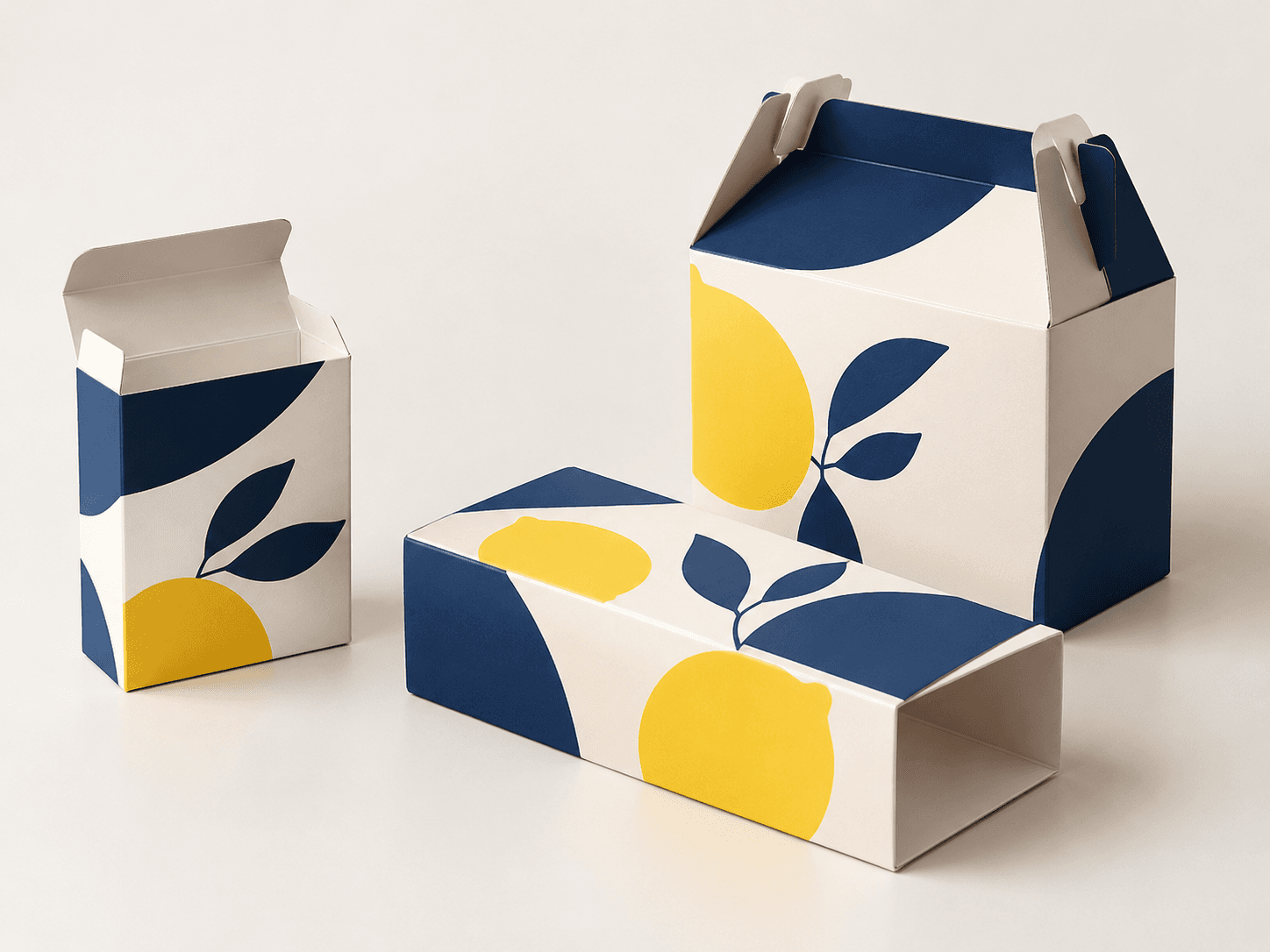
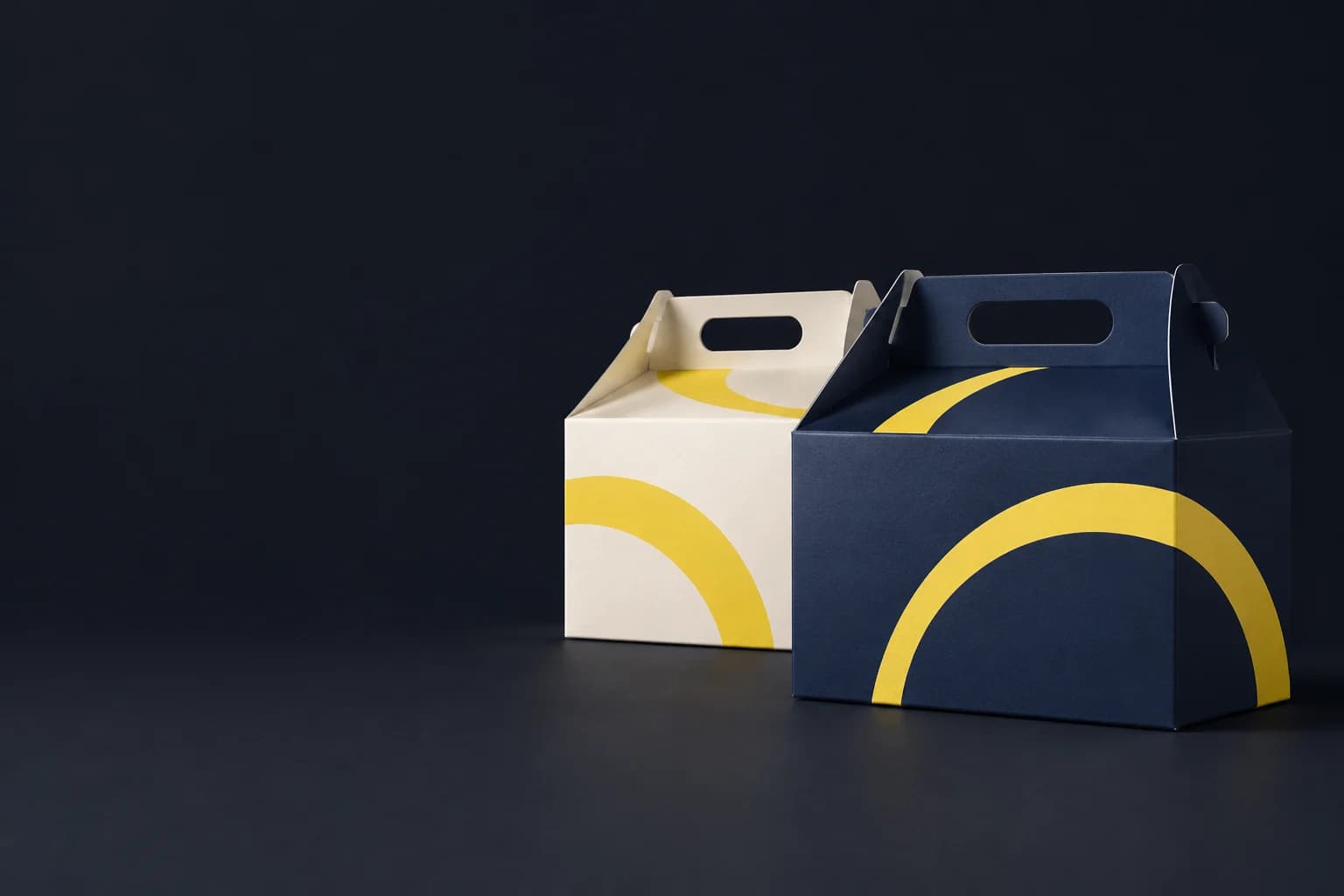
A printed folding carton with a peaked roof and a handle cut into the board. Designed for gift sets, event favors and wrapped bakery items that customers carry away.
- Die-cut handle in the carton roof
- White or kraft paperboard
- Hand-lock and auto-lock base options
Start with the intended use, finished size and quantity. The material and construction can follow.
The product in use
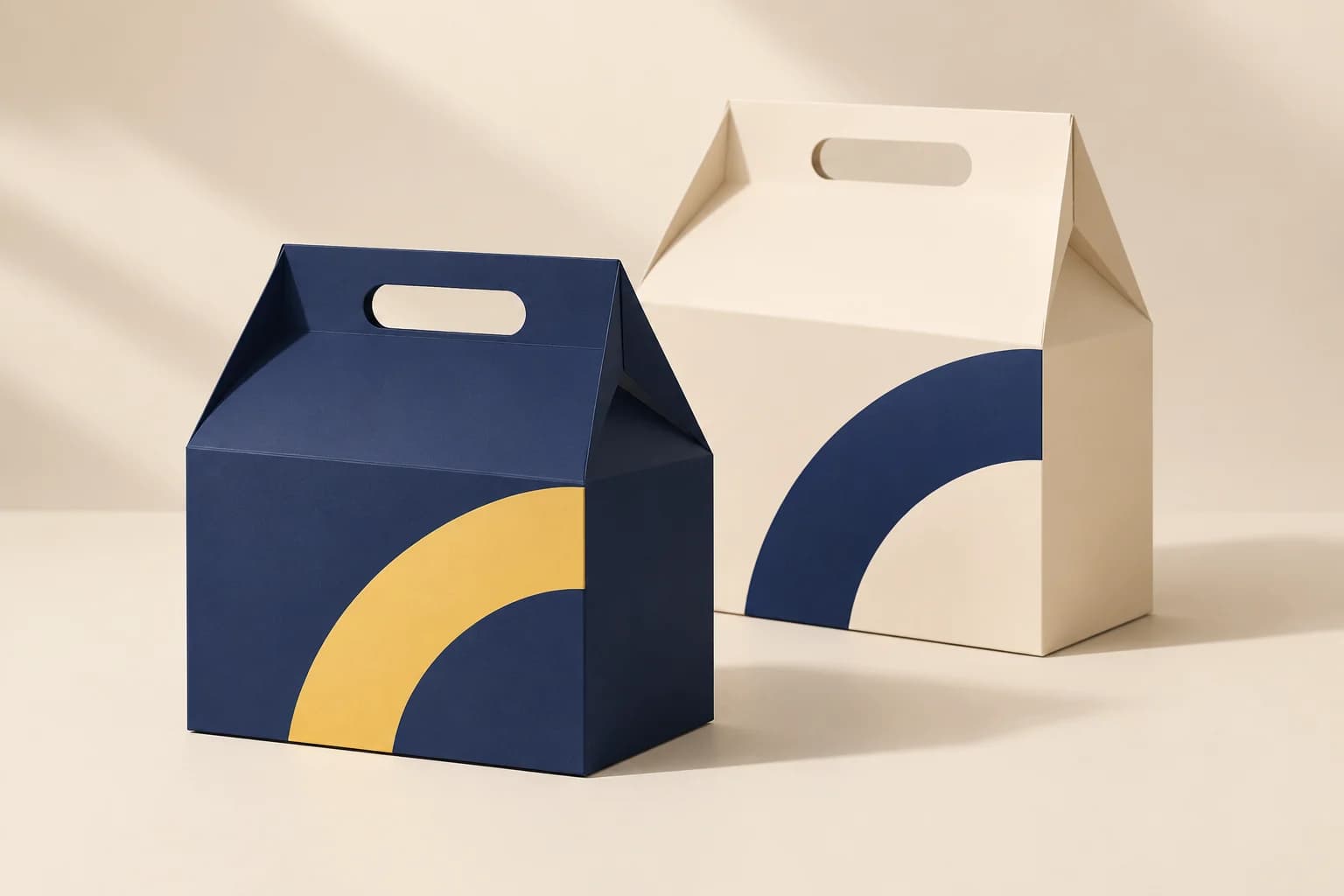
A folding box with its own carry handle
Two sloping roof panels meet at the handle while the side gussets fold inward to close the ends. The rectangular body gives you broad surfaces for print and keeps the contents together. Keep the tallest item below the roof folds so it cannot push the tabs open. For shipping, protect the raised handle inside a separate outer carton.
What makes up the finished product?
- Rectangular body
- Sets the usable footprint and straight-wall height. Allow for inserts, wrapping and loading clearance.
- Roof and side gussets
- Fold into the space above the body. Check how far they extend inwards with the pack filled.
- Locked base
- Supports the contents. Inspect flap engagement and any sag after handling the filled pack.
Specifications and materials
Custom Gable Boxes specifications
Use these reference options to build the project brief. Dimensions are design examples; material availability, tooling and production timing depend on the confirmed specification.
| Parameter | Reference or option | Why it matters |
|---|---|---|
| Internal body and overall height | Internal length × width × body height in mm; overall closed height to handle | Check the widest part of the wrapped contents and the room needed to lower them into the box. |
| Folding paperboard | White coated or kraft paperboard; industry reference 18–24 pt (about 460–610 µm) | The range is a selection reference. Check stiffness, creasing and grip on the proposed stock with a filled sample. |
| Bottom closure | Hand-lock flaps or pre-glued auto-lock base | Compare setup time and flap engagement with the intended contents. |
| Carry handle | Aligned finger slots in paired paperboard panels | Check hand clearance and inspect slot ends and tab engagement after lifting. |
Compare the material and its effect.
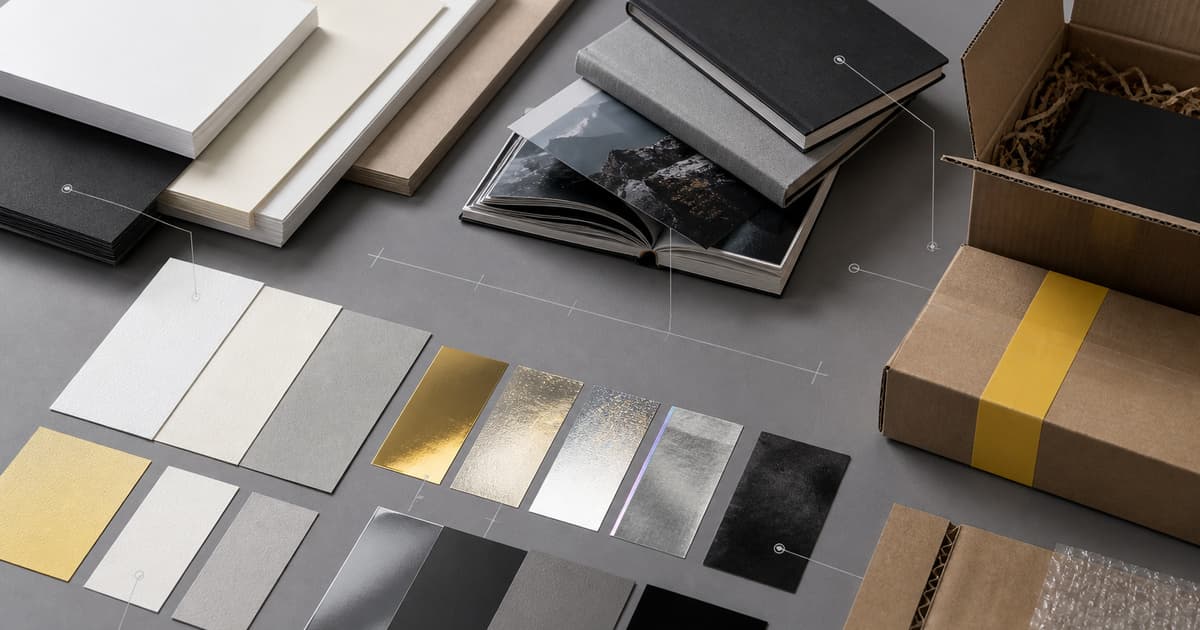
Choose the surface and construction for the way the finished product will be used. The options below are selection references, not a guaranteed inventory list.
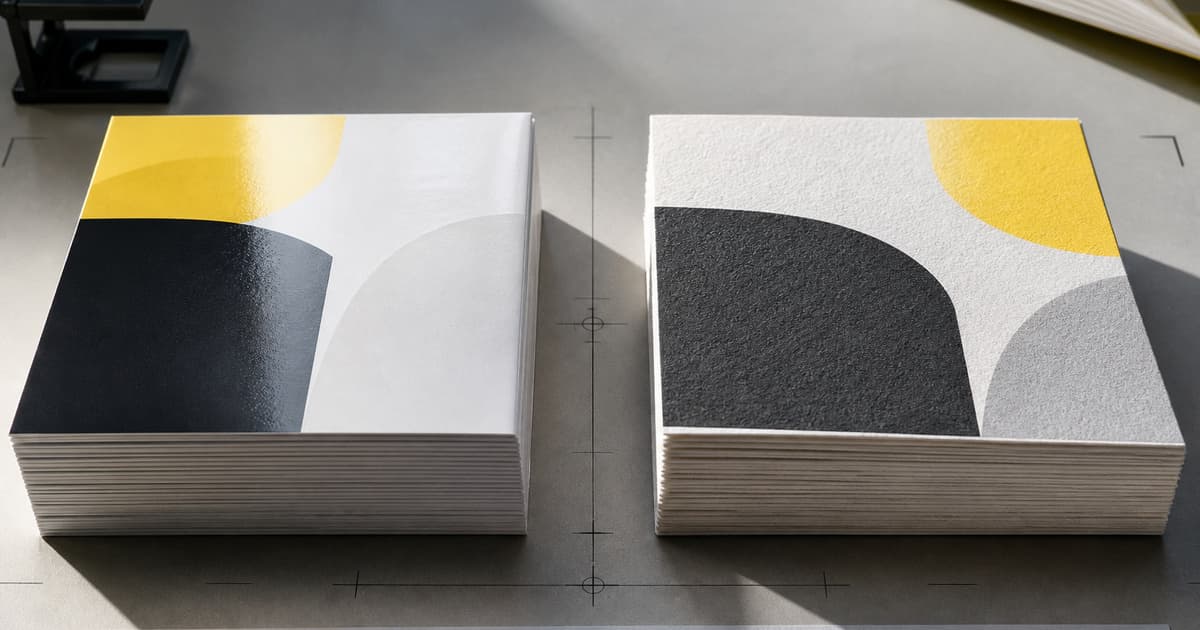
White coated paperboard
Smooth coated print face
Provides a neutral base for fine graphics and color matching.
Sample check: Fold the printed stock to check the roof scores.
Natural kraft paperboard
Visible brown fiber surface
Changes the appearance of unprinted areas and light inks.
Sample check: Approve an on-stock proof and specify opaque white if the design needs it.
Selected sample focus — White coated paperboard: Fold the printed stock to check the roof scores.
Format & usable space
Body Dimensions, Handle Clearance & Bottom Lock
150 × 100 × 100 mm internal body (L × W × H), illustrative
Measure body height to the start of the roof folds. Specify the total closed height to the top of the handle separately for shelf clearance and packing.
This is a design reference, not a required size or a manufacturing limit.
Body height and closed height
Use straight-wall height for fit and total closed height for shelving and transit.
Close the box over the tallest packed item and check both handle panels engage.
Hand-lock base
Flaps interlock by hand
Check setup time and flap seating.
Auto-lock base
Pre-glued floor forms during opening
Check square opening and support with the box filled.
View the original format reference
Details that change the finished product
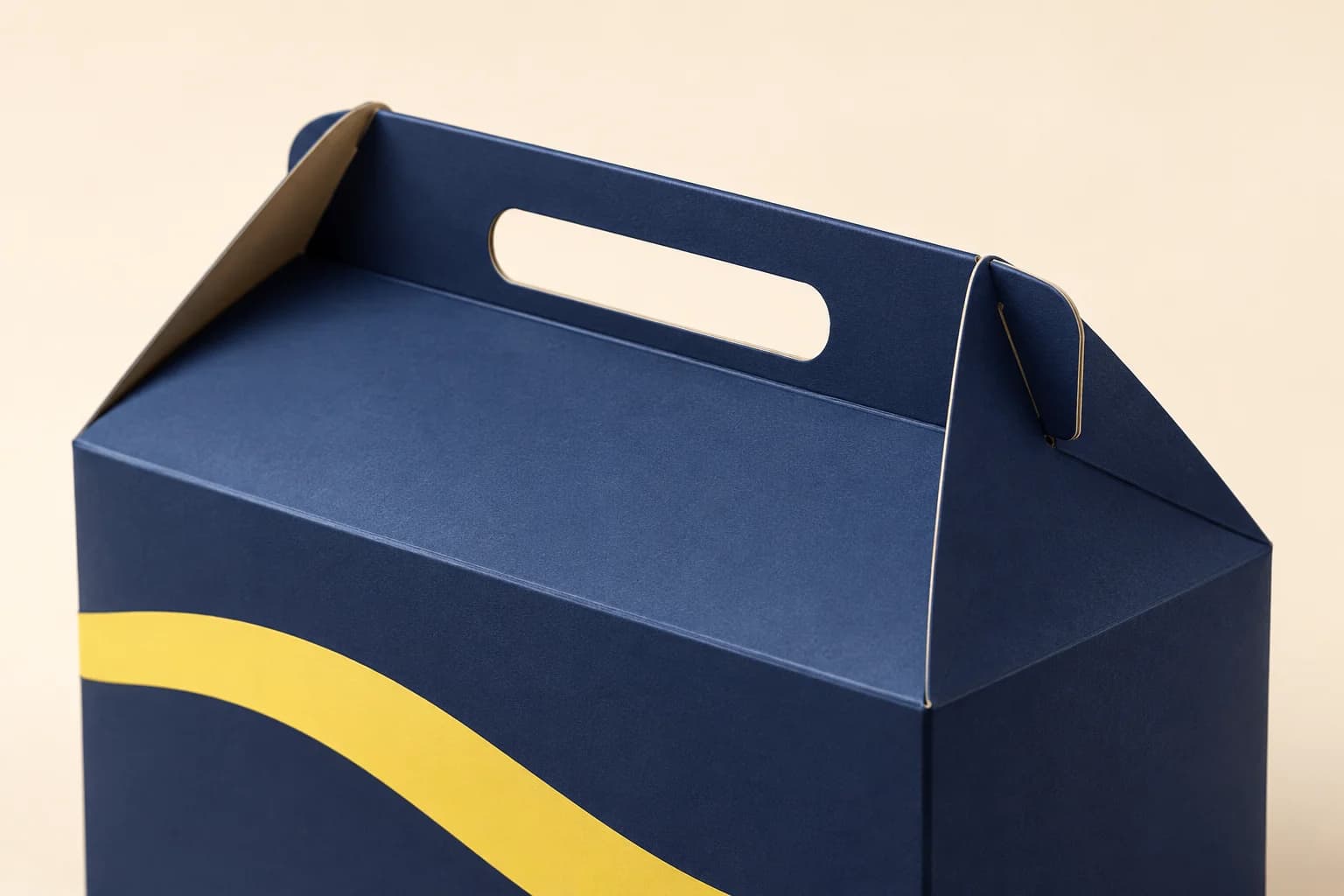
Design the handle, roof folds and base together
Close the roof without trapping contents
Leave room for the gussets to fold inward and seat the end tabs fully. Fill the sample with the tallest item and check both ends before lifting.
Match the base to your packing station
A hand-lock base needs the flaps engaged in sequence. A pre-glued auto-lock base forms when the carton opens square. Compare opening speed and inspect the underside after loading.
Keep artwork clear of cuts and creases
Dark solids make exposed fibers easier to see if the score cracks. Check folds on the printed board and look at light colors on natural kraft before approving the proof.
Where Gable Boxes Work Best
Gift sets and event favors
Use a fitted insert if small items can shift into the roof or put uneven pressure on the base.
Wrapped bakery items
Allow room around the tallest wrapped item. Define direct-contact requirements separately if there is no inner wrap.
Retail carry-away packs
Compare both base styles at the packing station and check how the complete pack sits in display and transit cartons.
Solve the risk before production
Prevent Handle Tears, Open Tabs and Sagging Bases
The critical finished-product check
An empty carton can close cleanly yet sag at the base or tear at the finger slot when filled. Check the handle, roof tabs and base using the intended contents.
Finger slot tears
Why it happens: A narrow web or sharp slot end concentrates stress.
Fix and check: Review the radius and board remaining around the cut. Repeatedly lift the heaviest intended pack.
Roof tabs open
Why it happens: Tall contents or a loose insert presses on the gussets.
Fix and check: Increase usable body height or hold the contents lower. Check both tabs on a filled sample.
Base bows or opens
Why it happens: One flap takes most of the weight or the bottom is incompletely engaged.
Fix and check: Seat the flaps, spread the load with an insert if needed and inspect after lifting.
When to choose another format
Gable Box, Tuck Carton or Mailer?
| Alternative | Use and trade-off |
|---|---|
| Folding Carton Printing | A flat-top tuck carton suits shelf stacking when a carry grip is unnecessary. |
| Mailer Box Printing | Use a corrugated mailer as an outer shipping structure when the carry pack needs protection in transit. |
Sample and approval
Test the Carry Box with Its Actual Contents
Free samples are available, with preparation completed within 15 days. Confirm the sample scope; courier arrangements and transit time are separate.
Structural sample
Checks dimensions, fit and assembly using unprinted or representative materials. It does not establish final color.
Printed proof
Checks text, image reproduction and artwork on the agreed proof medium. It may not reproduce final assembly or every finish.
Complete finished sample
Start with a blank made from the selected stock. Load the heaviest intended pack, close the roof, lift it repeatedly and inspect the slot ends, tabs, base and creases. Agree handling conditions and acceptance criteria before the printed proof.
From brief to delivery
What to Send for a Gable Box Quote
From filled dimensions to an approved carry box
Measure the packed contents
Record body dimensions, inserts, maximum filled weight and total height limit.
Approve the filled sample
Check opening, tab engagement, lifting and print appearance before releasing the artwork.
Plan flat packing and delivery
Agree quantities by artwork, bundle counts, destination and required arrival date.
Pack flat for assembly at destination
Bundle flat blanks by size and artwork. Protect handle cutouts and score lines and agree box counts and carton markings.
- Use the approved dieline with separate artwork, cut and crease layers. Follow the marked bleed and safe area.
- Fold a mockup to check panel orientation. Keep small type, barcodes and logos clear of slots, folds and glue zones.
Project questions
Planning Custom Gable Boxes
Does the quoted height include the handle?
State both dimensions. Usable body height ends at the roof folds. Overall closed height runs from the base to the top of the handle.
How much can a gable box carry?
Board caliper, slot geometry, bottom closure and load distribution all matter. Agree a filled-sample check for the maximum intended load.
Can the box touch unpackaged food?
State the food type, contact time and sales market. Direct contact needs suitable board, inks and barrier construction for the intended use. Wrapped products have a different specification.
When should I choose an auto-lock base?
Consider it when setup speed matters. Compare both closures at the packing station with the same contents and check the completed base after lifting.
Specify the finished product.
Send internal body dimensions, overall height limit, contents and maximum filled weight, base preference, quantities per artwork, destination and required arrival date. Indicate whether food is wrapped or touches the carton.